Elongated Goby Cichlid
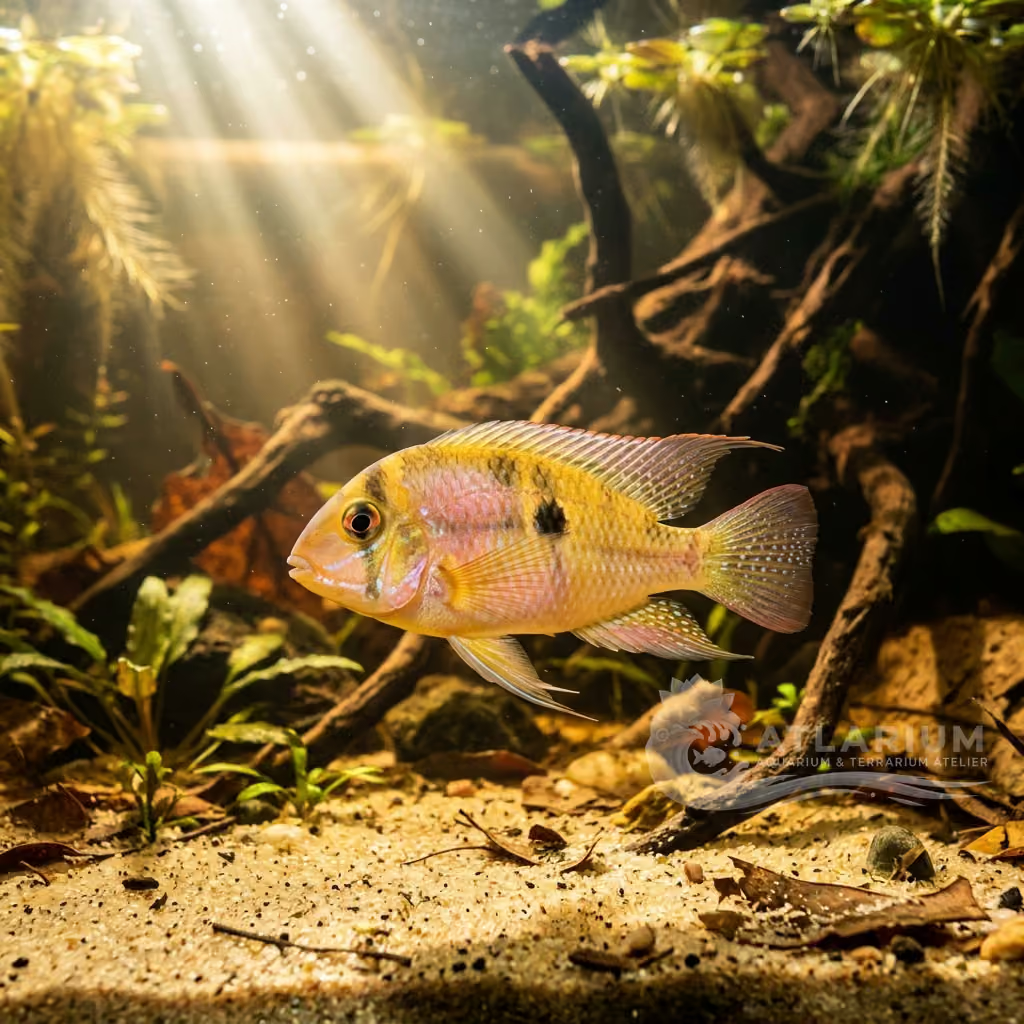
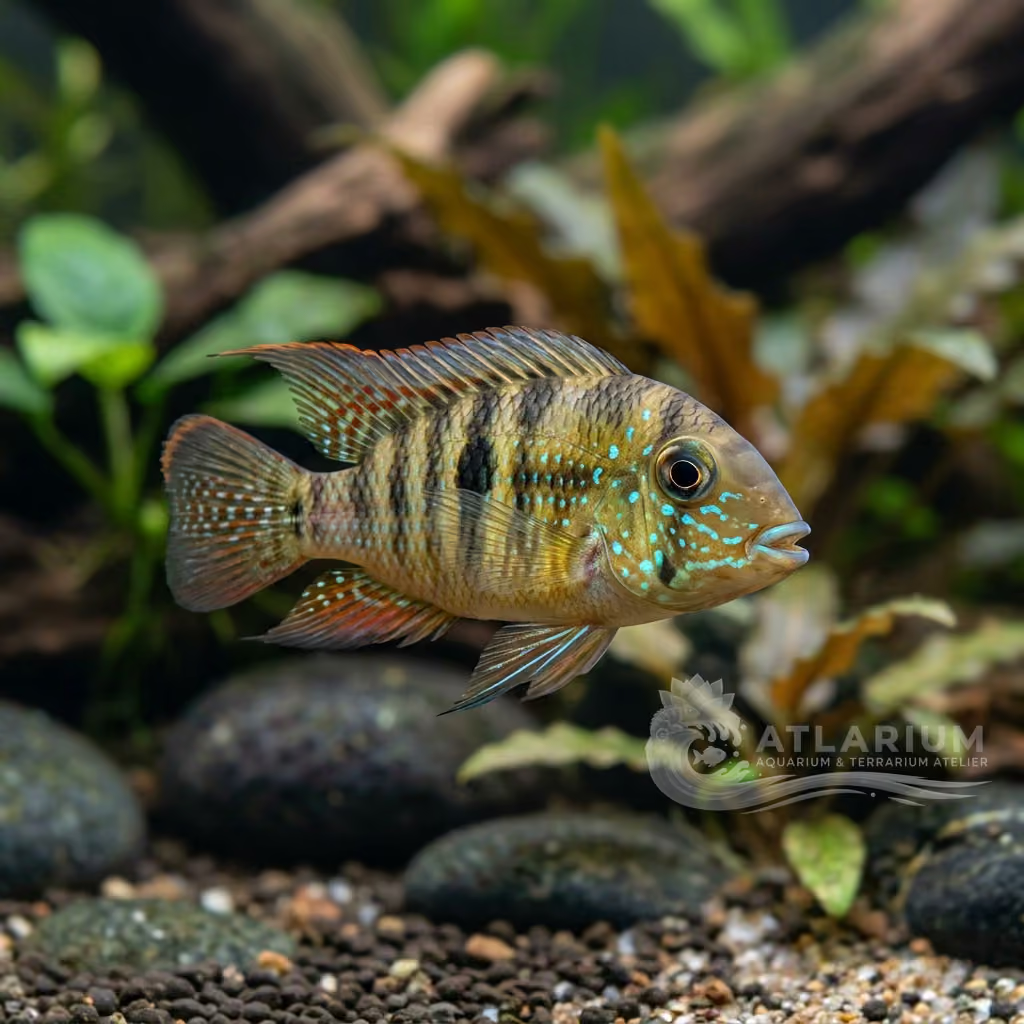
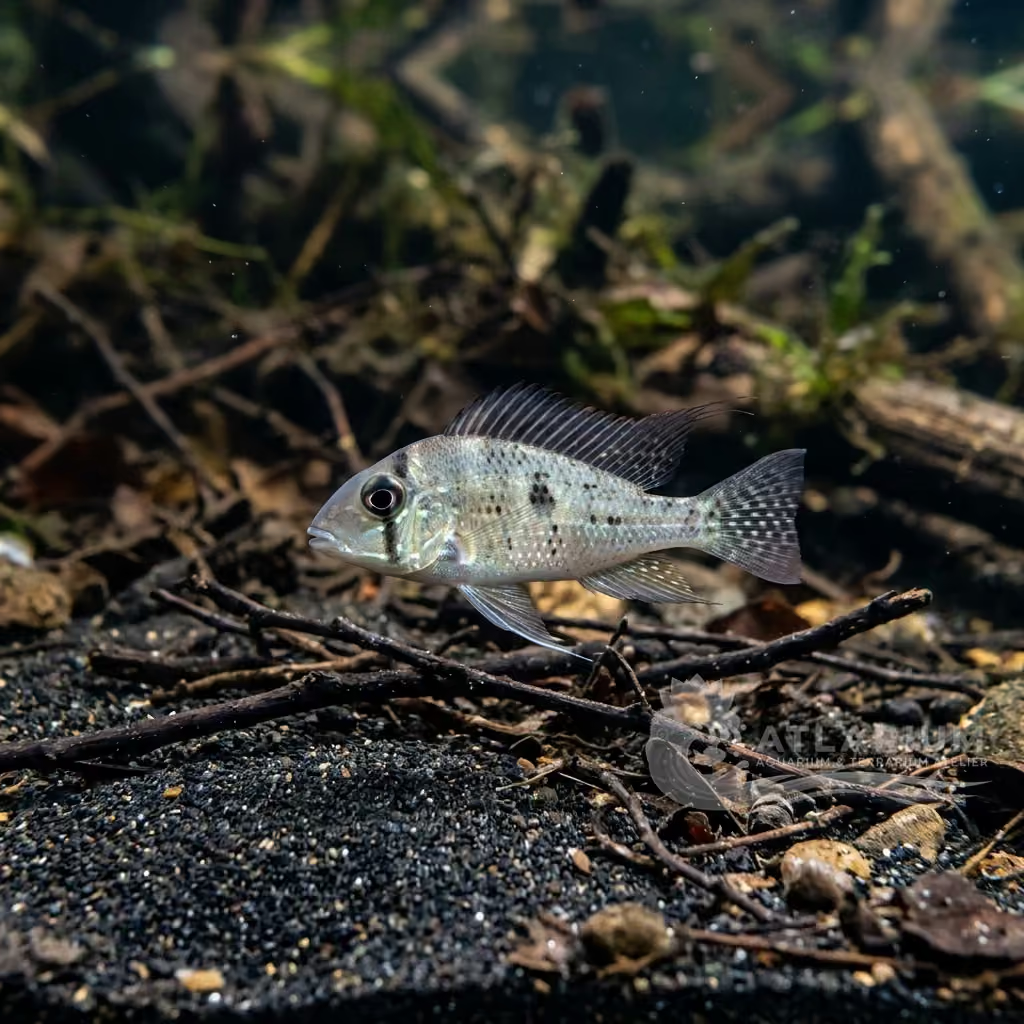
Teleocichla prionogenys
The thread-like 'Tapajos Goby Cichlid' (6-8 cm). The third extraordinary component of the South American genus of "suction-cup cichlids" without a swim bladder, the Teleocichla prionogenys represents the most hyper-elongated (serpentine) adaptation of the family. It comes from the very pure currents of the Rio Tapajos. It is distinguished from its cousins by its extremely pointed snout, curved back and pale, almost evanescent maculations on an olive or bright golden background. Extremely static but neurotic towards conspecifics, it requires turbulent waters and beds of round pebbles to survive captivity without getting sick or suffocating.
26 - 30 °C
6 - 7
Eau douce
Fond
8 cm
>= 100 L
>= 1
1 - 5 dGH
1 - 2 dKH
25 - 95 ppm
39 - 148 uS/cm

Description de l'espèce

Soins, reproduction et cohabitation

Origine et répartition géographiques
Origine

Profil de poisson
- Tempérament
- Semi-aggressive
- They exhibit a feisty and highly territorial temperament, particularly toward conspecifics and bottom dwellers. Despite their small size, they will boldly defend their chosen caves and resting spots. Providing ample space and hiding places is the best way to manage their territorial nature.
- Régime alimentaire
- Omnivore
- They are specialized micropredators that feed on small aquatic invertebrates and insect larvae in the wild. In the aquarium, they should be offered high-quality frozen or live foods such as bloodworms and brine shrimp. Variety is key to preventing nutritional deficiencies.
- Espérance de vie
- 2-5 years
- Taille adulte
- 8 cm
- Ratio des sexes
- Harem
- Maintaining a ratio of one male to multiple females can help disperse aggression. Males are generally more territorial and may fight if confined without adequate visual barriers. In smaller tanks, it is often best to keep a single compatible pair.
- Fréquence d'alimentation
- Twice daily
- Due to their active nature and high metabolic rate, they require multiple small meals throughout the day. Feeding them two to three times daily is generally recommended to maintain their condition. Take care not to overfeed during any single meal to avoid compromising water quality.
- Charge biologique
- Low to Medium
- This species has a modest bioload due to its small size, though it is highly sensitive to water quality. Nitrogenous waste must be kept at undetectable levels through frequent water changes. A robust biological filtration system is essential for their long-term survival in captivity.
- Courant
- Stagnant
- As rheophilic cichlids native to fast-flowing rivers, they require extremely strong water currents. Specialized river-manifold setups or powerful powerheads should be used to simulate their natural environment. Subdued or stagnant flow will quickly lead to health issues and stress.
- Risque de saut
- Yes
- They present a moderate to high jump risk, especially when startled or exhibiting territorial disputes. A tight-fitting lid is strictly required to prevent fatal accidents. Their powerful bursts of speed can easily propel them out of an uncovered aquarium.
- Reproduction
- Oviparous
- Breeding is complex and requires pristine water conditions mimicking their native riverine habitats. They are cave spawners that typically utilize crevices among rocks or smooth stones. Raising the fry can be challenging, as they demand microscopic live foods immediately after hatching.
- Compatibilité et compagnons
- Species only
- They are best kept in species-only setups or with robust, fast-moving upper-water column dwellers that tolerate high flow. Caution is advised when mixing them with slow-moving fish, as their territorial behavior can cause stress. Invertebrates are at high risk of being eaten.
- Niveau dans le bac
- Bottom
- They are strictly benthic fish that spend the vast majority of their time navigating the substrate. Their specialized body shape allows them to cling to the bottom in strong currents. The aquarium layout must focus on providing a complex bottom environment with smooth rocks.

Modèles et paramètres scientifiques
Fenêtre sur les données scientifiques officielles de l’espèce
- Niveau trophique
- 3,1 ± 0,5 se
- Résilience
- Élevée (moins de 15 mois)
- Singularité phylogénétique (PD50)
- 0.502
- Relation bayésienne longueur-poids
- a = 0.00776, b = 3.12
- VulnérabilitéVulnérabilité faible (10 / 100)

Espèces associées
Recommandations regroupées par proches parents, compagnons et soins similaires.