Eau douceIntermédiaire
©AI Generated·Proprietary
Satanoperca rhynchitis — Rhynchitis Demonfish (Satanoperca rhynchitis)

Rhynchitis Demonfish

Satanoperca rhynchitis

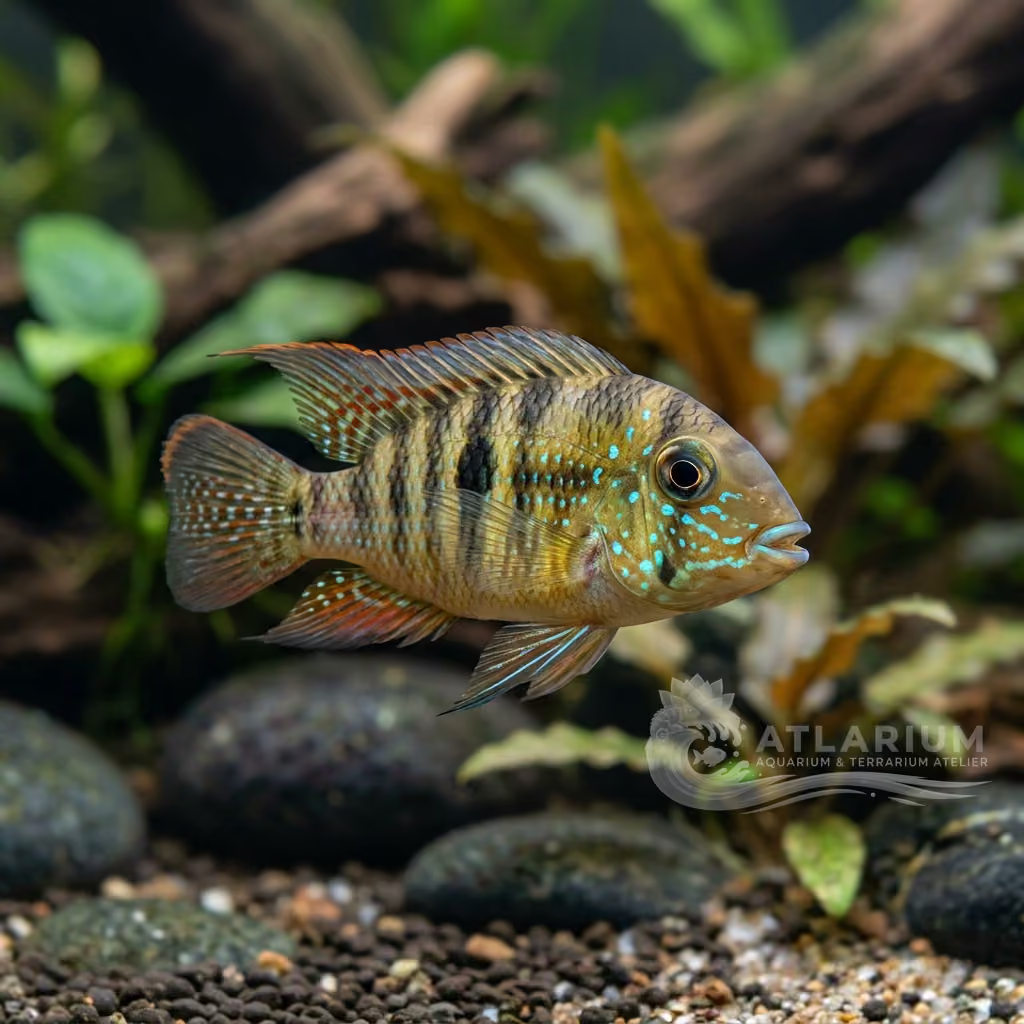
The 'Nosed Demon Eartheater' (18-20 cm). A relatively recent taxonomic discovery, in the past often confused with the very common Satanoperca jurupari. The Satanoperca rhynchitis is distinguished by the incredibly acute and elongated snout profile (hence the name rhynchitis, nose/beak bearer) and by a splendid pattern of irregular blue spots on the throat and cheeks. Originating from the eastern Amazonian border, it is a peaceful, moderately sensitive and schooling eartheater, which demands impalpable sand bottoms to be able to exercise its continuous, hypnotic and tranquil feeding dredging.

Température de l’eau

26 - 29 °C

Valeur du pH

5.5 - 7

Type d'eau

Eau douce

Niveau dans le bac

Fond

Taille adulte

20 cm

Volume minimal du bac

>= 180 L

Groupe minimal

>= 1

GH

1 - 6 dGH

KH

1 - 3 dKH

TDS

25 - 120 ppm

Conductivité

39 - 188 uS/cm

Description de l'espèce

Geographical Origin and Habitat: The Border Sifter. Species native to the river border zone between northern Brazil (Amapá) and French Guiana, mainly confined to the Oyapock River basin. Prefers calm, marginal and very warm waters, on uniform bottoms of very pure sand and silt, shielded by dense walls of riparian vegetation or hanging roots (Mixed Clearwater/Blackwater).
Taxonomy and Morphology: The "Benthic Stinger". The specific name *rhynchitis* refers to the exceptionally developed rostrum (nose/beak). Compared to the stockier *S. jurupari*, the snout is much more elongated and acute, sloping almost straight from the eyes. Massive but streamlined build, with expanded, fleshy and rubbery protrusible lips. No trace of spots on the flank.
Social Behavior: The Peaceful Tireless Worker. Deeply gregarious species (minimum 5-6 individuals); if raised singly it faces lethal wasting due to solitary phobia. Exquisitely peaceful, ignores smaller fish. Spends every single waking minute vigorously "chewing" sand and spitting it from the gills in thick clouds.
Coloration and Sexual Dimorphism: Turquoise Mask and Copper. Base body of beige, olive or pale copper (highly reflective under adequate lights). THE DIAGNOSTIC TRAIT (compared to *jurupari*): the snout, cheeks and gill cover are richly furrowed by very thick iridescent Turquoise Blue irregular dots and vermiculations. The only dark spot is a small ocellus at the root of the caudal fin. No obvious sexual dimorphism other than slightly larger sizes in old alpha males.

Soins, reproduction et cohabitation

Aquarium Setup: Demands "Immense Expanses of Sugar" (Tank min. 150 cm / 60 in). THE ABSOLUTE DOGMA IS THE SANDY LAYER. Granular gravels or soils strictly forbidden: they would fatally lacerate the gills. Prepare a bed of impalpable river sand (min. 5 cm / 2 in) with wide open spaces, punctuated only by enormous polished river stones and solid branches. Plants tolerated only if tied to suspended woods; if planted, they will be regularly uprooted by the excavating fish.
Diet and Feeding: Peaceful Omnivorous Micro-Siphon. Continuous benthic diet. Will eat exclusively from the bottom: crumbly sinking cichlid pellets, daphnia, brine shrimp and frozen bloodworms. The meal must sink into the sand, forcing them to chew earth and food simultaneously for proper gastric emptying and psychological well-being.
Water Quality: Need for Strict Hygiene and Heat. Moderately resistant if kept in a thick school, succumbs tragically to high nitrates. DEMANDS high tropical aquarium temperatures (26-29°C / 79-84°F), soft to medium water (GH 1-6) and generally acidic pH (5.5 - 7.0). Powerful (Sump) but not turbulent filtration, coupled with mandatory 40-50% weekly water changes by siphoning the bottom.
Compatibility and Cohabitation: Serene Community of Calm Rivers. Perfect tankmate for the peaceful. Excellent in schools paired with small-medium swimmers (Tetras, Hemigrammus, Pencilfish), large calm fish like Severum or Uaru, and resistant loricariids (Ancistrus, Peckoltia). Strictly forbidden large territorial Corydoras (harmful competition) or aggressive South/Central American cichlids that would skin them alive.
Aquarium Breeding: Protective Immediate Mouthbrooders. Similar to *S. jurupari*, very fascinating in a mature group. The female lays adhesive eggs on stones or clean hard dry foliage and, unlike larvophilic species, AFTER A FEW HOURS OR DAYS OF FERTILIZATION collects all the eggs/larvae directly into the immense throat sac, mouthbrooding for dozens of days and spitting out the somewhat grown free swimmers only to feed, under the martial escort of the male. Rare to see without a dedicated tank.
Risks and Diseases: Neotropical Bloat Lethality and Oral Cuts. Rearing on rough bottoms will cause an internal necrotic gill excoriation with subsequent fatal purulent facial paresis. Highly subject to Hole in the Head (Cranial ulcerous holes from Hexamita/Toxic mineral deficiency) and paralyzing starvation if housing does not respect the strict thermal, chemical and social changes described.

Origine et répartition géographiques

The Border Sifter. Species native to the river border zone between northern Brazil (Amapá) and French Guiana, mainly confined to the Oyapock River basin. Prefers calm, marginal and very warm waters, on uniform bottoms of very pure sand and silt, shielded by dense walls of riparian vegetation or hanging roots (Mixed Clearwater/Blackwater).

Origine

Océans tropicaux et récifsAmazonie, Orénoque et Guyanes

Profil de poisson

Tempérament
Semi-aggressive
They are very peaceful and can be somewhat shy. They will not bother other fish unless protecting a spawn. Providing adequate cover and conspecifics boosts their confidence.
Régime alimentaire
Omnivore
They sift sand continuously to find benthic invertebrates. Offer a diet of sinking cichlid pellets, blackworms, and frozen brine shrimp. Coarse substrate will severely limit their natural feeding behavior.
Espérance de vie
6-10 years
Taille adulte
20 cm
Ratio des sexes
School
Keep them in a shoal of 5 to 6 individuals. They are schooling cichlids that rely on group dynamics to feel secure. A healthy group will display interesting social hierarchies.
Fréquence d'alimentation
Twice daily
Provide 2 to 3 small meals per day. This frequent feeding matches their natural constant grazing. Ensure food sinks quickly before top-feeders consume it all.
Charge biologique
Medium to High
They produce a high bioload similar to other Satanoperca. Strict maintenance and high-end filtration are required. They are very susceptible to hole-in-the-head disease if water quality drops.
Courant
Stagnant
A gentle to moderate current is highly preferred. Excessive flow will disturb the sandy bottom they rely on. They appreciate calm, shaded areas under driftwood.
Risque de saut
No
Reproduction
Oviparous
Breeding is difficult and infrequently seen in the hobby. They are delayed mouthbrooders that need very soft, acidic water to spawn. Raising the fry requires dedicated care and feeding.
Compatibilité et compagnons
Peaceful
They are peaceful and suitable for a peaceful South American community. Keep them with medium-sized peaceful tetras and peaceful bottom dwellers. Aggressive cichlids will outcompete them for food.
Niveau dans le bac
Bottom
They are strict bottom dwellers that rarely visit the upper water column. Their entire life revolves around the sandy substrate. A tank with a large footprint is much better than a tall tank.

Modèles et paramètres scientifiques

FishBase

Fenêtre sur les données scientifiques officielles de l’espèce

FishBase v25.04Données synchronisées le : 15/06/2026
Niveau trophique
3,1 ± 0,4 se
Résilience
Élevée (moins de 15 mois)
Singularité phylogénétique (PD50)
0.5039
Relation bayésienne longueur-poids
a = 0.02754, b = 3.02
VulnérabilitéVulnérabilité faible (10 / 100)