Discus
Symphysodon discus
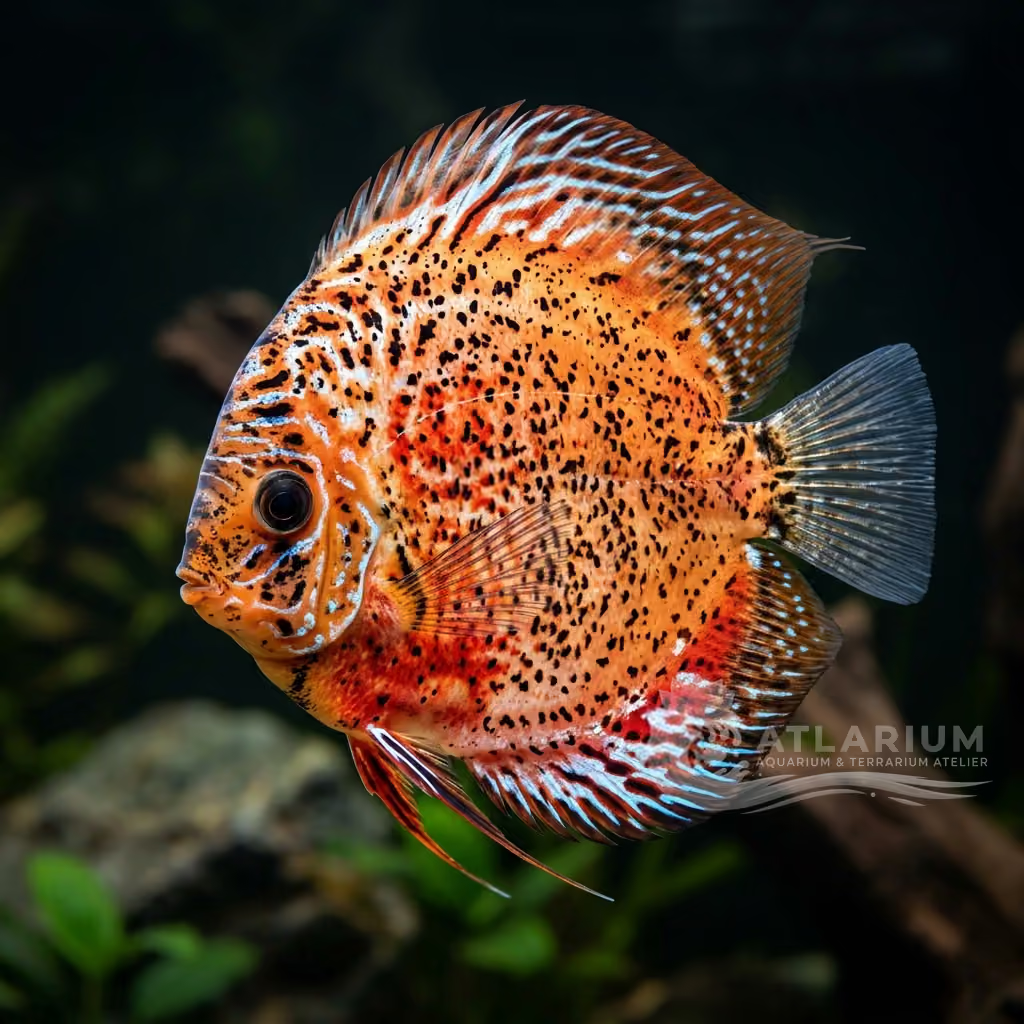
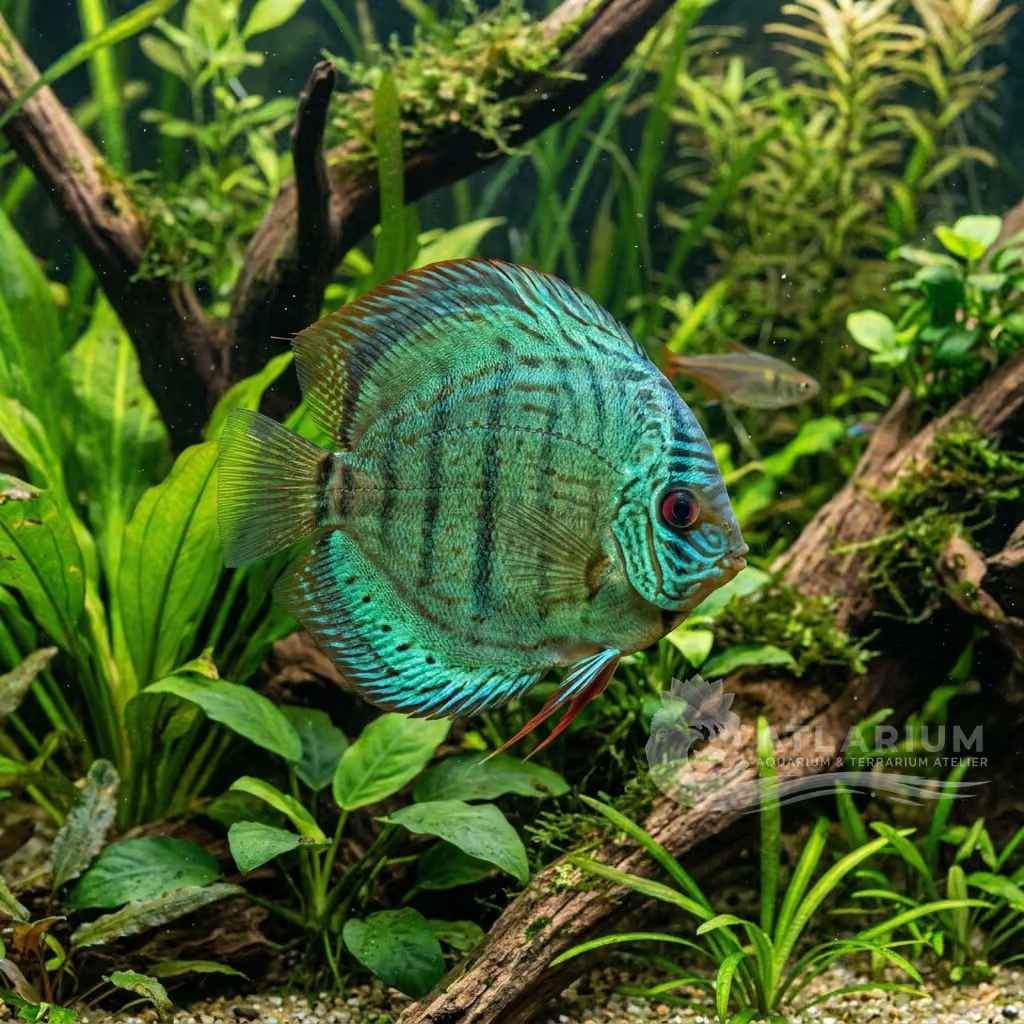
The Discus is the legendary "King" of the freshwater aquarium. As large as a dessert plate (20 cm), it moves with hypnotic slowness and majesty. Parents feed their young via a skin mucus, in one of nature's most moving displays. However, it is a fish for experts only. The King is paranoid, fragile, and needs extreme thermal conditions (28-30°C) to survive. It does not tolerate fast tankmates that steal its food and needs schools of at least 6 to dilute internal hierarchies, otherwise the leader will bully the lowest-ranking fish to death.
28 - 32 °C
5 - 6.5
Eau douce
Milieu
20 cm
>= 300 L
>= 5
1 - 5 dGH
1 - 3 dKH
25 - 105 ppm
39 - 164 uS/cm

Description de l'espèce

Soins, reproduction et cohabitation

Origine et répartition géographiques
Origine

Profil de poisson
- Tempérament
- Peaceful
- Heckel Discus are famously sensitive, shy, and require a stable, quiet environment to thrive. They are majestic and serene when comfortable, but highly prone to stress-induced illnesses if their strict needs are not met. They build a noticeable rapport with their caretaker, often coming to the glass to beg for food.
- Régime alimentaire
- Carnivore
- Their natural diet consists of insects, crustaceans, and plant detritus found in flooded forests. In the aquarium, they require a varied, high-quality diet of frozen bloodworms, brine shrimp, and specialized discus formulations. Ensuring their diet includes high-quality vitamins is crucial for maintaining their health and vibrant barring.
- Espérance de vie
- 10-15 years
- Taille adulte
- 20 cm
- Ratio des sexes
- Pair
- They should be kept in groups of at least 5 to 6 to allow for natural socialization and pair formation. A clear pecking order will establish itself within the group, which spreads out minor aggression. Keeping them in too small a group often leads to the weakest fish being relentlessly bullied.
- Fréquence d'alimentation
- Twice daily
- Adult Heckel Discus should be fed two to three times daily with high-quality foods. Juveniles require intense feeding schedules, up to five times a day, to achieve their full growth potential. Care must be taken not to overfeed to the point of spoiling the water quality.
- Charge biologique
- Medium to High
- The Heckel Discus produces a substantial bioload, necessitating stringent aquarium maintenance. Because they are notoriously sensitive to dissolved waste, heavy biological filtration and pristine water conditions are non-negotiable. Frequent and large water changes are essential to keep nitrate levels virtually undetectable.
- Courant
- Stagnant
- They demand very low water flow, mimicking the stagnant or slow-moving blackwater rivers of their origin. Strong currents cause severe stress and physical exhaustion. Use spray bars or baffles to minimize water turbulence while maintaining adequate filtration and oxygenation.
- Risque de saut
- Yes
- While not considered active jumpers, they may startle easily and attempt to escape the tank if panicked. A sturdy, tight-fitting lid is essential to prevent tragic accidents. Sudden lighting changes or loud external noises are the most common triggers for jumping behavior.
- Reproduction
- Oviparous
- Breeding the true Heckel Discus is considered one of the pinnacles of the freshwater hobby due to its extreme difficulty. They require perfectly replicated blackwater conditions, extremely low pH, and high temperatures to induce spawning. Like other Discus, parents feed their fry via a nutrient-rich mucosal secretion on their skin.
- Compatibilité et compagnons
- Community
- They are peaceful but very sensitive, requiring tank mates that will not outcompete them for food or cause them anxiety. Best kept in a species-only tank or with very placid, warm-water species like Rummy-nose tetras or small Loricariids. Extremely active or aggressive fish will force them into hiding and cause detrimental stress.
- Niveau dans le bac
- Middle
- They spend the vast majority of their time in the mid-levels of the aquarium. They prefer to navigate gracefully between vertical structures like driftwood branches that mimic submerged tree roots. They will occasionally forage on the substrate but avoid the top layer of the water.

Modèles et paramètres scientifiques
Fenêtre sur les données scientifiques officielles de l’espèce
- Niveau trophique
- 2,9 ± 0,33 se
- Résilience
- Élevée (moins de 15 mois)
- Singularité phylogénétique (PD50)
- 0.625
- Relation bayésienne longueur-poids
- a = 0.02692, b = 3.02
- VulnérabilitéVulnérabilité faible (10 / 100)

Galerie d'images
Images sous licence liées à l'espèce ou, lorsqu'elles sont indiquées, au taxon représentatif le plus proche.

Espèces associées
Recommandations regroupées par proches parents, compagnons et soins similaires.