Parnaíba Eartheater
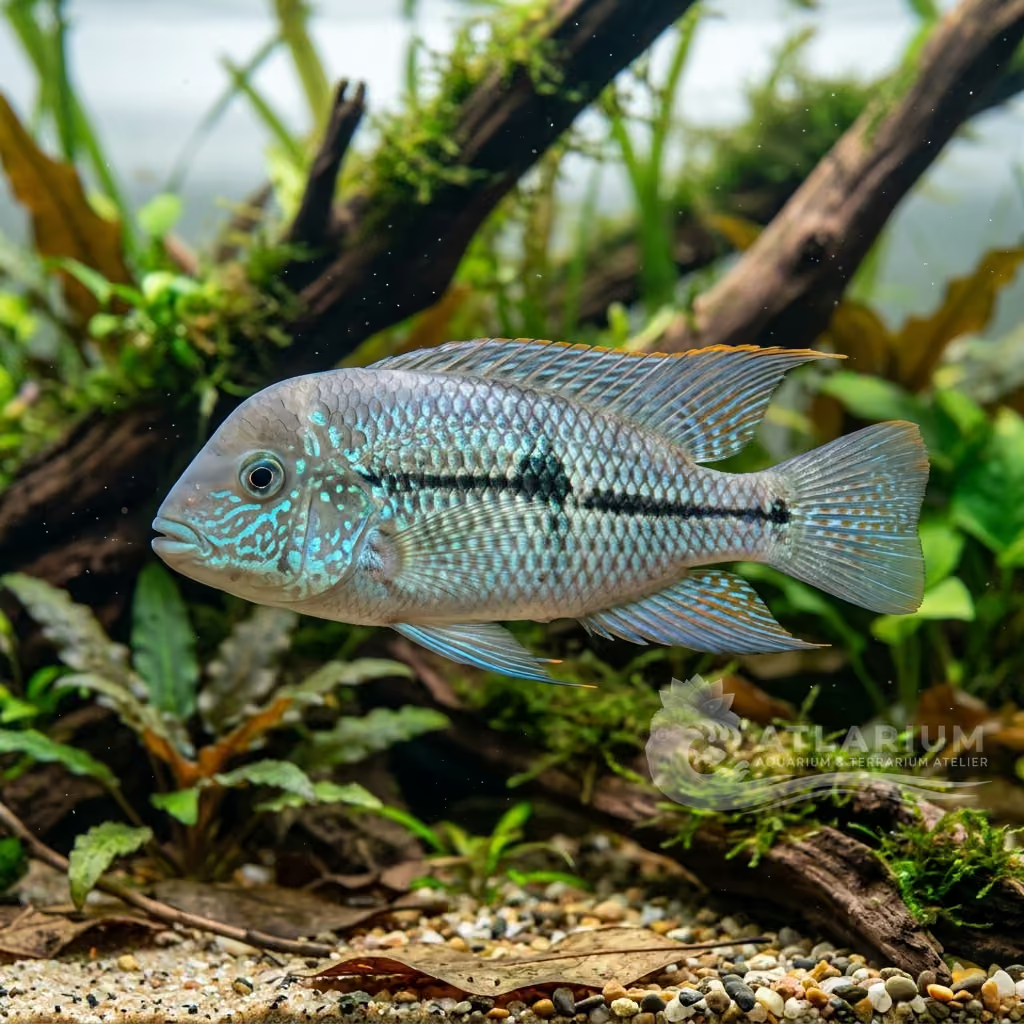
Geophagus parnaibae
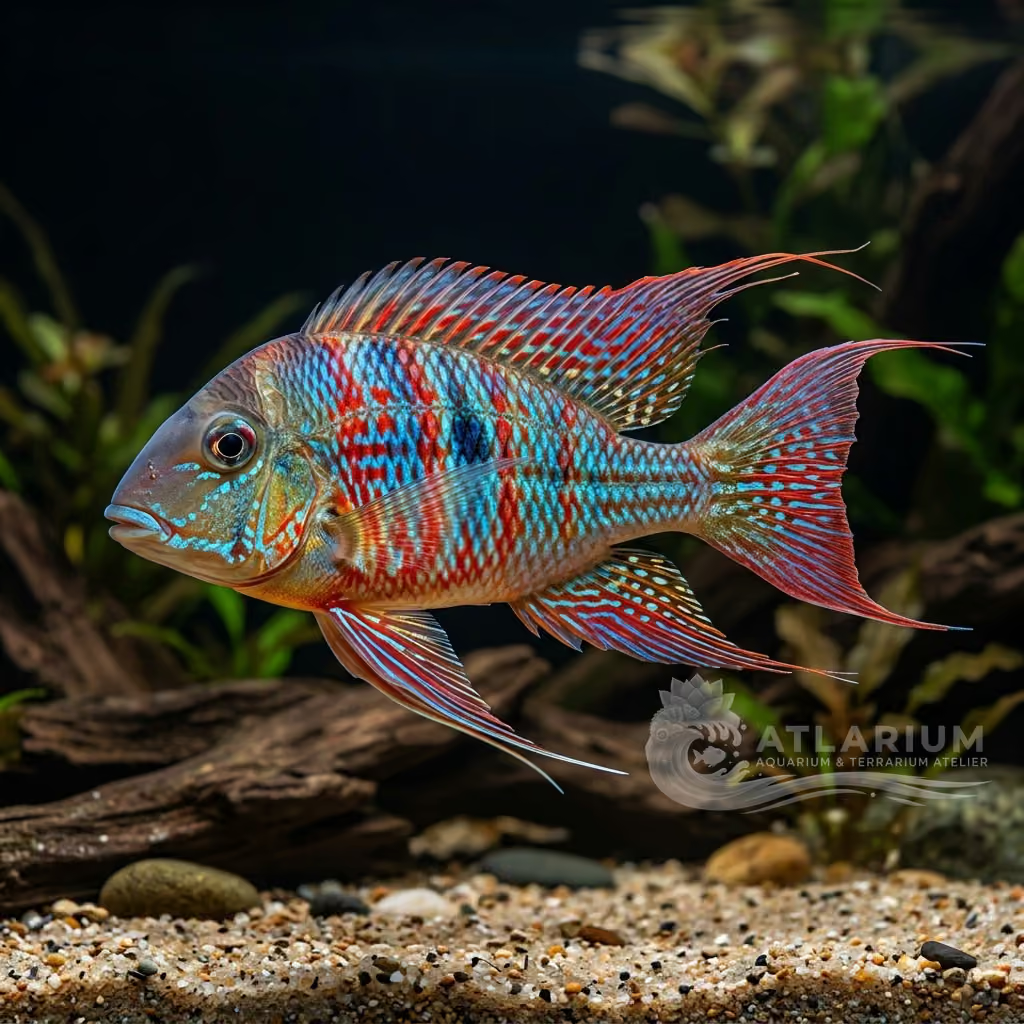
The 'Compact Parnaíba Sifter' (14-16 cm). The parnaibae is the miniature jewel of the large Eartheaters. It grows to barely 15 cm (6 inches) in length, retaining the protrusible lips and benthic vacuum cleaner habits of its enormous cousins. Rustic and peaceful, it lives in tireless schools that transform the sandy bottom layout every day. Perfect for community tanks from 120 cm (4 feet) and up, it readily accepts even medium-hard tap waters typical of its river of origin.
Température de l’eau
25 - 30 °C
Valeur du pH
6 - 7.5
Type d'eau
Eau douce
Niveau dans le bac
Fond
Taille adulte
15 cm
Volume minimal du bac
>= 180 L
Groupe minimal
6
GH
2 - 12 dGH
KH
1 - 6 dKH
TDS
40 - 240 ppm
Conductivité
63 - 375 uS/cm

Description de l'espèce
Geographical Origin and Habitat: Endemic to the Parnaíba River basin (Northeast Brazil). In nature it frequents the classic clear water biotopes with moderate currents and immense banks of fine sand in which it sifts its food.
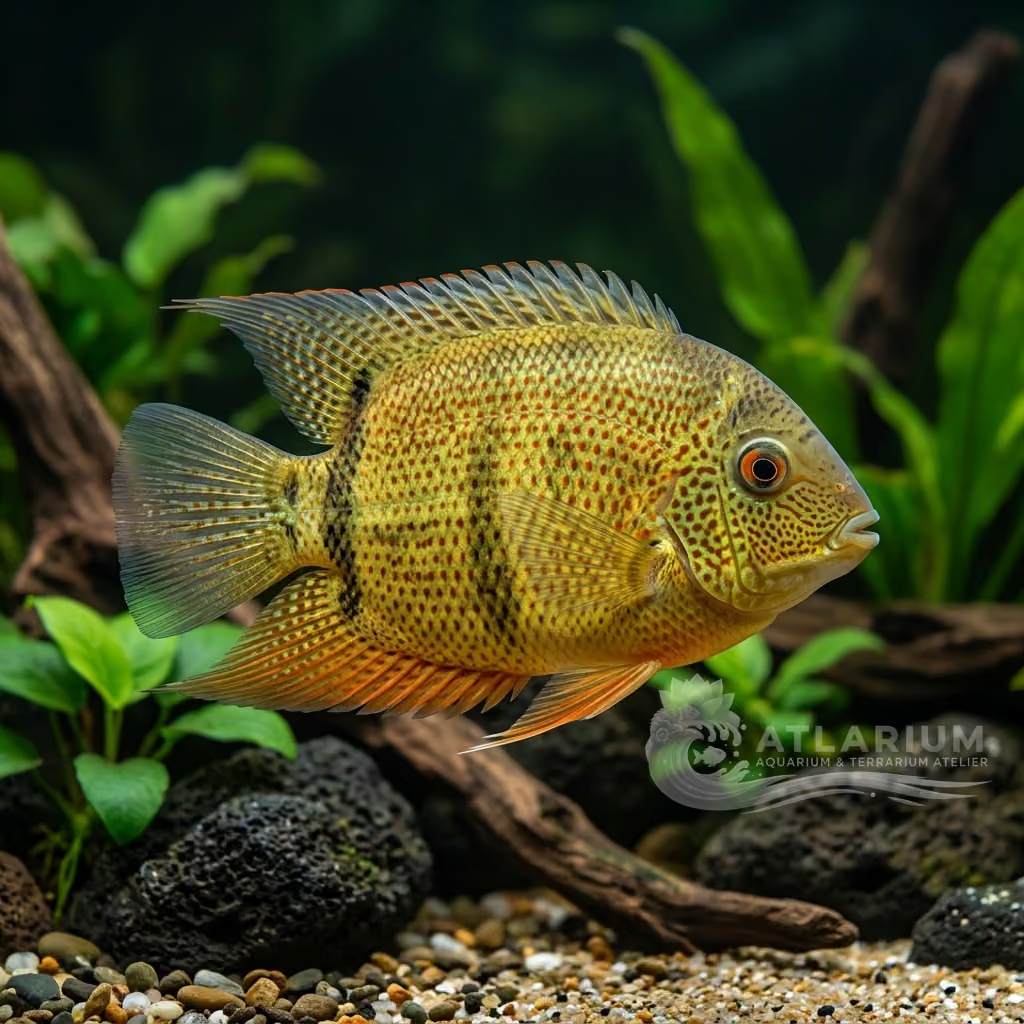
Taxonomy and Morphology: Parnaíba Eartheater (Geophagus parnaibae). It is the smallest of the "surinamensis" complex. It possesses the classic slender and compressed "horse head" shape, but stops at only 14-15 cm (5.5-6 inches) in size.
Social Behavior: A nano-giant cichlid, peaceful and gregarious. Must be kept in groups of at least 6 individuals; it wastes away solitary. Maintains a stable hierarchy through "lip-locking" (kisses) and bloodless lateral displays.
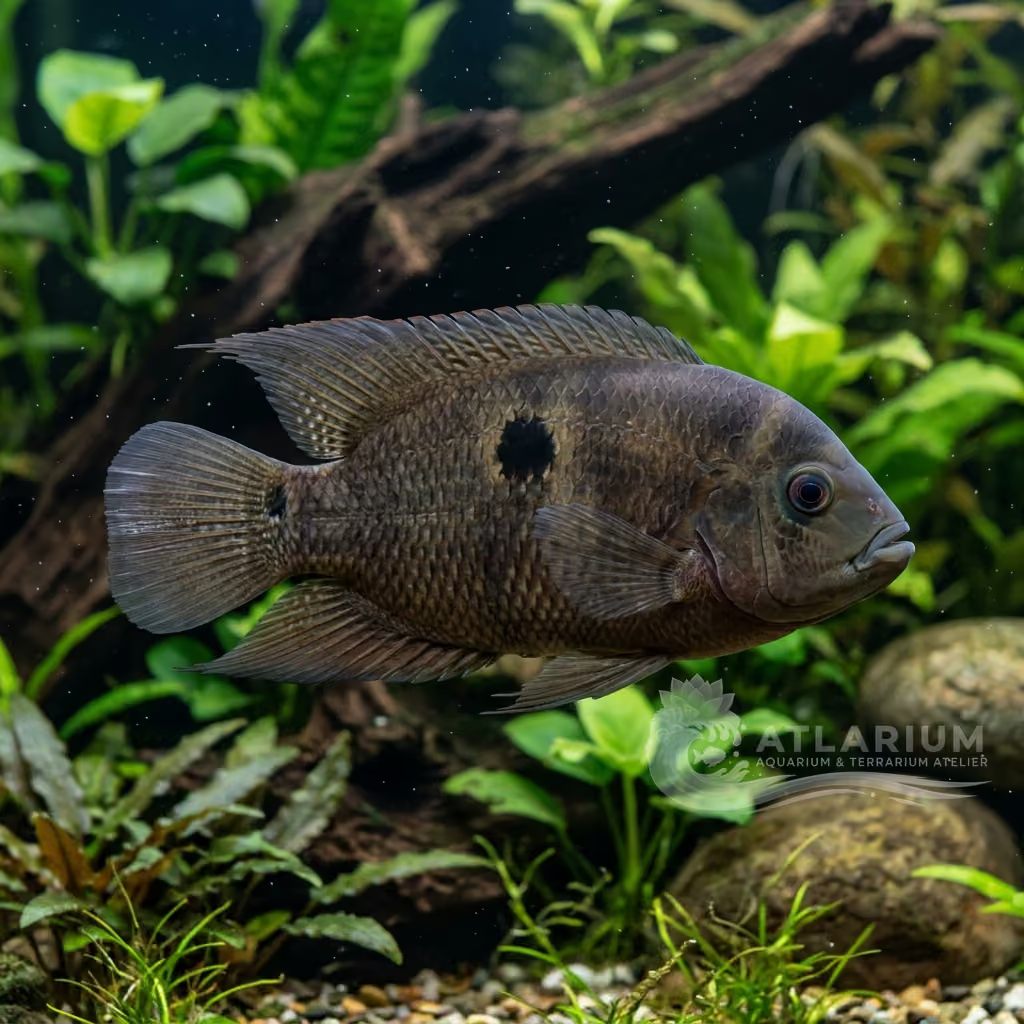
Coloration and Sexual Dimorphism: Silvery-olive background, but in reproduction it "explodes" in iridescent turquoise, gold and red horizontal stripes, especially on the gill operculum. Has the classic lateral black spot. Males slightly larger and with pointed filaments.

Soins, reproduction et cohabitation
Aquarium Setup: Paradise for "only" 120 cm (48 inches) aquariums that cannot host large Geophagus. Very fine sand (10 cm / 4 inches thick), branches and dry leaves. NO sharp quartz. Dimmed lighting and gentle current.
Diet and Feeding: Tireless benthic sifter. Sinks its snout into the sand swallowing it to filter micro-prey. Offer bloodworms, washed tubifex and sinking vegetable and protein micro-pellets. Eats very slowly, do not pair with voracious fish.
Water Quality: Very sensitive, like all Geophagus, to high nitrate concentrations. Requires pristine water; the accumulation of dirt in the sand generates lethal necrosis (Hole-in-the-head disease).
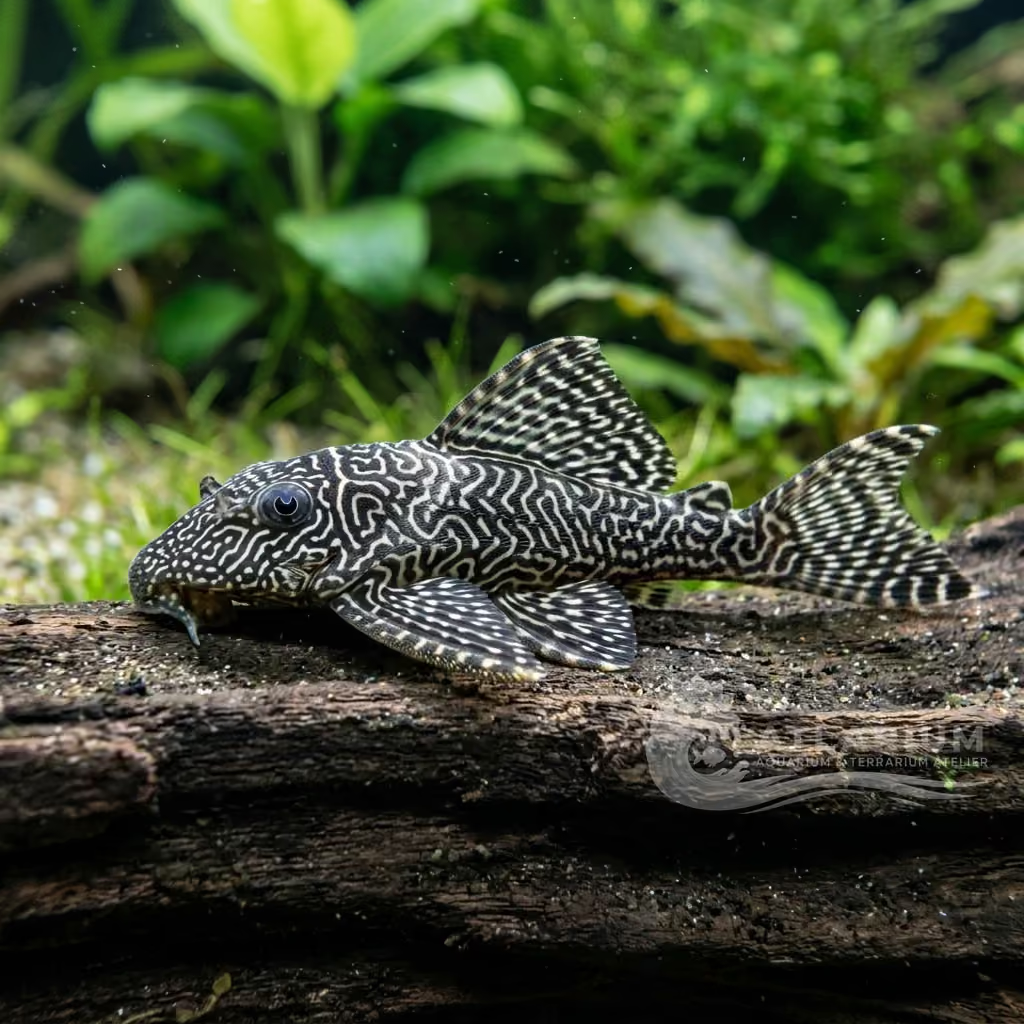
Compatibility and Cohabitation: Ideal companion for large South American community tanks, together with Corydoras (which it tolerates), small loricariids and large schools of Tetras (Cardinals, Rummy Nose). DO NOT pair with aggressive cichlids.
Aquarium Breeding: Biparental larvophile mouthbrooders. The eggs (about 100) are laid on a hard surface (a flat root or a stone). After 2-3 days of fanning, at hatching, they are swallowed and brooded in the mouth by the parents for 2 weeks.
Risks and Diseases: Gill wear and starvation if housed in aquariums with coarse gravel that it cannot chew, resulting in stress, loss of color and digestive blockages.

Origine et répartition géographiques
Endemic to the Parnaíba River basin (Northeast Brazil). In nature it frequents the classic clear water biotopes with moderate currents and immense banks of fine sand in which it sifts its food.
Origine
Océans tropicaux et récifsAmazonie, Orénoque et Guyanes

Profil de poisson
- Tempérament
- Semi-aggressive
- It is a mild-mannered cichlid. Unprovoked aggression is very rare. It is a wonderful centerpiece fish.
- Régime alimentaire
- Omnivore
- It is an eartheater. Feed sinking pellets and frozen bloodworms. A fine sand substrate is mandatory.
- Espérance de vie
- 10 years
- Taille adulte
- 15 cm
- Ratio des sexes
- Pair
- Keep them in groups. This diffuses natural aggression. Pairs will emerge as they mature.
- Fréquence d'alimentation
- Twice daily
- It constantly sifts the sand. Feed multiple small meals daily. This mimics natural continuous foraging.
- Charge biologique
- Low to Medium
- This fish produces a high bioload. Robust biological filtration is essential. Frequent water changes are necessary.
- Courant
- Stagnant
- It originates from riverine environments. It prefers moderate water flow. Provide resting areas with calm water.
- Risque de saut
- Yes
- It is a bottom dweller. It can jump if startled. A secure lid is always recommended.
- Reproduction
- Oviparous
- Many are mouthbrooders. Parents fiercely guard eggs and fry. Breeding pairs form naturally over time.
- Compatibilité et compagnons
- Semi-aggressive
- It is generally peaceful. It fits well in community tanks. It becomes territorial during spawning.
- Niveau dans le bac
- Bottom
- It stays at the bottom. It continuously sifts the sand. A large footprint is required.

Modèles et paramètres scientifiques
FishBase
Fenêtre sur les données scientifiques officielles de l’espèce
FishBase v25.04Données synchronisées le : 15/06/2026
- Niveau trophique
- 2,5 ± 0,1 se
- Résilience
- Élevée (moins de 15 mois)
- Singularité phylogénétique (PD50)
- 0.5
- Relation bayésienne longueur-poids
- a = 0.02042, b = 3.02
- VulnérabilitéVulnérabilité faible (10 / 100)

Espèces associées
Recommandations regroupées par proches parents, compagnons et soins similaires.