Hypselecara coryphaenoides
Hypselecara coryphaenoides
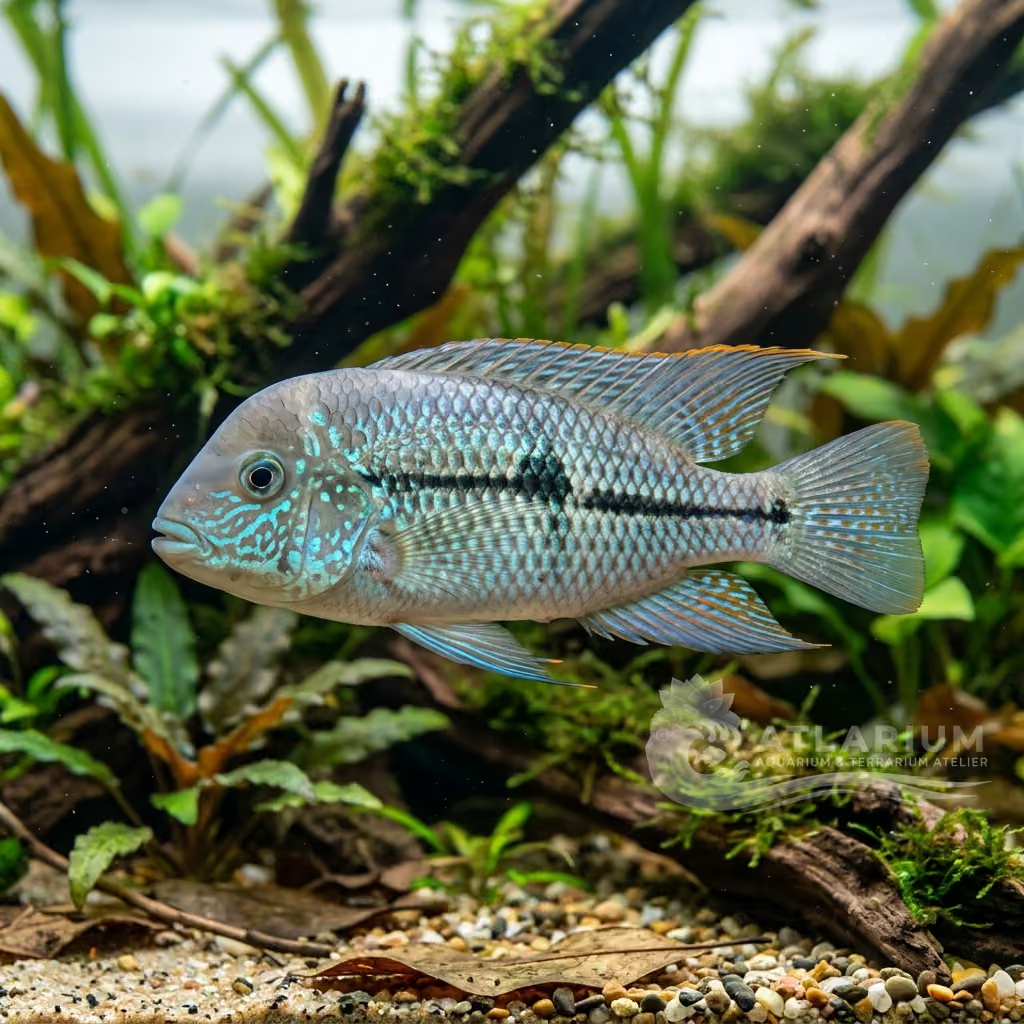
The unobtainable 'Rio Negro Chocolate Cichlid' (20-25 cm). Direct (and often confused) cousin of H. temporalis. Less known and widespread, this cichlid shares the exceptional mildness of the family and the high disc shape, but differs in the rigid need for amber and acidic waters. Features darker and more purplish chromatic shades. A jewel for peaceful and unplanted Blackwater biotopes.
Température de l’eau
25 - 30 °C
Valeur du pH
5 - 7
Type d'eau
Eau douce
Niveau dans le bac
Milieu
Taille adulte
25 cm
Volume minimal du bac
>= 300 L
Groupe minimal
>= 1
GH
1 - 10 dGH
KH
1 - 5 dKH
TDS
25 - 200 ppm
Conductivité
39 - 313 uS/cm

Description de l'espèce
Geographic Origin and Biotope: FishBase records Hypselecara coryphaenoides as a freshwater, tropical, benthopelagic species native to South America, in the Amazon and upper Orinoco basins. It lists a pH range of 5.0–6.0, dH 0.5–1.0, and temperature of 22–30 °C.
Taxonomy and Morphology: FishBase documents a maximum length of 16.1 cm SL.
Social Behaviour: This recovery makes no source-backed claim about social behaviour beyond the facts cited above.
Colouration and Sexual Dimorphism: This recovery makes no source-backed claim about colouration or sexual dimorphism beyond the facts cited above.

Soins, reproduction et cohabitation
Verified habitat data: FishBase records Hypselecara coryphaenoides as a tropical freshwater, benthopelagic species, with pH 5.0–6.0, dH 0.5–1 and temperature 22–30 °C. The source places it in blackwater rivers and reports that both parents guard eggs and larvae.

Origine et répartition géographiques
Cette espèce provient de : Sud America (Bacino del Rio Negro, Alto e Medio Orinoco).
Origine
Amazonie, Orénoque et Guyanes

Profil de poisson
- Tempérament
- Semi-aggressive
- They are surprisingly peaceful and easygoing compared to other South American cichlids of similar size. They move slowly and deliberately, observing their environment. Aggression is typically only displayed when defending their fry during breeding.
- Régime alimentaire
- Omnivore
- They are omnivores with a hearty appetite for both plant and animal matter. Offer a staple diet of high-quality cichlid pellets, supplemented with earthworms, shrimp, and blanched vegetables. Variety ensures they maintain vibrant coloration and robust health.
- Espérance de vie
- 10-12 years
- Taille adulte
- 25 cm
- Ratio des sexes
- Pair
- Males generally grow significantly larger and develop a pronounced nuchal hump on their forehead as they mature. Females remain slightly smaller and lack the prominent hump. Keeping them in a group as juveniles allows a natural pair to form.
- Fréquence d'alimentation
- Twice daily
- Adults should be fed once or twice a day with carefully measured portions. Do not overfeed, as they are prone to overeating and subsequent digestive issues. Fasting them one day a week can be beneficial for their digestion.
- Charge biologique
- Medium to High
- As a large cichlid, they produce a considerable amount of waste, equating to a high bioload. Strong, oversized filtration systems are required to handle their output effectively. Consistent and substantial weekly water changes are a strict requirement.
- Courant
- Stagnant
- They favor sluggish to moderate water flow, typical of their natural Amazonian backwater habitats. Turbulent currents should be avoided to minimize stress. Gentle circulation that keeps the water highly oxygenated is ideal.
- Risque de saut
- Yes
- While not notorious jumpers, their sheer size means sudden startled movements can cause them to breach the surface. A sturdy, weighted aquarium lid is recommended. This prevents water splashing out and ensures the fish remain safely inside.
- Reproduction
- Oviparous
- They are substrate spawners that form strong monogamous pair bonds. The female lays eggs on a flat, cleaned stone or piece of driftwood. Both parents are fiercely protective of the eggs and the resulting fry.
- Compatibilité et compagnons
- Semi-aggressive
- Despite their large size, they are relatively mild-mannered for cichlids. They can be kept with other peaceful large cichlids, large characins, and sizable catfish. Avoid keeping them with very small fish that could easily fit into their mouths.
- Niveau dans le bac
- Middle
- They utilize the middle and lower levels of the aquarium. The tank setup should include large open swimming areas alongside complex driftwood structures for shelter. They may occasionally rearrange small decor or uproot delicate plants.

Modèles et paramètres scientifiques
FishBase
Fenêtre sur les données scientifiques officielles de l’espèce
FishBase v25.04Données synchronisées le : 15/06/2026
- Niveau trophique
- 3,8 ± 0,62 se
- Résilience
- Élevée (moins de 15 mois)
- Singularité phylogénétique (PD50)
- 0.75
- Relation bayésienne longueur-poids
- a = 0.02692, b = 3.02
- VulnérabilitéVulnérabilité faible (10 / 100)

Espèces associées
Recommandations regroupées par proches parents, compagnons et soins similaires.