Adonis Pleco
Acanthicus adonis
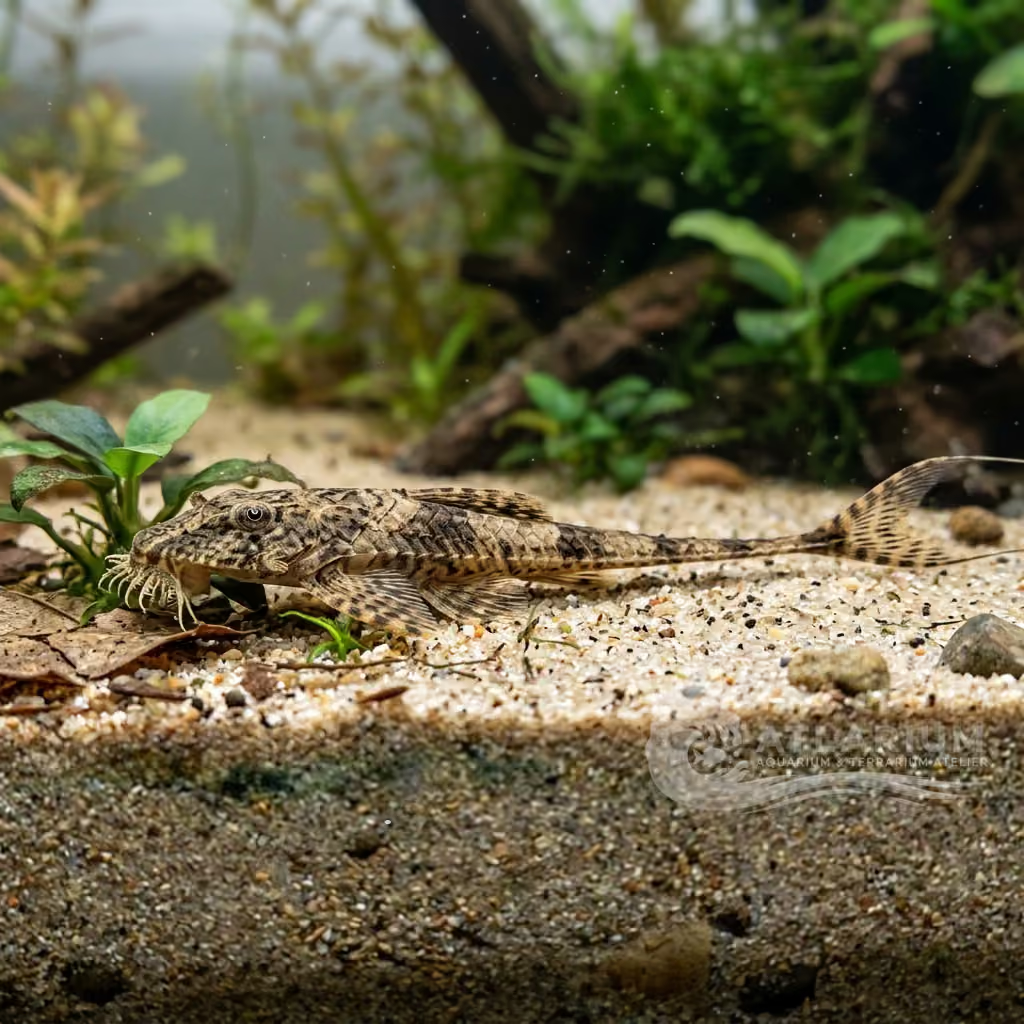
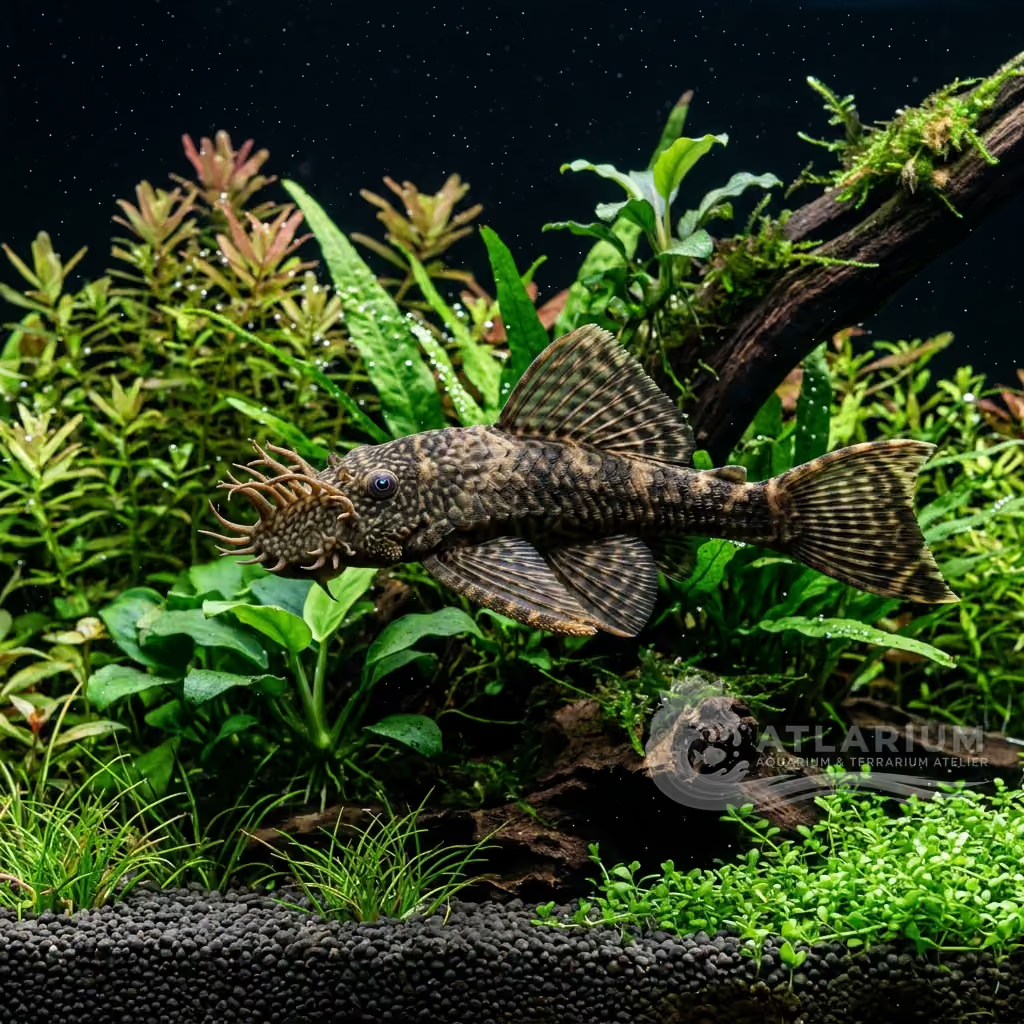
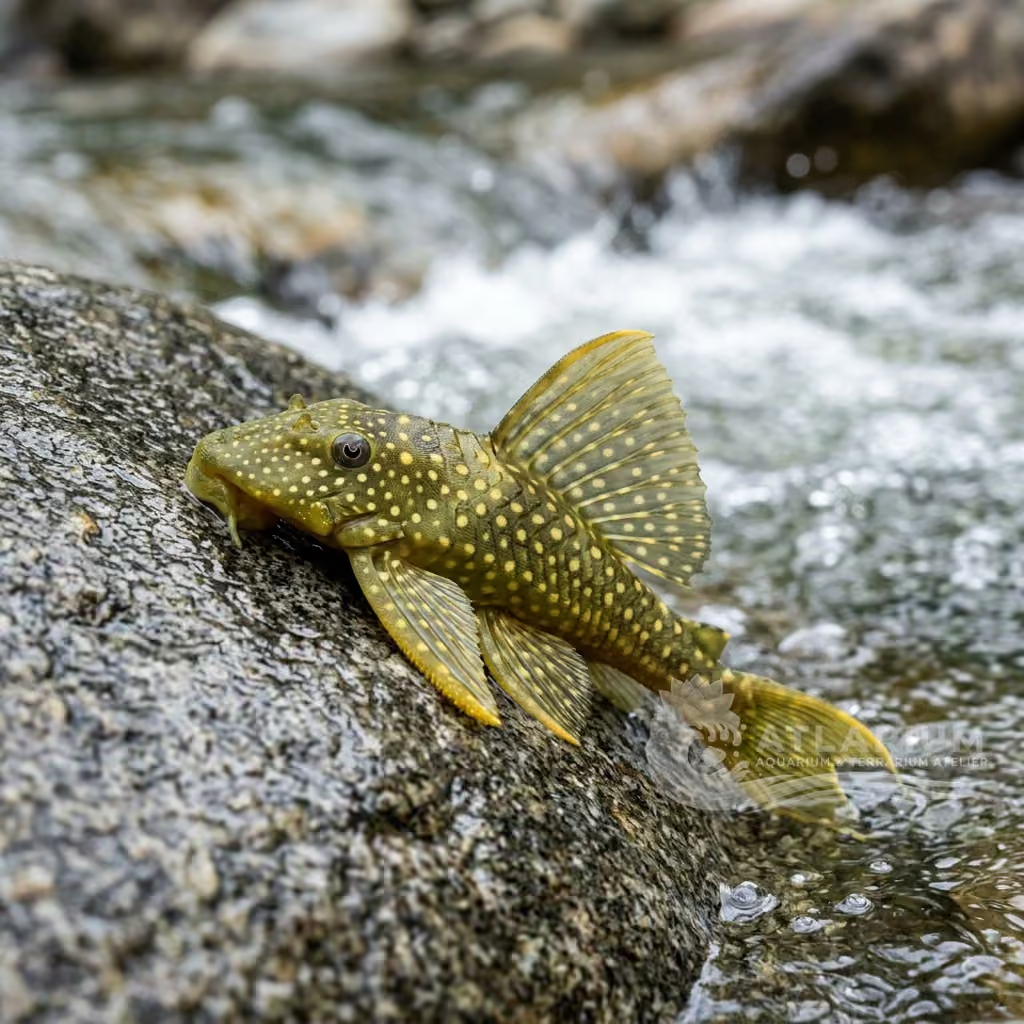
The Adonis Pleco (Acanthicus adonis) is one of the largest armored fish in the world, a true aquarium 'Monster Fish'. Often sold very young with an enchanting deep black pattern covered with huge shiny white dots, as it grows it loses the dots to reveal a menacing colossus, armored with spines and equipped with huge lyre-shaped filamentous fins. Reaching (and often exceeding) the incredible length of 100 cm (1 meter / 3 feet), this Leviathan has no place in normal home aquariums and is destined exclusively for giant public tanks or indoor tropical ponds dedicated to river monsters.
23 - 28 °C
6 - 7.5
Eau douce
Fond
100 cm
>= 2 000 L
>= 1
4 - 15 dGH
2 - 7 dKH
80 - 295 ppm
125 - 461 uS/cm

Description de l'espèce

Soins, reproduction et cohabitation

Origine et répartition géographiques
Origine

Profil de poisson
- Tempérament
- Aggressive
- As juveniles, Adonis Plecos can be relatively peaceful, but they become highly aggressive and territorial as they mature. Adult specimens will not tolerate other bottom-dwellers, especially other plecos, and can easily injure or kill tank mates in restricted spaces. They are known to assert dominance violently, using their spiny bodies and odontodes as weapons, which makes them unsuitable for typical community aquariums.
- Régime alimentaire
- Omnivore
- *Acanthicus adonis* is an opportunistic omnivore with a strong preference for protein-rich foods as it grows. Their diet should consist of high-quality sinking catfish pellets, algae wafers, and fresh or frozen meaty foods like bloodworms, prawns, and mussels. They also benefit from blanched vegetables like zucchini or cucumber, and the presence of natural driftwood is essential for them to rasp on to aid digestion.
- Espérance de vie
- 15-20 years
- Taille adulte
- 100 cm
- Ratio des sexes
- Solitary
- Due to their highly territorial and aggressive nature, *Acanthicus adonis* is best kept singly in a home aquarium. In massive, public-aquarium-sized setups, they can sometimes be kept in groups, provided there are plenty of visual barriers and caves to define individual territories. Standard sex ratios are difficult to establish or recommend because males are highly bellicose and will actively fight to the death over territory, regardless of sex.
- Fréquence d'alimentation
- Twice daily
- To sustain their growth and large mass, Adonis Plecos should be fed once or twice daily. Because they are primarily nocturnal, it is best to feed them shortly before or after the aquarium lights are turned off. Feeding smaller portions multiple times can help ensure they consume all the food, preventing uneaten food from decaying and negatively impacting the water chemistry.
- Charge biologique
- Extreme
- Due to its massive adult size, which can easily exceed 60 centimeters in captivity, *Acanthicus adonis* produces an extremely large amount of biological waste. Maintaining pristine water conditions requires a highly efficient, oversized filtration system, preferably with sump setups and frequent water changes. Without robust filtration and strict maintenance, the massive bioload will rapidly degrade water quality, causing lethal spikes in ammonia and nitrates.
- Courant
- Strong
- Originating from major river systems in South America, *Acanthicus adonis* has a strong preference for moderate to strong water flow. This current replicates their natural environment and helps keep the water well-oxygenated, which is vital for their respiratory health. Utilizing powerful powerheads or wavemakers is highly recommended to simulate these riverine conditions and keep the fish active and healthy.
- Risque de saut
- Yes
- Although *Acanthicus adonis* is a heavy, bottom-dwelling catfish, it still poses a notable jump risk, particularly when startled or during territorial disputes. Their sheer size and power mean that a sudden flight response can lead to them leaping out of an uncovered aquarium or cracking lightweight covers. A heavy, tight-fitting, and secure lid is absolutely mandatory to prevent accidents and ensure the fish remains safely inside the tank.
- Reproduction
- Oviparous
- Breeding *Acanthicus adonis* in captivity is exceptionally difficult and extremely rare in home aquariums due to the massive territory they require. They are cave spawners, with the male selecting and guarding a large cave or crevice where spawning takes place. After the female deposits the eggs, the male takes sole responsibility for guarding and fanning the nest until the fry hatch and become free-swimming.
- Compatibilité et compagnons
- Highly aggressive
- Due to its extreme territoriality, the Adonis Pleco is incompatible with other bottom-dwelling fish, including members of its own species and other large catfish. Suitable tank mates are limited to large, robust open-water species like arowanas, large cichlids, or pacus that swim in the upper layers of the water column. Any attempt to house them with smaller or peaceful fish will likely result in the tank mates being severely harassed, injured, or killed.
- Niveau dans le bac
- Bottom
- The Adonis Pleco is primarily a bottom-dwelling species that spends most of its time grazing on substrates, driftwood, and rocks. They will occasionally climb the aquarium glass or large decorative structures to search for food or establish hiding spots. Because of their size and heavy bodies, they require a vast bottom footprint with plenty of open floor space alongside secure cave structures.

Modèles et paramètres scientifiques
Fenêtre sur les données scientifiques officielles de l’espèce
- Résilience
- Moyenne (1,4 - 4,4 ans)
- Singularité phylogénétique (PD50)
- 0.75
- Relation bayésienne longueur-poids
- a = 0.01549, b = 2.96
- VulnérabilitéVulnérabilité faible (15 / 100)

Espèces associées
Recommandations regroupées par proches parents, compagnons et soins similaires.