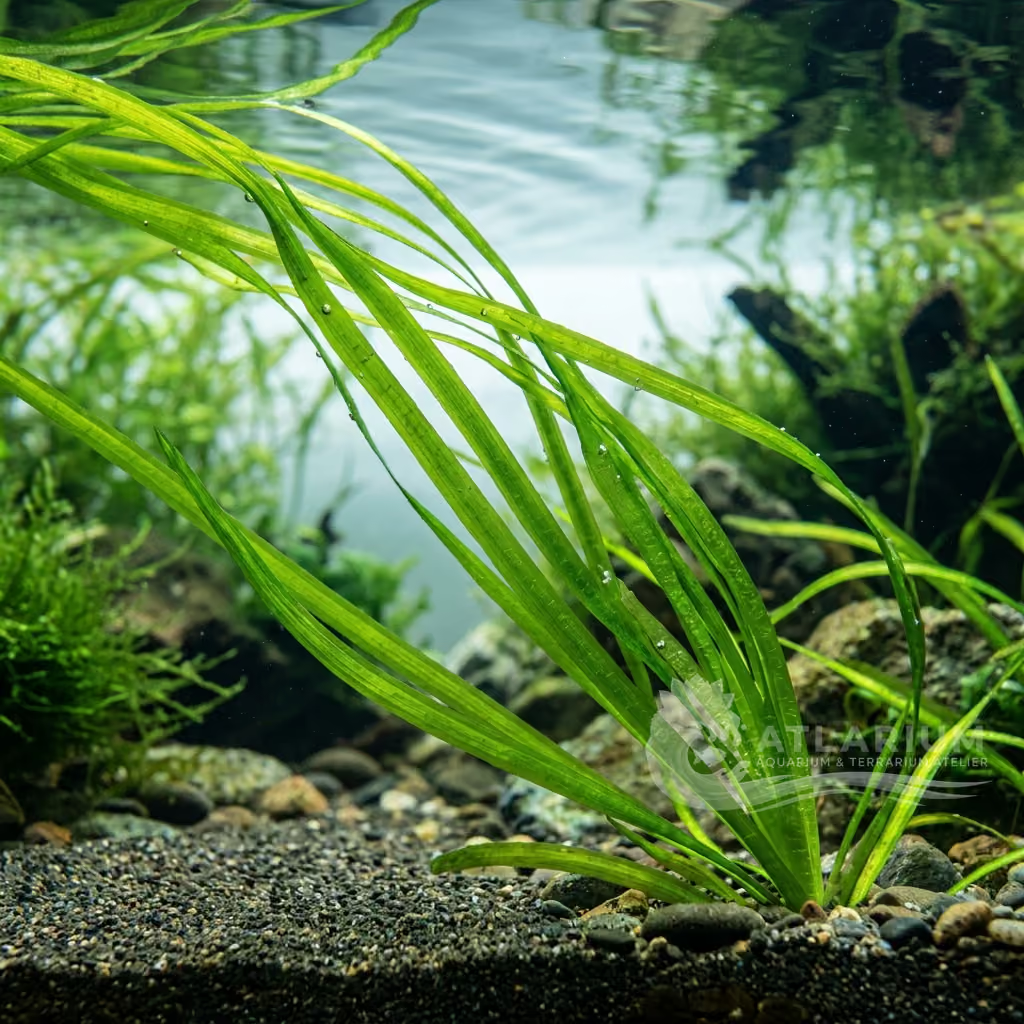
Shinnersia rivularis
Shinnersia rivularis
Shinnersia rivularis is a very fast-growing stem plant, ideal for the aquarium background. It forms dense thickets of bright green foliage, contributing a lush and natural appearance to the layout.
Water Temperature
22 - 28 °C
pH Value
5 - 8
Water type
Freshwater
Light
Low to High
CO2
Medium - High
Expected height
60 cm
Expected width
25 cm
KH
2 - 21 dKH

Species description
Geographical Origin and Habitat: Native to the riverine and marshy regions of North America, specifically Mexico and southern Texas, Shinnersia rivularis thrives in shallow, slow-moving aquatic environments. It is often found both fully submerged and emergent along the banks of rivers, ponds, and ditches. Its remarkable adaptability to various water conditions attests to its robustness and versatility in nature.
Taxonomy & Genetics: Shinnersia rivularis belongs to the Asteraceae family, which is unusual for an aquatic plant, as most members of this family are terrestrial. This makes it a botanically interesting and unique genus within aquascaping. Its scientific name, Shinnersia, honors botanist Lloyd H. Shinners, while 'rivularis' refers to its riverine habitat.
Physical Structure: This plant presents as a robust green stem from which lobed leaves resembling small oak leaves emerge, giving rise to its common name "Mexican Oak Leaf." It can reach considerable heights in the aquarium, developing a secondary root system along the stems that aids in anchorage and nutrient absorption. Its structure allows it to quickly form a dense vegetative mass.
Color & Texture: Shinnersia rivularis leaves display a bright green hue, which can vary depending on light intensity and nutrient availability. Under high lighting, or with specific deficiencies, some parts of the leaves may take on lighter shades or even slight reddish veins, although green is the dominant color. Their texture is soft and delicate, lending a light and airy appearance to the submerged plant.

Care, breeding and tankmates
Lighting & CO2: Shinnersia rivularis is extremely flexible regarding lighting requirements, thriving in both low and high light conditions. However, higher light intensity will promote more compact growth and a more vivid color, reducing internode elongation. CO2 injection is not mandatory but significantly stimulates its already very rapid growth rate, leading to a more robust and lush plant.
Nutrition & Substrate: Being primarily a
Water Chemistry: This plant is remarkably tolerant of a wide range of water parameters, able to thrive in temperatures between 20 and 28 °C, pH between 5.0 and 8.0, and KH between 2.0 and 21.0. Although robust, it is always preferable to maintain stable parameters to avoid unnecessary stress and promote optimal growth. Good water circulation helps distribute nutrients and prevent sedimentation on the leaves.
Space Management & Placement: Shinnersia rivularis is ideally placed in the aquarium background due to its ability to grow quickly and reach considerable heights. Planting it in dense groups creates a lush green wall effect that can conceal equipment or provide a natural contrast to other plants. Its rapid growth requires space management through regular
Pruning: Due to its extremely fast growth, Shinnersia rivularis requires frequent trimming to maintain its desired shape and prevent excessive shading of underlying plants. The tops of the stems can be cut, which can then be replanted into the substrate to propagate the plant or increase density. Pruning stimulates the formation of new lateral shoots, making the plant bushier and fuller.
Risks & Diseases: Shinnersia rivularis is generally a robust plant and resistant to many common aquarium diseases. However, like all plants, it can show signs of stress or nutrient deficiencies, such as yellowing leaves or stunted growth, if it does not receive adequate lighting or fertilization. A sudden change in water conditions can cause slight melting, but it usually recovers quickly with stable conditions.

Geographic origin and distribution
Native to the riverine and marshy regions of North America, specifically Mexico and southern Texas, Shinnersia rivularis thrives in shallow, slow-moving aquatic environments. It is often found both fully submerged and emergent along the banks of rivers, ponds, and ditches. Its remarkable adaptability to various water conditions attests to its robustness and versatility in nature.
Origin
Central America and CaribbeanNorth America

Plant profile
- Placement
- Background
- Place Shinnersia rivularis in the midground or background of the aquarium. It needs enough space to avoid shading neighboring species. Proper placement ensures steady light exposure and water flow.
- Botanical form
- Stem
- Shinnersia rivularis features a distinct structural form with well-defined leaves. Its stem and root structures anchor firmly into the substrate. The overall appearance provides excellent visual texture underwater.
- Growth
- VERY_FAST
- The growth rate of Shinnersia rivularis is generally moderate under optimal conditions. Adding CO2 injection will significantly accelerate its development. However, it can adapt to slower growth in low-tech setups.
- Substrate
- Low
- *Shinnersia rivularis*, commonly known as Mexican oak leaf, is an exceptionally fast-growing stem plant that adapts well to almost any substrate type. Its vigorous roots will anchor quickly in plain gravel, sand, or aqua soil, but the plant draws a significant portion of its nutrients directly from the water column. While a nutrient-rich substrate is not strictly necessary, providing a depth of at least 4 cm ensures the tall, buoyant stems remain securely planted. In bare-bottom setups, it can even be left floating or loosely tethered to hardscape.
- Column fertilization
- Recommended
- Liquid fertilization is very beneficial for Shinnersia rivularis. It absorbs dissolved minerals directly from the water column. Dosing a complete micronutrient fertilizer twice a week is recommended.
- Root fertilization
- None
- A nutrient-rich substrate strongly supports the root system of Shinnersia rivularis. Adding root tabs near its base provides essential macronutrients. This promotes a stronger base and healthier overall growth.
- Trimming
- Regular
- Regular trimming keeps Shinnersia rivularis looking neat and prevents overgrowth. Cut the stems just above a node to encourage branching. Remove any decaying or yellowing leaves to maintain water quality.
- Propagation
- Cuttings
- Propagation of Shinnersia rivularis is straightforward by taking stem cuttings. Replant the healthy cut portions directly into the substrate. They will develop new roots within a week or two.
- Sensitivity
- Moderate
- Shinnersia rivularis is somewhat sensitive to sudden fluctuations in water parameters. It prefers stable temperatures and consistent CO2 levels. Algae can grow on its leaves if lighting is too intense.
- Layout role
- Background
- Shinnersia rivularis plays a crucial role in creating depth in an aquascape. Its unique texture contrasts beautifully with fine-leaved plants. It works well as a focal point or a transition plant.

Related species
Recommendations grouped by close relatives, companion choices, and similar care.