Encyclopaedia
PlantFreshwaterEasy
©AI Generated·Proprietary
Cryptocoryne lutea 'Hobbit'
Cryptocoryne lutea 'Hobbit'
Cryptocoryne lutea 'Hobbit' is an exceptionally small dwarf cultivar. With its tiny, wavy olive-green leaves and slow growth rate, it is the perfect choice for nano aquascapes and vibrant foregrounds.
Class:Liliopsida
Order:Alismatales
Family:Araceae
Genus:Cryptocoryne
Species:Cryptocoryne lutea 'Hobbit'
Share
Check out Cryptocoryne lutea 'Hobbit' on Atlarium
Water Temperature
22 - 28 °C
pH Value
6 - 7.5
Water type
Freshwater
Light
Medium - High
CO2
Medium - High
Expected height
6 cm
Expected width
5 cm
KH
2 - 10 dKH
Species description
Geographical Origin and Habitat: Cryptocoryne lutea 'Hobbit' does not exist in the wild as a natural form, being a cultivar selected in cultivation. The parent species, Cryptocoryne lutea, is native to Sri Lanka, where it inhabits the banks of shaded forest streams and moist floodplains. The 'Hobbit' cultivar was isolated and propagated due to its dwarf mutation, preserving the hardiness and requirements of the mother plant but in miniature dimensions suited for nano-aquascapes.
Taxonomy & Genetics: It belongs to the Araceae family, genus Cryptocoryne. Taxonomically, it is a genetically stable selection of Cryptocoryne lutea. The genetic selection favored an extremely compact growth form and reduced leaf size, with leaves rarely exceeding a few centimeters. This genetic stability ensures that the dwarf traits are consistently passed down through vegetative propagation.
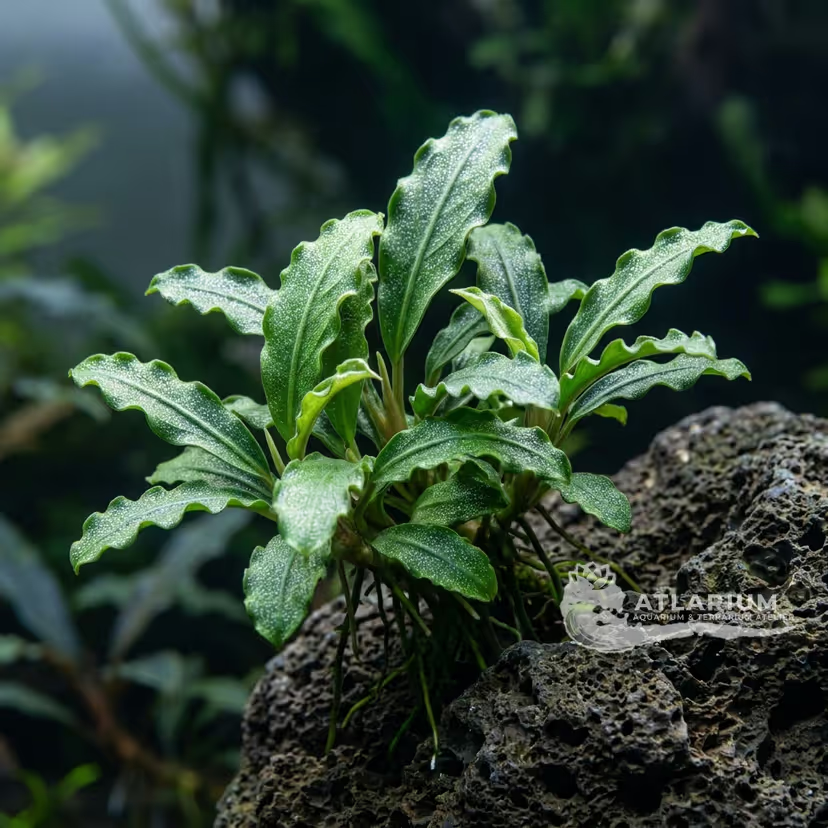
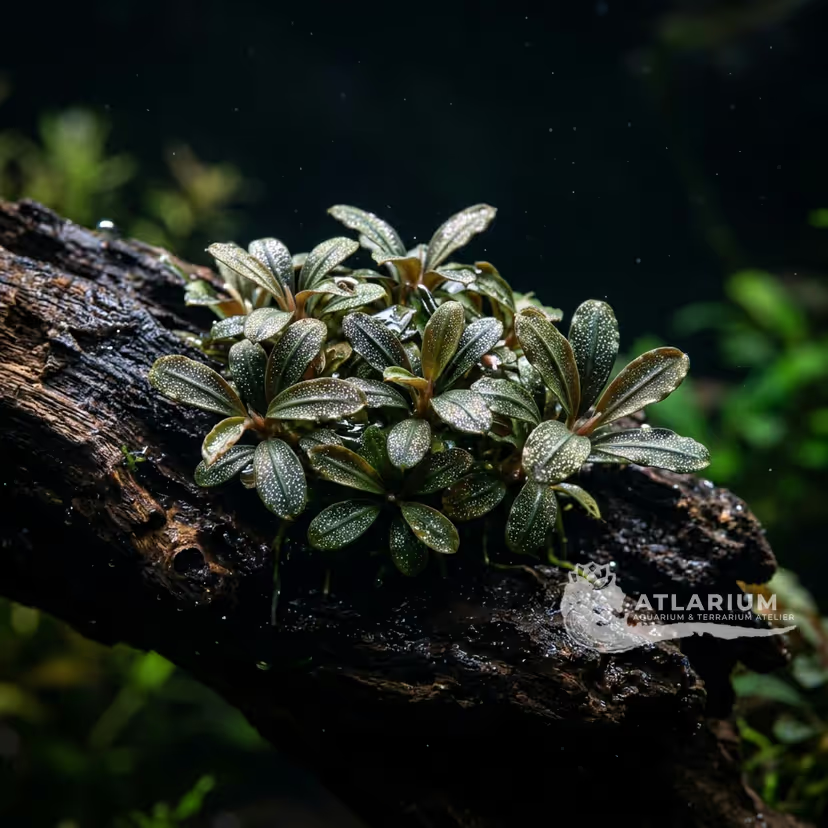
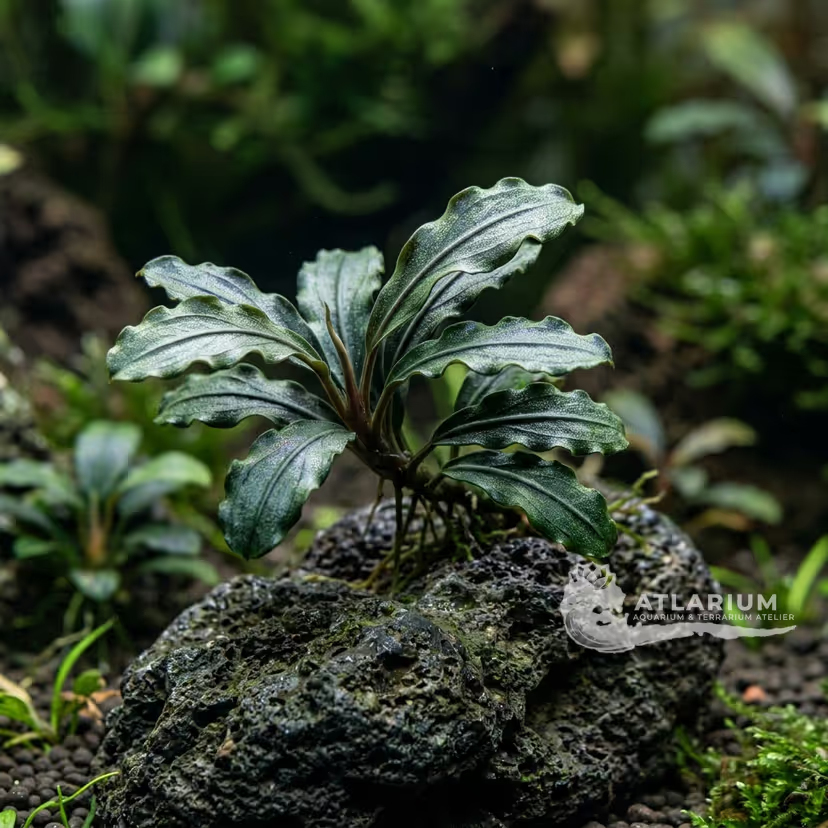
Physical Structure: It features a classic compact and dense rosette structure, formed by small, closely set leaves growing horizontally. The overall height ranges between 4 and 6 cm, making it one of the smallest Cryptocorynes available. The root system, though proportionate to its small size, is well developed and requires a fine substrate to anchor and spread.
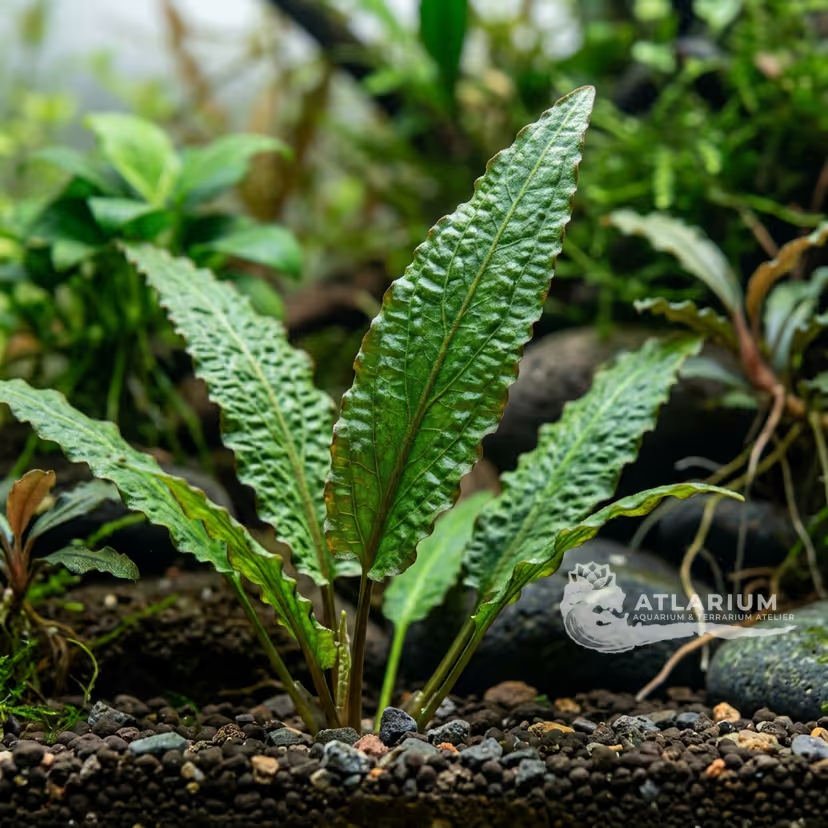
Color & Texture: The leaves are lanceolate-ovate with slightly wavy margins. The color ranges from bright green to olive green with brown or purple hues under moderate to high light, while the leaf underside may display reddish tones. The leaf texture is smooth but thick and leathery despite its miniature size, providing good physical durability.
Care, breeding and tankmates
Lighting & CO2: Tolerates low to moderate light levels, but benefits from moderate lighting which promotes a compact rosette shape and enhances bronze colors. CO2 injection is not strictly mandatory, but a low, steady supply accelerates its slow growth rate and stimulates runner production.
Nutrition & Substrate: Requires a fertile and soft substrate, preferably of fine grain size (such as aquasoil or fine sand). Periodic insertion of root tabs rich in iron and potassium near the root zone prevents leaf yellowing and promotes lateral propagation.
Water Chemistry: Prefers soft to moderately hard water with a KH between 2 and 12 dKH and a neutral to slightly acidic pH (6.0-7.5). It adapts to temperatures between 20°C and 28°C. Avoid sudden changes in conductivity and temperature during water changes.
Space Management & Placement: Ideal for the foreground and corner zones in nano tanks or detailed aquascaping layouts. It is recommended to plant in small groups spaced 1-2 cm apart. Over time, the clusters will connect via runners, forming a dense, charming dwarf carpet.
Pruning: Pruning is minimal due to the slow growth rate. It is sufficient to remove older, yellowing, or damaged outer leaves with tweezers, cutting them near the crown to encourage new central leaves to grow.
Risks & Diseases: Though hardier than many dwarf plants, it can suffer from "Cryptocoryne melt" if exposed to sudden parameter or light shocks. Once planted, avoid relocating it to protect the delicate root system.
Geographic Origin and Distribution
Cryptocoryne lutea 'Hobbit' does not exist in the wild as a natural form, being a cultivar selected in cultivation. The parent species, Cryptocoryne lutea, is native to Sri Lanka, where it inhabits the banks of shaded forest streams and moist floodplains. The 'Hobbit' cultivar was isolated and propagated due to its dwarf mutation, preserving the hardiness and requirements of the mother plant but in miniature dimensions suited for nano-aquascapes.
Origin
Selective breeding and cultivarsSouth and Southeast Asia
Plant profile
- Placement
- No verified data available
- Botanical form
- No verified data available
- Growth
- No verified data available
- Substrate
- No verified data available
- Column fertilization
- No verified data available
- Root fertilization
- No verified data available
- Trimming
- No verified data available
- Propagation
- No verified data available
- Nutrients
- No verified data available
- Sensitivity
- No verified data available
- Layout role
- No verified data available
Image gallery
Licensed images linked to the species or, when marked, to the closest representative taxon.
Related species
Recommendations grouped by close relatives, companion choices, and similar care.