Tanganyika Goby Cichlid
Eretmodus cyanostictus
Very singular 'Goby' cichlid (8 cm) without a functional swim bladder. Spends its life hopping and clinging to the wave-beaten rocks of the coast. Red and blue checkerboard designs, strictly herbivorous and monogamous.
Wassertemperatur
24 - 27 °C
pH-Wert
8 - 9
Wassertyp
Süßwasser
Tankfüllstand
Unten
Erwachsenengröße
9 cm
Mindesttankvolumen
>= 100 L
Mindestgruppe
>= 1
GH
10 - 20 dGH
KH
5 - 10 dKH
TDS
200 - 400 ppm
Leitfähigkeit
313 - 625 uS/cm

Artbeschreibung
Geographical Origin and Habitat: Endemic to Lake Tanganyika, Africa. Lives in the brutal surf zone, constantly crushed against the stones and pebbles where the waves break (up to 1 meter / 3 feet deep).
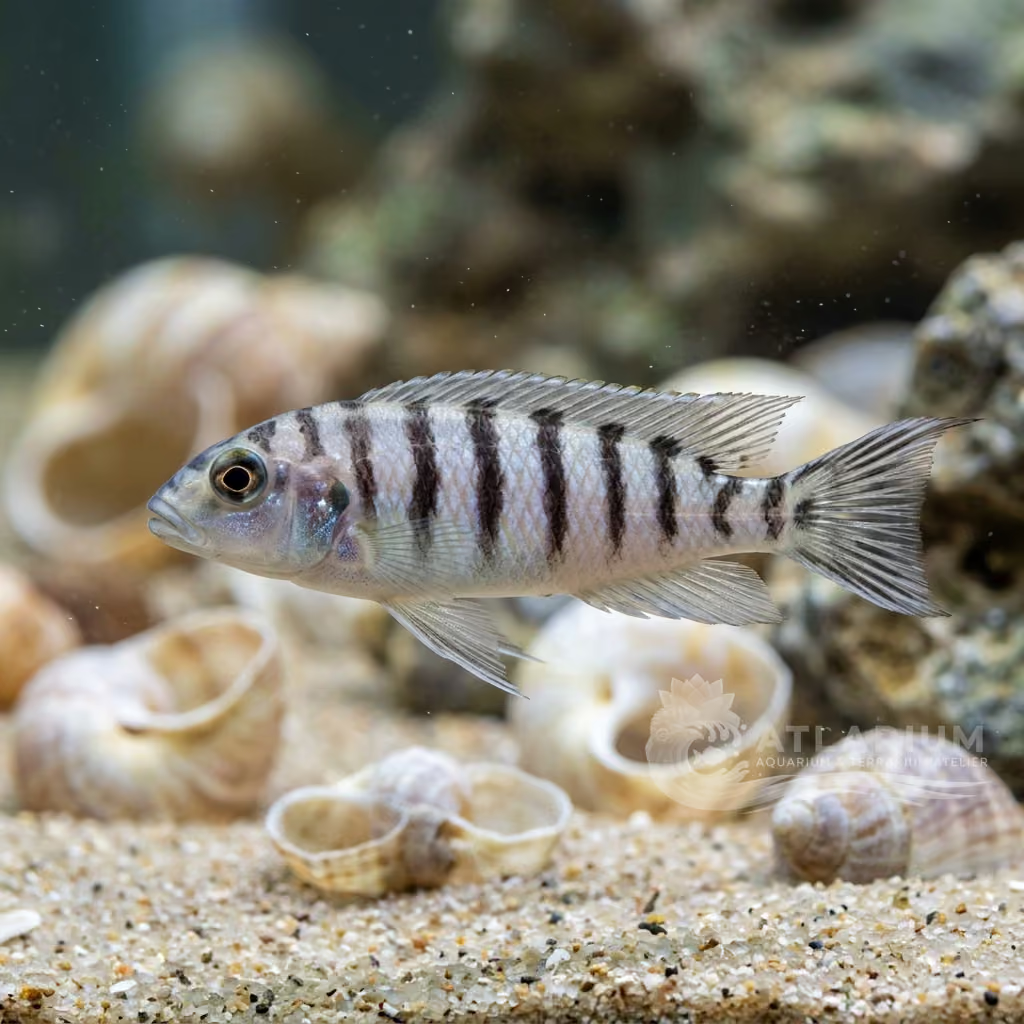
Taxonomy and Morphology: Tanganyika Clown / Goby Cichlid (Eretmodus cyanostictus). "Goby" cichlid. Atrophied swim bladder: unable to float, it "hops" on the stones holding on with its strong pelvic muscles. Spatulate mouth downwards, comb-like dentition.
Social Behavior: Intolerant of all other conspecifics; it is mandatory to keep ONLY a true pair bonded for life (which self-selects in youth). If the bond breaks or a tank is small, the dominant relentlessly hunts the partner or the submissive to death.
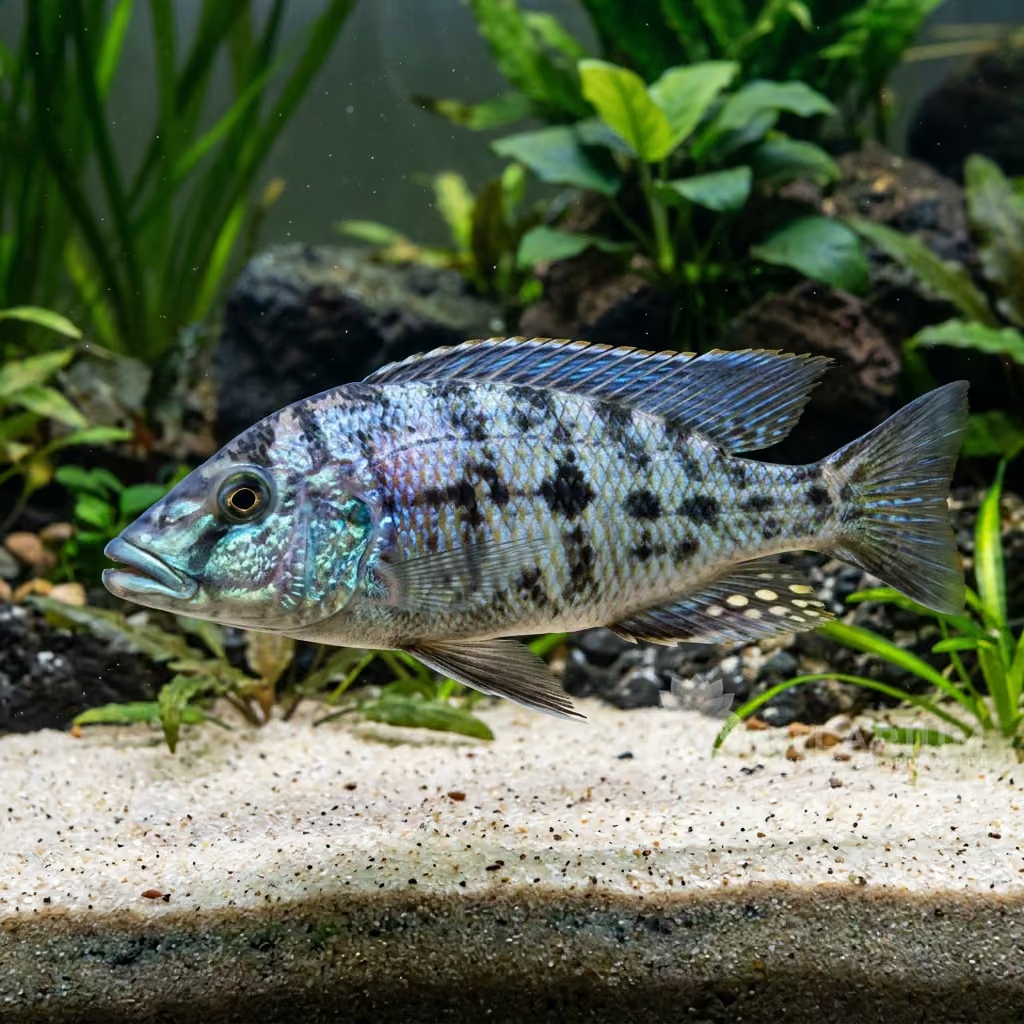
Coloration and Sexual Dimorphism: Peculiar "clown" snout. Brown or sand-gray background, interrupted by coppery shades and spectacular turquoise and iridescent dots ("cyanostictus") along the upper half. Imperceptible dimorphism to an inexperienced eye.

Pflege, Zucht und Mitbewohner
Aquarium Setup: A setup for Tropheus is ideal. Piles of large rocks in 120 cm (48 inches), very strong light to favor the development of Aufwuchs (algae patina) on the stones. The water CURRENT must be powerful and turbulent.
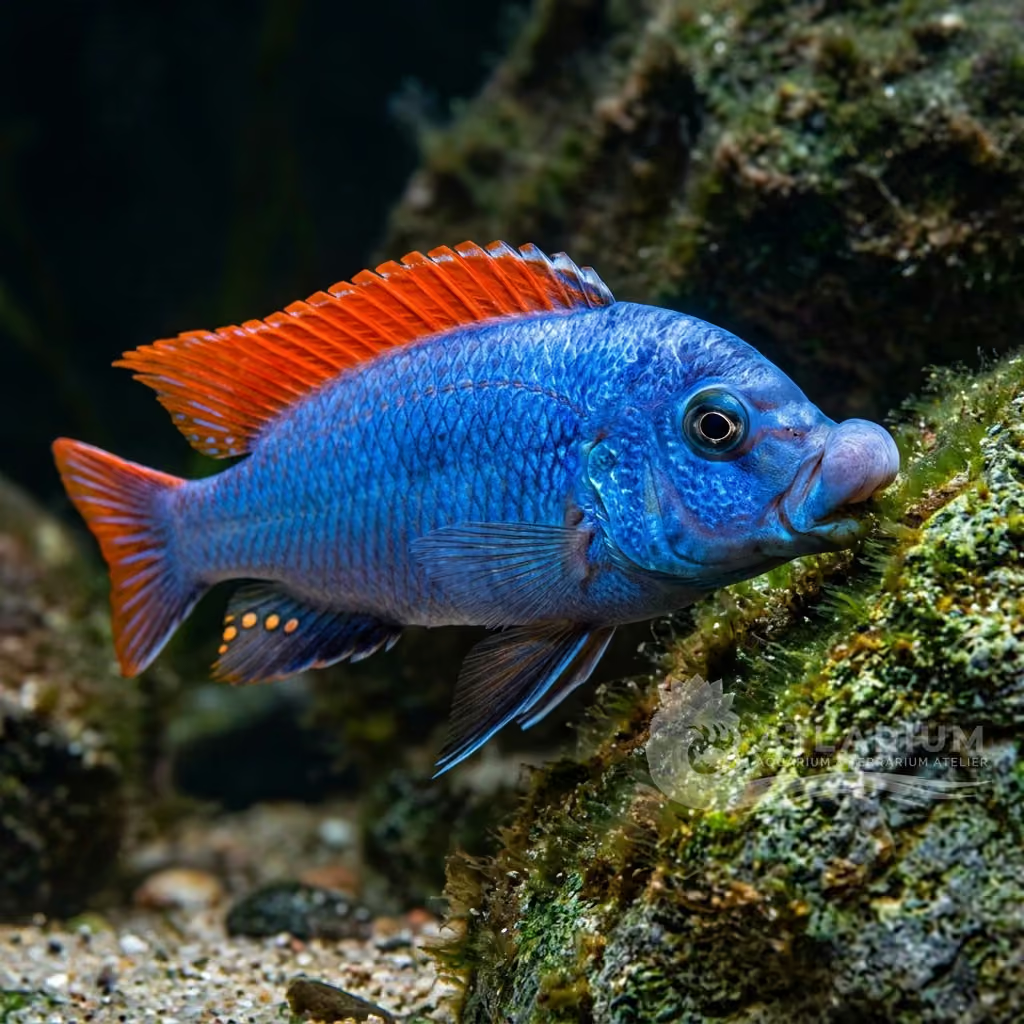
Diet and Feeding: Strictly extreme VEGETARIAN. With its teeth it "scrapes" the algal biofilm and microorganisms from the rocks. Administer spirulina flakes and vegetable wafers. Any animal protein (even bloodworms) triggers a lethal inflammation (Bloat).
Water Quality: Rigid requirements typical of Tanganyikans (pH 8-9) and oxygen supersaturation. There must be live rocks of mosses and algae so that it finds psychological well-being, ignore clinical and empty tanks.
Compatibility and Cohabitation: Ideal companion for turbulent and vegetarian tanks populated by Tropheus and Petrochromis (which swim free in the water column), provided that abundant hiding places are guaranteed in the rockfall. Excellent with rock Neolamprologus.
Aquarium Breeding: Incredible BIPARENTAL mouthbrooding! After brooding the 10-25 eggs in her mouth for about two weeks, the female literally "spits" the larvae into the mouth of the partner who will brood them for another 10 days.
Risks and Diseases: Killing by "divorce". In case of prolonged stress (diseases, frights) the pair can break the bond; the (smaller) female ends up murdered. Very high sensitivity to intestinal stasis from wrong food (Malawi Bloat).

Geografische Herkunft und Verbreitung
Endemic to Lake Tanganyika, Africa. Lives in the brutal surf zone, constantly crushed against the stones and pebbles where the waves break (up to 1 meter / 3 feet deep).
Ursprung
Selektive Züchtung und SortenAfrika und Madagaskar

Fischprofil
- Temperament
- Semi-aggressive
- They are fiercely territorial bottom-dwellers that will rigorously defend their chosen rocky domain. While peaceful towards mid-water tank mates, they are highly intolerant of other substrate-bound cichlids. A closely bonded pair will often display interesting, synchronized behaviors to ward off rivals.
- Diät
- Omnivore
- They are highly specialized herbivores that primarily graze on algae and aufwuchs from rocks. Their diet must consist almost entirely of high-quality spirulina flakes and specialized herbivore pellets. Feeding them high-protein, meaty foods will quickly lead to fatal digestive disorders.
- Lebenserwartung
- 5-8 years
- Erwachsenengröße
- 9 cm
- Geschlechterverhältnis
- Pair
- Due to their extreme intraspecific aggression, it is best to keep them as a single compatible pair. Obtaining a true pair usually requires buying a group of juveniles and letting them pair off naturally. Once a pair forms, the remaining individuals must be promptly removed.
- Fütterungsfrequenz
- Twice daily
- Offer them small, strictly herbivorous meals two to three times a day. Frequent, small feedings are much better for their sensitive, elongated digestive tracts than one large meal. Constant access to algae-covered rocks in the aquarium is highly beneficial.
- Bioload
- Low to Medium
- The Tanganyika clown produces a moderate bioload consistent with other medium-sized African cichlids. Exceptional water quality is strictly required to prevent bloat and other serious health issues. Highly efficient biological filtration and meticulous weekly water changes are absolutely necessary.
- Fluss
- Stagnant
- Originating from the turbulent surge zones of Lake Tanganyika, they absolutely thrive in strong water currents. High oxygenation and vigorous water movement are critical for replicating their natural environment. Wavemakers or powerful powerheads should be positioned to sweep across the rocky bottom.
- Sprungrisiko
- Yes
- While they are specialized bottom dwellers with reduced swim bladders, they can dart unpredictably if severely startled. A well-fitted lid is strongly recommended to prevent accidental escapes during territorial disputes. However, jumping is not a primary or common behavioral trait.
- Reproduktion
- Oviparous
- They are fascinating biparental mouthbrooders, making their breeding behavior incredibly rewarding to observe. The female holds the eggs initially, then transfers the developing fry to the male's mouth halfway through. A harmonious bonded pair will fiercely defend their spawning territory from all intruders.
- Kompatibilität & Tankkameraden
- With caution
- They do best in a Lake Tanganyika biotope alongside peaceful, upper-water dwelling cichlids. They can be fiercely aggressive toward conspecifics and other bottom-dwelling gobies. Avoid keeping them with overly aggressive or large predatory species that might intimidate them.
- Tankfüllstand
- Bottom
- They are specialized bottom-dwellers, hopping and perching among the rocky substrate. Their lack of a functional swim bladder prevents them from hovering effortlessly in the mid-water. The aquarium must feature an extensive, stable rocky layout to accommodate their natural behavior.

Wissenschaftliche Modelle & Parameter
FishBase
Zugang zu den offiziellen wissenschaftlichen Daten der Art
FishBase v25.04Daten synchronisiert am: 15.06.2026
- Trophäenniveau
- 2,1 ± 0,1 se
- Belastbarkeit
- Niedrig (4,5 - 14 Jahre)
- Phylogenetische Einzigartigkeit (PD50)
- 0.75
- Bayessche Längen-Gewichts-Beziehung
- a = 0.01905, b = 3.01
- AnfälligkeitGeringe Anfälligkeit (10 / 100)

Verwandte Arten
Empfehlungen gruppiert nach nahen Verwandten, Auswahl von Begleitern und ähnlicher Betreuung.