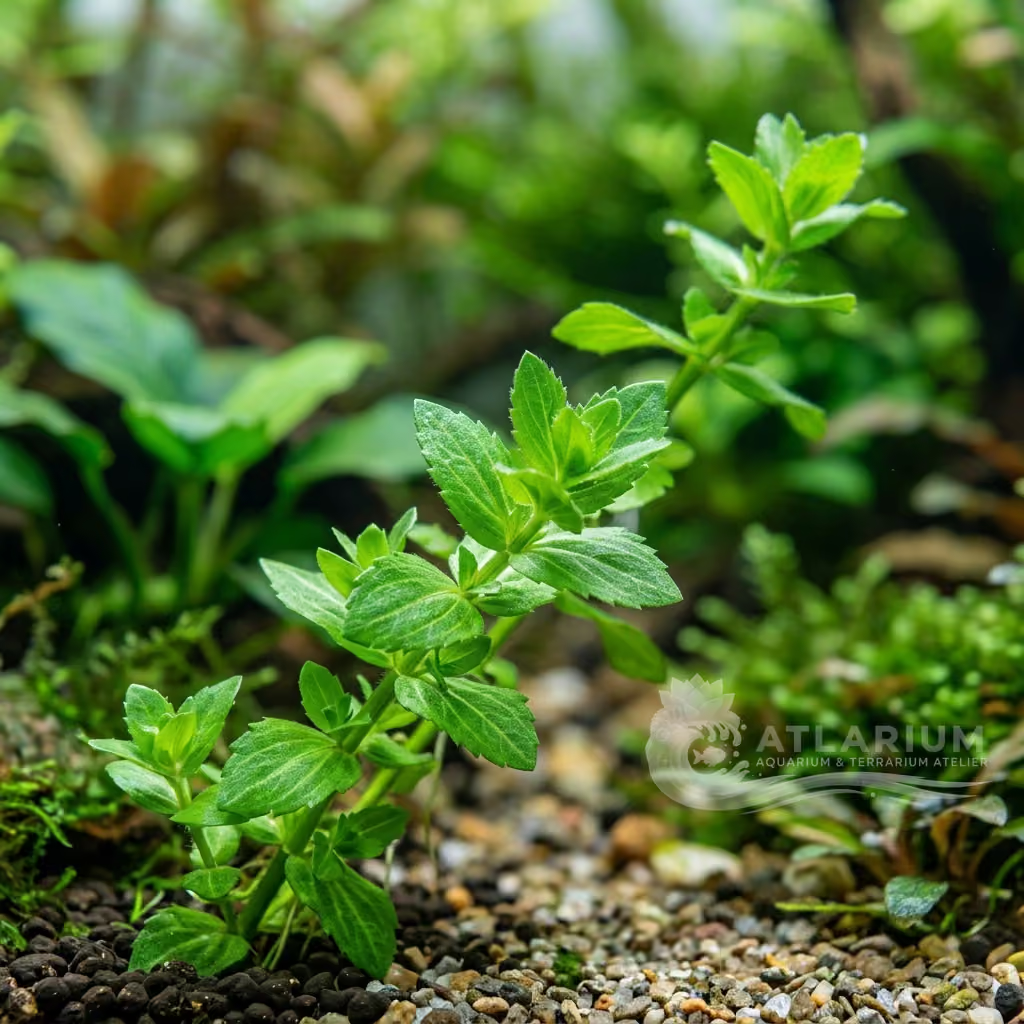
Alternanthera reineckii 'Rot' ('Red')
Alternanthera reineckii 'Rot' ('Red')
Deep red stem plant from South America. Requires moderate to intense lighting and CO2 to stimulate photosynthesis and preserve its classic vibrant foliage.
Temperatura da água
4 - 30 °C
Valor de pH
5 - 7
Tipo de água
Água doce
Luz
Média - Alta
CO2
Baixa - Alta
Altura esperada
40 cm
Largura esperada
20 cm
KH
0 - 14 dKH

Descrição da espécie
Geographical Origin and Habitat: Alternanthera reineckii 'Rot' (commonly known as Red Temple Plant) is native to the tropical and subtropical areas of South America, distributed mainly in Brazil, Argentina, Paraguay, and Uruguay. In the wild, it colonizes floodplains, muddy riverbanks, and shallow ponds exposed to direct sunlight. It grows easily as an emersed marsh plant during the dry season and as a submerged plant during seasonal flooding, absorbing large amounts of organic nutrients from warm, calm waters.
Taxonomy & Genetics: It belongs to the Amaranthaceae family and the genus Alternanthera. The cultivar 'Rot' (or 'Red') represents one of the most classic and popular horticultural selections in the aquarium hobby due to the stability and intensity of its red foliage. Genetically, this variety is characterized by high synthesis of anthocyanins, pigments that act as a protective screen against direct sunlight and UV radiation in its natural habitat, resulting in spectacular red shades in the aquarium.
Physical Structure: It is an erect stem plant with fleshy, sturdy, and well-branched stems that reach a height of about 40 cm and a foliage spread of 15-20 cm in the aquarium. The leaves are arranged in opposite, decussate pairs along the stem. They are lanceolate-ovate, slightly pointed at the tip, and have finely wavy margins. It develops significant adventitious roots both from the main root system and along the submerged nodes.
Color & Texture: The outstanding feature of this cultivar is its intense coloration: the upper side of the leaves assumes tones ranging from bronze-red to dark brownish-red, while the underside shines with a very deep and saturated purple-red or fuchsia. The leaf texture is smooth and slightly glossy underwater, with a firm consistency that allows it to maintain its shape in moderate currents.

Cuidado, criação e companheiros de tanque
Lighting & CO2: It requires moderate to intense lighting to stimulate photosynthesis and preserve the deep red color of the foliage. CO2 injection (15-25 mg/L) is highly recommended to promote robust growth and prevent leggy internodes, which would leave the lower stem bare.
Nutrition & Substrate: It prefers a rich and porous substrate, such as a fertile aquasoil, to support root growth. It requires constant liquid column fertilization rich in trace elements, chelated iron, and potassium. Deficiencies in these elements lead to fading of the upper leaves and necrosis of the older ones.
Water Chemistry: Highly temperature-tolerant (4°C to 30°C, with an optimal range between 22°C and 26°C). It adapts to acidic to neutral pH (5.0-7.0) and carbonate hardness between 0 and 14 dKH. Regular water changes promote healthy stems and prevent the accumulation of organic pollutants.
Space Management & Placement: Its height makes it ideal for the midground or background of the aquarium. It should be planted in small groups, spacing individual stems 2-3 cm apart so that light can penetrate to the lower leaves, preventing lower leaf loss caused by mutual shading.
Pruning: Pruning is done by cutting the upper part of the stem above a leaf node. The cut apical portion can be replanted directly into the substrate to propagate the plant, while the remaining bottom portion will quickly develop new lateral shoots, making the original clump bushier.
Risks & Diseases: It is sensitive to potassium deficiency (causing small holes in the leaves) and iron deficiency (resulting in pale or yellowish tips). If growth slows down due to lack of CO2 or light, the plant can easily be colonized by thread algae or green spot algae on the leaf margins.

Origem e distribuição geográfica
Alternanthera reineckii 'Rot' (commonly known as Red Temple Plant) is native to the tropical and subtropical areas of South America, distributed mainly in Brazil, Argentina, Paraguay, and Uruguay. In the wild, it colonizes floodplains, muddy riverbanks, and shallow ponds exposed to direct sunlight. It grows easily as an emersed marsh plant during the dry season and as a submerged plant during seasonal flooding, absorbing large amounts of organic nutrients from warm, calm waters.
Origem
Extra-Amazônica América do SulAmazônia, Orinoco e GuianasMelhoramento seletivo e cultivares

Perfil da planta
- Posicionamento
- Plano intermediário
- It is best positioned in the midground or foreground of the aquarium, depending on the tank size. Its compact nature allows it to create beautiful, dense bushes that do not overshadow other plants. When planted in groups, it forms a striking focal point that draws the eye. Ensure it is placed in an area that receives unobstructed light for optimal development.
- Forma botânica
- Caule
- This plant features sturdy, upright stems adorned with decussate leaves that exhibit a striking red to magenta hue on the underside. The leaves are typically lanceolate and somewhat smaller than the standard species, giving it a more compact appearance. Its structure is quite robust, allowing it to withstand moderate water flow. The dense foliage creates a beautifully textured visual element in the aquascape.
- Crescimento
- Média
- The growth rate is generally moderate when provided with optimal lighting and CO2 injection. Under lower light conditions, growth slows down significantly and the plant may struggle. Regular fertilization will encourage a steady and manageable upward progression. Overall, it requires less frequent maintenance compared to faster-growing stem plants.
- Substrato
- Alta
- This exceptionally red variety exhibits strong root growth that necessitates a high-capacity nutrient substrate like aqua soil. The roots delve deeply to extract large quantities of nutrients, particularly iron and phosphates, essential for its vivid pigmentation. To support its structural integrity and nutrient demands, a substrate layer of 5 to 6 centimeters is recommended.
- Fertilização de coluna
- Recomendada
- Liquid column fertilization is highly recommended to supply readily available nutrients to the leaves. A comprehensive liquid fertilizer containing both macro and micronutrients should be dosed regularly. Iron supplements are particularly beneficial to enhance the red pigmentation. Consistent dosing schedules help prevent deficiencies and promote vigorous foliage development.
- Fertilização radicular
- Nenhuma
- While it can absorb nutrients from the water column, it benefits significantly from a nutrient-rich substrate. Root tabs placed near the base can provide a steady supply of essential elements, promoting stronger root development. A fertile soil base encourages thicker stems and more robust overall growth. This dual feeding approach maximizes the plant's health and coloration.
- Corte
- Ocasional
- Trimming should be done by cutting the stem just above a healthy node using sharp scissors. This encourages the plant to develop side shoots, resulting in a bushier appearance over time. The replanted tops will quickly root and form new plants, allowing for easy expansion. Regular pruning is necessary to maintain its compact shape and prevent lower leaves from being shaded out.
- Propagação
- Estacas
- Propagation is straightforward and is achieved primarily through stem cuttings. Simply cut a healthy top portion of the stem and plant it directly into the substrate. Ensure the cutting has at least a few leaves and a healthy node to promote rapid root growth. With optimal conditions, the new cuttings will establish themselves within a few days.
- Sensibilidade
- Moderada
- This species is somewhat sensitive to sudden fluctuations in water parameters, particularly pH and temperature. It does not tolerate prolonged periods of shading, which will cause it to quickly drop its lower leaves. Algae growth on its leaves can be a problem if nutrients and light are not properly balanced. Extreme care should be taken when using chemical treatments, as it can be delicate.
- Função de layout
- accent, Plano intermediário, Fundo
- It plays an excellent role as a colorful midground accent, adding depth and contrast to green aquatic landscapes. Its smaller leaf size makes it suitable for both large and small aquariums without overwhelming the layout. It pairs beautifully with light green foreground carpets or dark hardscape materials. Its striking coloration draws attention and serves as a natural focal point.

Espécies relacionadas
Recomendações agrupadas por parentes próximos, escolhas de acompanhantes e cuidados semelhantes.