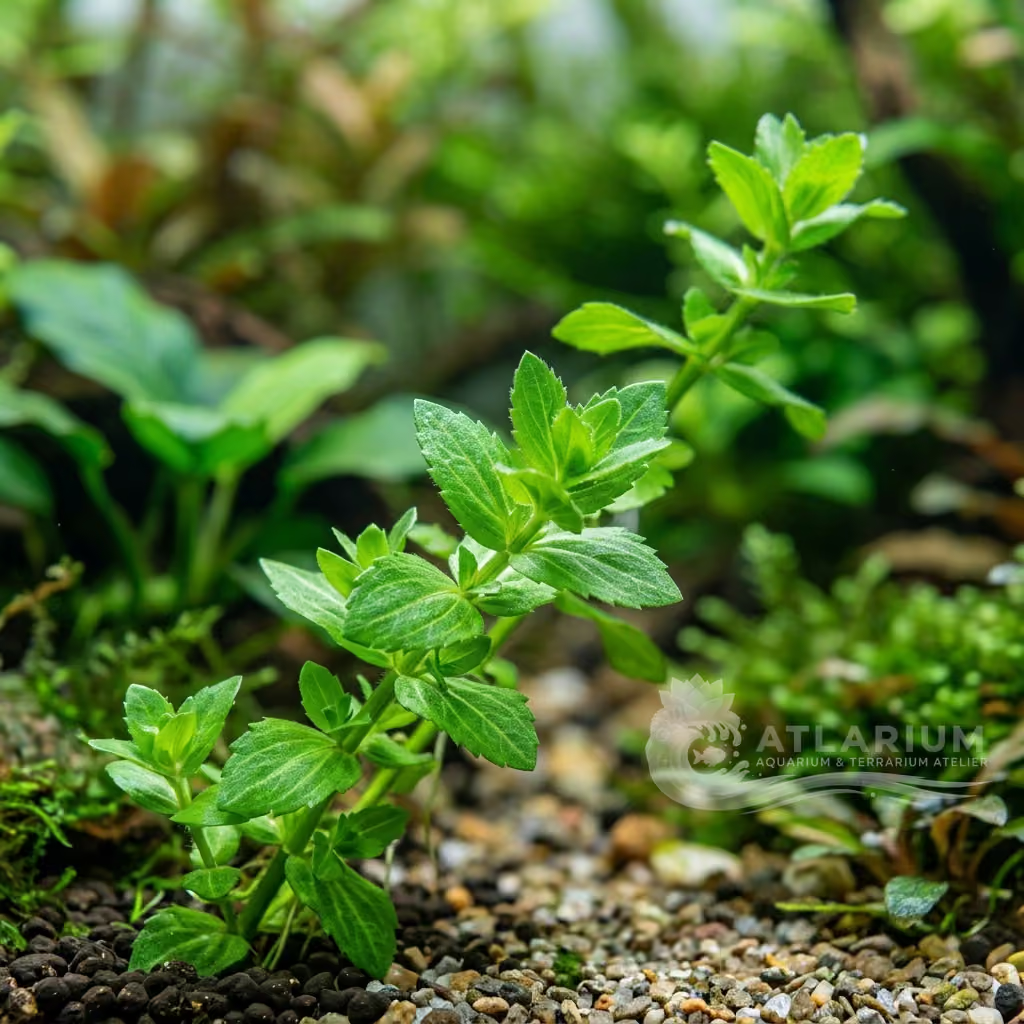
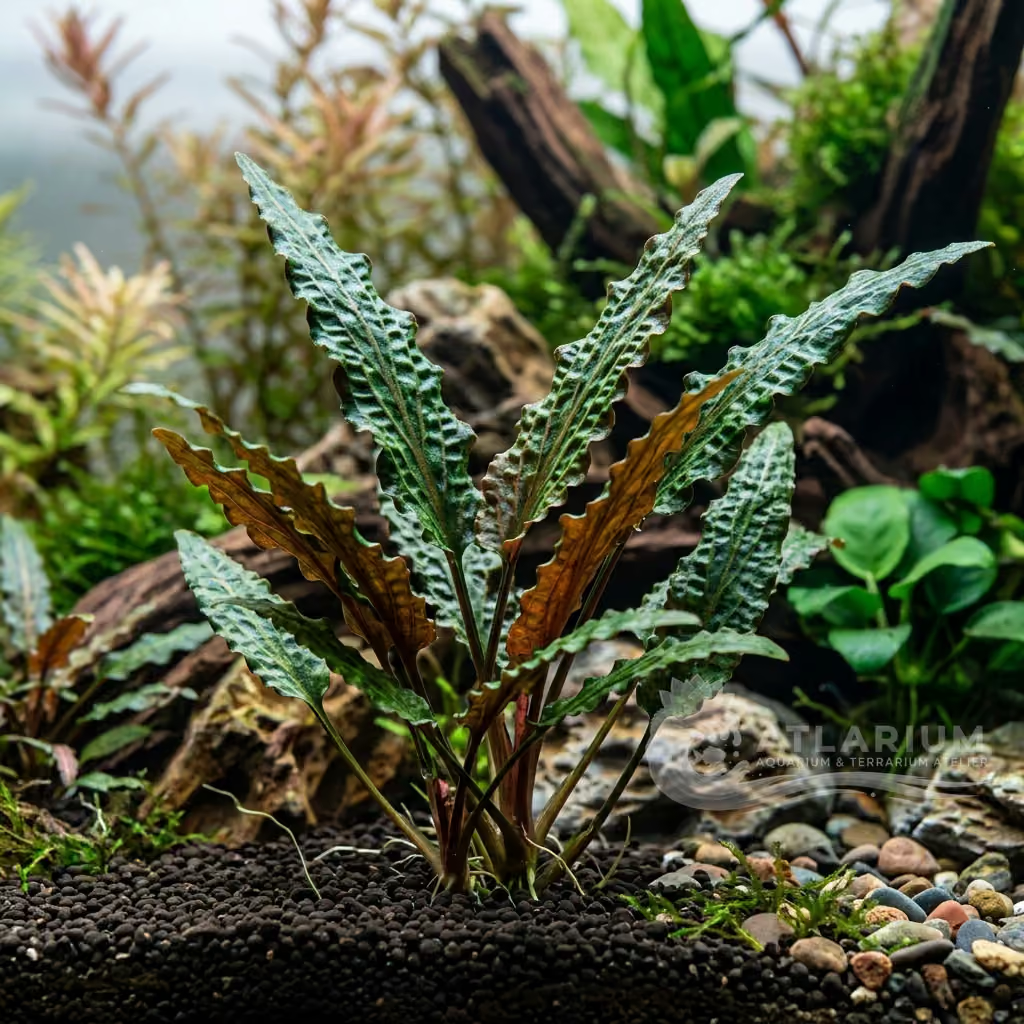
Alternanthera reineckii 'Mini'
Alternanthera reineckii 'Mini'
Dwarf magenta-red bush ideal for nano tanks. Demands very intense light and consistent CO2 injection to maintain its compact size and bright colors.
Temperatura da água
4 - 30 °C
Valor de pH
5 - 7
Tipo de água
Água doce
Luz
Média - Alta
CO2
Baixa - Alta
Altura esperada
30 cm
Largura esperada
10 cm
KH
0 - 14 dKH

Descrição da espécie
Geographical Origin and Habitat: The species Alternanthera reineckii 'Mini' is native to cultivated greenhouse selections derived from the parent species Alternanthera reineckii, native to the tropical regions of South America. In its natural environment, it is typically found in slow-flowing or stagnant waters, such as swamps, ponds, and tropical riverbanks, where it adapts beautifully to seasonal water level variations. This habitat provides a rich organic substrate and consistent, filtered light exposure. The plant's ability to grow both submersed and emersed is a testament to its extraordinary evolutionary resilience in these humid ecosystems.
Taxonomy & Genetics: From a taxonomic perspective, the plant belongs to the Amaranthaceae family, genus Alternanthera. It is a stabilized dwarf cultivar, selected for its compact size and bushy habit. This phylogenetic placement places it within a group of vascular plants highly specialized for aquatic life. Genetically, species in this genus exhibit high phenotypic plasticity, meaning their outward appearance can vary drastically based on available light and nutrient conditions. Selection and hybridization efforts have led to the development of specific cultivars suited for aquarium cultivation.
Physical Structure: The morphology of this plant is characterized by a short, knotty stem with closely spaced opposite lanceolate leaves, growing only up to 10-20 cm, creating a dense, compact bush. This structural conformation allows the plant to withstand moderate water currents and maximize the absorption of carbon dioxide and light. The root system is designed to anchor the plant firmly to the soil and absorb mineral nutrients. In aquariums, the vertical or creeping development provides excellent natural barriers and shelter zones for small fish and invertebrates.
Color & Texture: Aesthetically, the plant offers a stunning magenta-red and deep purple coloration covering both the upper and lower leaf surfaces, ideal for creating color contrasts. The leaf texture, soft yet resilient to the touch, adds visual depth and a sense of naturalness to any aquascaping composition. The chromatic variation serves as an excellent color contrast compared to traditional, all-green plants. Under strong lighting and targeted fertilization, the intensity of the color reaches its maximum visual splendor.

Cuidado, criação e companheiros de tanque
Lighting & CO2: For optimal growth, the plant requires intense to very intense light combined with regular CO2 injection to stimulate compact growth and maintain the bright red color. Intense light promotes shorter internodes and the development of more saturated colors, while the CO2 supply ensures stable photosynthesis, preventing plant tissue decay. In the absence of these elements, the plant will tend to stretch excessively towards the light, losing its lower leaves and exhibiting weak, stunted growth.
Nutrition & Substrate: Nutrition must be managed by providing a fertile substrate enriched with iron and consistent liquid dosing of potassium and micronutrients to prevent leaf fading. A fertile substrate or the use of root tabs near the root system significantly accelerates growth, while
Water Chemistry: This species prefers soft to moderately hard water with a pH between 5.0 and 7.0, KH 0-14, and a flexible temperature range between 4 and 30 °C. Regular water changes are recommended to maintain stable parameters and low levels of pollutants such as nitrates and phosphates. Good mechanical and biological filtration will ensure an environment free of suspended particles, which could settle on the leaves and limit photosynthesis.
Space Management & Placement: The ideal placement is the foreground or midground of the aquarium, where it can be used to create a dense border or a spectacular red carpet effect. As a plant that can expand laterally or vertically, it is important to carefully calculate distances from neighboring species to avoid mutual shading. Proper water circulation among the foliage also prevents the formation of stagnant zones susceptible to bacterial infections.
Pruning: Maintenance is carried out by regularly trimming the stem tips to stimulate low lateral branching, replanting the cut portions back into the substrate. Periodically removing older or damaged leaves at the base stimulates the plant to focus energy on new growth. Using sterile, very sharp tools is essential to avoid crushing stem tissues, which could lead to necrosis or fungal infections.
Risks & Diseases: The main risks include colonization by filamentous or green spot algae if growth slows down, and loss of basal leaves if shaded by taller plants. Under conditions of poor water movement or nutrient imbalance, the leaves can be colonized by filamentous or green spot algae. In cases of severe stress, the stems can rot from the inside; if this occurs, damaged parts must be removed immediately to prevent infecting the entire plant.

Origem e distribuição geográfica
The species Alternanthera reineckii 'Mini' is native to cultivated greenhouse selections derived from the parent species Alternanthera reineckii, native to the tropical regions of South America. In its natural environment, it is typically found in slow-flowing or stagnant waters, such as swamps, ponds, and tropical riverbanks, where it adapts beautifully to seasonal water level variations. This habitat provides a rich organic substrate and consistent, filtered light exposure. The plant's ability to grow both submersed and emersed is a testament to its extraordinary evolutionary resilience in these humid ecosystems.
Origem
Extra-Amazônica América do SulAmazônia, Orinoco e GuianasMelhoramento seletivo e cultivares

Perfil da planta
- Posicionamento
- Plano intermediário
- It is best positioned in the midground or foreground of the aquarium, depending on the tank size. Its compact nature allows it to create beautiful, dense bushes that do not overshadow other plants. When planted in groups, it forms a striking focal point that draws the eye. Ensure it is placed in an area that receives unobstructed light for optimal development.
- Forma botânica
- Caule
- This plant features sturdy, upright stems adorned with decussate leaves that exhibit a striking red to magenta hue on the underside. The leaves are typically lanceolate and somewhat smaller than the standard species, giving it a more compact appearance. Its structure is quite robust, allowing it to withstand moderate water flow. The dense foliage creates a beautifully textured visual element in the aquascape.
- Crescimento
- Média
- The growth rate is generally moderate when provided with optimal lighting and CO2 injection. Under lower light conditions, growth slows down significantly and the plant may struggle. Regular fertilization will encourage a steady and manageable upward progression. Overall, it requires less frequent maintenance compared to faster-growing stem plants.
- Substrato
- Alta
- Despite its compact size, this miniature cultivar possesses a surprisingly aggressive root system that demands a high-quality, nutrient-rich substrate. A fine-grained aqua soil is ideal, allowing the delicate roots to easily penetrate and establish a firm hold in the foreground of the aquarium. Providing a 3-4 cm deep nutrient bed rich in iron ensures the roots can adequately feed the intense red, bushy growth.
- Fertilização de coluna
- Recomendada
- Liquid column fertilization is highly recommended to supply readily available nutrients to the leaves. A comprehensive liquid fertilizer containing both macro and micronutrients should be dosed regularly. Iron supplements are particularly beneficial to enhance the red pigmentation. Consistent dosing schedules help prevent deficiencies and promote vigorous foliage development.
- Fertilização radicular
- Nenhuma
- While it can absorb nutrients from the water column, it benefits significantly from a nutrient-rich substrate. Root tabs placed near the base can provide a steady supply of essential elements, promoting stronger root development. A fertile soil base encourages thicker stems and more robust overall growth. This dual feeding approach maximizes the plant's health and coloration.
- Corte
- Ocasional
- Trimming should be done by cutting the stem just above a healthy node using sharp scissors. This encourages the plant to develop side shoots, resulting in a bushier appearance over time. The replanted tops will quickly root and form new plants, allowing for easy expansion. Regular pruning is necessary to maintain its compact shape and prevent lower leaves from being shaded out.
- Propagação
- Estacas
- Propagation is straightforward and is achieved primarily through stem cuttings. Simply cut a healthy top portion of the stem and plant it directly into the substrate. Ensure the cutting has at least a few leaves and a healthy node to promote rapid root growth. With optimal conditions, the new cuttings will establish themselves within a few days.
- Sensibilidade
- Moderada
- This species is somewhat sensitive to sudden fluctuations in water parameters, particularly pH and temperature. It does not tolerate prolonged periods of shading, which will cause it to quickly drop its lower leaves. Algae growth on its leaves can be a problem if nutrients and light are not properly balanced. Extreme care should be taken when using chemical treatments, as it can be delicate.
- Função de layout
- Nano, accent, Plano intermediário, Primeiro plano
- It plays an excellent role as a colorful midground accent, adding depth and contrast to green aquatic landscapes. Its smaller leaf size makes it suitable for both large and small aquariums without overwhelming the layout. It pairs beautifully with light green foreground carpets or dark hardscape materials. Its striking coloration draws attention and serves as a natural focal point.

Espécies relacionadas
Recomendações agrupadas por parentes próximos, escolhas de acompanhantes e cuidados semelhantes.