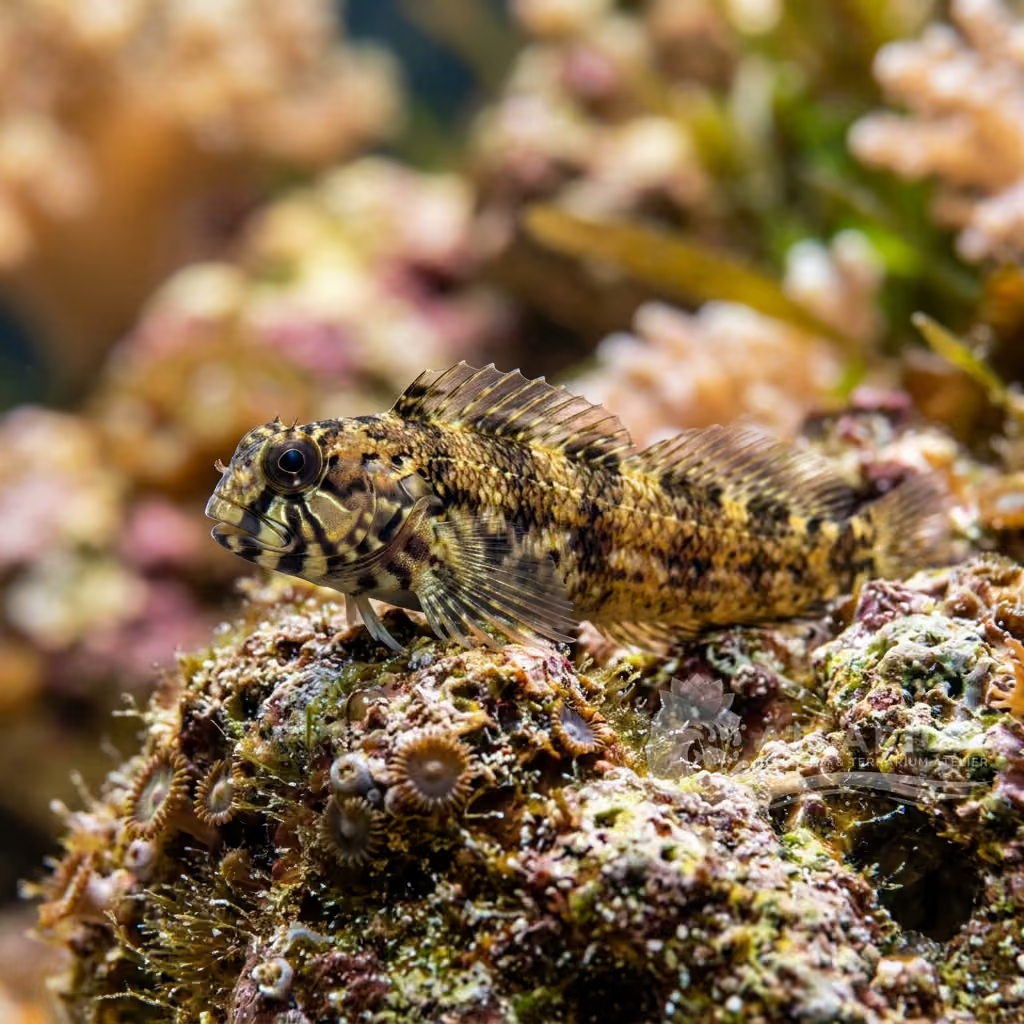
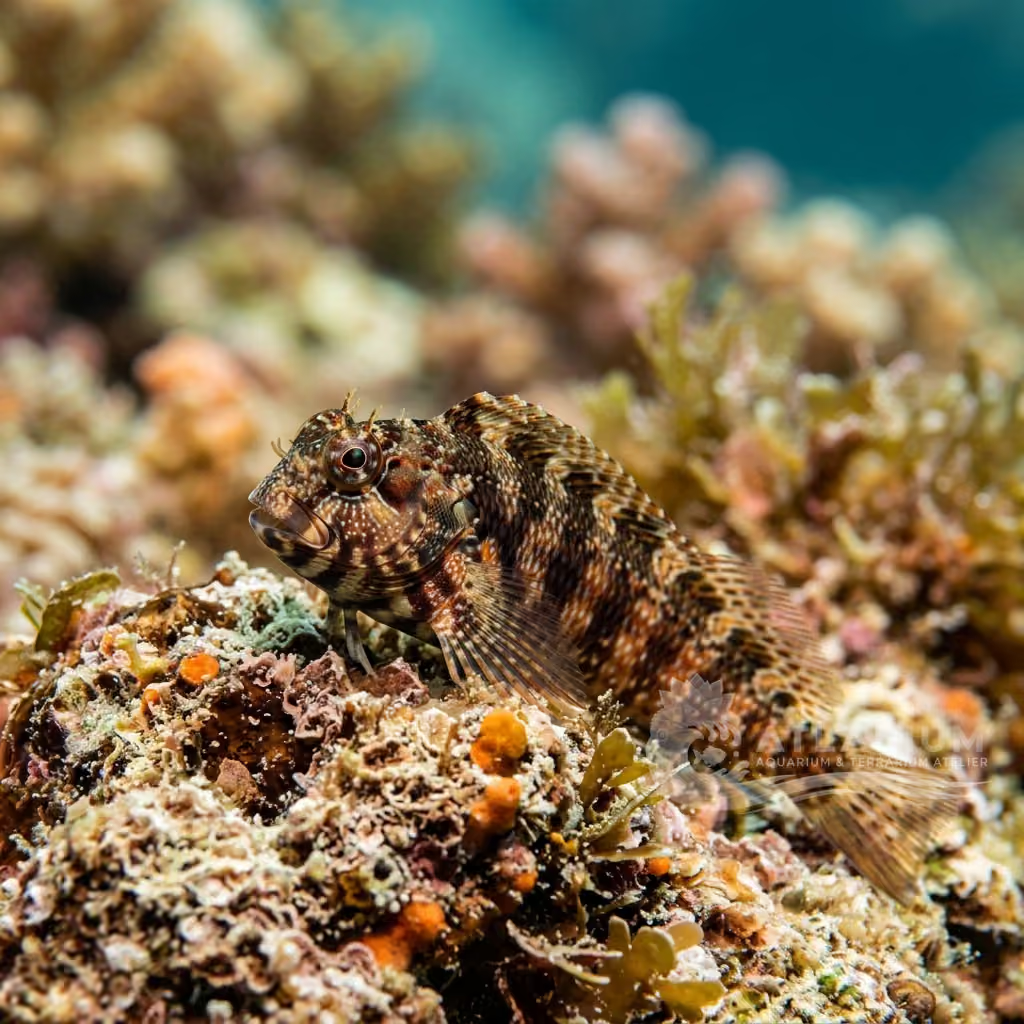
Tailspot blenny
Ecsenius stigmatura
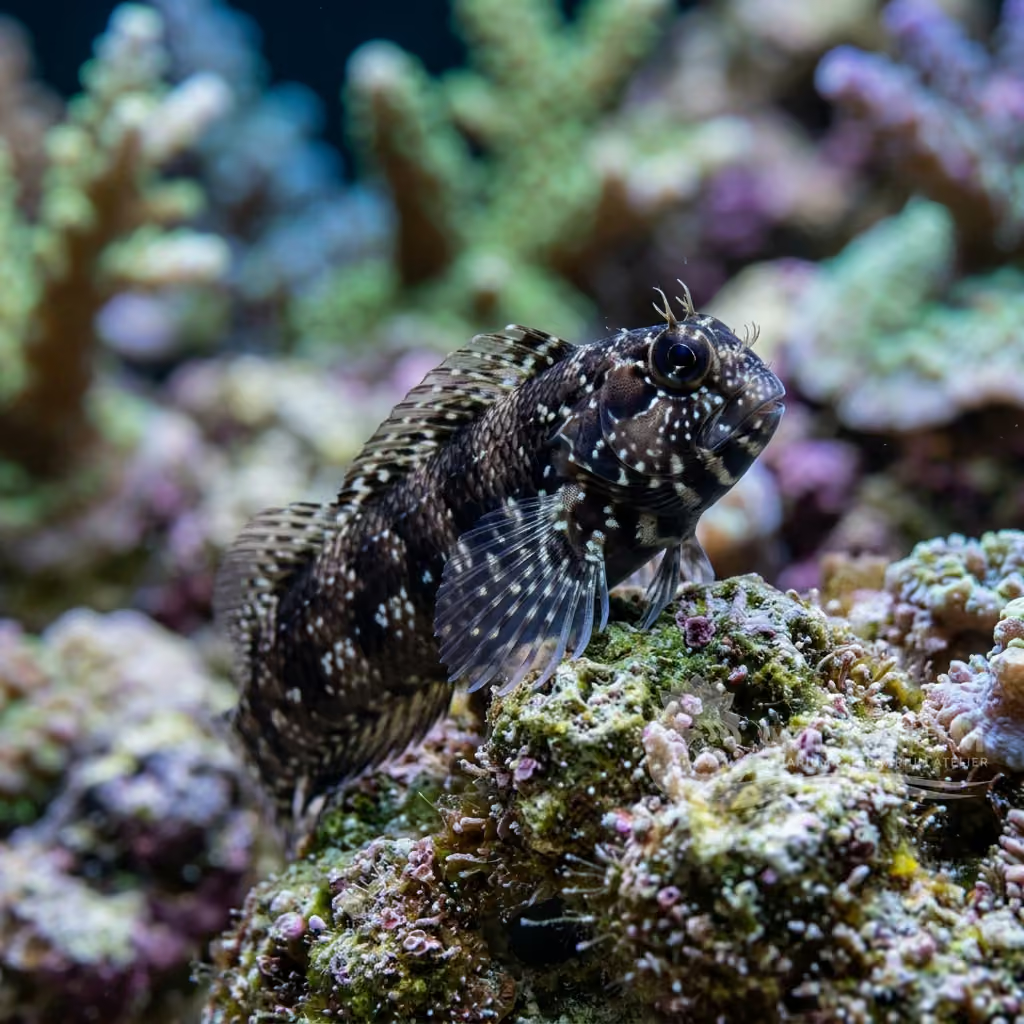
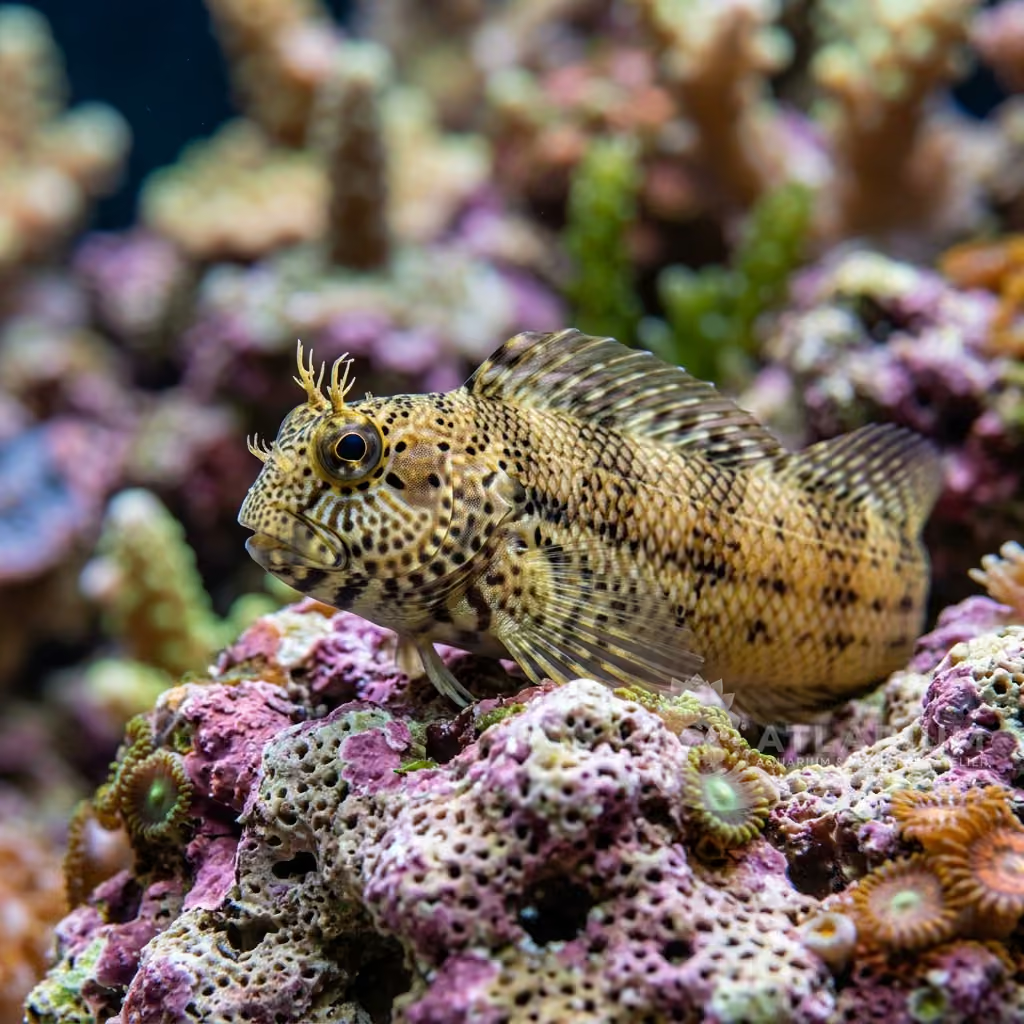
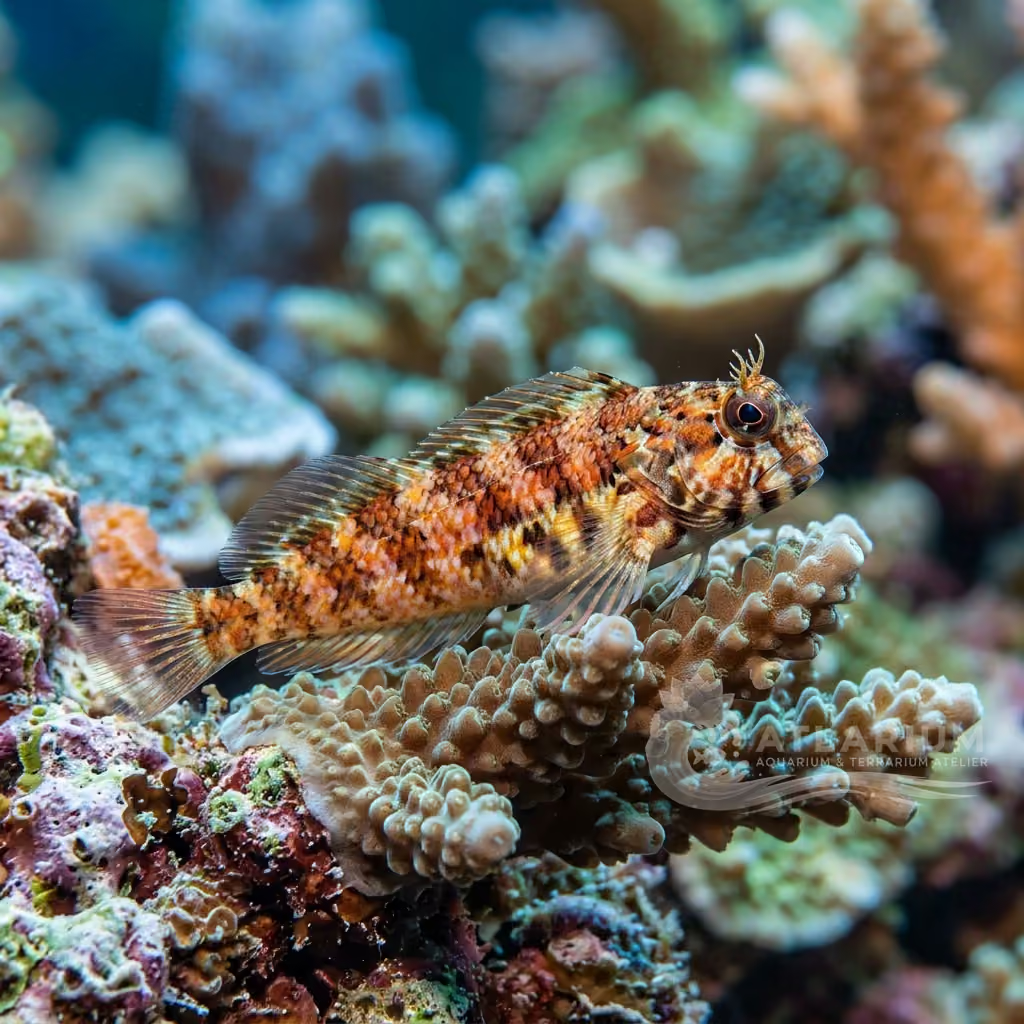
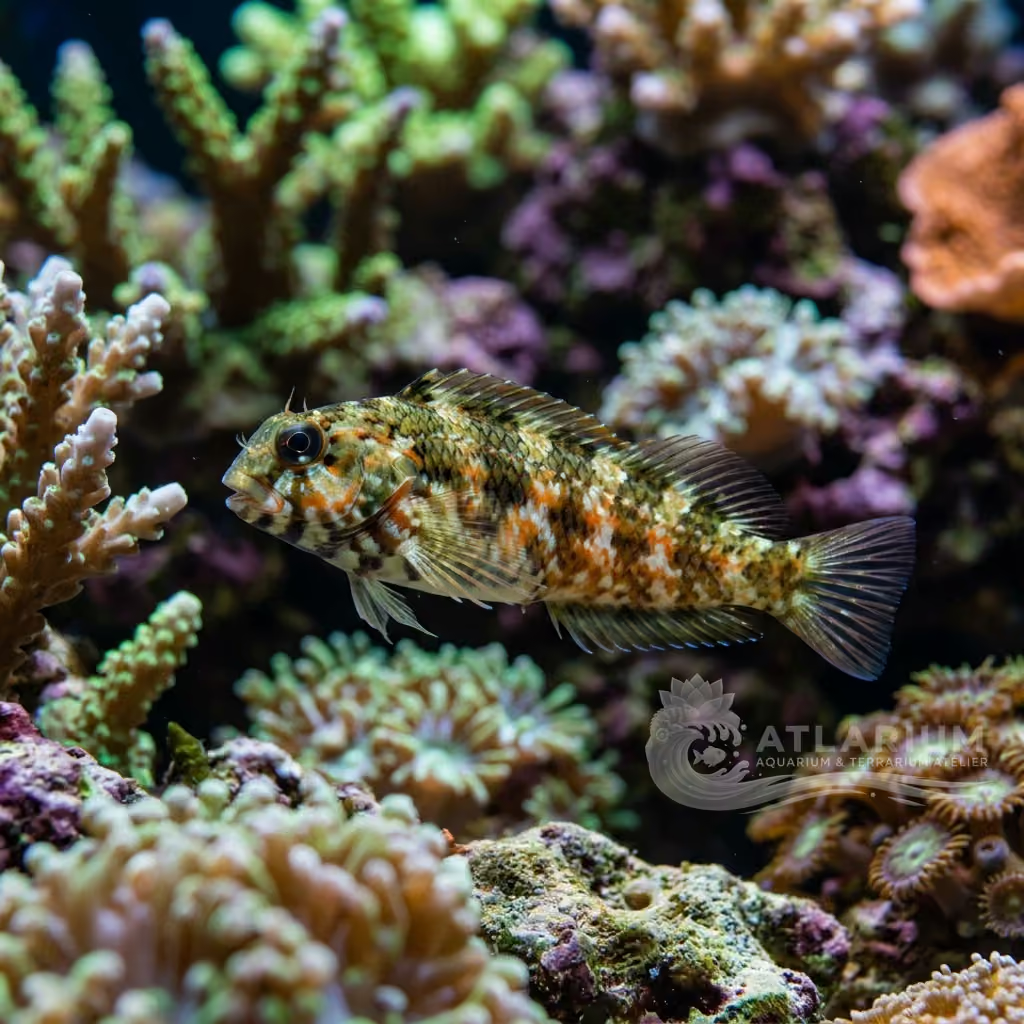
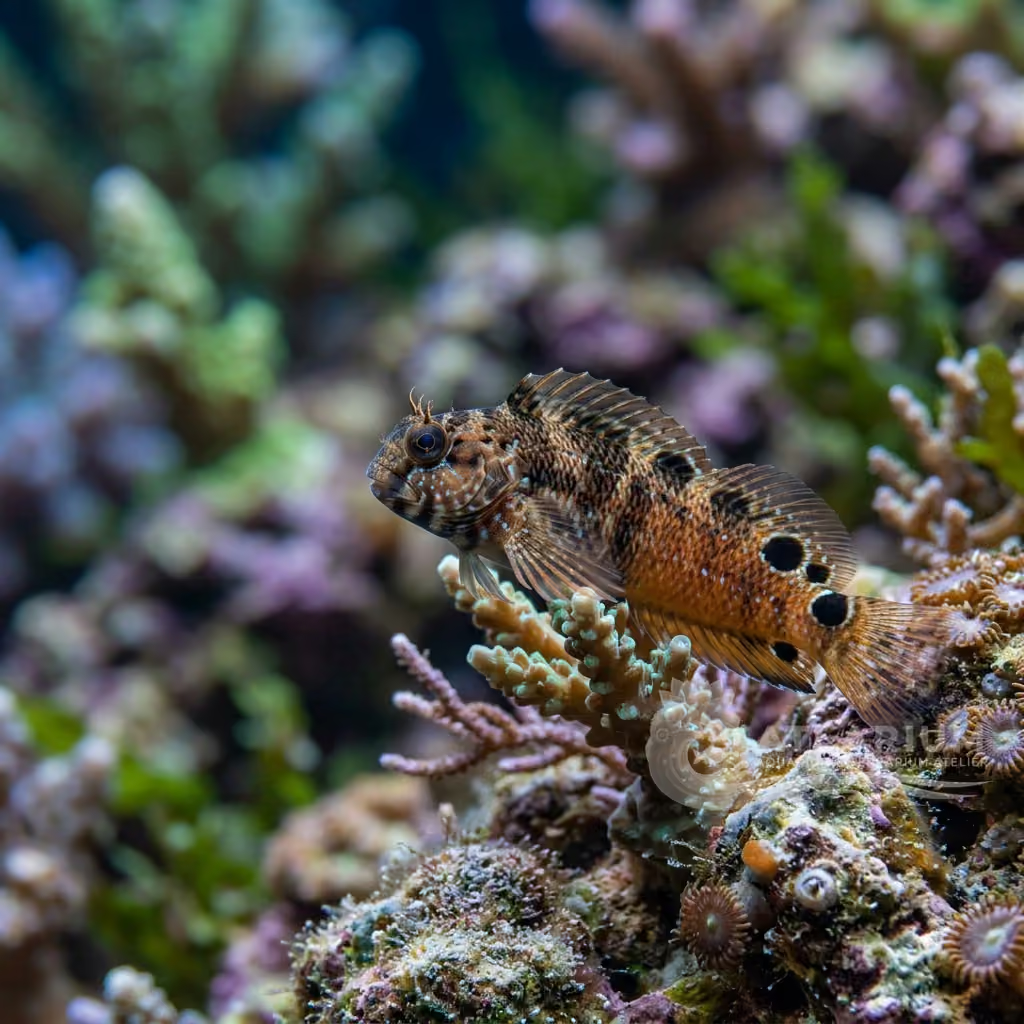
An incredibly popular nano-reef candidate showcasing a striking black tailspot and neon facial accents. This inquisitive herbivore comfortably perches on live rock, diligently scraping away microalgae.
Temperatura da água
22 - 28 °C
Valor de pH
8.1 - 8.4
Tipo de água
Marinho
Nível do tanque
Parte inferior
Tamanho adulto
6 cm
Volume mínimo do tanque
>= 60 L
Grupo mínimo
>= 1
KH
8 - 12 dKH

Descrição da espécie
Geographical Origin and Habitat: Ecsenius stigmatura is native to the warm tropical waters of the Western Indo-Pacific. Its range is centered around the Indonesian archipelago, the Philippines, and adjacent waters, extending to northern Australia. It primarily inhabits shallow coral reefs, protected coastal lagoons, and reef flats at depths ranging from 1 to 15 meters. It prefers perching on live rocks rich in algae growth and hard corals, where it can find immediate shelter in small holes or empty gastropod shells.
Taxonomy and Morphology: Belonging to the family Blenniidae, it is classified under the genus Ecsenius, which hosts small herbivorous marine blennies. Morphologically, it features a cylindrical, scaleless, highly flexible body and a rounded head with large, expressive eyes set high to allow excellent stereoscopic vision. Its mouth is positioned inferiorly and is equipped with comb-like teeth adapted for scraping algae and organic biofilm from rock surfaces.
Social Behavior: This blenny is a peaceful, inquisitive, and active diurnal fish. It spends much of the day perching on live rock or hard corals, observing aquarium activities and making quick, short darts to feed on algae. It exhibits marked intraspecific territoriality toward conspecifics or other members of the genus Ecsenius, especially if the aquarium volume and rockwork do not allow for distinct territories.
Coloration and Sexual Dimorphism: The coloration is highly appealing: the body has a warm reddish-brown or olive-brown hue, which fades to a lighter greyish-blue on the belly. The most defining feature is a distinct, circular black spot bordered by a thin yellow or gold line located at the base of the caudal fin. On the face, two bright, parallel lines (usually neon blue or orange) run horizontally just beneath the eyes.

Cuidado, criação e companheiros de tanque
Aquarium Setup: Requires a marine aquarium or nano-reef of at least 60 liters. The tank setup should feature plenty of live rock arranged to create numerous crevices, micro-caves, and narrow passages. It is beneficial to introduce empty snail shells of various sizes, which the blenny will use as sleeping quarters. A tight-fitting lid or fine mesh screen is essential, as this species is prone to jumping when startled.
Diet and Feeding: Its diet is primarily herbivorous. In the wild, it feeds by grazing on benthic microalgae and diatoms. In captivity, it must be offered high-quality commercial pellets or flakes based on marine algae (such as spirulina), dried nori sheets attached to a clip, and small frozen foods like cyclops and brine shrimp. Feed small amounts multiple times a day to maintain its energy levels.
Water Quality: Water parameters must be kept stable: temperature between 23 and 27 °C, pH between 8.1 and 8.4, salinity at a specific gravity of 1.020-1.025, and KH between 8 and 12. Regular water testing and partial water changes are required to keep nitrate and phosphate levels low. A good water flow is recommended to ensure high dissolved oxygen levels.
Compatibility and Cohabitation: This species is 100% reef safe and does not damage hard or soft corals or clam mantles. It coexists peacefully with most small, calm community fish such as gobies, clownfish, and small wrasses. Avoid housing it with large predators or overly aggressive, fast-moving fish that could intimidate it and force it to remain permanently hidden in the rockwork.
Aquarium Breeding: Breeding in home aquariums is extremely difficult and rarely documented. The tailspot blenny is a demersal spawner: the female deposits adhesive eggs in a narrow crevice or rock cavity, which the male then fertilizes and guards until hatching. Rearing the microscopic pelagic larvae requires specialized live foods like rotifers and copepod nauplii.
Risks and Diseases: The primary risk is starvation if introduced into sterile or newly established tanks lacking natural algae. Because it lacks scales, Ecsenius stigmatura is highly sensitive to copper-based medications and rapid water parameter fluctuations. It is also susceptible to skin infections if injured during territorial scuffles or jumping accidents.

Origem e distribuição geográfica
Ecsenius stigmatura is native to the warm tropical waters of the Western Indo-Pacific. Its range is centered around the Indonesian archipelago, the Philippines, and adjacent waters, extending to northern Australia. It primarily inhabits shallow coral reefs, protected coastal lagoons, and reef flats at depths ranging from 1 to 15 meters. It prefers perching on live rocks rich in algae growth and hard corals, where it can find immediate shelter in small holes or empty gastropod shells.
Origem
Oceanos tropicais e recifesSul e Sudeste AsiáticoAustrália, Nova Guiné e Oceania

Perfil de peixe
- Temperamento
- Active
- The Tailspot Blenny is renowned for its charming and comical personality. It is quite inquisitive, often observing the aquarist from its favorite perches with large, expressive eyes. While generally peaceful and somewhat shy when first introduced, it quickly becomes a bold and active member of the community. Its playful darting and perching behaviors make it a joy to watch.
- Dieta
- Herbivore
- Ecsenius stigmatura is primarily a herbivore, feeding enthusiastically on microalgae growing on live rock and glass. In the home aquarium, its diet must be supplemented with high-quality herbivore preparations, including spirulina flakes and dried marine algae. Occasional feedings of meaty items like mysis shrimp are accepted but should not form the bulk of its diet. A steady supply of greens is essential for its long-term health and coloration.
- Expectativa de vida
- 3-5 years
- Tamanho adulto
- 6 cm
- Proporção sexual
- Solitary
- There are no easily distinguishable external differences between males and females of this species. They are generally kept singly unless the aquarium is very large, as two males will likely fight. A proven mated pair can be housed together harmoniously in a suitably sized tank. For most hobbyists, keeping just one specimen is the safest and most practical approach.
- Frequência de alimentação
- Twice daily
- It is best to feed this active little fish two to three times a day with small portions. Because it constantly grazes on naturally occurring algae throughout the day, it does not require massive single feedings. Providing grazing opportunities ensures it maintains a healthy weight and stays active. If the tank lacks natural algae, supplemental feedings become even more critical.
- Carga biológica
- Low to Medium
- The Tailspot Blenny adds a relatively low bioload to a marine aquarium setup. Thanks to its small adult size and efficient digestion of algal matter, it does not produce excessive waste. Regular water changes and a standard protein skimmer are more than sufficient to handle its biological impact. Its peaceful nature also means it doesn't stress other fish into producing more waste.
- Fluxo
- Strong
- The Tailspot Blenny prefers moderate to somewhat strong water flow within the aquarium. Good water movement mimics its natural reef habitat and helps keep the rock surfaces clear of detritus, promoting healthy algae growth. It often perches on rocks facing the current to observe its surroundings and catch passing food particles. Ensure there are calmer areas where it can rest and sleep at night.
- Risco de salto
- Yes
- Like many blennies, this species is notorious for its jumping ability. They will often dart upwards when spooked or during territorial disputes, easily clearing the rim of an open aquarium. A tight-fitting lid or a custom mesh screen cover is absolutely mandatory to prevent tragic losses. Even a small gap near the filtration equipment can be large enough for them to escape.
- Reprodução
- Oviparous
- Breeding the Tailspot Blenny in a home aquarium is uncommon but possible under the right conditions. They are demersal spawners, meaning the female lays adhesive eggs inside a crevice or an empty shell. The male typically guards and tends to the eggs until they hatch. Raising the microscopic fry is the biggest challenge, requiring specialized live foods such as rotifers.
- Compatibilidade e companheiros de tanque
- Reef safe
- This blenny is generally very peaceful and is an excellent candidate for community reef tanks. It gets along well with most other peaceful fish and will not bother corals or motile invertebrates. However, it may show territorial aggression toward other blennies or fish with very similar body shapes if the tank is too small. Providing plenty of live rock helps mitigate any territorial disputes.
- Nível do tanque
- Bottom
- This blenny spends the vast majority of its time in the middle to bottom sections of the aquarium. It is a benthic species that prefers to hop from rock to rock rather than swim openly in the water column. You will frequently find it perched comfortably in small holes or crevices with only its head poking out. It rarely ventures to the surface unless food is introduced there.

Modelos e parâmetros científicos
FishBase
Acesso aos dados científicos oficiais da espécie
FishBase v25.04Dados sincronizados em: 15/06/2026
- Nível trófico
- 2 ± 0 se
- Resiliência
- Alta (menos de 15 meses)
- Unicidade filogenética (PD50)
- 0.5
- Relação bayesiana comprimento-peso
- a = 0.00776, b = 3
- VulnerabilidadeVulnerabilidade baixa (10 / 100)

Espécies relacionadas
Recomendações agrupadas por parentes próximos, escolhas de acompanhantes e cuidados semelhantes.