Bundoon blenny
Meiacanthus bundoon
The Bundoon Fangblenny is a vibrant reef dweller from Fiji and Tonga. It requires plenty of live rock with numerous caves for its nocturnal roosting, ample open swimming areas, and a tight-fitting lid.
Temperatura da água
24 - 28 °C
Valor de pH
8.1 - 8.4
Tipo de água
Marinho
Nível do tanque
Todos os níveis
Tamanho adulto
10 cm
Volume mínimo do tanque
>= 115 L
Grupo mínimo
>= 1
KH
8 - 12 dKH

Descrição da espécie
Geographical Origin and Habitat: Meiacanthus bundoon is native to the southwestern Pacific Ocean, with populations primarily concentrated around Fiji, Tonga, and the Solomon Islands. It inhabits seaward coral reefs and shallow lagoon systems, typically ranging in depth from 2 to 20 meters. It is frequently found swimming near branching Acropora corals, which it uses as immediate shelter when threatened by predators.
Taxonomy and Morphology: Belongs to the family Blenniidae, subfamily Blenniinae, and tribe Nemophini (fangblennies). It features an elongated and slightly compressed body, characteristic of the genus. Adults reach a maximum length of about 8 centimeters. It possesses two long, hollow canine teeth in the lower jaw connected to venom glands, used defensively to escape predators.
Social Behavior: Unlike many benthic blennies, this species is an active open-water swimmer that spends substantial time in the water column. It is generally peaceful toward other species but can exhibit territorial aggression toward conspecifics of the same sex or similarly shaped species, particularly in smaller aquariums.
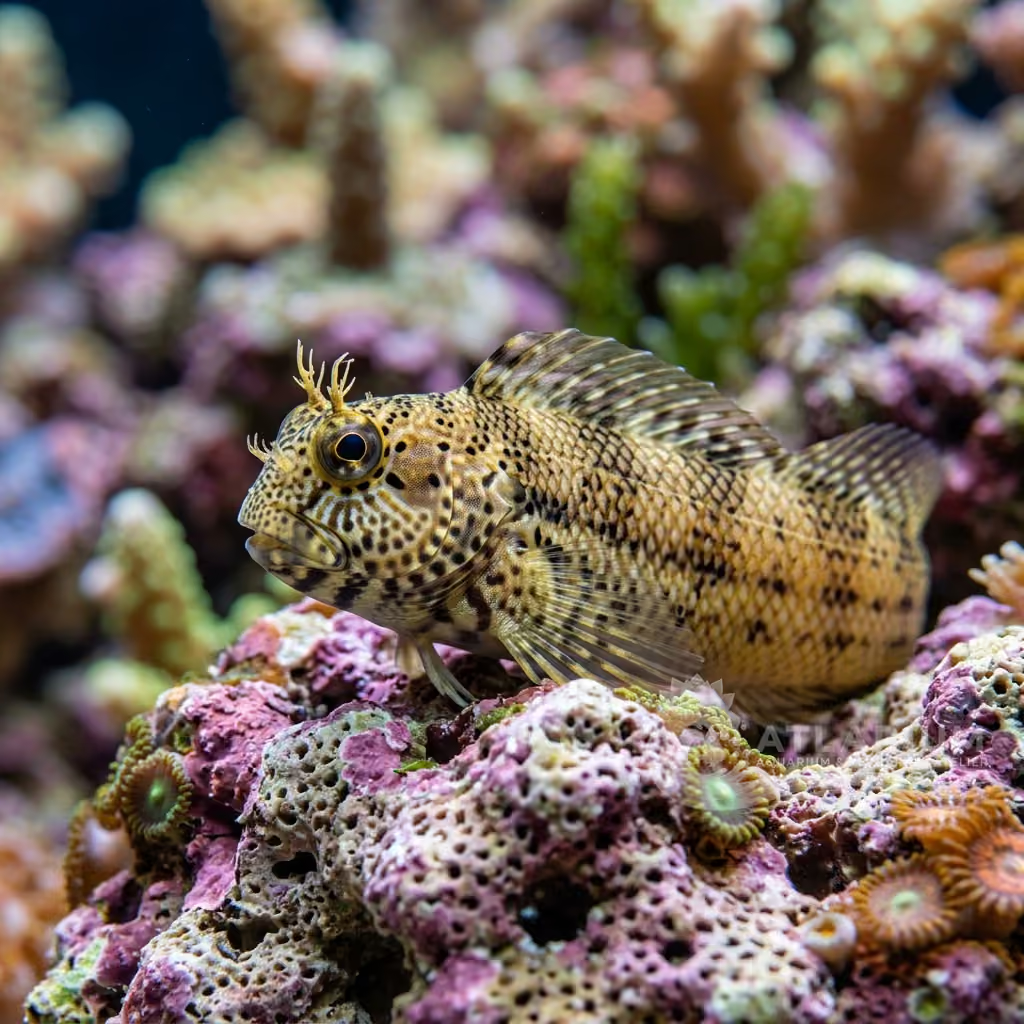
Coloration and Sexual Dimorphism: Displays a dramatic and contrasting color pattern: the body is mostly dark grey to velvet black, while the dorsal fin features a bright yellow-orange coloration that tapers toward the back. Some regional variations display greenish hues on the head. Sexual dimorphism is minimal; mature males may develop slightly longer dorsal and anal fin filaments.

Cuidado, criação e companheiros de tanque
Aquarium Setup: Requires a reef aquarium of at least 100 liters. It is essential to provide plenty of live rock with numerous caves, crevices, and small holes where the fish can establish a nocturnal roost. Ample open swimming space is necessary. A tight-fitting lid or mesh cover is recommended as they are capable of jumping when startled.
Diet and Feeding: An omnivore with a preference for small crustaceans and zooplankton. In captivity, it readily accepts frozen foods such as mysis, brine shrimp, copepods, and preparations containing marine algae. It quickly adapts to high-quality dry flakes and micro-pellets. Feed twice daily to support its active swimming habits.
Water Quality: Requires stable reef parameters: water temperature between 24 and 28 °C, pH levels of 8.1 to 8.4, and a specific gravity of 1.020 to 1.025. Keep nitrates and phosphates low through active protein skimming and regular water changes of 10-15% every two weeks to prevent health complications.
Compatibility and Cohabitation: An excellent community fish. Natural predators usually avoid it due to its venomous bite. Avoid keeping it with other Meiacanthus species unless the tank is large with distinct visual boundaries. It is fully reef-safe and will not harm corals or most ornamental invertebrates.
Aquarium Breeding: Breeding in captivity is possible. They are substrate spawners; the female deposits adhesive eggs inside a crevice or empty tube, which the male then guards and fans until hatching. The newly hatched larvae are very small and require microscopic live foods such as rotifers to survive.
Risks and Diseases: A robust species that rarely falls ill under proper water conditions. However, avoid or carefully dose copper-based medications, as blennies can be highly sensitive to them. Use caution when handling or cleaning the tank: its bite is venomous, causing pain similar to a bee sting in humans.

Origem e distribuição geográfica
Meiacanthus bundoon is native to the southwestern Pacific Ocean, with populations primarily concentrated around Fiji, Tonga, and the Solomon Islands. It inhabits seaward coral reefs and shallow lagoon systems, typically ranging in depth from 2 to 20 meters. It is frequently found swimming near branching Acropora corals, which it uses as immediate shelter when threatened by predators.
Origem
Oceanos tropicais e recifes

Perfil de peixe
- Temperamento
- Peaceful
- They are bold, active, and fascinating to watch as they constantly hover and swim in the open. While generally peaceful with other species, their venomous bite makes them completely fearless of larger fish. They will not hesitate to bite back if swallowed or attacked, often causing the predator to spit them out. They make a colorful, dynamic, and unique addition to a reef community.
- Dieta
- Omnivore
- This species is an omnivorous planktivore that feeds from the water column rather than grazing on rocks. They eagerly accept frozen foods like mysis shrimp, brine shrimp, and finely chopped seafood. High-quality marine flakes and micro-pellets are also usually taken with enthusiasm. A varied diet that includes some marine algae or spirulina will keep their colors bright and their immune systems strong.
- Expectativa de vida
- 3-5 years
- Tamanho adulto
- 10 cm
- Proporção sexual
- Flexible
- It is highly recommended to keep only one individual per aquarium unless they are a proven, mated pair. Conspecifics or even similarly shaped blennies will engage in vicious, often fatal, combat. In very large tanks with abundant rockwork, multiple individuals might coexist, but the risk remains high. For the vast majority of home aquarists, keeping a single specimen is the safest choice.
- Frequência de alimentação
- Twice daily
- They should be fed two to three times daily with small amounts they can quickly snatch from the water column. Since they have relatively small stomachs, frequent feeding mimics their natural continuous foraging behavior. They are quick and enthusiastic eaters that will aggressively compete for food. Automated feeders dispensing small sinking pellets are highly beneficial for them.
- Carga biológica
- Low to Medium
- The Bundoon Blenny produces a minimal bioload making them suitable for smaller marine aquariums. They do not significantly impact nitrate or phosphate levels if fed correctly. Standard marine filtration and regular, modest water changes are entirely sufficient to maintain excellent water parameters. They are quite hardy and resilient to minor fluctuations in water chemistry.
- Fluxo
- Strong
- They appreciate moderate water flow that suspends food particles in the water column. Good flow encourages them to stay active and visible in the open water. Ensure there are calmer areas near the rockwork where they can retreat and rest when desired. Too much turbulent flow can exhaust them, as they constantly swim rather than perch.
- Risco de salto
- Yes
- They are known to be significant jumper risks, particularly when newly introduced to an aquarium. A tight-fitting lid, canopy, or mesh screen is absolutely mandatory to keep them safely inside. They often dart toward the surface when chased or spooked by sudden movements outside the tank. Do not underestimate their ability to find even the smallest escape route.
- Reprodução
- Oviparous
- They are demersal spawners; the male courts the female and she lays adhesive eggs inside a tight crevice or empty shell. The male fiercely guards and aerates the egg clutch until they hatch. Captive breeding is very possible and happens regularly in well-established aquariums. Rearing the very small larvae, however, requires specialized cultures of rotifers and copepods.
- Compatibilidade e companheiros de tanque
- Reef safe
- They are generally peaceful and completely reef safe, paying no attention to corals or invertebrates. However, they possess venomous fangs which they use defensively, meaning aggressive tank mates will learn to leave them alone. They can be safely kept with a wide variety of peaceful community fish. Avoid keeping them with other fang blennies, as they will fight aggressively over territory.
- Nível do tanque
- All levels
- Unlike many blennies that perch on the substrate, they spend most of their time actively swimming in the mid-water regions. They will utilize the upper rockwork as a base to dart out and catch passing plankton. They require small caves or crevices in the live rock where they can sleep securely at night. They are very visible fish that utilize open swimming space extensively.

Modelos e parâmetros científicos
FishBase
Acesso aos dados científicos oficiais da espécie
FishBase v25.04Dados sincronizados em: 15/06/2026
- Nível trófico
- 3,4 ± 0,45 se
- Resiliência
- Alta (menos de 15 meses)
- Unicidade filogenética (PD50)
- 0.5
- Relação bayesiana comprimento-peso
- a = 0.00575, b = 3.06
- VulnerabilidadeVulnerabilidade baixa (10 / 100)

Espécies relacionadas
Recomendações agrupadas por parentes próximos, escolhas de acompanhantes e cuidados semelhantes.