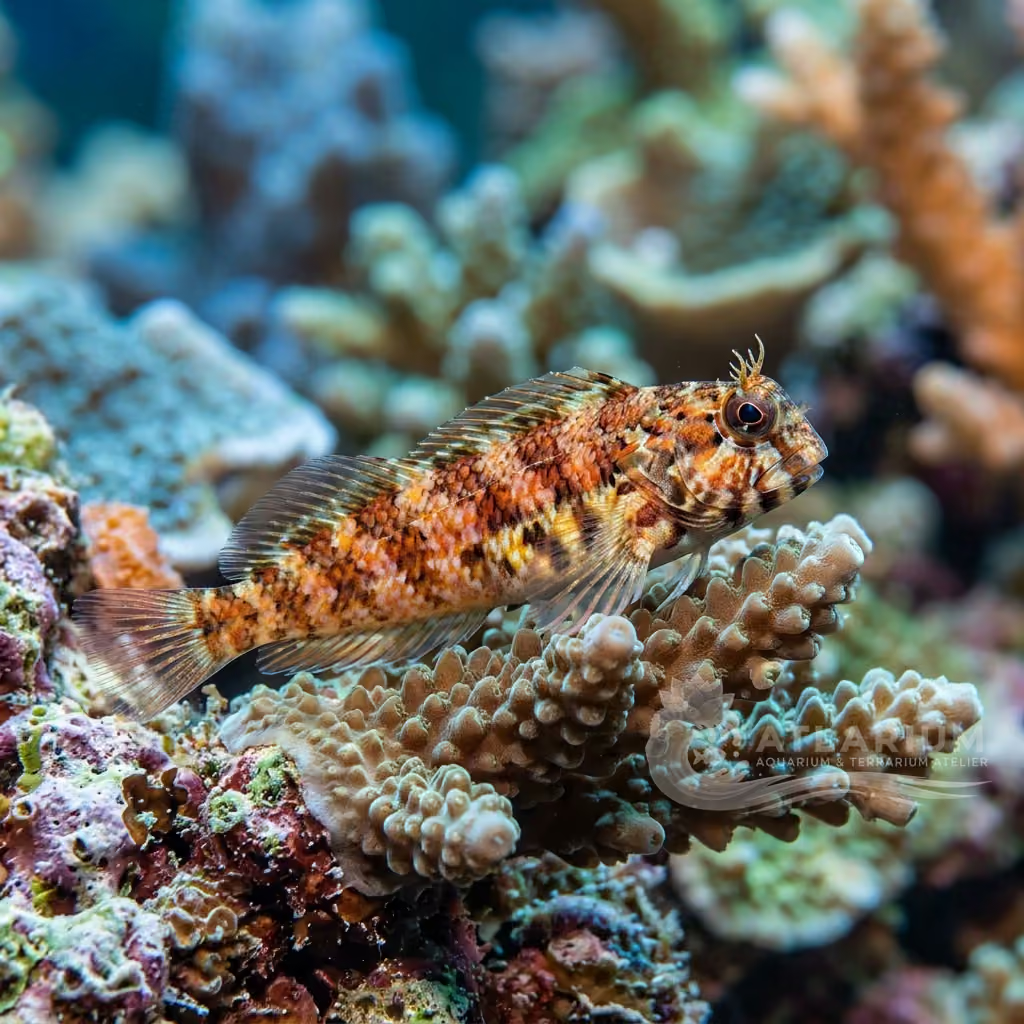
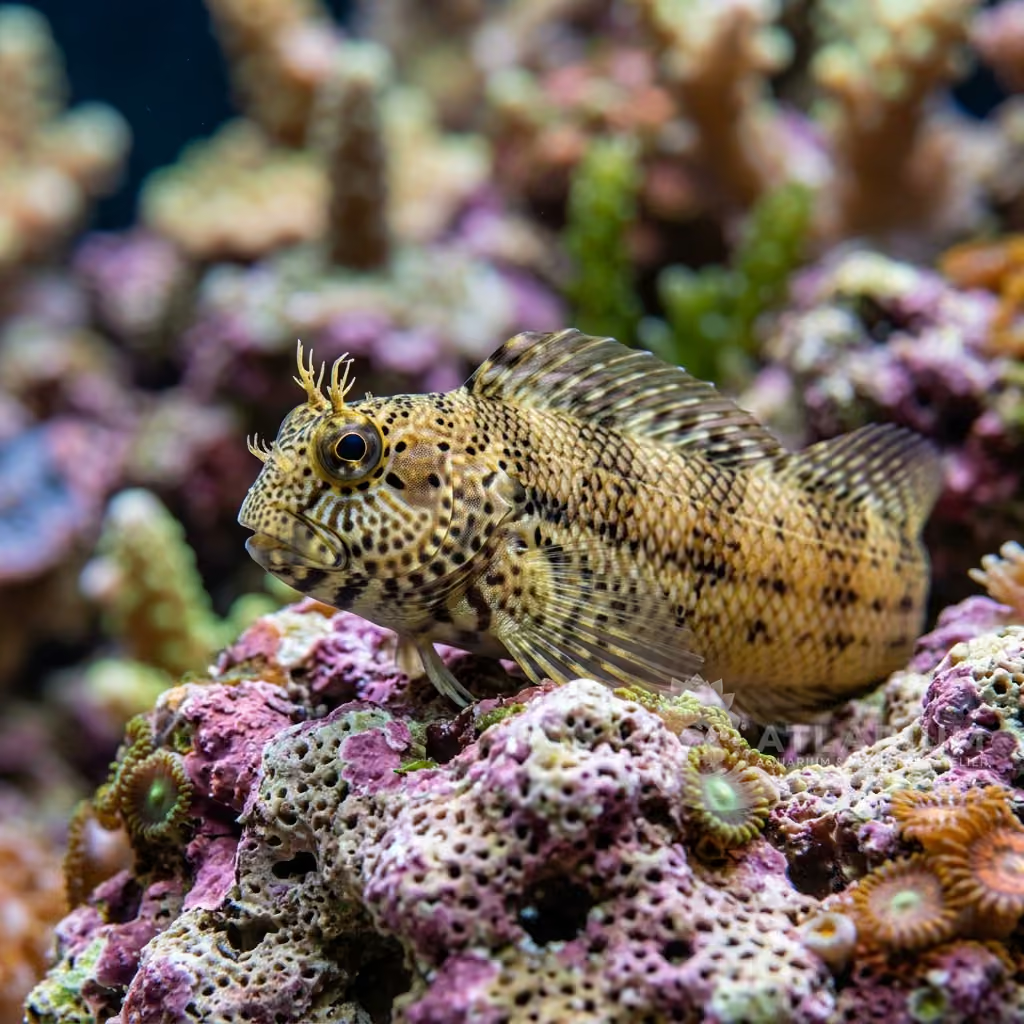
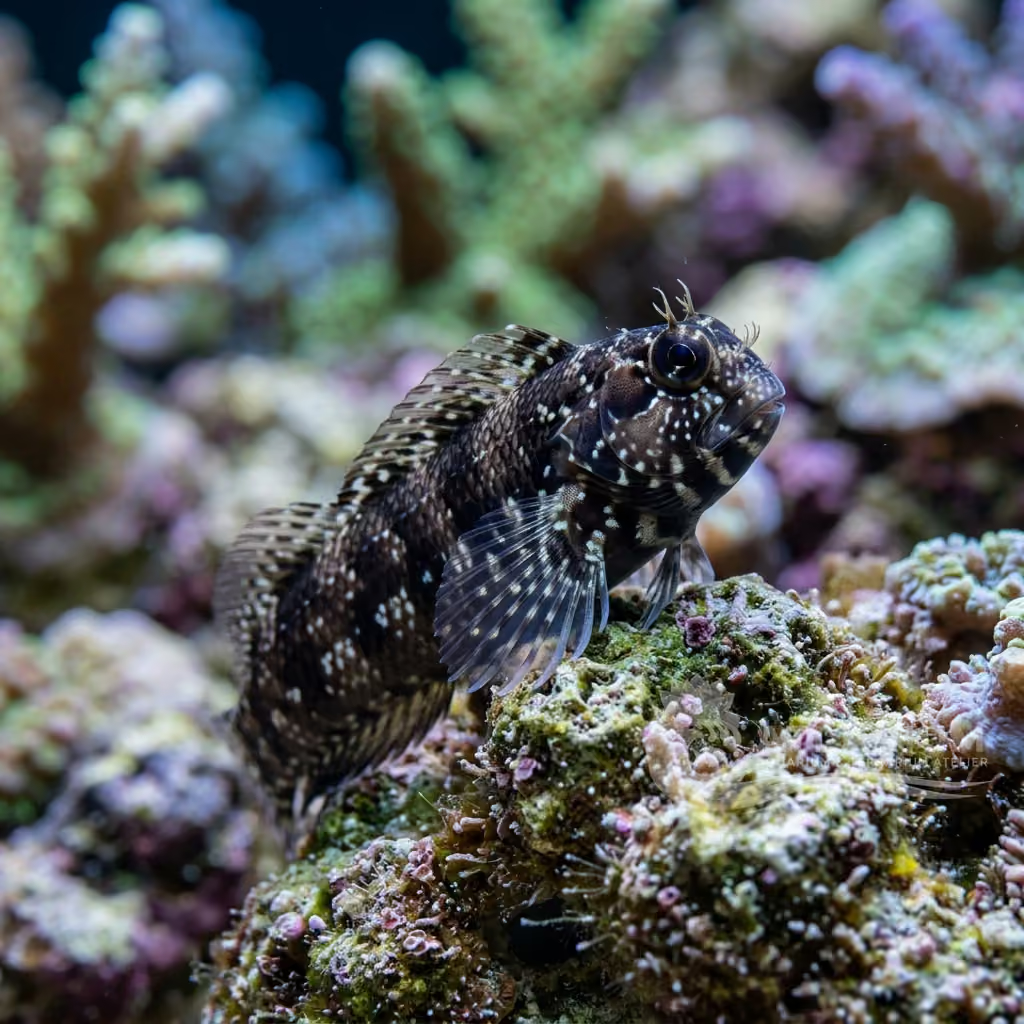
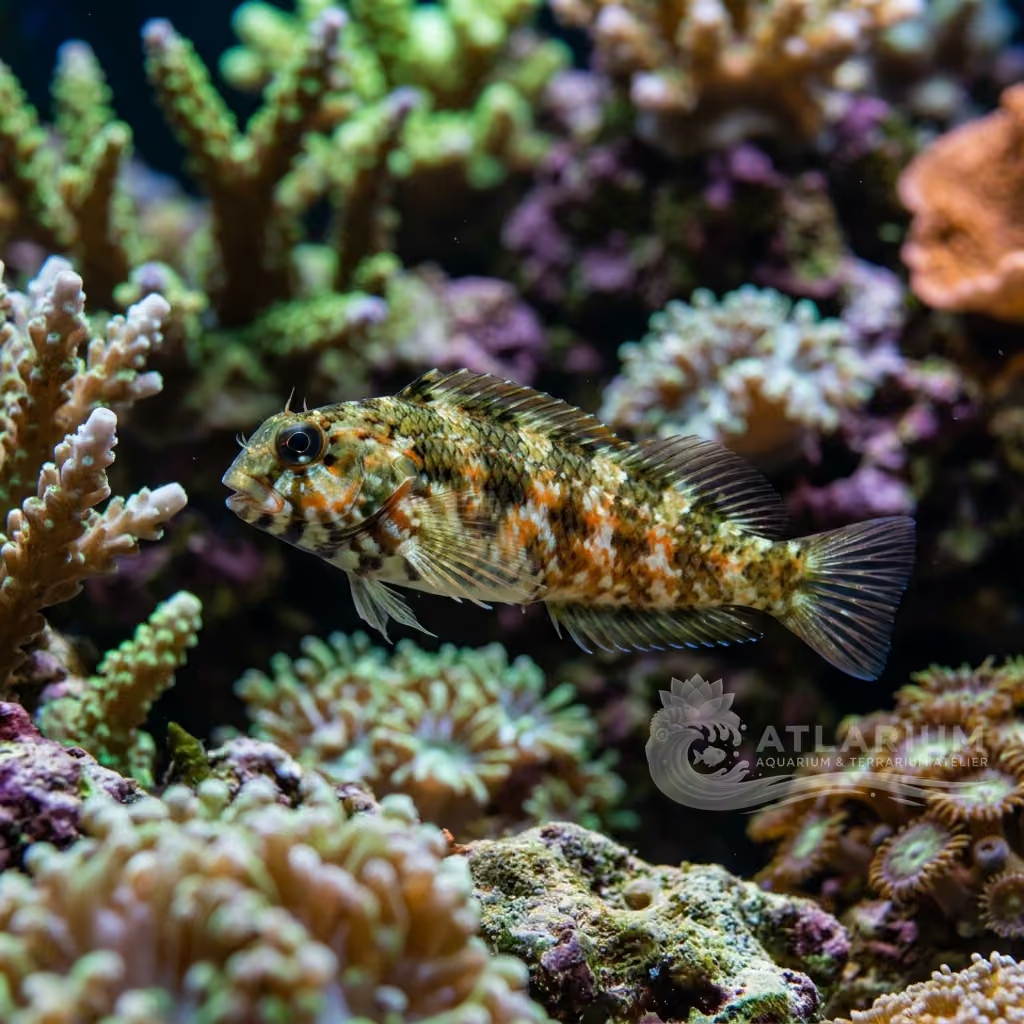
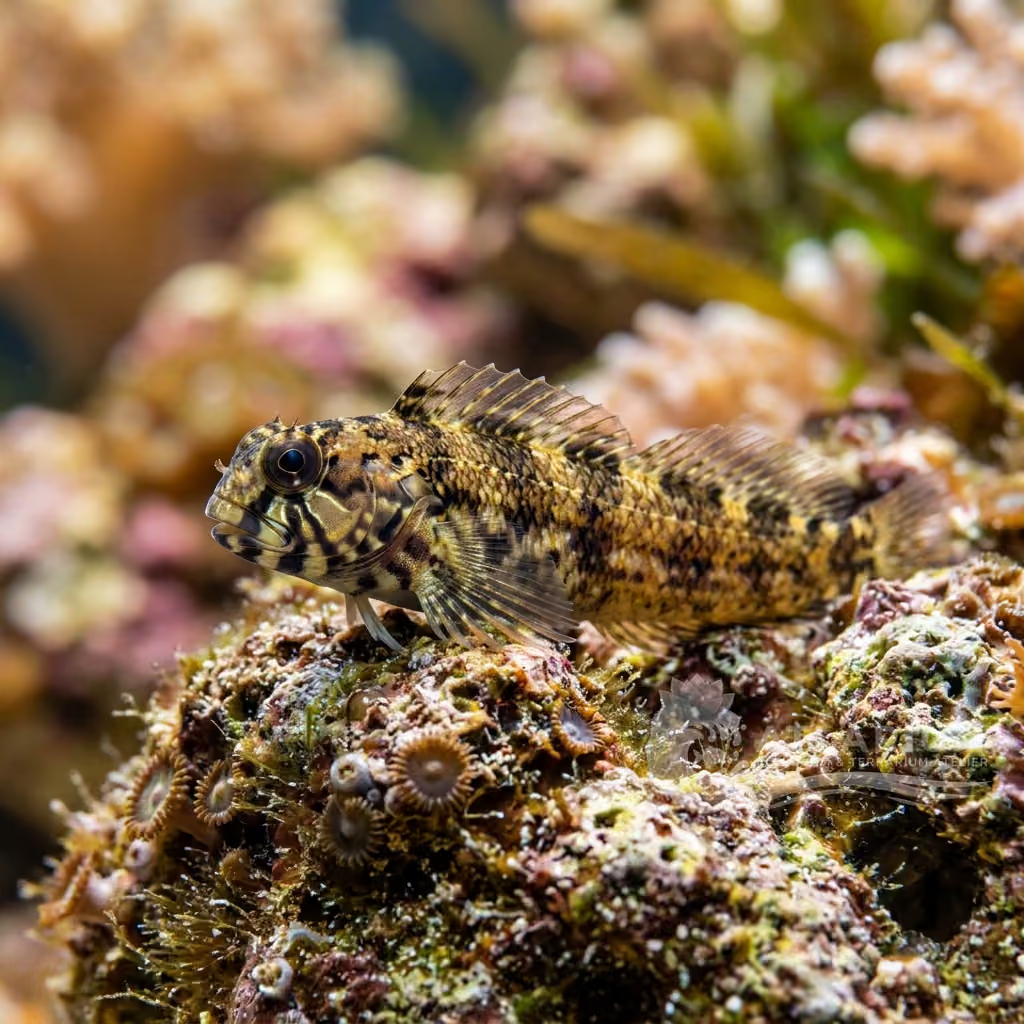
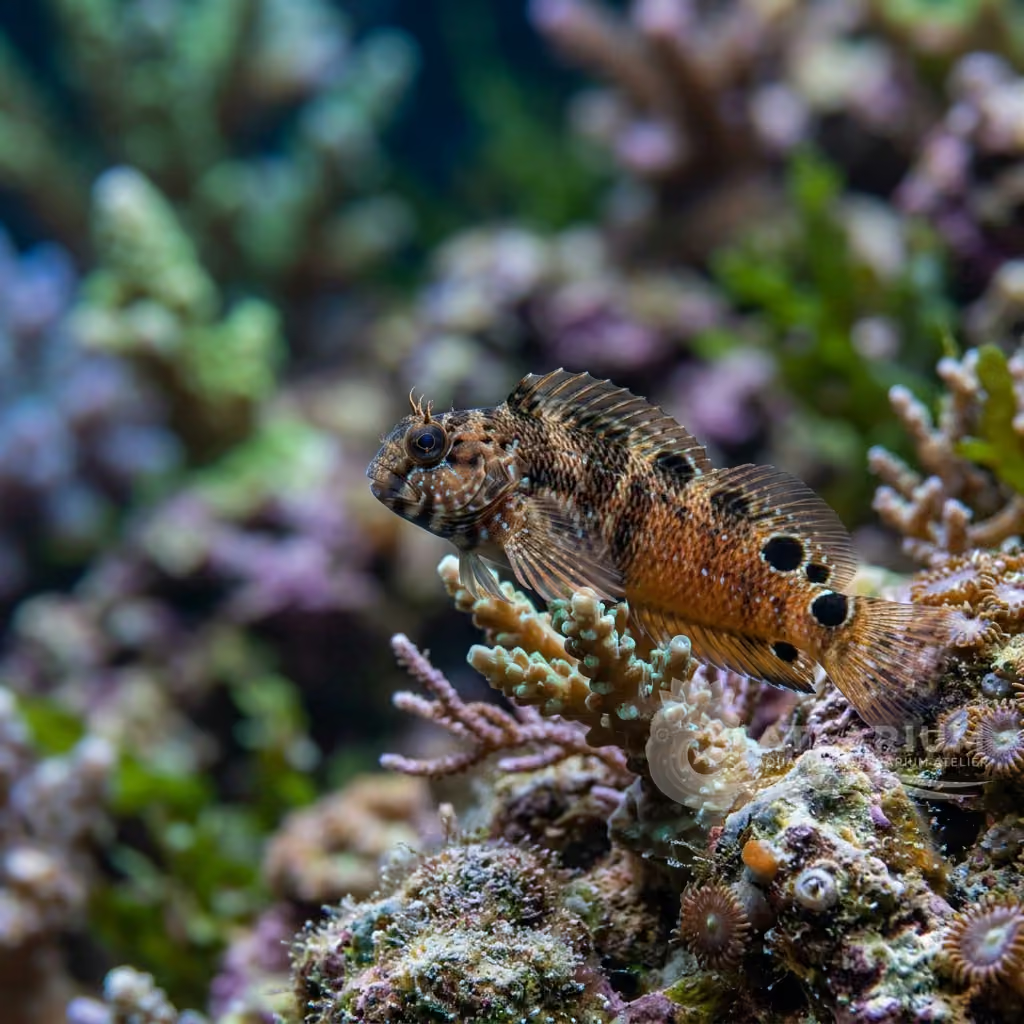
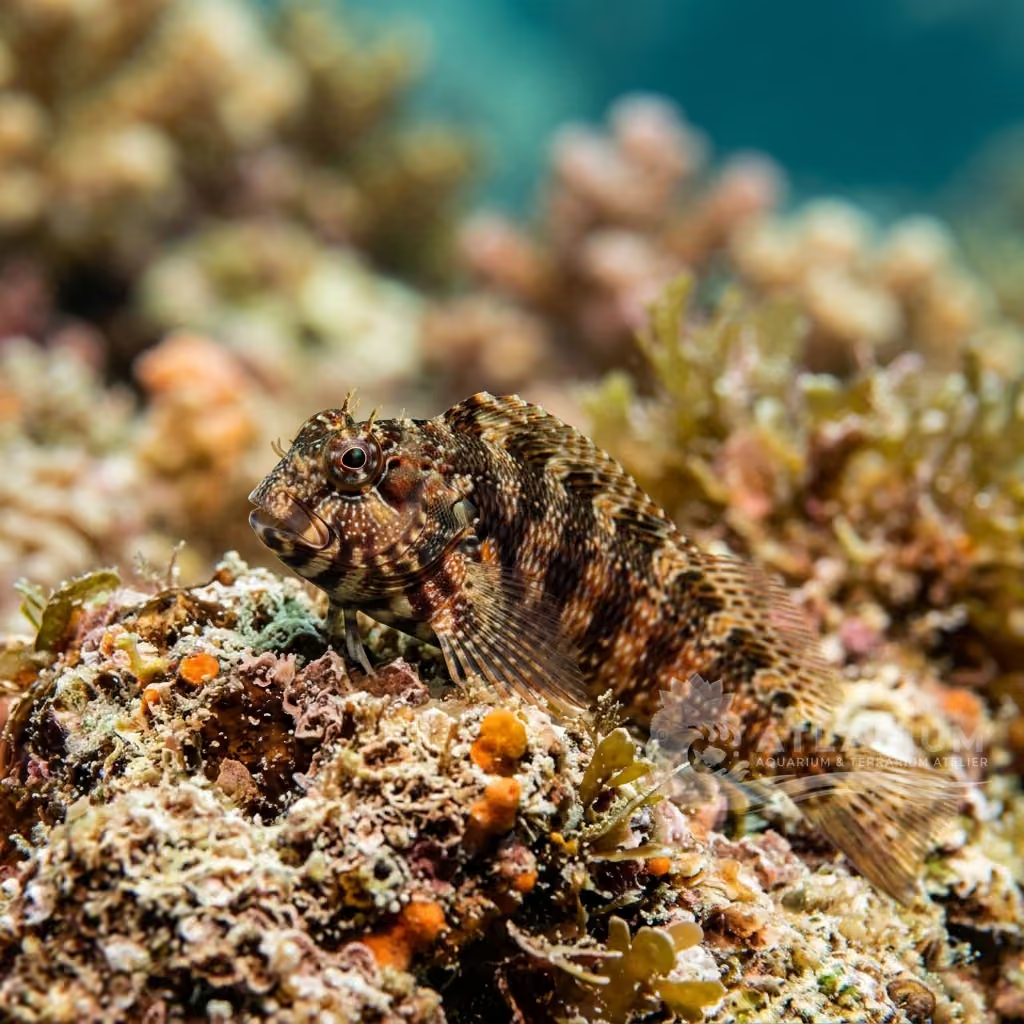
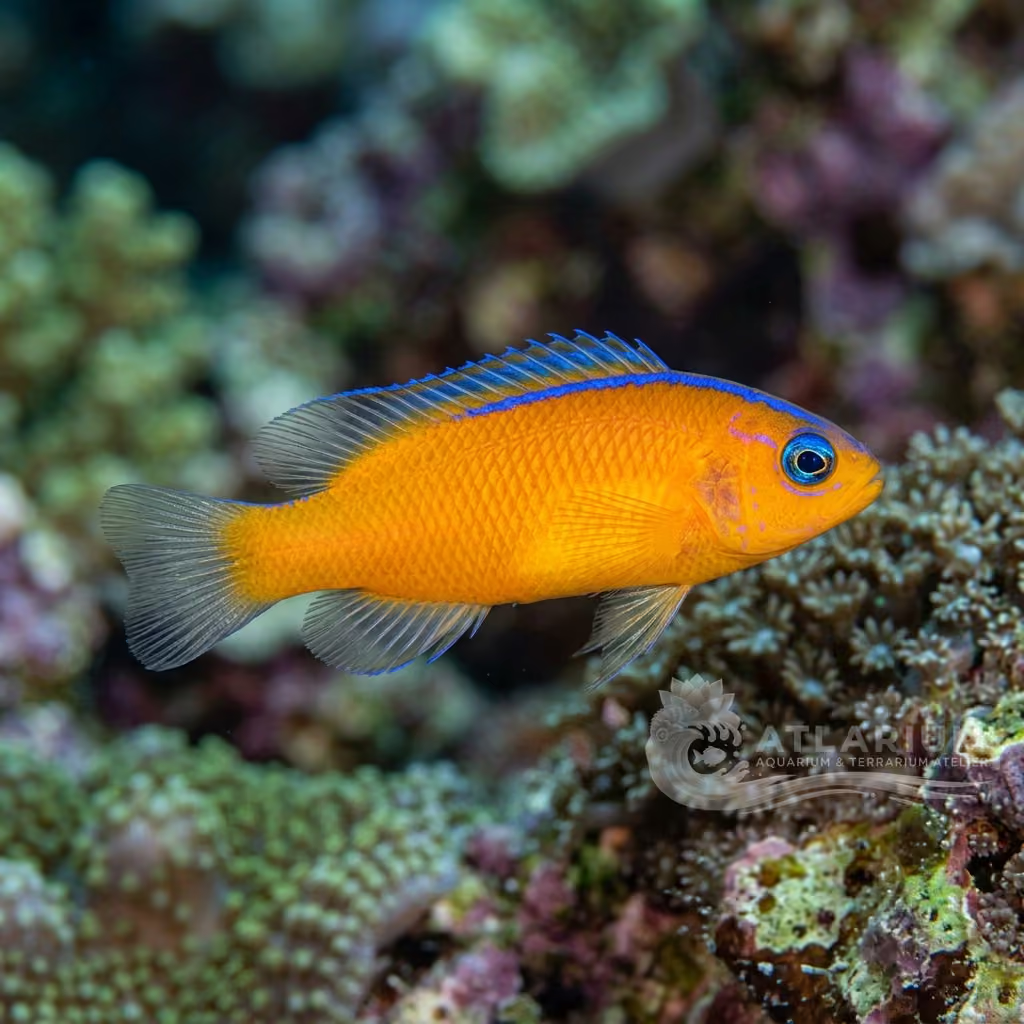
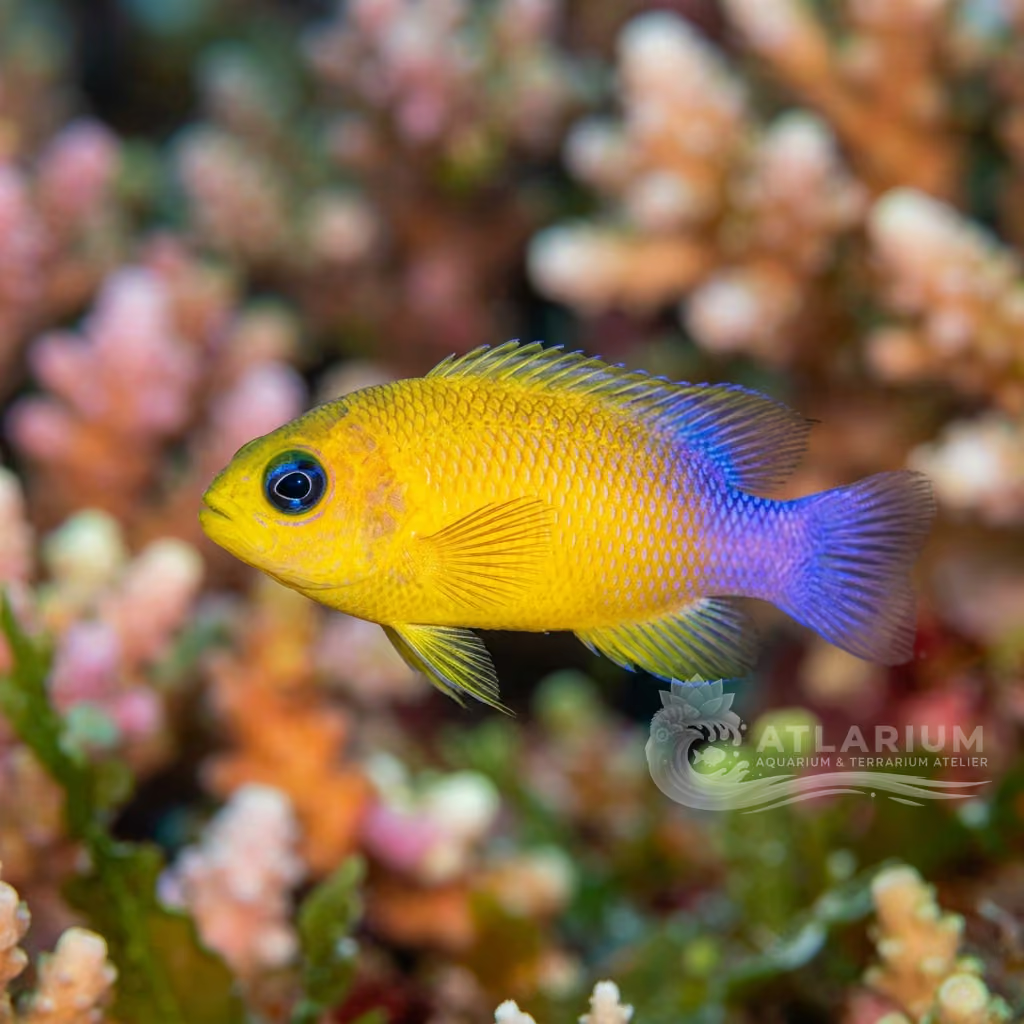
Banda combtooth blenny
Ecsenius bandanus
Native to Indonesia, this small, peaceful marine blenny is an excellent choice for nano reefs, actively grazing on microalgae while staying safe with most corals.
Temperatura da água
22 - 26 °C
Valor de pH
8.1 - 8.4
Tipo de água
Marinho
Nível do tanque
Parte inferior
Tamanho adulto
6 cm
Volume mínimo do tanque
>= 60 L
Grupo mínimo
>= 1
KH
8 - 11 dKH

Descrição da espécie
Geographical Origin and Habitat: Ecsenius bandanus is native to the warm tropical waters of the Western Central Pacific Ocean, endemic to Indonesia, specifically around the Banda Sea, the Maluku Islands, and Timor. It inhabits shallow coral reefs, sheltered lagoons, and rubble-rich zones at depths ranging from 1 to 15 meters. It lives in close association with rockwork and soft corals, utilizing empty worm holes and cracks.
Taxonomy and Morphology: Belonging to the family Blenniidae and the genus Ecsenius. It features an elongated, cylindrical, and scaleless body covered in a protective mucus layer. The head is rounded with large, mobile, protruding eyes that provide excellent situational awareness. It has a subterminal mouth with a row of small, flexible, comb-like teeth. Adults reach a maximum length of 4 to 5 centimeters.
Social Behavior: A diurnal, active, and peaceful blenny that spends the day perching on rockwork or coral branches, lifting its head to observe its surroundings. It may exhibit intraspecific territoriality toward other Ecsenius species, especially in smaller tanks. It is peaceful toward unrelated fish and shows curiosity toward its keeper.
Coloration and Sexual Dimorphism: The body coloration is split horizontally: the upper half is dark brownish-black, while the lower half and belly are silvery-white or cream. It often features a bright yellow or orange horizontal stripe running through the eye and extending partially onto the body. There is no visible sexual dimorphism between sexes.

Cuidado, criação e companheiros de tanque
Aquarium Setup: Due to its small size, it can be housed in aquariums or nano reefs starting from 75 liters (approx. 20 gallons). The setup must include plenty of live rock with small holes, crevices, and cavities for the fish to hide. Strong lighting is recommended to encourage the growth of microalgae on the rocks, which forms its primary diet. Cover the tank.
Diet and Feeding: Herbivorous and detritivorous. In captivity, it feeds by grazing on microalgae and organic film on the rocks. The diet should be supplemented with plant-based dry foods, spirulina flakes, dried seaweed (nori) sheets, and small amounts of frozen foods (cyclops, brine shrimp). Do not introduce it into sterile, algae-free aquariums.
Water Quality: Requires stable marine parameters: temperature 23-27°C (73-81°F), pH 8.1-8.4, specific gravity 1.022-1.025, and carbonate hardness (KH) at 8-11 dKH. Efficient filtration and regular water changes are necessary to keep nitrates low. Moderate water flow is recommended to maintain high dissolved oxygen levels.
Compatibility and Cohabitation: 100% reef-safe, making it an ideal inhabitant for tanks with hard and soft corals. It coexists peacefully with small community fish such as clownfish, gobies, pipefish, and small wrasses. Avoid housing it with other territorial Ecsenius blennies in the same tank unless the enclosure is very large.
Aquarium Breeding: Spawning in home aquariums is rare and challenging. They are cave-spawners: the female deposits adhesive eggs inside a hole or empty shell, and the male fertilizes them, taking responsibility for guarding and fanning the nest. The pelagic larvae are extremely difficult to raise in home aquariums.
Risks and Diseases: The primary risk is starvation if introduced into sterile or newly established tanks lacking algae on the rocks. It is also an active jumper, requiring a tight-fitting lid or mesh screen to prevent escapes. It is moderately hardy but can contract skin parasites if subjected to high stress during acclimation.

Origem e distribuição geográfica
Ecsenius bandanus is native to the warm tropical waters of the Western Central Pacific Ocean, endemic to Indonesia, specifically around the Banda Sea, the Maluku Islands, and Timor. It inhabits shallow coral reefs, sheltered lagoons, and rubble-rich zones at depths ranging from 1 to 15 meters. It lives in close association with rockwork and soft corals, utilizing empty worm holes and cracks.
Origem
Oceanos tropicais e recifesSul e Sudeste Asiático

Perfil de peixe
- Temperamento
- Peaceful but territorial
- They are peaceful, somewhat shy at first, but highly observant fish. Once comfortable, they spend much of the day perched in the open, watching the tank's activities. Their expressive faces and erratic hopping movements make them a joy to observe.
- Dieta
- Herbivore
- This species is a dedicated herbivore that spends its days grazing on fine microalgae. To maintain its health, supply it with high-quality spirulina, nori sheets, and specialized herbivore pellets. A well-established tank with plenty of live rock is crucial to supplement its diet naturally.
- Expectativa de vida
- 3-5 years
- Tamanho adulto
- 6 cm
- Proporção sexual
- Solitary
- It is strongly advised to keep a single Banda blenny per aquarium. Two males will almost certainly fight, potentially to the death, over prime rockwork territories. If a male and female pair are obtained, they will often share a territory peacefully.
- Frequência de alimentação
- Twice daily
- They are constant grazers, so leaving a small piece of dried seaweed clipped in the tank daily is ideal. Direct feeding with herbivore preparations should be done once or twice a day. Ensure they receive enough plant matter to prevent them from slowly wasting away.
- Carga biológica
- Low
- The Banda blenny produces an exceptionally small bioload, making it perfect for smaller nano reef tanks. Its minimal waste production won't strain standard filtration systems. Routine weekly or bi-weekly water changes are perfectly sufficient to maintain water quality.
- Fluxo
- Moderate
- They prefer a gentle to moderate water flow that mimics the sheltered reef environments they often occupy. Excessive flow may force them to stay hidden in the rockwork rather than venturing out to feed. Moderate currents will encourage healthy algae growth on the rocks without overwhelming the fish.
- Risco de salto
- Yes
- Like most members of the Ecsenius genus, they are startled easily and will jump to escape perceived threats. A snug-fitting lid or fine mesh canopy must be utilized at all times. Care should be taken during maintenance not to spook them unnecessarily.
- Reprodução
- Oviparous
- They lay their eggs in tight crevices, which the male then rigorously defends and aerates. While spawning can occur in captive environments, raising the larvae is incredibly difficult. The fry require microscopic rotifers and greenwater immediately after hatching.
- Compatibilidade e companheiros de tanque
- Peaceful
- It is an incredibly peaceful fish that completely ignores corals and sessile invertebrates. It gets along wonderfully with small gobies, peaceful wrasses, and clownfish. The only risk of aggression comes from housing them with other combative blenny species.
- Nível do tanque
- Bottom
- They are strictly bottom-dwellers that spend their time resting on rocks and corals. They hop along the substrate and rockwork, as they lack a swim bladder for sustained hovering. Ample hiding holes are necessary for them to feel secure and sleep.

Modelos e parâmetros científicos
FishBase
Acesso aos dados científicos oficiais da espécie
FishBase v25.04Dados sincronizados em: 15/06/2026
- Nível trófico
- 2 ± 0 se
- Resiliência
- Alta (menos de 15 meses)
- Unicidade filogenética (PD50)
- 0.5
- Relação bayesiana comprimento-peso
- a = 0.00776, b = 3
- VulnerabilidadeVulnerabilidade baixa (10 / 100)

Espécies relacionadas
Recomendações agrupadas por parentes próximos, escolhas de acompanhantes e cuidados semelhantes.