Sheepshead Minnow
Cyprinodon variegatus
The sheepshead minnow is a robust, euryhaline pupfish thriving in diverse salinities. Highly territorial breeding males require a 100L tank with many hiding spots, a secure lid, and an omnivorous diet.
Temperatura da água
10 - 30 °C
Valor de pH
7 - 8.5
Tipo de água
Água doce / Água salobra / Marinho
Nível do tanque
Todos os níveis
Tamanho adulto
7 cm
Volume mínimo do tanque
>= 80 L
Grupo mínimo
>= 6
GH
10 - 25 dGH
KH
5 - 12 dKH
TDS
200 - 495 ppm
Condutividade
313 - 773 uS/cm

Descrição da espécie
Geographical Origin and Habitat: Widespread along the Atlantic coast of North America, from Massachusetts down to Venezuela and the West Indies. It inhabits salt marshes, shallow lagoons, estuaries, and tidal pools, and is capable of tolerating habitats ranging from pure freshwater to hypersaline pools.
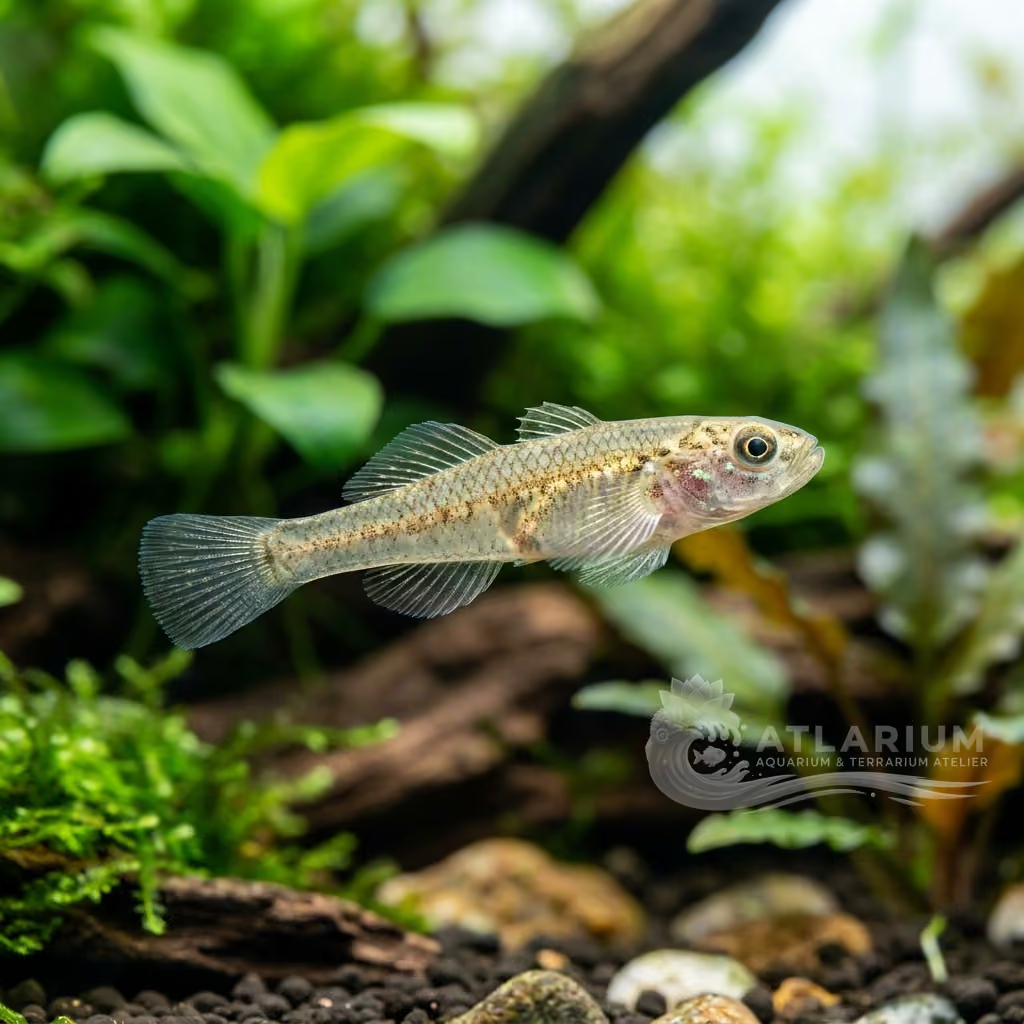
Taxonomy and Morphology: Belonging to the family Cyprinodontidae and the genus Cyprinodon. Features a deep, stocky body with a rounded snout and small tricuspid teeth. Adult specimens reach a maximum length of about 7.5 centimeters.
Social Behavior: Males are intensely territorial and highly aggressive toward rivals during the breeding season. They guard small substrate nesting territories, while females, juveniles, and non-breeding males form loose foraging schools.
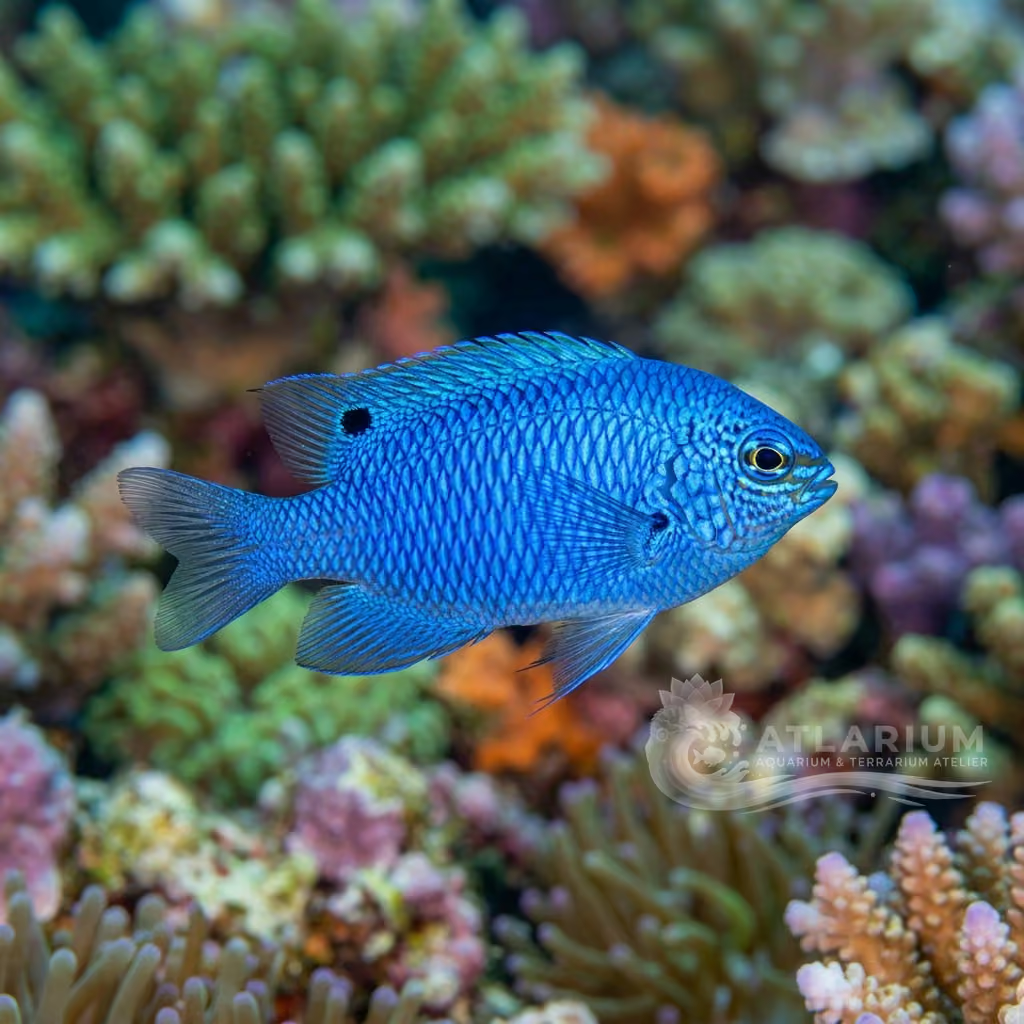
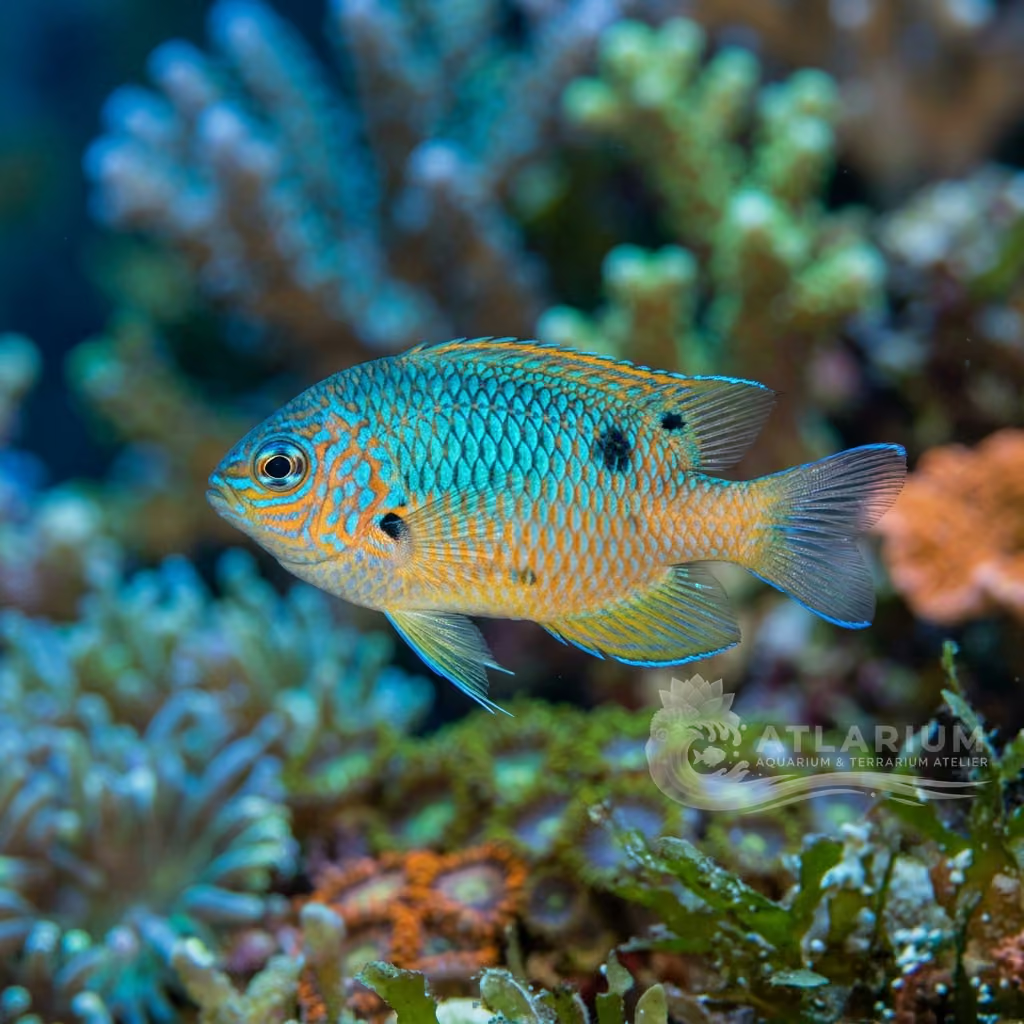
Coloration and Sexual Dimorphism: Body is olive-grey with irregular, dark vertical bands along the flanks. Breeding males undergo a striking transformation, developing a brilliant iridescent blue sheen on their backs and bright orange-yellow bellies.

Cuidado, criação e companheiros de tanque
Aquarium Setup: An aquarium of at least 100 liters with plenty of hardscape (rocks and driftwood) is recommended. Provide dense stands of salt-tolerant plants (like Java Fern) to break lines of sight and provide shelter for harassed females.
Diet and Feeding: Voracious omnivore. In their natural habitat, they consume algae, detritus, and small benthic invertebrates; in captivity, they accept all foods including commercial flakes, spirulina pellets, frozen mysis, and fresh vegetables.
Water Quality: Highly adaptable. While they can live in freshwater, brackish water (specific gravity 1.005-1.015) is highly recommended. Maintain a stable pH of 7.2-8.5, and a temperature range between 18 and 28 °C.
Compatibility and Cohabitation: Due to male aggression, they are best kept in a species-specific harem tank (one male with several females) or with robust brackish tankmates like sailfin mollies and larger glassfish. Avoid small, delicate species.
Aquarium Breeding: Highly prolific spawners. Males court females vigorously, and adhesive eggs are deposited on the substrate or spawning mops. To raise fry, separate the eggs or parents, as adults will readily consume their own spawn.
Risks and Diseases: Resilient to most common fish diseases. Major issues arise from physical injuries due to intense territorial fighting; monitor the tank for nipped fins and treat with antibacterial agents if necessary.

Origem e distribuição geográfica
Widespread along the Atlantic coast of North America, from Massachusetts down to Venezuela and the West Indies. It inhabits salt marshes, shallow lagoons, estuaries, and tidal pools, and is capable of tolerating habitats ranging from pure freshwater to hypersaline pools.
Origem
Oceanos tropicais e recifesExtra-Amazônica América do SulAmérica Central e CaribeAmérica do Norte

Perfil de peixe
- Temperamento
- Peaceful
- They are incredibly hardy, active, and pugnacious fish that punch well above their weight class. Males are fiercely territorial and will relentlessly chase rivals and harass females. They are incredibly tough and can survive massive swings in salinity and temperature that would kill other fish.
- Dieta
- Omnivore
- They are omnivorous with a strong inclination toward plant matter and algae. Their diet should consist of high-quality spirulina flakes, algae wafers, and blanched vegetables. They also require meaty supplements such as brine shrimp and bloodworms to maintain optimal conditioning and color.
- Expectativa de vida
- 1-3 years
- Tamanho adulto
- 7 cm
- Proporção sexual
- Specific M:F ratio
- Males are slightly larger and exhibit beautiful, iridescent blue and orange breeding colors, while females are more drab and olive-colored. It is crucial to maintain a ratio of at least two or three females per male to disperse the male's intense aggression. Keeping multiple males requires a very large tank with numerous broken lines of sight.
- Frequência de alimentação
- Twice daily
- Because they graze continuously throughout the day, they benefit from being fed small amounts two to three times daily. A tank with a healthy growth of natural algae provides an excellent supplementary food source. Overfeeding protein-rich foods should be avoided to prevent digestive issues.
- Carga biológica
- Medium
- The Sheepshead minnow produces a moderate bioload that is manageable with standard filtration. Despite their small size, they are incredibly active and constantly foraging, which increases their waste production. Routine water changes and good biological filtration are necessary to keep the water quality high.
- Fluxo
- Moderate
- They inhabit coastal marshes, tidal creeks, and mangrove swamps, so they appreciate moderate water movement. A current helps mimic the tidal flushing of their natural environment and provides necessary oxygenation. However, there should also be calmer areas where they can rest.
- Risco de salto
- Yes
- Like many coastal minnows and killifish, they have a tendency to jump when frightened or when males are aggressively chasing each other. A tight-fitting lid is strongly advised. Keeping them in a sufficiently large tank with plenty of cover also reduces jumping behavior.
- Reprodução
- Oviparous
- Breeding is quite common and easy to achieve in the home aquarium. Males become highly territorial and aggressively court females, who will lay a few eggs daily among fine-leaved plants or spawning mops. The parents may eat the eggs, so providing dense cover or removing the eggs is recommended.
- Compatibilidade e companheiros de tanque
- Community
- They are known for their feisty and somewhat aggressive nature, especially the males. They should only be kept with fast-moving, robust fish like certain gobies or larger brackish species that can hold their own. Slow-moving or long-finned fish will almost certainly be heavily nipped and harassed.
- Nível do tanque
- All levels
- They utilize all levels of the water column but are often found near the bottom or mid-water actively grazing on hard surfaces. They require open swimming space but also appreciate rocks and driftwood where algae can grow. They will vigorously defend their chosen grazing territory.

Modelos e parâmetros científicos
FishBase
Acesso aos dados científicos oficiais da espécie
FishBase v25.04Dados sincronizados em: 15/06/2026
- Nível trófico
- 2,4 ± 0,1 se
- Resiliência
- Média (1,4 - 4,4 anos)
- Unicidade filogenética (PD50)
- 0.5
- Relação bayesiana comprimento-peso
- a = 0.0263, b = 3.12
- VulnerabilidadeVulnerabilidade baixa (10 / 100)

Espécies relacionadas
Recomendações agrupadas por parentes próximos, escolhas de acompanhantes e cuidados semelhantes.