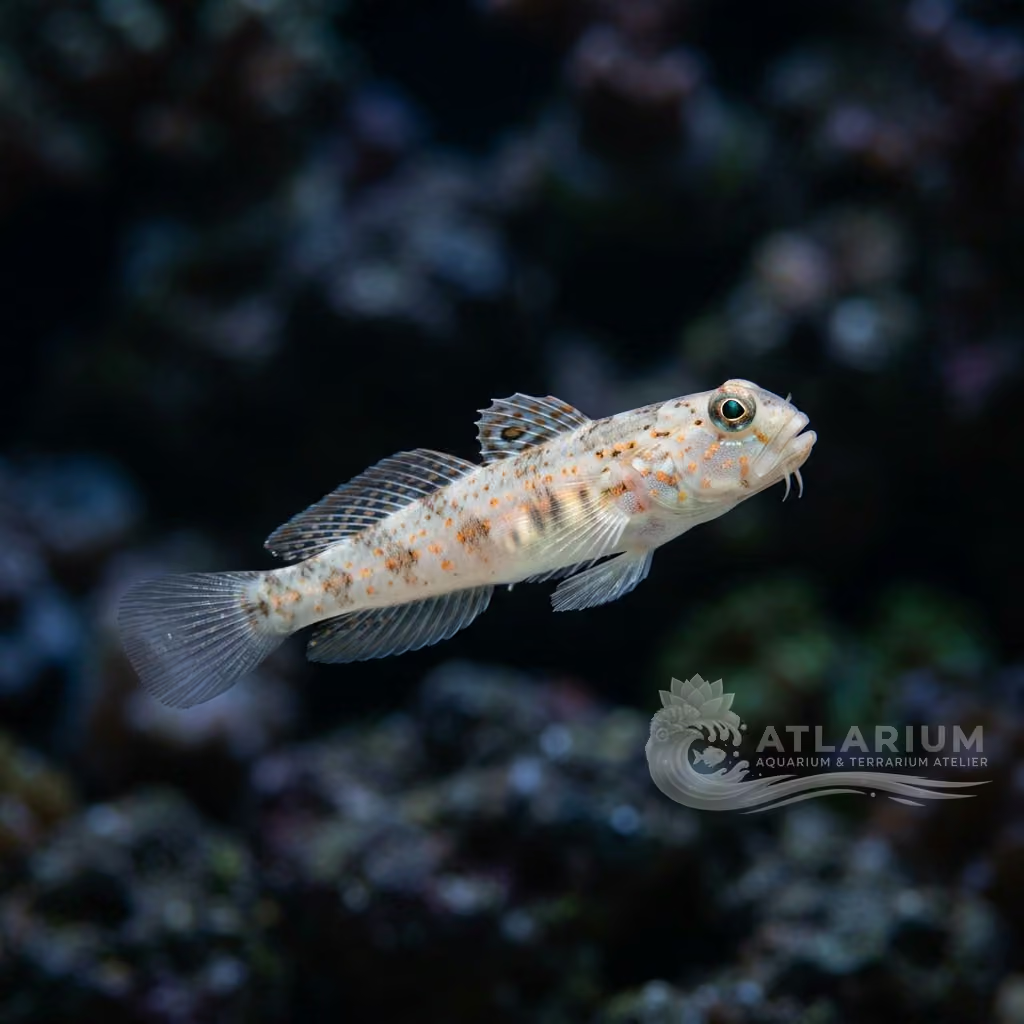
Philippine Hover Goby
Parioglossus philippinus
A small, slender schooling fish native to the Philippines, inhabiting brackish and marine waters and known for hovering in midwater in cohesive groups.
Temperatura da água
22 - 26 °C
Valor de pH
7.5 - 8.2
Tipo de água
Água salobra / Marinho
Nível do tanque
Parte inferior e intermediária
Tamanho adulto
4 cm
Volume mínimo do tanque
>= 50 L
Grupo mínimo
>= 6
KH
6 - 15 dKH

Descrição da espécie
Geographical Origin and Habitat: Parioglossus philippinus is widely distributed across the tropical Western Pacific, with high populations in the Philippines, Indonesia, Palau, and adjacent coasts. It primarily inhabits estuary mouths, coastal lagoons, mangrove channels, and tidal flats, moving between shallow marine and brackish water environments.
Taxonomy and Morphology: Belonging to the family Gobiidae (often classified with dartfishes in Microdesmidae), the Philippine Hover Goby features a slender, elongated, and laterally compressed body. It has large eyes and a small upturned mouth. It is a tiny species, with adults reaching a maximum length of 3 to 4 centimeters.
Social Behavior: Unlike most bottom-dwelling gobies, it is a pelagic species that hovers in the midwater column in large, tight-knit groups. It is very peaceful, active, and easily startled. It must be kept in schools of at least 6 to 8 individuals to build confidence, reduce chronic stress, and encourage natural swimming behavior.
Coloration and Sexual Dimorphism: Displays a translucent to silvery-beige body with a distinct dark longitudinal stripe running along the flanks to the caudal fin, which often features a dark blotch. Sexual dimorphism is present in mature specimens: males develop longer dorsal and anal fins and show darker body coloration during courtship.

Cuidado, criação e companheiros de tanque
Aquarium Setup: Requires an aquarium of at least 60-80 liters with plenty of open swimming space in the middle. The decor should include plenty of roots, driftwood, and salt-tolerant plants (if kept in brackish water) to provide shelter. A secure screen or lid is mandatory, as these gobies are excellent and agile jumpers.
Diet and Feeding: It is a micro-carnivore and planktivore. In captivity, it must be fed small, high-quality frozen foods such as cyclops, copepods, daphnia, baby brine shrimp, and finely chopped mysis. It may accept micro-pellets, but frozen or live foods should form the bulk of its diet. Feed twice daily.
Water Quality: Highly adaptable, it can be kept in brackish water (specific gravity 1.005 to 1.012) or full marine salinity (1.020 to 1.025). The ideal temperature is 24°C to 28°C, with pH between 7.5 and 8.2. Efficient filtration with a moderate water flow is required to keep water clean and oxygenated.
Compatibility and Cohabitation: Extremely peaceful. Best suited for community brackish aquariums or quiet nano-reef setups. It can be housed with other peaceful species like pipefish, neon gobies, and small cardinalfish. Do not house with larger, aggressive, or fast-swimming tankmates that would outcompete it for food.
Aquarium Breeding: Breeding in home aquariums is very rare and difficult. They spawn in small caves or under mangrove roots, where the male guards the eggs until they hatch. The larvae are microscopic and have a delicate planktonic phase, requiring specialized greenwater rearing and rotifer cultures.
Risks and Diseases: Vulnerable to skin parasites like marine velvet (Oodinium) under stressful conditions. The primary risk in captivity is starvation due to feeding competition; ensure food is distributed evenly across the tank so that all members of the school can feed without being intimidated.

Origem e distribuição geográfica
Parioglossus philippinus is widely distributed across the tropical Western Pacific, with high populations in the Philippines, Indonesia, Palau, and adjacent coasts. It primarily inhabits estuary mouths, coastal lagoons, mangrove channels, and tidal flats, moving between shallow marine and brackish water environments.
Origem
Oceanos tropicais e recifesÁfrica e MadagascarSul e Sudeste AsiáticoAustrália, Nova Guiné e Oceania

Perfil de peixe
- Temperamento
- Peaceful
- It is a highly timid and easily frightened species that relies entirely on flight to avoid danger. Once established in a peaceful community, it becomes a confident and visible mid-water swimmer. It displays zero aggression towards other tank inhabitants.
- Dieta
- Carnivore
- It is a dedicated planktivore, requiring tiny, meat-based foods suspended in the water column. Frozen cyclops, Calanus, and finely crushed dry foods are readily accepted. Live foods such as baby brine shrimp are highly recommended to trigger its natural feeding response.
- Expectativa de vida
- 2-4 years
- Tamanho adulto
- 4 cm
- Proporção sexual
- Group
- They are best maintained in small groups or pairs to encourage natural behavior and reduce stress. A solitary fish will often spend its entire life hiding and may refuse to eat. When kept in groups, they form a loose, peaceful shoal in the open water.
- Frequência de alimentação
- Twice daily
- Because it constantly expends energy hovering in the water, it needs frequent feedings. Providing small amounts of food two to three times a day is ideal. Without frequent feedings, it can quickly become emaciated and succumb to disease.
- Carga biológica
- Low
- The Philippine Dartfish has a negligible bioload, making it perfect for small or heavily stocked tanks. Its small body mass translates to very low waste production. It is easily supported by the biological filtration of a mature reef system.
- Fluxo
- Strong
- It prefers a moderate water flow that gently suspends its food without overpowering its swimming abilities. It is often found hovering in areas of laminar flow just above the reef structure. Access to calmer areas near its chosen hiding spot is also important.
- Risco de salto
- Yes
- This species is an extreme jump risk, especially during its initial introduction or if startled by tank mates. A tightly sealed lid or fine mesh cover is an absolute requirement for its safety. It will exploit even the smallest gaps to escape the aquarium.
- Reprodução
- Oviparous
- Captive spawning is exceptionally rare and successful rearing of fry has not been widely documented. Like related species, they likely lay demersal eggs that hatch into microscopic pelagic larvae. Rearing these larvae requires a sophisticated setup with access to specific zooplankton cultures.
- Compatibilidade e companheiros de tanque
- Peaceful
- It is an exceptionally peaceful community fish that is completely reef safe. It must be kept with other small, non-aggressive species to prevent it from being outcompeted or eaten. It will happily coexist with all manner of peaceful invertebrates and corals.
- Nível do tanque
- Middle/Bottom
- It predominantly occupies the mid-water regions of the aquarium, hovering in place. It quickly retreats to a specific hole or crevice in the live rock when it feels threatened. It rarely rests directly on the sandy substrate.

Modelos e parâmetros científicos
FishBase
Acesso aos dados científicos oficiais da espécie
FishBase v25.04Dados sincronizados em: 15/06/2026
- Nível trófico
- 3,2 ± 0,4 se
- Unicidade filogenética (PD50)
- 0.5
- Relação bayesiana comprimento-peso
- a = 0.00389, b = 3.12
- VulnerabilidadeVulnerabilidade baixa (10 / 100)

Espécies relacionadas
Recomendações agrupadas por parentes próximos, escolhas de acompanhantes e cuidados semelhantes.