Narrow-spine Wrasse
Halichoeres tenuispinis
This warm-temperate Asian wrasse features captivating iridescent green and orange hues in courting males, requiring cooler waters and sandy substrates to thrive properly.
Température de l’eau
18 - 24 °C
Valeur du pH
8.1 - 8.4
Type d'eau
Marin
Niveau dans le bac
Fond et milieu
Taille adulte
15 cm
Volume minimal du bac
>= 200 L
Groupe minimal
>= 1

Description de l'espèce
Geographical Origin and Habitat: Native to the Northwestern Pacific Ocean, commonly found along the rocky subtropical and temperate coasts of Japan, South Korea, Taiwan, and eastern China. It inhabits rocky reefs, sargassum beds, and adjacent sandy substrates at depths from 1 to 30 meters, adapted to withstand significant seasonal temperature fluctuations.
Taxonomy and Morphology: A member of the Labridae family in the genus Halichoeres. The species grows to a maximum adult length of approximately 14 to 15 centimeters. The body has the characteristic elongated, streamlined shape of benthic wrasses, equipped with a pointed snout and small conical teeth suitable for seizing micro-invertebrates.
Social Behavior: An active, diurnal wrasse that spends the day constantly swimming near the sea bed, turning over small stones or searching the sand for food. At dusk, it exhibits the crucial behavior of diving headfirst into the sand substrate, sleeping completely buried. A lack of proper sand in the tank will cause high stress.
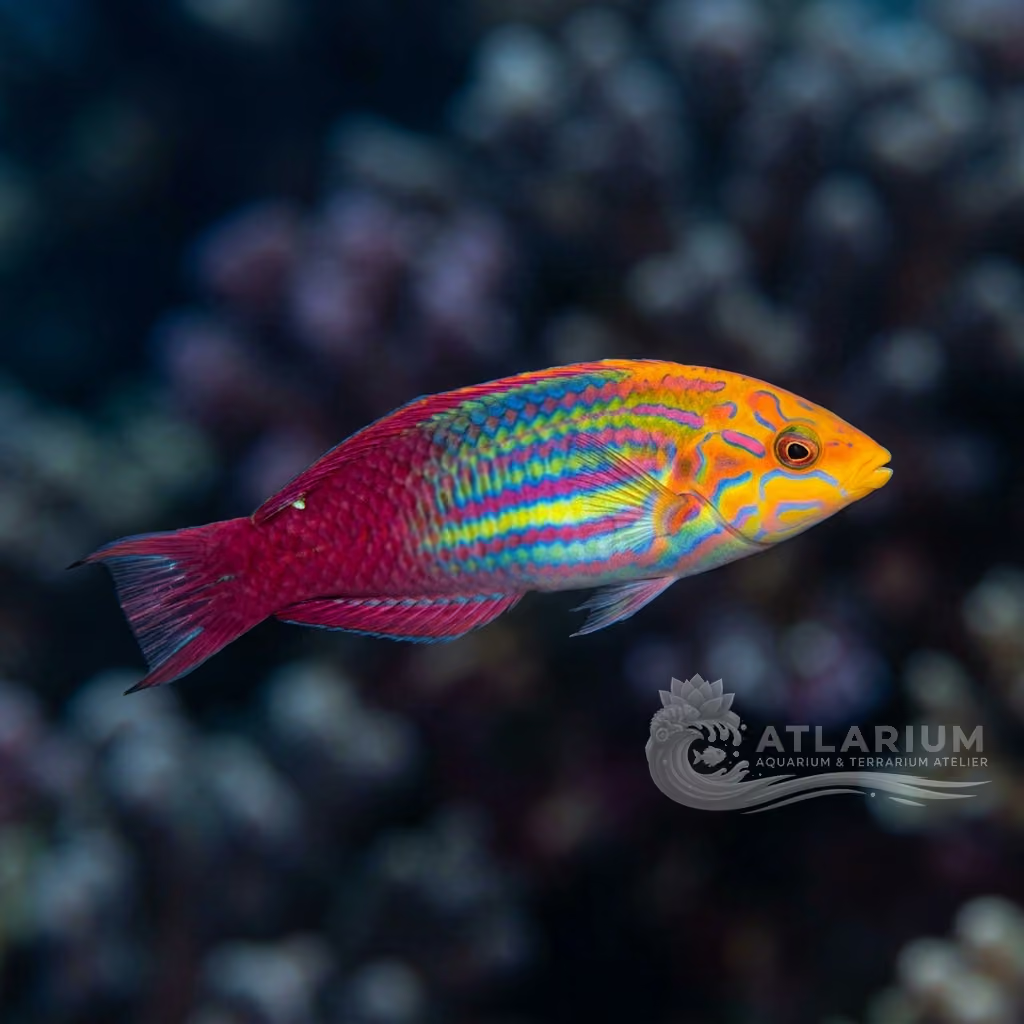
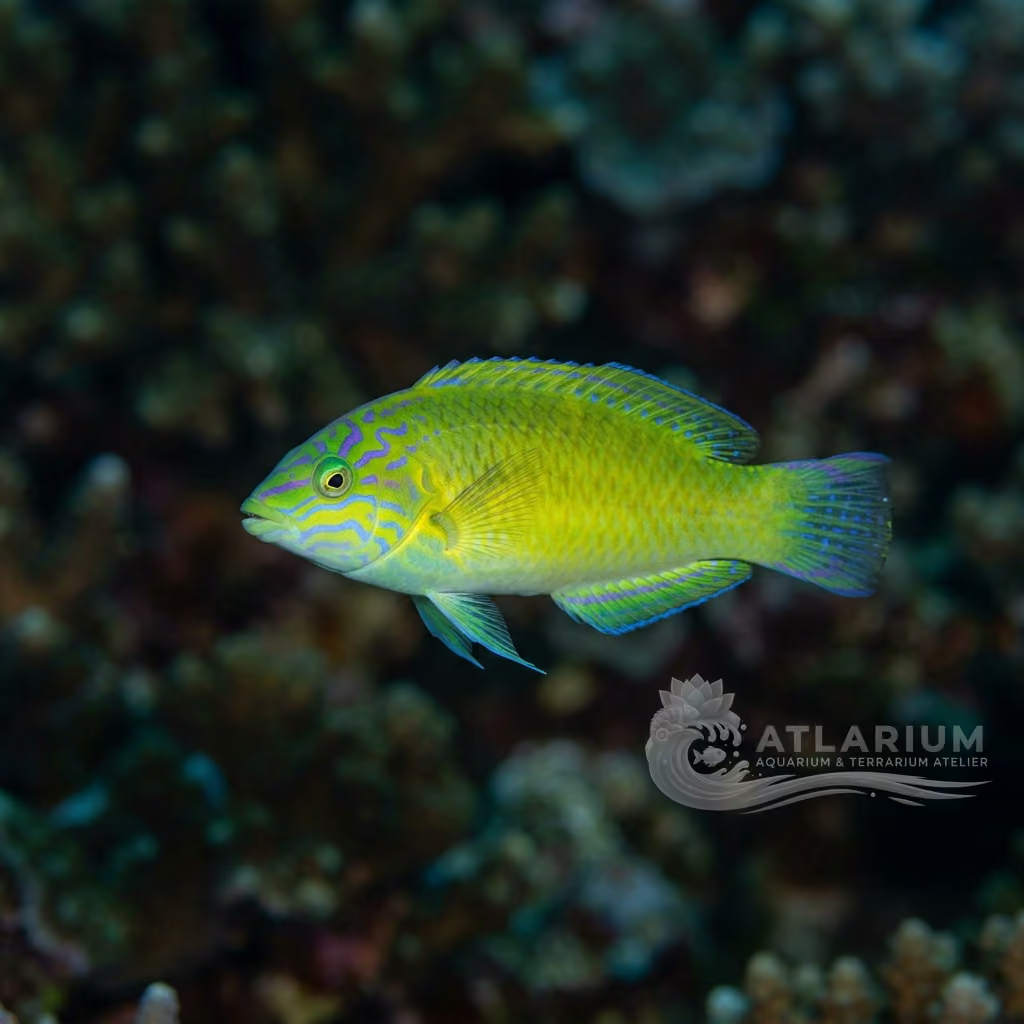
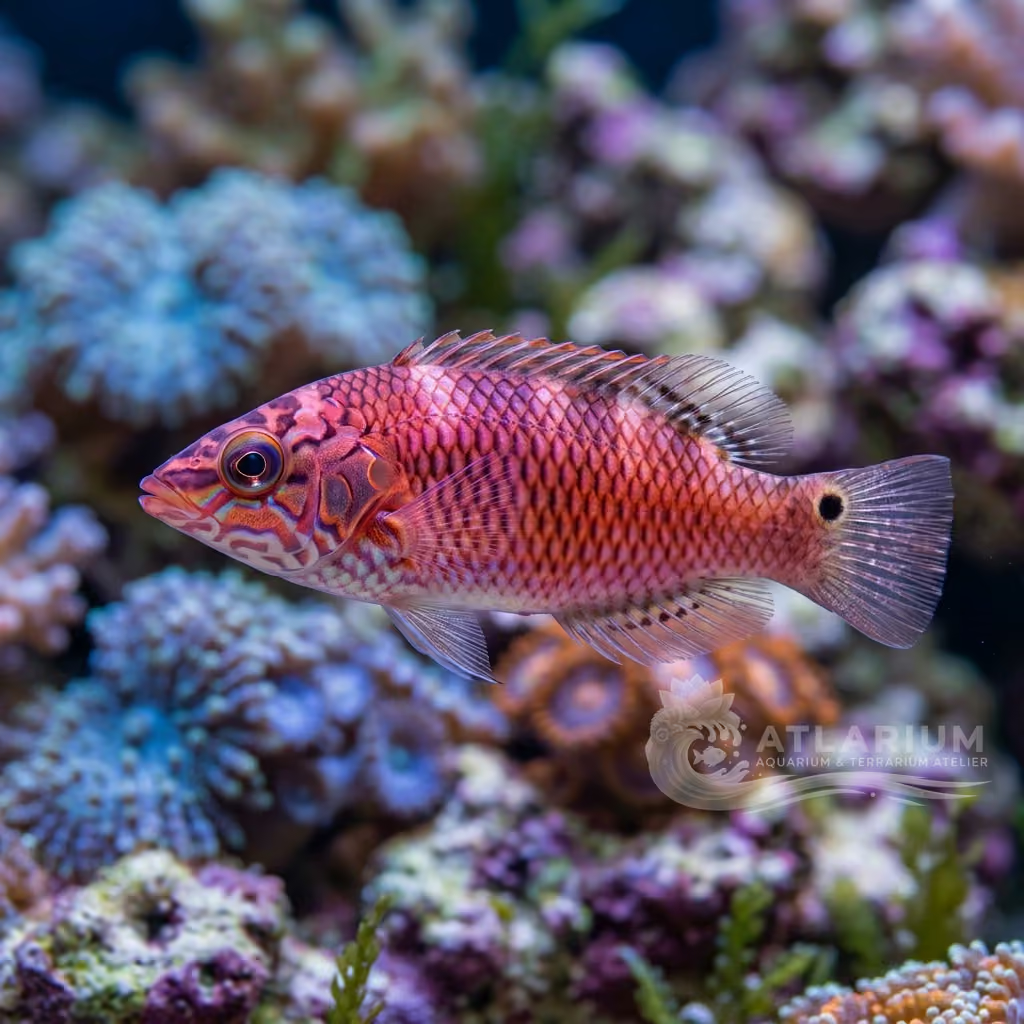
Coloration and Sexual Dimorphism: Displays strong sexual dimorphism. Juveniles and initial phase females are mostly muted greyish-brown or tan with dark longitudinal stripes. Terminal phase males develop brilliant, iridescent green and pinkish-orange body colors, decorated with complex neon markings on the head and vibrant fins.

Soins, reproduction et cohabitation
Aquarium Setup: Requires an aquarium of at least 200 liters (55 gallons). The most critical care requirement is a deep bed of fine, smooth sand (5-8 cm / 2-3 inches deep) to satisfy their natural burying behavior. Rocks must be stabilized on the bottom glass. A tight-fitting screen lid is mandatory to prevent the fish from jumping out.
Diet and Feeding: Carnivorous. In captivity, feed them a variety of frozen foods such as mysis shrimp, brine shrimp, krill, and chopped seafood. They will accept high-quality pellet foods after acclimation. They are excellent for pest control, naturally consuming flatworms, pyramidellid snails, and bristle worms from rockwork.
Water Quality: A warm-temperate species that prefers temperatures between 18 and 24°C (64-75°F), making it suitable for both coldwater marine setups and subtropical reef tanks. Keep pH 8.1-8.4, and specific gravity 1.020-1.025. Ensure strong water movement and high levels of dissolved oxygen in the system.
Compatibility and Cohabitation: Reef-safe with caution: they will not harm corals but will prey on small ornamental shrimp, crabs, and feather dusters. Peaceful towards other fish, though they can be territorial towards similar-looking wrasses. Best housed in a spacious community tank with active and hardy companions.
Aquarium Breeding: Protogynous sequential hermaphrodites; dominant females transition into terminal phase males when no male is present. Spawning is a pelagic event involving open-water gamete release, which has not been successfully replicated or raised in small home marine aquariums.
Risks and Diseases: Injuries to the eyes or mouth can occur if the substrate contains sharp coral gravel, leading to secondary infections. The wrasse can suffer from severe stress and refuse to eat if it cannot bury itself at night. Maintain a consistent light cycle to support their strict diurnal internal clock.

Origine et répartition géographiques
Native to the Northwestern Pacific Ocean, commonly found along the rocky subtropical and temperate coasts of Japan, South Korea, Taiwan, and eastern China. It inhabits rocky reefs, sargassum beds, and adjacent sandy substrates at depths from 1 to 30 meters, adapted to withstand significant seasonal temperature fluctuations.
Origine
Océans tropicaux et récifsAsie de l'Est

Profil de poisson
- Tempérament
- Semi-aggressive
- This is a highly active, inquisitive, and generally peaceful fish that adds constant movement to the tank. They are constantly inspecting crevices and substrate for tiny morsels of food. Once acclimated, they are bold and often interact with the aquarist during feeding times.
- Régime alimentaire
- Carnivore
- As a micro-predator, its natural diet consists heavily of benthic invertebrates, copepods, and amphipods. In captivity, they eagerly accept finely chopped meaty foods, frozen mysis, and vitamin-enriched brine shrimp. High-quality pelleted foods should also be offered to ensure complete nutrition.
- Espérance de vie
- 5-8 years
- Taille adulte
- 15 cm
- Ratio des sexes
- Solitary
- Keeping a single specimen is the safest approach for most home aquariums. Keeping two males will result in severe territorial fighting, often until the weaker fish perishes. If keeping a group, a single male should be paired with multiple females in a very large tank.
- Fréquence d'alimentation
- Twice daily
- To properly support their high energy levels, they must be fed two to three times daily. Small, frequent feedings are much better suited to their digestive systems than a single large meal. Proper feeding reduces their tendency to decimate the tank's natural pod populations.
- Charge biologique
- Medium
- The Slenderspine wrasse maintains a moderate bioload consistent with its active metabolism. Ensuring robust biological filtration and routine water changes will keep nutrient levels low. A well-tuned protein skimmer is a necessary component for maintaining its preferred pristine water conditions.
- Courant
- Moderate
- Moderate to strong water flow is ideal to replicate the coastal reef environments they naturally inhabit. Brisk water movement keeps the water well-oxygenated and provides them with currents to swim against. It also aids in keeping detritus from settling on the substrate where they forage.
- Risque de saut
- Yes
- Like all species in this genus, the Slenderspine wrasse is highly prone to jumping if spooked. A completely secure, tight-fitting lid or fine mesh screen is absolutely mandatory. Jumping often occurs at night or when the tank lights turn on or off abruptly.
- Reproduction
- Oviparous
- Captive propagation is essentially impossible for the standard aquarist due to their pelagic spawning habits. They release their eggs and sperm into the water column where fertilization occurs. The complex requirements for rearing their planktonic larvae represent a major hurdle.
- Compatibilité et compagnons
- Community
- This wrasse is generally reef-safe and peaceful toward corals and sessile invertebrates. However, caution should be used when housing them with very small ornamental shrimp or feather dusters, which may be mistaken for food. They coexist peacefully with most other community fish but may quarrel with similar-looking wrasses.
- Niveau dans le bac
- Middle/Bottom
- They are predominantly found in the middle and lower zones of the aquarium. A soft, deep sand bed is an absolute necessity, as they bury themselves entirely to sleep and escape perceived threats. During the day, they are constantly swimming and exploring the rockwork.

Modèles et paramètres scientifiques
FishBase
Fenêtre sur les données scientifiques officielles de l’espèce
FishBase v25.04Données synchronisées le : 15/06/2026
- Niveau trophique
- 3,5 ± 0,5 se
- Résilience
- Élevée (moins de 15 mois)
- Singularité phylogénétique (PD50)
- 0.5
- Relation bayésienne longueur-poids
- a = 0.01, b = 3.09
- VulnérabilitéVulnérabilité faible (10 / 100)

Espèces associées
Recommandations regroupées par proches parents, compagnons et soins similaires.