Four-line Wrasse
Pseudocheilinus tetrataenia
A small, brightly colored marine wrasse widely recognized for its tireless hunting of nuisance pests within mature reef aquarium setups.
Température de l’eau
24 - 27 °C
Valeur du pH
8.1 - 8.4
Type d'eau
Marin
Niveau dans le bac
Fond et milieu
Taille adulte
7,5 cm
Volume minimal du bac
>= 100 L
Groupe minimal
>= 1
KH
8 - 12 dKH

Description de l'espèce
Geographical Origin and Habitat: This species is native to the coral reefs of the Indo-Pacific Ocean, ranging from the Ryukyu Islands to Hawaii, the Marshall Islands, and the Tuamotu Archipelago. It typically lives among coral branches at depths between 6 and 44 meters.
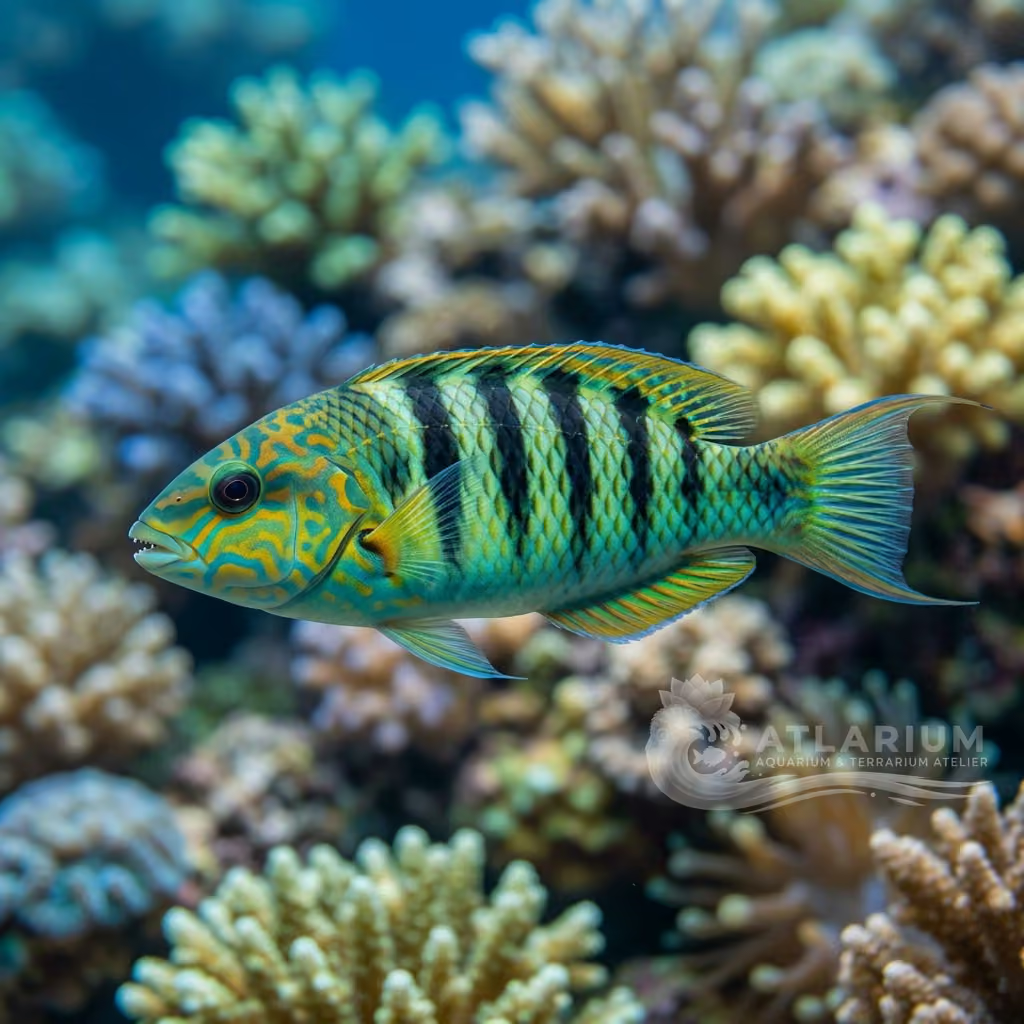
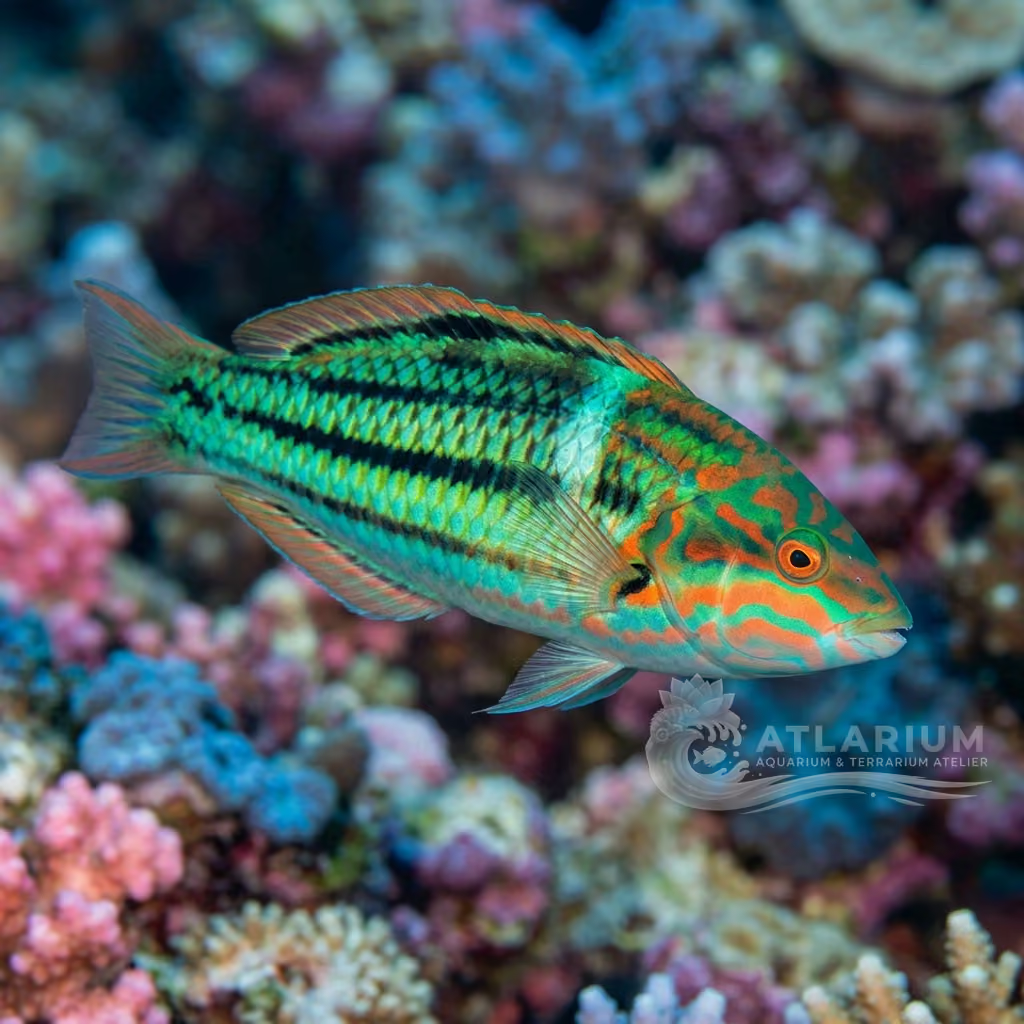
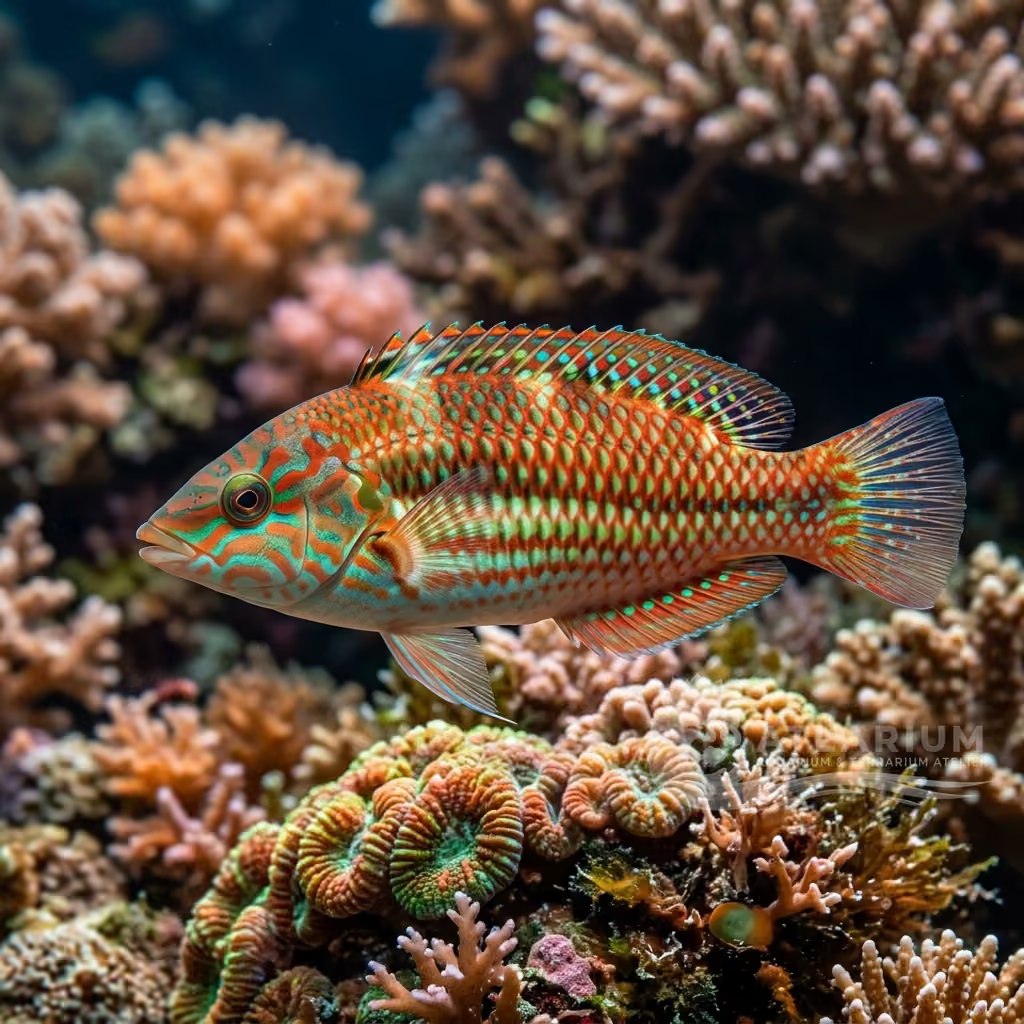
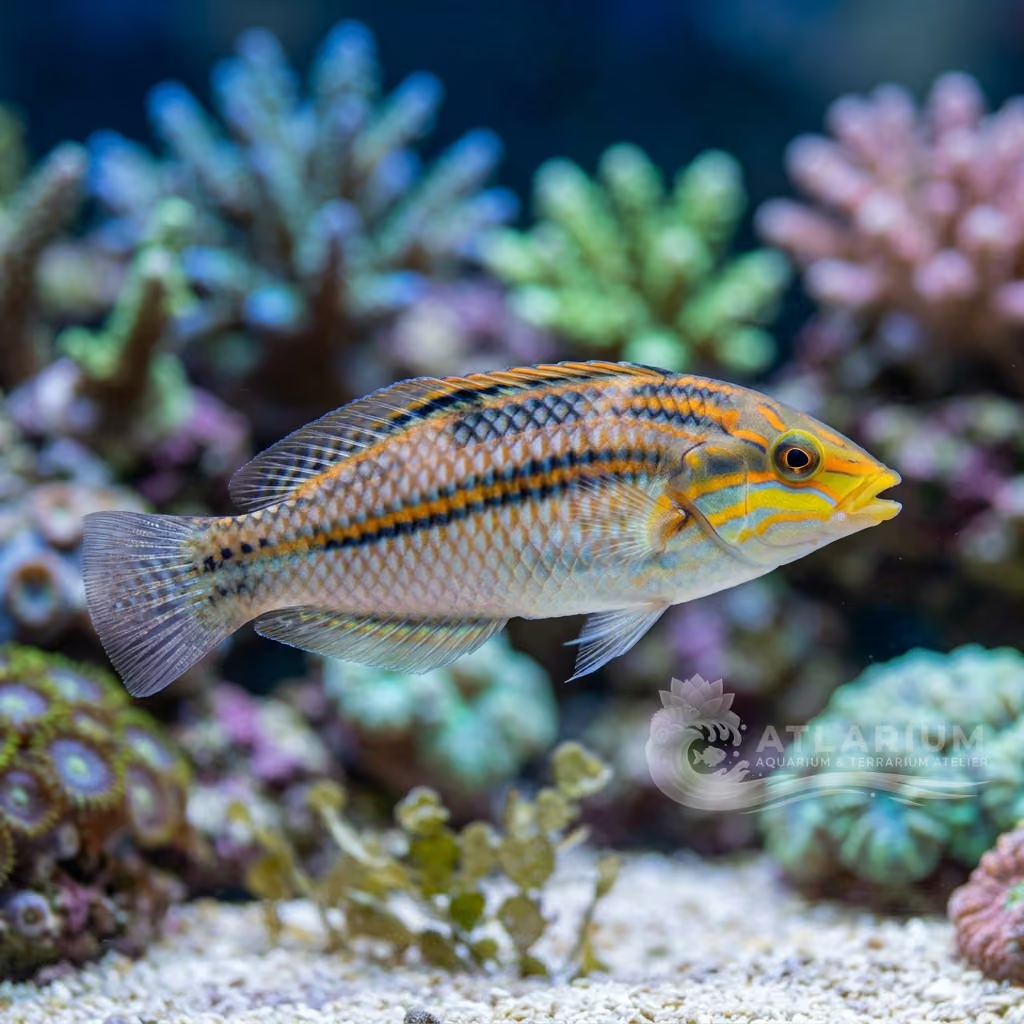
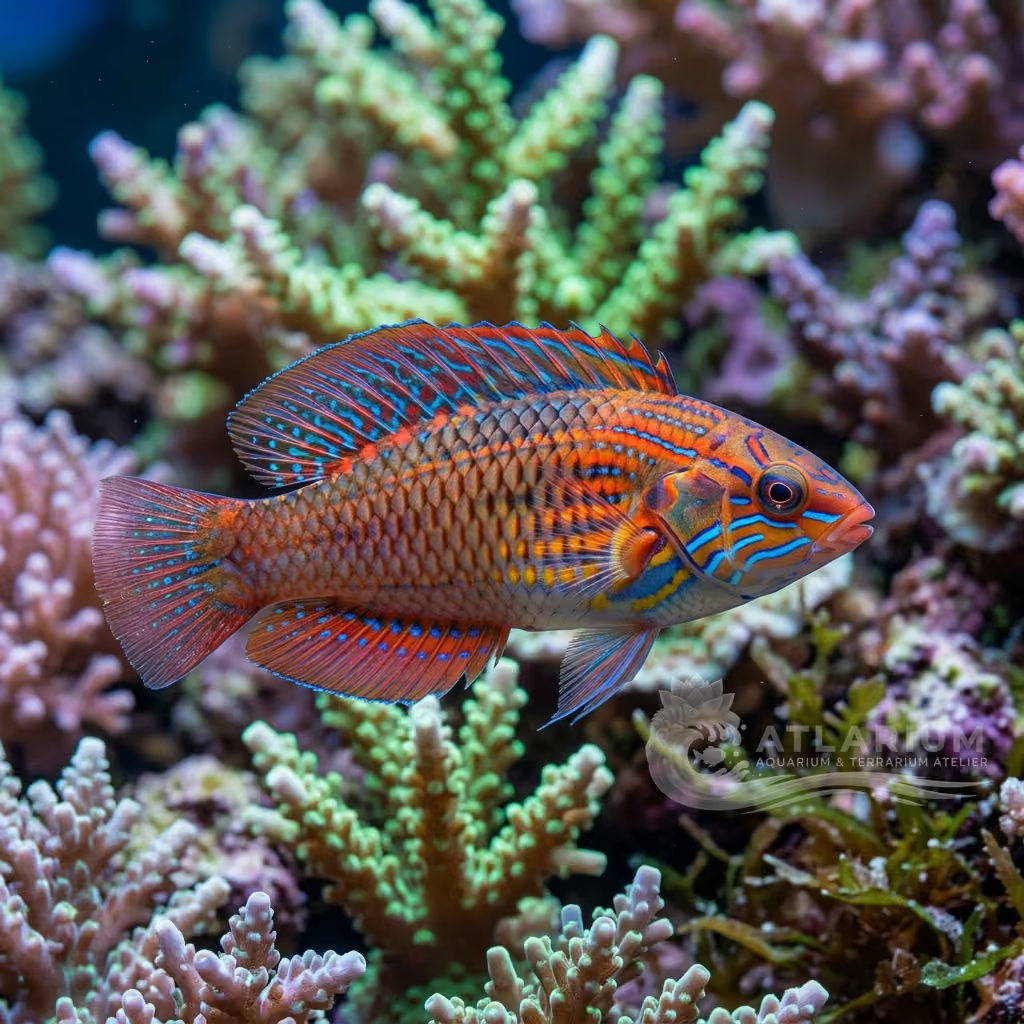
Taxonomy and Morphology: Belongs to the family Labridae, genus Pseudocheilinus. The body is elongated and laterally compressed, reaching a maximum size of about 7.5 cm (3 inches). It features distinctive red eyes split by a white stripe.
Social Behavior: Solitary and markedly territorial towards conspecifics or similar wrasses. Swims actively through rockwork in search of small crustaceans.
Coloration and Sexual Dimorphism: Features four bright horizontal neon-blue stripes over a red-orange body that fades to olive green on the belly. Sexual dimorphism is not prominent, though dominant males may display brighter colors during courtship.

Soins, reproduction et cohabitation
Aquarium Setup: Requires a tank of at least 100 liters with abundant live rock providing numerous caves and crevices for shelter. A tight-fitting lid is essential to prevent jumping.
Diet and Feeding: Active carnivore. In captivity, it consumes mysis, frozen brine shrimp, small pellet foods, and naturally controls small pests like flatworms and parasitic snails.
Water Quality: Requires stable marine parameters: temperature of 24-27°C (75-81°F), stable pH between 8.1 and 8.4, specific gravity between 1.022 and 1.025, GH 15-25, and KH 8-12.
Compatibility and Cohabitation: Reef-safe. May harass small ornamental crustaceans like shrimp and target similar small wrasses, but is completely ignored by corals.
Aquarium Breeding: Extremely rare in the aquarium hobby. Releases pelagic eggs into the water column; larval rearing is highly technical and requires specialized live food cultures.
Risks and Diseases: Robust fish once acclimated. Can suffer from ectoparasites like Cryptocaryon irritans under stressful conditions. High risk of jumping when startled.

Origine et répartition géographiques
This species is native to the coral reefs of the Indo-Pacific Ocean, ranging from the Ryukyu Islands to Hawaii, the Marshall Islands, and the Tuamotu Archipelago. It typically lives among coral branches at depths between 6 and 44 meters.
Origine
Océans tropicaux et récifsAmérique du NordAsie de l'Est

Profil de poisson
- Tempérament
- Semi-aggressive
- They are highly active, curious, and can be quite territorial. They are known to harass peaceful or slower-moving fish, especially new additions. It is highly recommended to add them as the last fish in a community tank to minimize aggressive behavior.
- Régime alimentaire
- Planktivore
- They are strict carnivores that spend their day hunting small crustaceans on live rock. In captivity, they will readily take frozen mysis, brine shrimp, and high-quality carnivore flakes or pellets. They are also known to actively hunt and eat pest flatworms and small nuisance snails.
- Espérance de vie
- 5-7 years
- Taille adulte
- 7.5 cm
- Ratio des sexes
- Solitary
- They should be kept singly in the home aquarium due to their high conspecific aggression. They will not tolerate another Four Line Wrasse or closely related species. Keeping more than one is only possible in extremely large systems with abundant hiding places.
- Fréquence d'alimentation
- 2-3 times daily
- They should be fed one to two times daily with small portions. They will constantly forage for microfauna in the aquarium, which supplements their diet naturally. An established aquarium with plenty of mature live rock is ideal for their grazing habits.
- Charge biologique
- Low
- The Four Line Wrasse has a small and very manageable bioload. They do not produce excessive waste, making them suitable for smaller reef setups. Standard filtration and a regular water change schedule are completely adequate.
- Courant
- Moderate
- Pseudocheilinus tetrataenia needs steady, moderate circulation distributed across the aquarium rather than a narrow, forceful jet. Requires a tank of at least 100 liters with abundant live rock providing numerous caves and crevices for shelter. A tight-fitting lid is essential to prevent jumping. This preserves useful water exchange while retaining calmer shelter for rest and feeding.
- Risque de saut
- Yes
- Like all species in the Pseudocheilinus genus, they are notorious jumpers. A tight-fitting, secure lid or mesh screen is absolutely vital to prevent them from leaping out. They can escape through incredibly small openings, so double-check all gaps.
- Reproduction
- Oviparous
- They are pelagic spawners, releasing eggs and sperm directly into the water column. They are protogynous hermaphrodites, and dominant females will transition to males if needed. There are no successful reports of captive breeding due to the complicated pelagic larval stage.
- Compatibilité et compagnons
- Reef safe with caution
- They are fully reef safe regarding corals and sessile invertebrates. However, they may predate on small ornamental shrimp or small crabs. They can be very aggressive towards other wrasses and timid fish, so choose tank mates carefully.
- Niveau dans le bac
- Middle/Bottom
- They are highly active fish that predominantly stay in the middle to lower levels. They are closely associated with the aquascape, constantly darting in and out of the live rock. They require numerous caves and crevices for hunting, hiding, and sleeping.

Modèles et paramètres scientifiques
FishBase
Fenêtre sur les données scientifiques officielles de l’espèce
FishBase v25.04Données synchronisées le : 15/06/2026
- Niveau trophique
- 3,3 ± 0,4 se
- Résilience
- Élevée (moins de 15 mois)
- Singularité phylogénétique (PD50)
- 0.5078
- Relation bayésienne longueur-poids
- a = 0.01072, b = 3.03
- VulnérabilitéVulnérabilité faible (10 / 100)

Espèces associées
Recommandations regroupées par proches parents, compagnons et soins similaires.