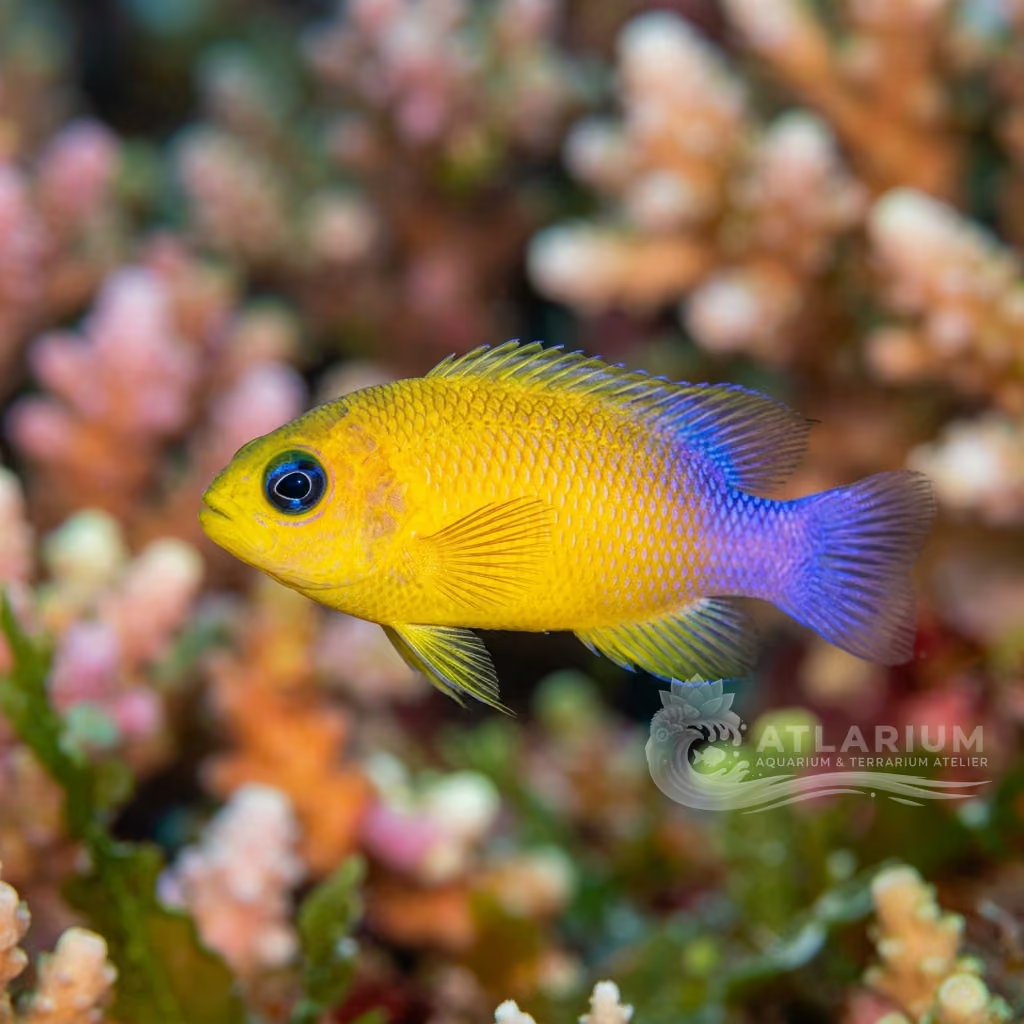
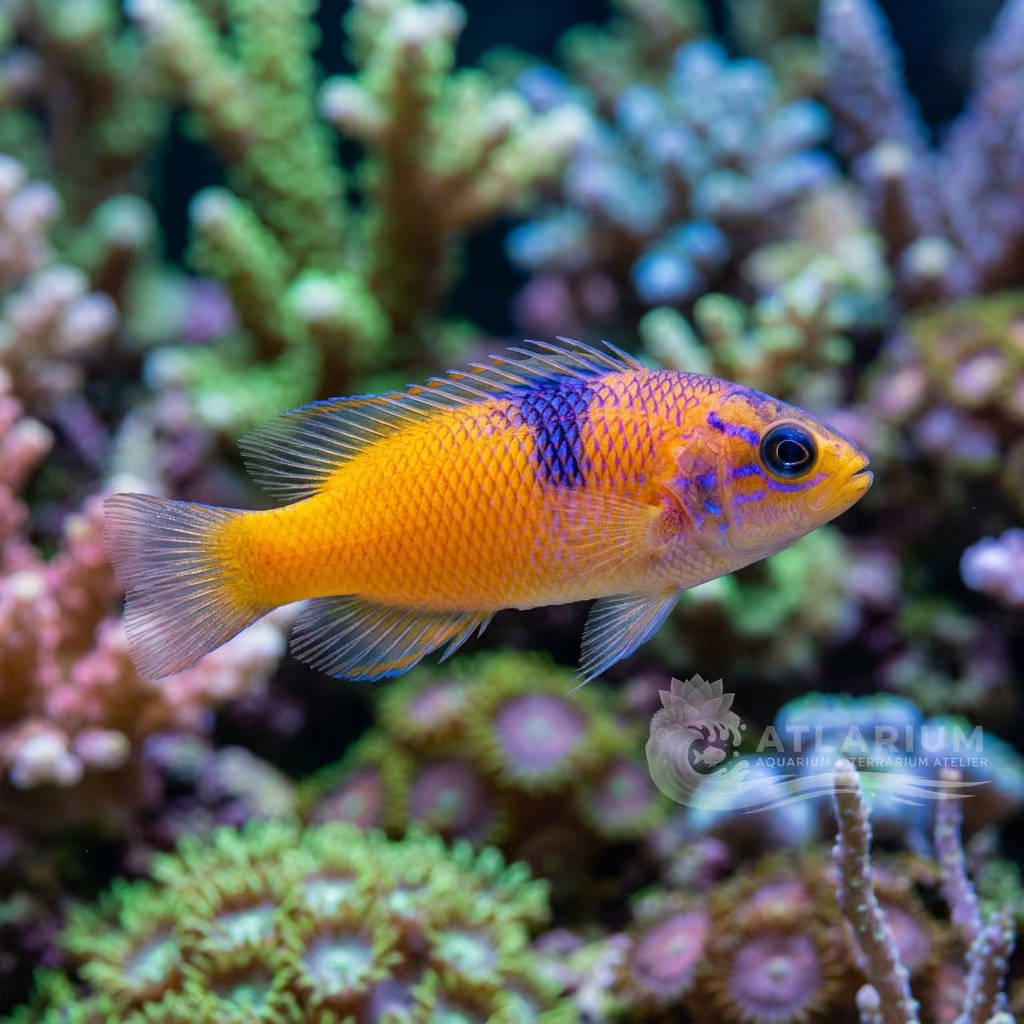
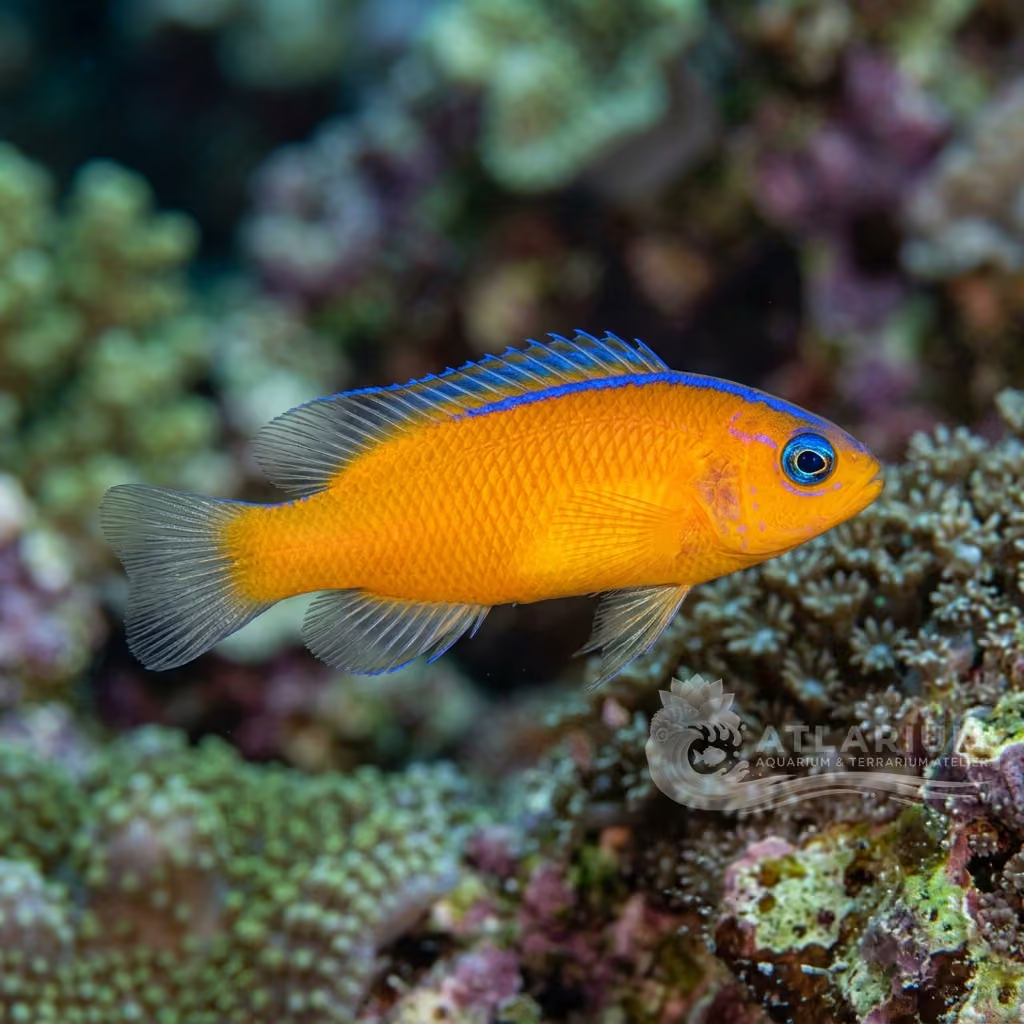
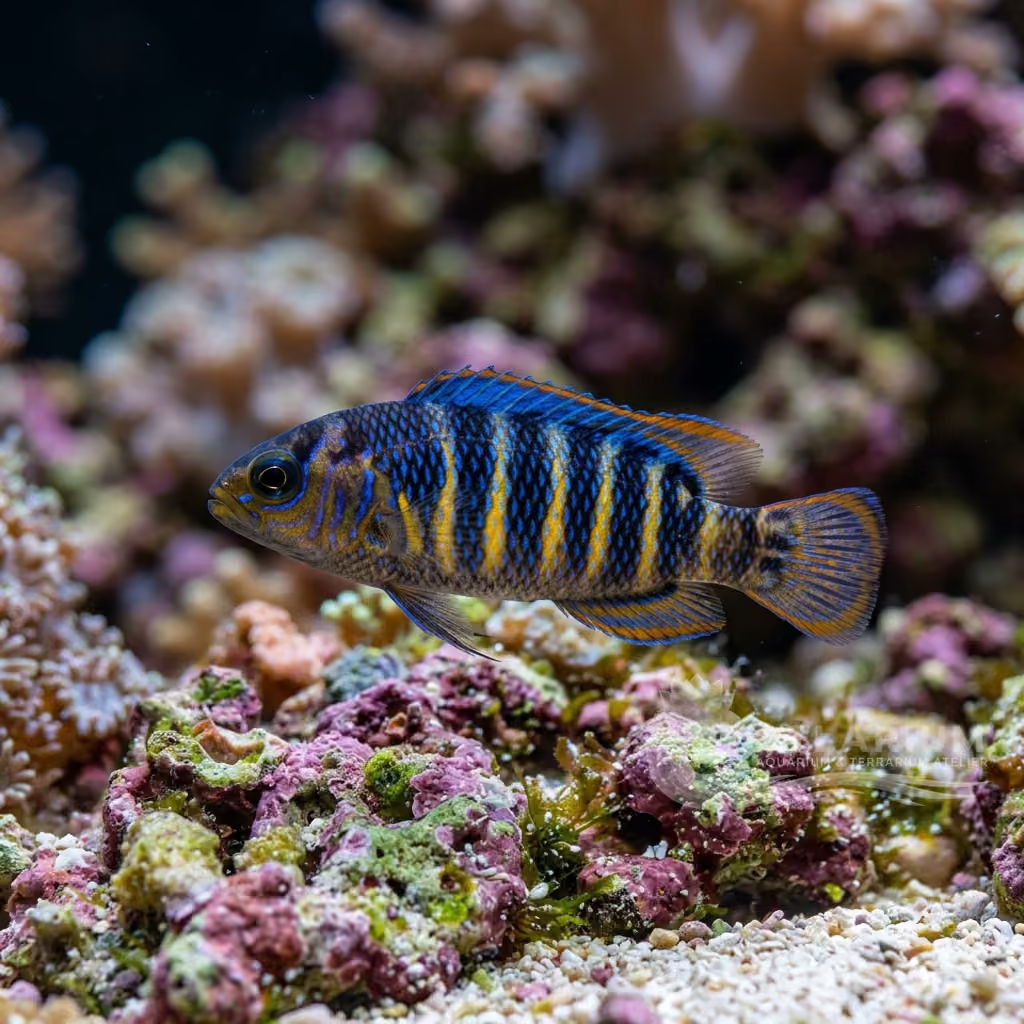
Neon dottyback
Pseudochromis aldabraensis
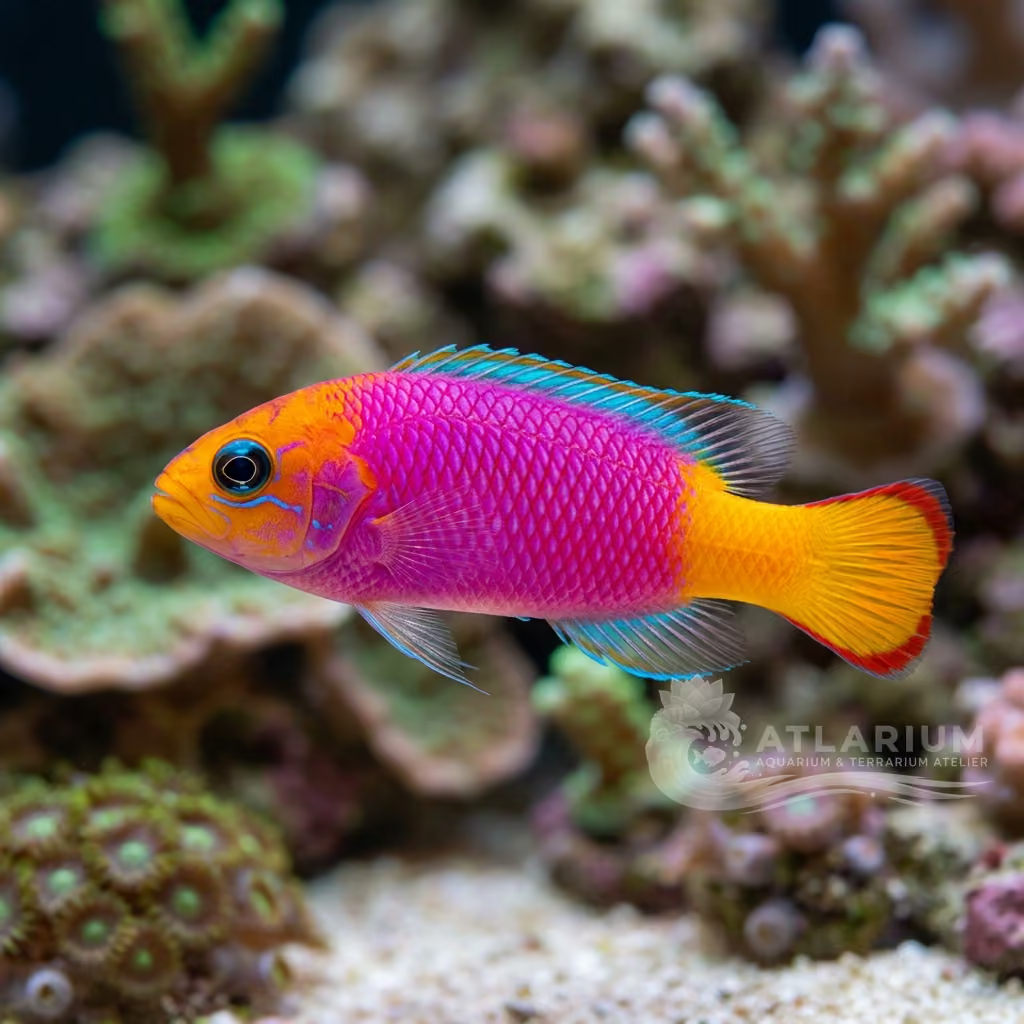
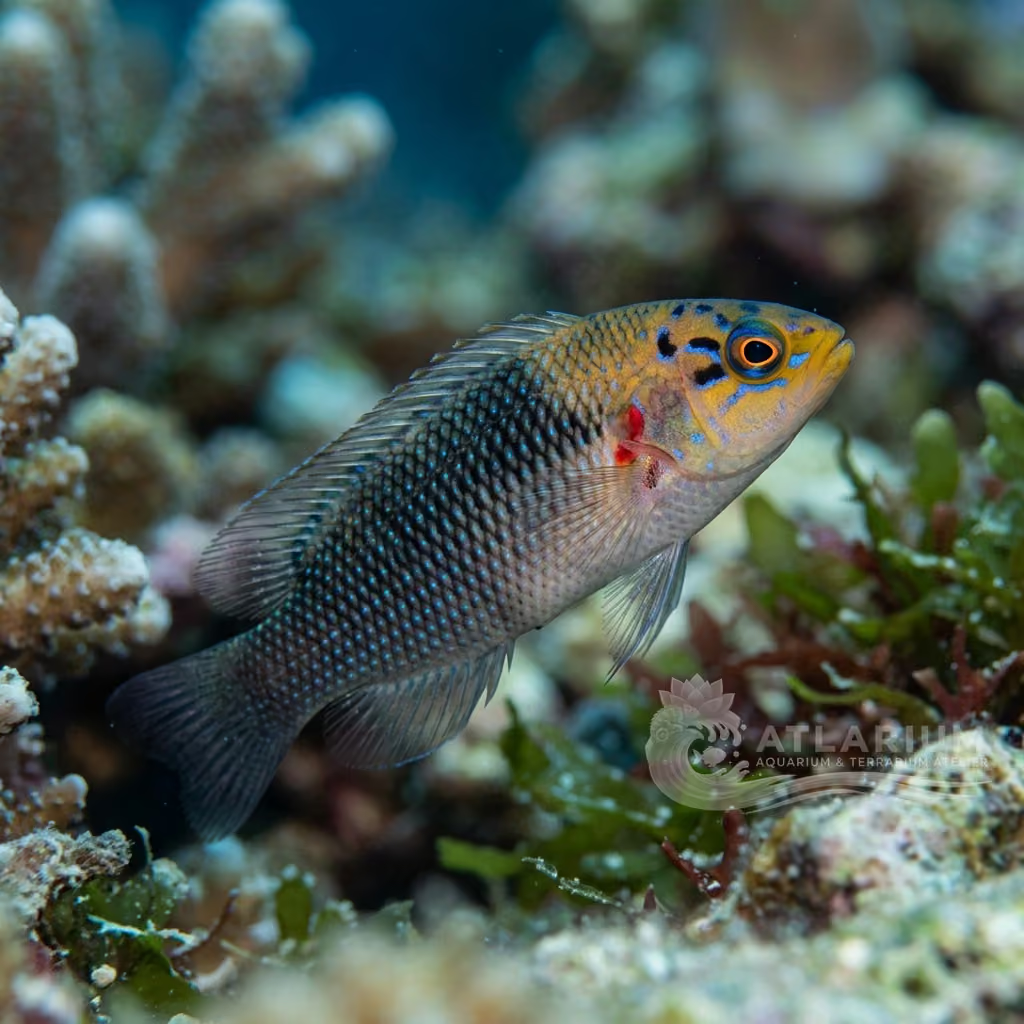
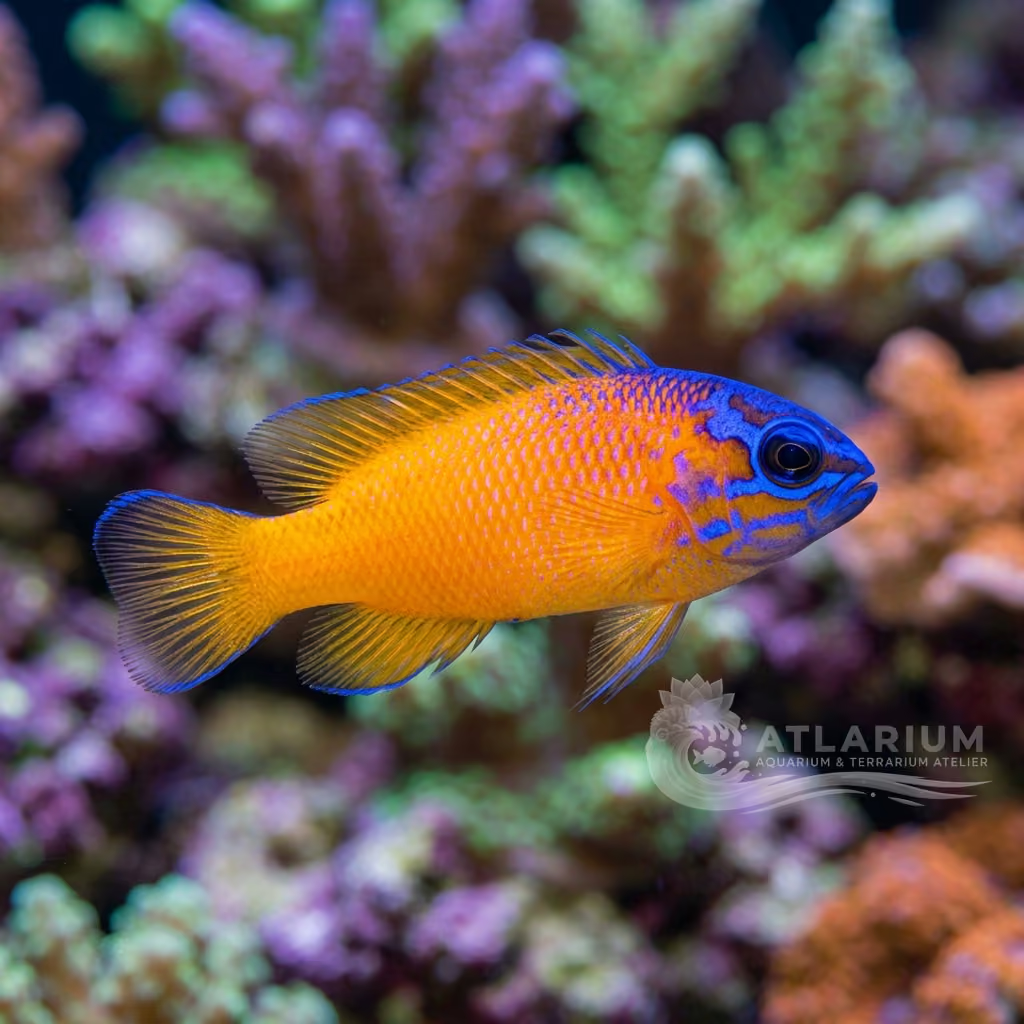
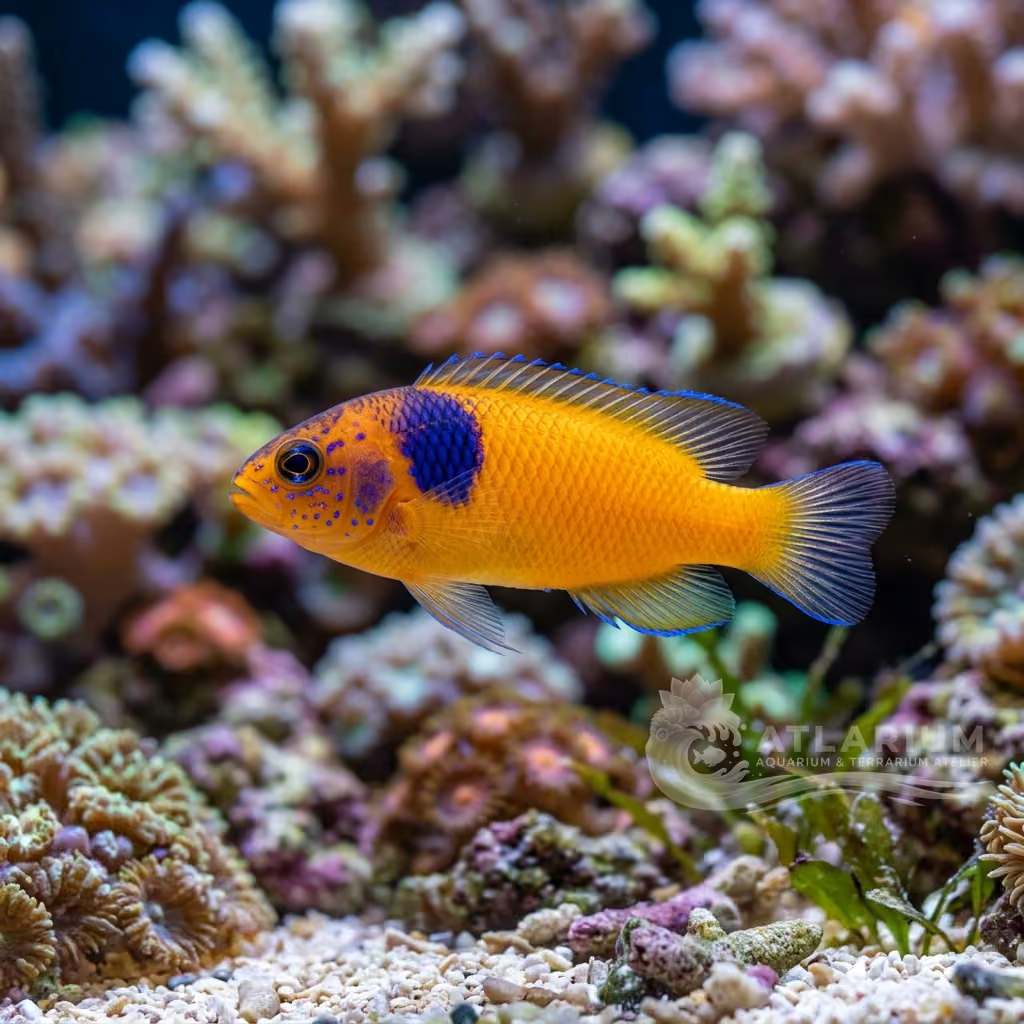
A vividly colored marine fish showcasing bright electric blue stripes over an orange body, known for its bold and highly territorial nature.
Température de l’eau
24 - 27 °C
Valeur du pH
8.1 - 8.4
Type d'eau
Marin
Niveau dans le bac
Fond et milieu
Taille adulte
10 cm
Volume minimal du bac
>= 120 L
Groupe minimal
>= 1
KH
8 - 12 dKH

Description de l'espèce
Geographical Origin and Habitat:
Neon dottyback is native to the Western Indian Ocean. It is primarily found in the waters surrounding the Aldabra Atoll, the Persian Gulf, the Gulf of Oman, and along the coastlines of India and Pakistan. It inhabits shallow coral reefs, rocky crevice zones, and sponge reefs at depths of 1 to 20 meters.
Taxonomy and Morphology:
Belonging to the family Pseudochromidae, it possesses an elongated, hydrodynamic body with a pointed snout and a continuous dorsal fin. Adults reach a maximum length of approximately 8 centimeters. Their morphology is perfectly adapted for darting through narrow cracks and caves in live rock where they hunt micro-invertebrates.
Social Behavior:
This fish is notorious for its highly territorial and aggressive behavior, which is disproportionate to its small size. It fiercely defends its chosen territory. It will not tolerate conspecifics or similar-looking fish (such as other dottybacks or grammas) in the same tank, attacking them relentlessly.
Coloration and Sexual Dimorphism:
The coloration is stunningly vibrant: the body is a deep golden-orange or yellow-orange, adorned with electric neon blue longitudinal stripes running along the back, the gill covers, and the margins of the fins. Sexual dimorphism is not highly visible, though males may be slightly larger and show more intense coloration during courtship.

Soins, reproduction et cohabitation
Aquarium Setup:
Requires a marine aquarium of at least 100 liters (approx. 26 gallons) with a dense and complex rockwork design. Live rocks should form multiple caves, overhangs, and swim-throughs to allow the fish to establish its territory and hide. The tank must be tightly covered, as this species is an agile jumper when startled.
Diet and Feeding:
It is an active carnivore. In captivity, feed a varied diet of high-quality frozen foods, including mysis shrimp, brine shrimp, finely chopped krill, fish eggs, and meaty seafood preparations. It will also accept high-protein dry pellets and flakes. Feeding small portions twice daily is recommended to reduce food-related aggression.
Water Quality:
Demands stable marine parameters: water temperature between 24°C and 28°C (75°F to 82°F), pH between 8.1 and 8.4, and specific gravity between 1.021 and 1.025. Efficient filtration is needed to handle organic wastes. Regular 10-15% bi-weekly water changes are recommended to keep nitrates below 20 ppm.
Compatibility and Cohabitation:
Due to its aggressive nature, it should only be housed with robust and active tankmates that can hold their own, such as surgeonfish, aggressive damselfish, large clownfish, and dwarf angelfish. Avoid keeping with shy fish, small gobies, or ornamental invertebrates like small shrimp (e.g., Lysmata), which will be hunted.
Aquarium Breeding:
Captive breeding has been successfully achieved but remains difficult. They are cave spawners; the female deposits a sticky spherical mass of eggs that is fertilized and then guarded solely by the male inside his rocky shelter. Raising the larvae requires live rotifer and copepod nauplii cultures in a dedicated tank.
Risks and Diseases:
It is a highly resilient and hardy species that rarely falls ill under proper care. However, it can contract external parasitic infections such as marine ich (Cryptocaryon) under stress or temperature swings. A preventative quarantine protocol for new purchases is highly advised to protect the main display aquarium.

Origine et répartition géographiques
Neon dottyback is native to the Western Indian Ocean. It is primarily found in the waters surrounding the Aldabra Atoll, the Persian Gulf, the Gulf of Oman, and along the coastlines of India and Pakistan. It inhabits shallow coral reefs, rocky crevice zones, and sponge reefs at depths of 1 to 20 meters.
Origine
Océans tropicaux et récifsEurope, Méditerranée et Asie occidentaleAsie du Sud et du Sud-Est

Profil de poisson
- Tempérament
- Aggressive
- They are extremely bold, highly intelligent, and notoriously aggressive for their size. They will fiercely defend their chosen territory against any intruder, regardless of size. Because of their belligerent nature, they should be the last addition to the aquarium.
- Régime alimentaire
- Carnivore
- They are voracious carnivores that feed on small crustaceans and zooplankton in the wild. In the home aquarium, they eagerly accept frozen mysis, brine shrimp, and high-quality carnivore pellets. A varied meaty diet is necessary to maintain their striking neon coloration.
- Espérance de vie
- 5-7 years
- Taille adulte
- 10 cm
- Ratio des sexes
- Solitary
- They are fiercely territorial and should be kept singly in most aquariums. Keeping a pair requires a very large tank and the pair must be bonded. Attempting to keep multiple unbonded individuals will invariably lead to a fight to the death.
- Fréquence d'alimentation
- Twice daily
- Feeding them one to two times a day is generally adequate. They are highly active hunters and will constantly scour the rockwork for small pods and bristle worms. Supplementing their diet ensures they don't overly deplete the tank's natural microfauna.
- Charge biologique
- Low to Medium
- The Neon Dottyback produces a relatively low bioload. They are small and active, meaning their waste production is easily handled by standard biological filtration. Routine weekly water changes are sufficient to maintain optimal water quality.
- Courant
- Strong
- They are very adaptable and will do well in moderate to strong water flow. They naturally navigate through the surging currents of rocky reefs. Ensuring good water movement helps simulate their natural environment and keeps the tank clean.
- Risque de saut
- Yes
- Like most dottybacks, they are very capable jumpers when startled or in pursuit of prey. A tightly fitted lid or mesh cover is absolutely necessary to prevent them from escaping. Ensure there are no small gaps around filters or overflow boxes.
- Reproduction
- Oviparous
- They are demersal spawners, laying adhesive eggs in a hidden cave or crevice. The male will vigorously guard and aerate the egg mass until they hatch. They have been successfully bred in captivity, though raising the microscopic fry requires dedicated effort and specialized foods.
- Compatibilité et compagnons
- Reef safe
- They are completely reef safe with corals but will aggressively hunt ornamental shrimp and small crabs. They can be highly aggressive towards small, peaceful fish like firefish or gobies. They must be housed with robust, semi-aggressive tank mates that can stand their ground.
- Niveau dans le bac
- Middle/Bottom
- They spend almost all of their time darting through the rockwork in the lower to middle levels of the aquarium. They are very closely tied to the aquascape and rarely venture far into open water. Ample caves, tunnels, and crevices are an absolute requirement for them to thrive.

Modèles et paramètres scientifiques
FishBase
Fenêtre sur les données scientifiques officielles de l’espèce
FishBase v25.04Données synchronisées le : 15/06/2026
- Niveau trophique
- 3,5 ± 0,5 se
- Résilience
- Élevée (moins de 15 mois)
- Singularité phylogénétique (PD50)
- 0.5
- Relation bayésienne longueur-poids
- a = 0.01148, b = 2.95
- VulnérabilitéVulnérabilité faible (10 / 100)

Espèces associées
Recommandations regroupées par proches parents, compagnons et soins similaires.