Sixbar Wrasse
Thalassoma hardwicke
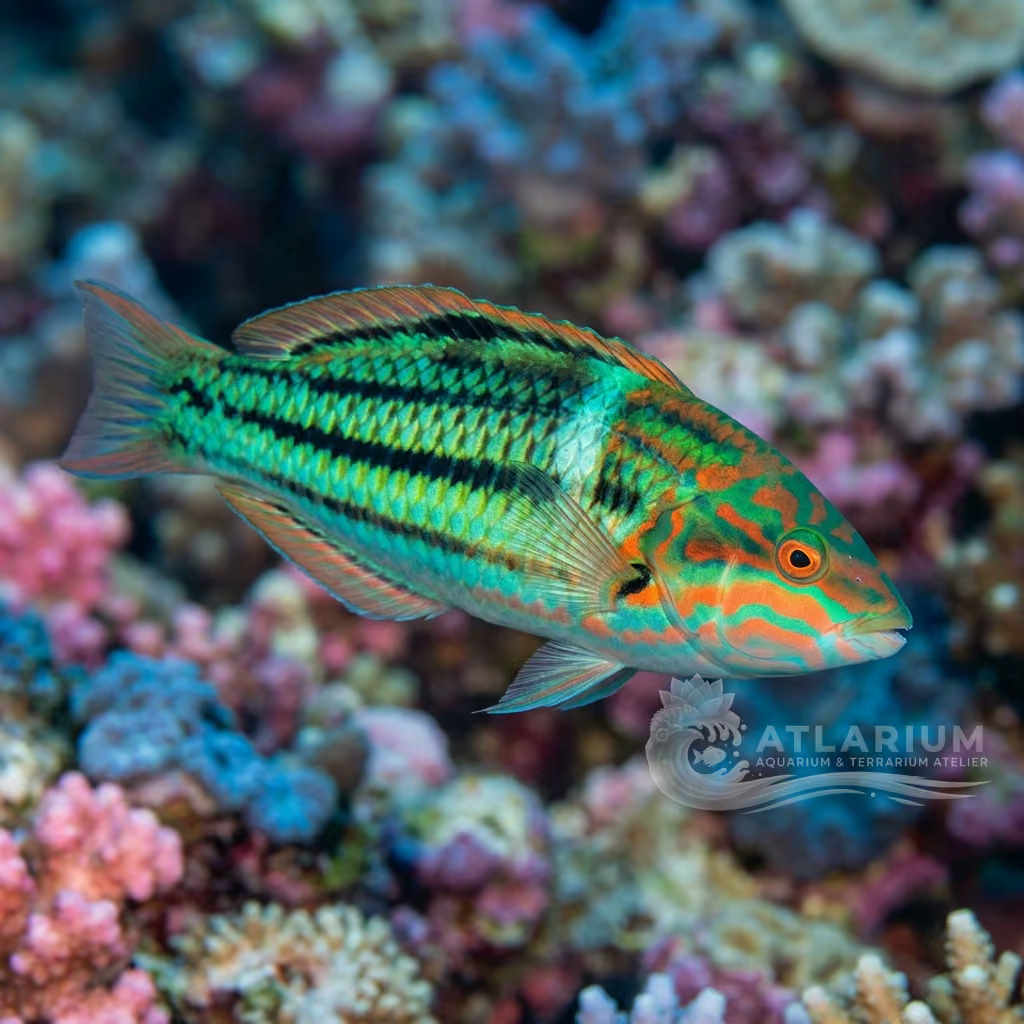
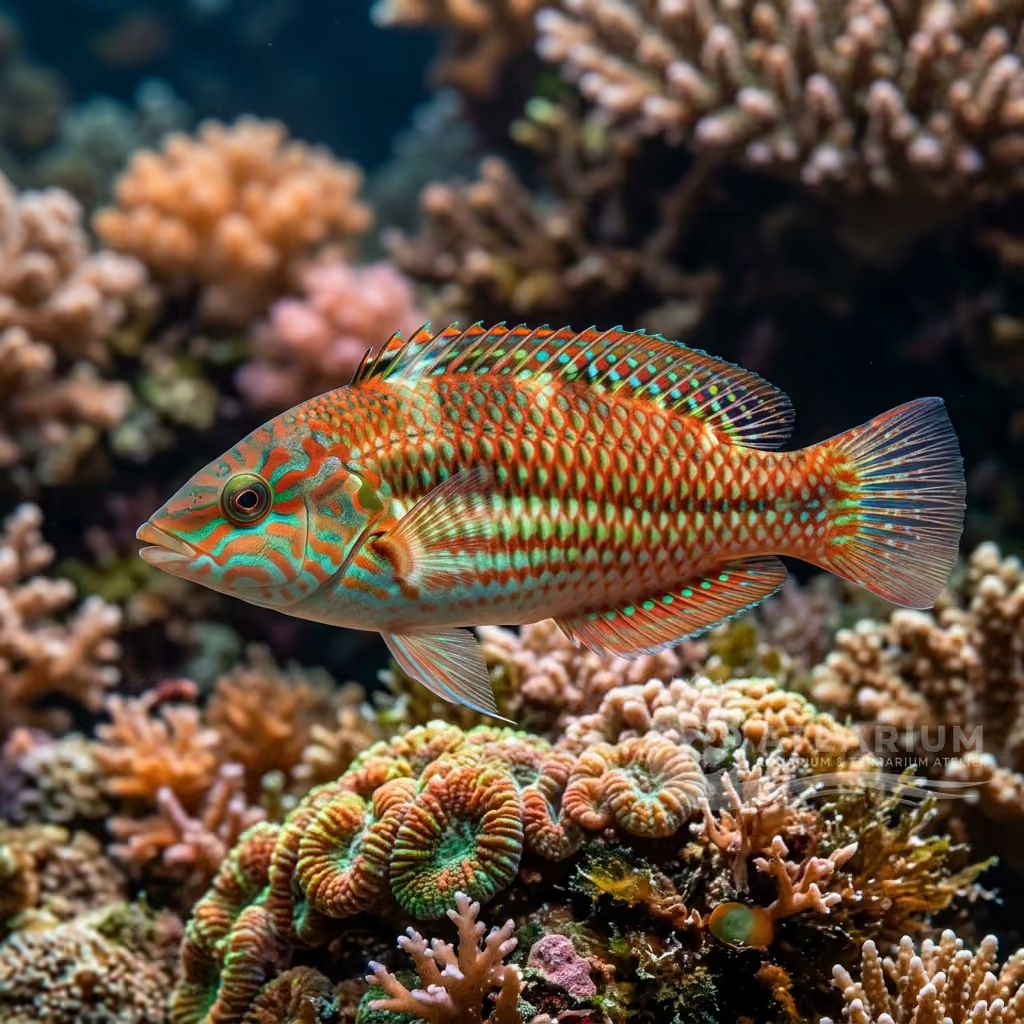
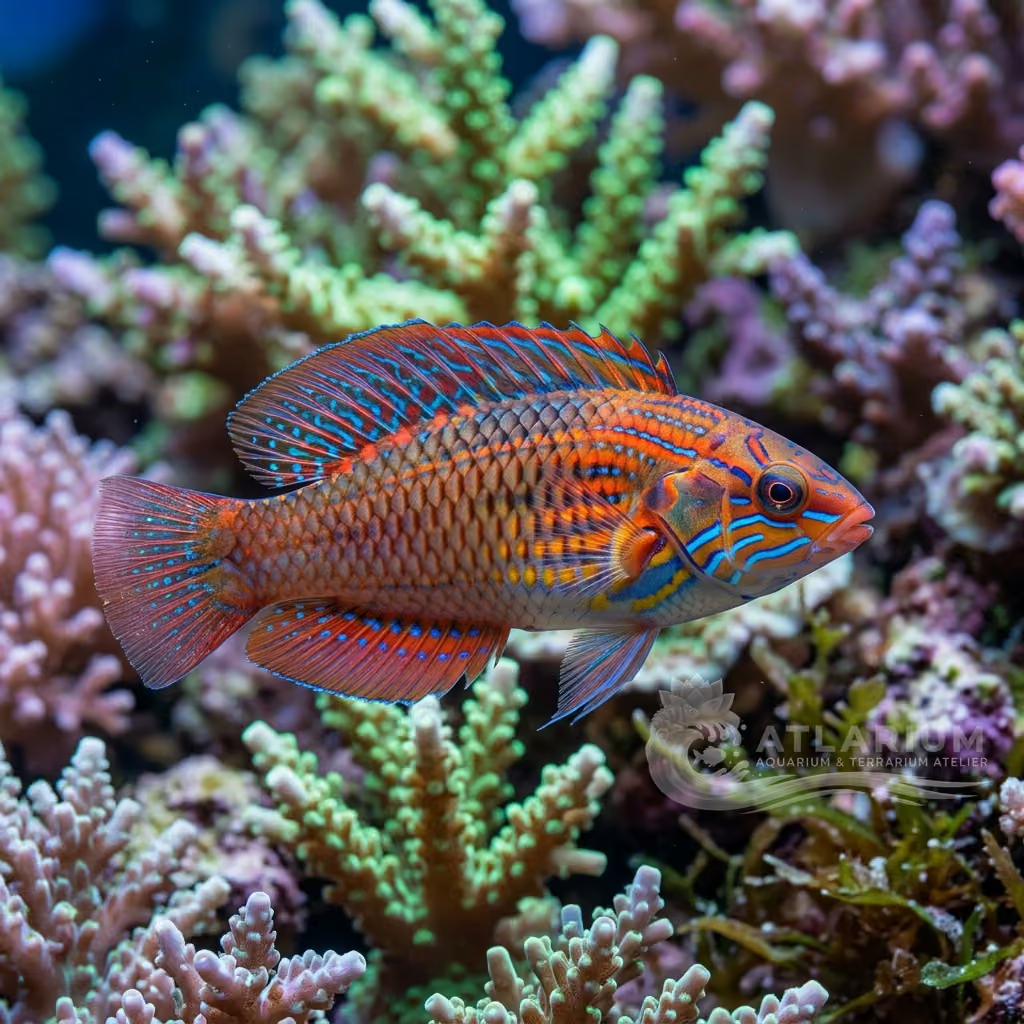
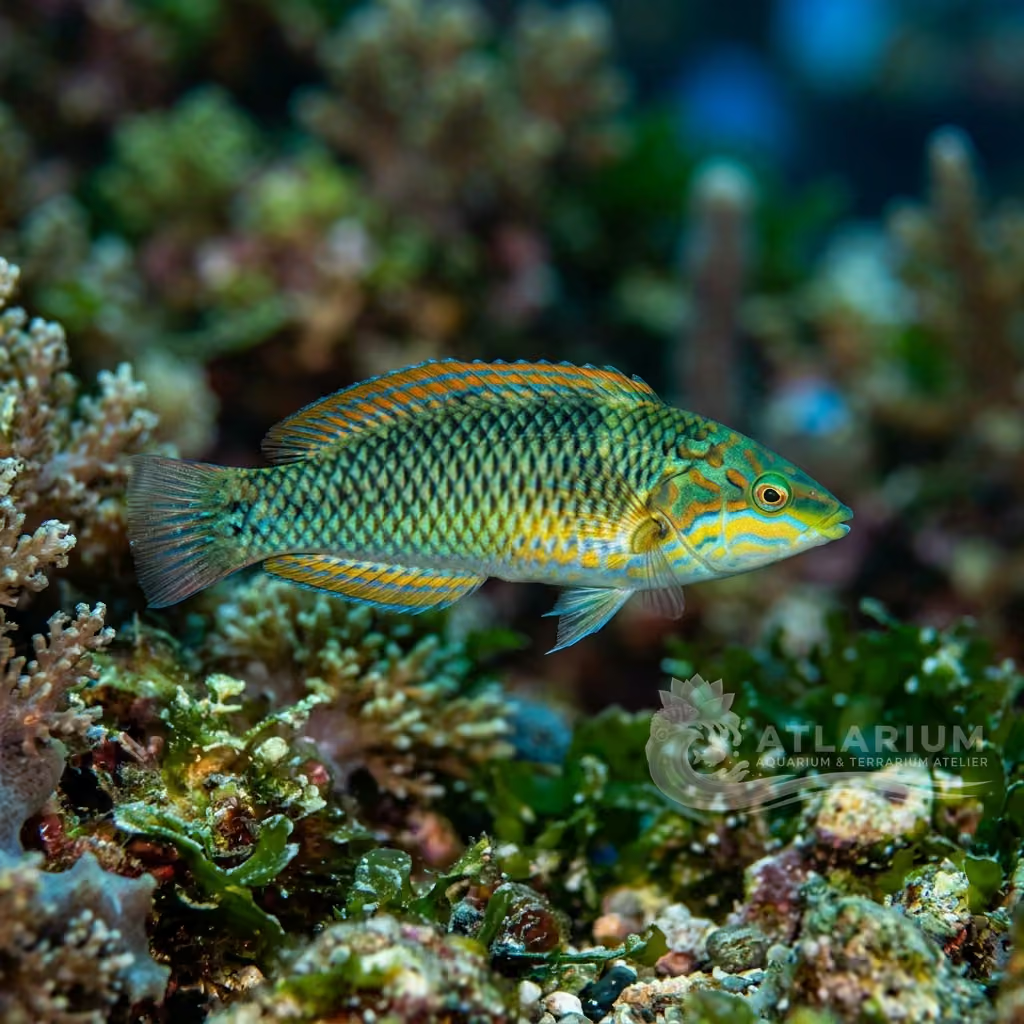
The Sixbar Wrasse is an incredibly dynamic, large predator adorned with six dark vertical bars. Highly aggressive and constantly in motion, it easily dominates smaller tankmates in roomy fish-only setups.
Température de l’eau
24 - 28 °C
Valeur du pH
8.1 - 8.4
Type d'eau
Marin
Niveau dans le bac
Surface et milieu
Taille adulte
20 cm
Volume minimal du bac
>= 450 L
Groupe minimal
>= 1
KH
8 - 12 dKH

Description de l'espèce
Geographical Origin and Habitat: Thalassoma hardwicke, commonly known as the Sixbar Wrasse, is widely distributed throughout the tropical waters of the Indo-Pacific. Its range extends from the east coast of Africa and Madagascar eastward to the Line and Tuamotu Islands, reaching as far north as southern Japan and as far south as northern Australia and Lord Howe Island. It inhabits shallow marine waters, including protected lagoons, rocky shores, and seaward reef slopes, from depths near the surface down to approximately 15 meters, preferring areas with rich coral cover and strong water movement.
Taxonomy and Morphology: It belongs to the class Actinopterygii, order Perciformes, family Labridae, and genus Thalassoma. It features a robust, streamlined, and laterally compressed body shape typical of fast-swimming reef wrasses. Adults can reach a maximum length of about 20 centimeters. The mouth is terminal and relatively small, equipped with strong, protruding canine teeth used to crack the shells of its prey, which include small crustaceans and mollusks.
Social Behavior: This species is incredibly active, bold, and constantly in motion during daylight hours. It exhibits a semi-aggressive to aggressive temperament and is highly territorial, especially as it matures. It establishes dominant hierarchies and will not tolerate other Thalassoma species or similar-looking wrasses in the same enclosure. At night, rather than burying in the sand like some other wrasses, it typically hides within rock crevices or under ledges.
Coloration and Sexual Dimorphism: The coloration is striking and complex. The body has a light blue-green or silvery-grey base color, broken by six bold, dark vertical bars (black or dark green) that run from the back down to the mid-flank. The head features radiating pinkish-red stripes centered around the eye. This species is a protogynous hermaphrodite: all individuals hatch as females, and only dominant ones change sex to terminal males. Terminal males are larger, display brighter colors, and show darker patches on their pectoral fins.

Soins, reproduction et cohabitation
Aquarium Setup: Given its maximum size of 20 cm and energetic swimming style, this species requires a very large aquarium of at least 400-500 liters. The aquascape should include plenty of live rock arranged to create caves, crevices, and hiding spots, while still leaving a vast open area for fast swimming. Although it does not always bury itself to sleep, a sand bed of at least 5 cm deep is recommended. A secure, tight-fitting lid is essential, as this fish is an exceptional jumper.
Diet and Feeding: Carnivorous and an opportunistic predator. In captivity, it requires a varied, high-energy diet rich in protein-heavy frozen or fresh foods such as mysis shrimp, krill, crab meat, chopped shrimp, and clams. It also accepts high-quality dry pellets and flakes. Due to its high metabolic rate from constant activity, it should be fed multiple times per day.
Water Quality: Requires clean, stable, and well-filtered water conditions: temperature 24-28°C, pH 8.1-8.4, and specific gravity 1.020-1.026. Because of the heavy feeding required, a powerful filtration system and an efficient protein skimmer are necessary to manage organic waste and keep nitrate and phosphate levels low.
Compatibility and Cohabitation: Not reef-safe in the traditional sense: while it will not harm corals, it will eat any small mobile invertebrates, including ornamental shrimp, small crabs, starfish, and urchins. It should be kept with other robust, active species like tangs, triggers, large angelfish, and larger damselfish. Avoid housing it with slow, timid, or very small fish that could easily become targets of aggression.
Aquarium Breeding: Breeding in home aquariums is extremely difficult and has not been reliably achieved. In the wild, they are broadcast spawners, executing a vertical spawning rush toward the surface to release eggs and sperm into the water column.
Risks and Diseases: This is an exceptionally hardy fish that rarely falls ill if water quality remains high. The primary risks include injury or stress from territorial disputes with incompatible tankmates, or physical trauma from jumping and hitting the aquarium lid when startled.

Origine et répartition géographiques
Thalassoma hardwicke, commonly known as the Sixbar Wrasse, is widely distributed throughout the tropical waters of the Indo-Pacific. Its range extends from the east coast of Africa and Madagascar eastward to the Line and Tuamotu Islands, reaching as far north as southern Japan and as far south as northern Australia and Lord Howe Island. It inhabits shallow marine waters, including protected lagoons, rocky shores, and seaward reef slopes, from depths near the surface down to approximately 15 meters, preferring areas with rich coral cover and strong water movement.
Origine
Océans tropicaux et récifsAfrique et MadagascarAsie de l'EstAustralie, Nouvelle-Guinée et Océanie

Profil de poisson
- Tempérament
- Territorial
- They are beautiful but notoriously belligerent fish that require careful planning to house successfully. Their aggressive nature means they often act as the tank boss in aggressive FOWLR setups. They are incredibly hardy, making them a durable choice for experienced aquarists.
- Régime alimentaire
- Carnivore
- They are robust predators that require a diet rich in meaty marine foods. Chopped squid, clam, krill, and large mysis shrimp should form the core of their diet. Providing a diverse array of seafood is necessary to sustain their high energy levels and robust health.
- Espérance de vie
- 5-8 years
- Taille adulte
- 20 cm
- Ratio des sexes
- Solitary
- They are protogynous hermaphrodites, with dominant females transitioning into males. In the confines of a home aquarium, they should strictly be kept as solitary specimens to prevent lethal aggression. Housing two Sixbar wrasses together will inevitably lead to a fight to the death.
- Fréquence d'alimentation
- Twice daily
- Given their immense energy expenditures, they should be fed two to three times daily. They are incredibly aggressive feeders that will quickly dominate the water column during feeding time. Their high metabolism demands consistent, generous meals.
- Charge biologique
- Medium to High
- The Sixbar wrasse contributes a substantial bioload to the aquarium due to its large size and voracious appetite. Exceptional filtration, including a powerful protein skimmer, is essential to manage their waste. Their demanding diet dictates a high input of organics into the system.
- Courant
- Strong
- They thrive in environments with chaotic, strong water flow characteristic of reef crests. Heavy water movement promotes maximum oxygenation, which is crucial for such a large, active species. They are strong swimmers that are completely unbothered by powerful currents.
- Risque de saut
- Yes
- Like all members of the Thalassoma genus, they are extreme jump risks. An absolutely secure, heavy-duty lid or a tightly fitted mesh screen is non-negotiable. They are easily startled by sudden movements, which often triggers a flight response toward the surface.
- Reproduction
- Oviparous
- Breeding the Sixbar wrasse in captivity is currently not feasible for the home aquarist. They are pelagic spawners that require immense vertical swimming space to execute their spawning rituals. Rearing the pelagic larvae demands highly specialized planktonic foods.
- Compatibilité et compagnons
- Community
- This is a highly aggressive and territorial wrasse that is not suitable for peaceful community tanks. They must be housed with large, aggressive tank mates such as groupers or predatory eels. They are absolutely not reef-safe and will systematically decimate populations of shrimp.
- Niveau dans le bac
- Top/Middle
- They are relentless swimmers that dominate the mid and upper levels of the aquarium. They require a very long tank with maximum open swimming space to prevent pacing and stress. When the lights go out, they require a deep sand bed to bury themselves entirely for the night.

Modèles et paramètres scientifiques
FishBase
Fenêtre sur les données scientifiques officielles de l’espèce
FishBase v25.04Données synchronisées le : 15/06/2026
- Niveau trophique
- 3,5 ± 0,37 se
- Résilience
- Élevée (moins de 15 mois)
- Temps de génération
- 1,1 ans
- Singularité phylogénétique (PD50)
- 0.5
- Relation bayésienne longueur-poids
- a = 0.00977, b = 3.05
- VulnérabilitéVulnérabilité faible (16 / 100)

Espèces associées
Recommandations regroupées par proches parents, compagnons et soins similaires.