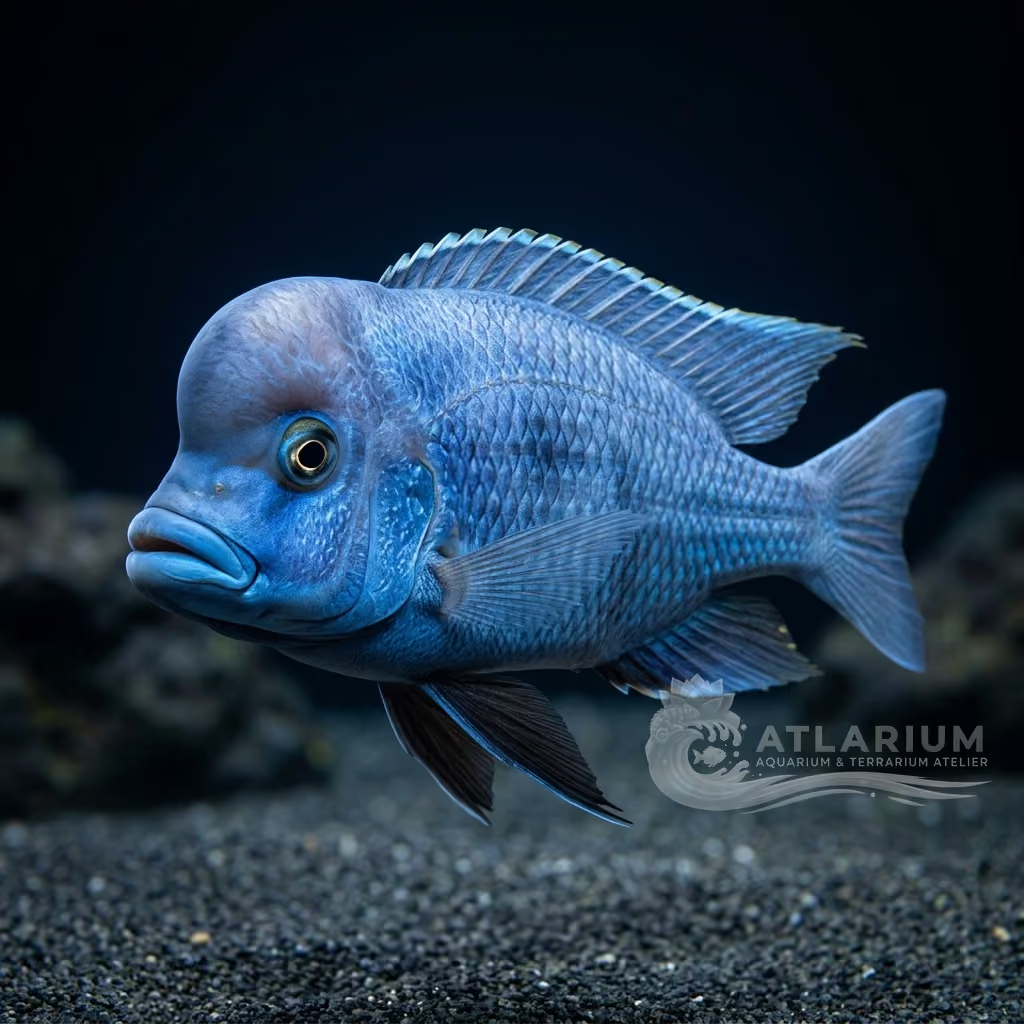
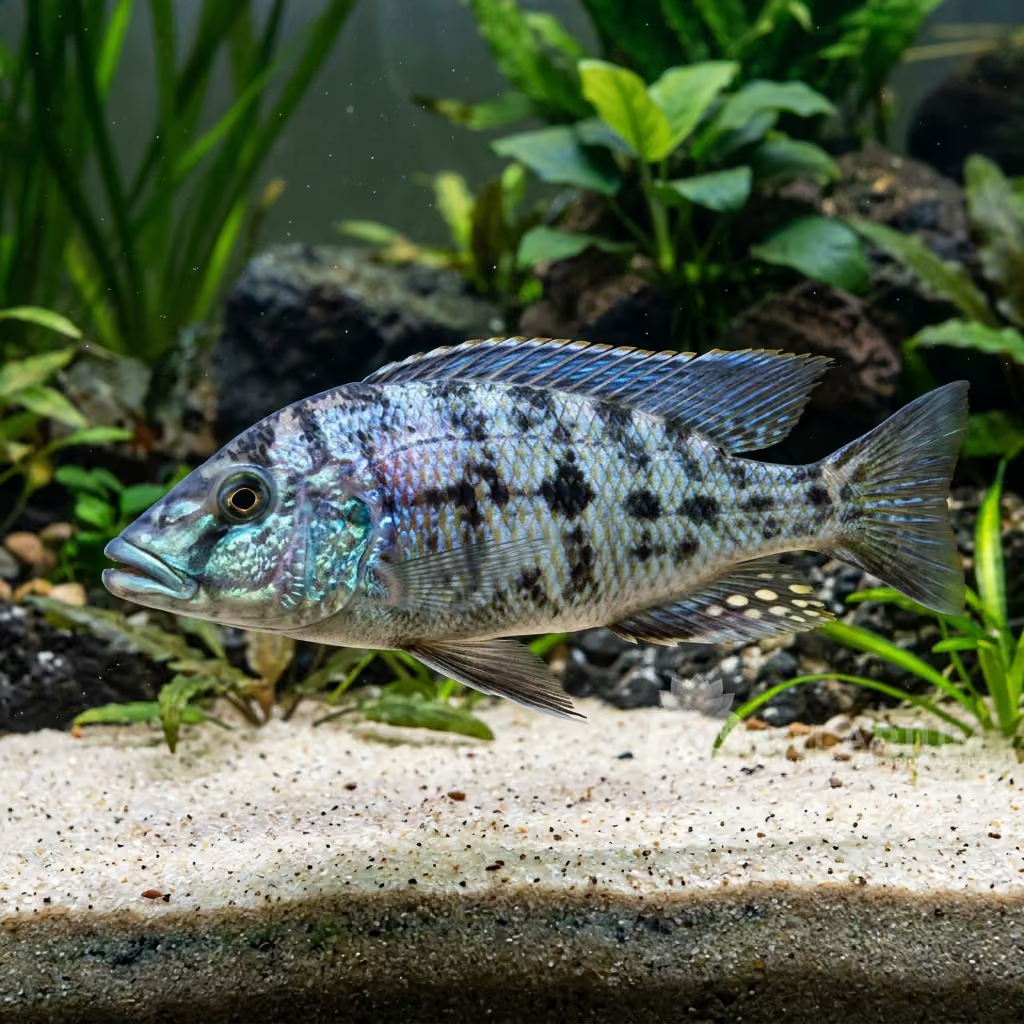
Brichard's Masked Cichlid
Chalinochromis brichardi
Sly Tanganyika rock cichlid (12 cm). Light cylindrical body and showy 'black mask' (bridles) on the face. Sponge grazer, lives constantly glued to the rocks.
Température de l’eau
24 - 27 °C
Valeur du pH
7.8 - 9
Type d'eau
Eau douce
Niveau dans le bac
Fond
Taille adulte
12 cm
Volume minimal du bac
>= 100 L
Groupe minimal
>= 1
GH
10 - 25 dGH
KH
5 - 12 dKH
TDS
200 - 495 ppm
Conductivité
313 - 773 uS/cm

Description de l'espèce
Geographical Origin and Habitat: Endemic to Lake Tanganyika (East Africa). Populates exclusively rocky coastal habitats rich in crevices, caves and rocky debris in shallow waters.
Taxonomy and Morphology: Masked Julie Cichlid (Chalinochromis brichardi). Elongated rupicolous cichlid, similar to Julidochromis with which it is closely related. Reaches 12 cm (4.7 inches).
Social Behavior: Markedly territorial and linked to the rocks. Incessantly patrols the boundaries of its territory, chasing away conspecifics. Tends to swim with its belly adhering to the rocks, even upside down.
Coloration and Sexual Dimorphism: Golden beige body crossed by dark bands (masks) on the snout and opercula, which resemble the reins of a horse (hence "chalino" = bridle). Absence of evident sexual dimorphism, males slightly more massive.

Soins, reproduction et cohabitation
Aquarium Setup: Aquarium of at least 100 cm (40 inches). The tank must be filled to the surface with large rocks to create innumerable secret passages and caves. Substrate in fine coral or calcareous sand.
Diet and Feeding: In nature it feeds on sponges, small snails and crustaceans hidden among the rocks. In the aquarium it accepts high quality flakes, mysis, krill and chopped earthworms. Provide vegetable supplements (spirulina).
Water Quality: Hard and alkaline water mandatory: pH 7.8-9.0, GH over 10. Essential to keep the water very well oxygenated and free of nitrates (max 20 ppm).
Compatibility and Cohabitation: Coexists well with open water Tanganyika species (Cyprichromis) or shell-dwellers (Neolamprologus multifasciatus). Do not pair with Julidochromis due to high risk of hybridization and fierce territorial clashes.
Aquarium Breeding: Cave spawners. Stable monogamous pairs are formed that lay up to 100 eggs on the vault of a hidden cave. Very intense biparental care; they protect the young for months.
Risks and Diseases: Prone to "Tanganyika Bloat" (abdominal swelling) if fed with too much bloodworm or mammal proteins, or if kept in soft waters.

Origine et répartition géographiques
Endemic to Lake Tanganyika (East Africa). Populates exclusively rocky coastal habitats rich in crevices, caves and rocky debris in shallow waters.
Origine
Afrique et Madagascar

Profil de poisson
- Tempérament
- Semi-aggressive
- They are bold and fiercely territorial cichlids. They defend their caves with absolute ferocity. Their complex social dynamics are fascinating to watch.
- Régime alimentaire
- Omnivore
- They are strict micro-predators and carnivores. Frozen bloodworms and high-quality cichlid pellets work perfectly. Plant-based foods are entirely ignored.
- Espérance de vie
- 5-8 years
- Taille adulte
- 12 cm
- Ratio des sexes
- Solitary
- Chalinochromis brichardi is best maintained either as a solitary individual or as a confirmed, bonded male-female pair. It is generally not recommended to keep multiple males or unbalanced ratios in the same aquarium, as their intra-specific territoriality is extremely intense. Once a pair bonds, they will fiercely defend their chosen rock formations against any other members of their own species. For a successful community tank, keeping just one mated pair is the safest approach to minimize deadly aggression.
- Fréquence d'alimentation
- Twice daily
- Feed them one or two moderate meals. They aggressively snatch sinking food pieces quickly. Avoid overfeeding to prevent severe digestive blockages.
- Charge biologique
- Medium
- Chalinochromis brichardi produces a moderate bioload typical of small to medium-sized Lake Tanganyika cichlids. Their dietary needs require high-quality, protein-rich foods, and the resulting metabolic waste can accumulate if the tank is heavily stocked. Because they demand pristine water conditions and very low nitrate levels to thrive, robust biological and mechanical filtration is absolutely critical. Regular, substantial water changes are necessary to process their waste and maintain the hard, alkaline water parameters they naturally require.
- Courant
- Stagnant
- They thrive under moderate, well-oxygenated water flow. Surface agitation mimics natural Rift Lake conditions. Strong output shouldn't disrupt their precise swimming.
- Risque de saut
- No
- Reproduction
- Oviparous
- They are secretive rocky substrate cave spawners. Both parents fiercely defend the resulting fry. Fry easily accept newly hatched brine shrimp.
- Compatibilité et compagnons
- Species only
- They are highly aggressive toward similar species. Keep them with distinctly different Tanganyikan cichlids. Peaceful top-dwellers are usually completely ignored.
- Niveau dans le bac
- Bottom
- These cichlids are obligate bottom-dwellers that spend their entire lives closely associated with the rocky substrate. They rarely swim into the middle or upper sections of the water column, preferring to remain hidden among rubble piles, caves, and overhangs. Their body shape is adapted for navigating tight vertical crevices and closely hugging the contours of the rocks. Replicating a deep, structurally complex rockery at the base of the aquarium is essential to accommodate their natural vertical and horizontal swimming patterns.

Modèles et paramètres scientifiques
FishBase
Fenêtre sur les données scientifiques officielles de l’espèce
FishBase v25.04Données synchronisées le : 15/06/2026
- Niveau trophique
- 3,5 ± 0,37 se
- Résilience
- Moyenne (1,4 - 4,4 ans)
- Singularité phylogénétique (PD50)
- 0.625
- Relation bayésienne longueur-poids
- a = 0.01445, b = 2.99
- VulnérabilitéVulnérabilité faible (10 / 100)

Espèces associées
Recommandations regroupées par proches parents, compagnons et soins similaires.