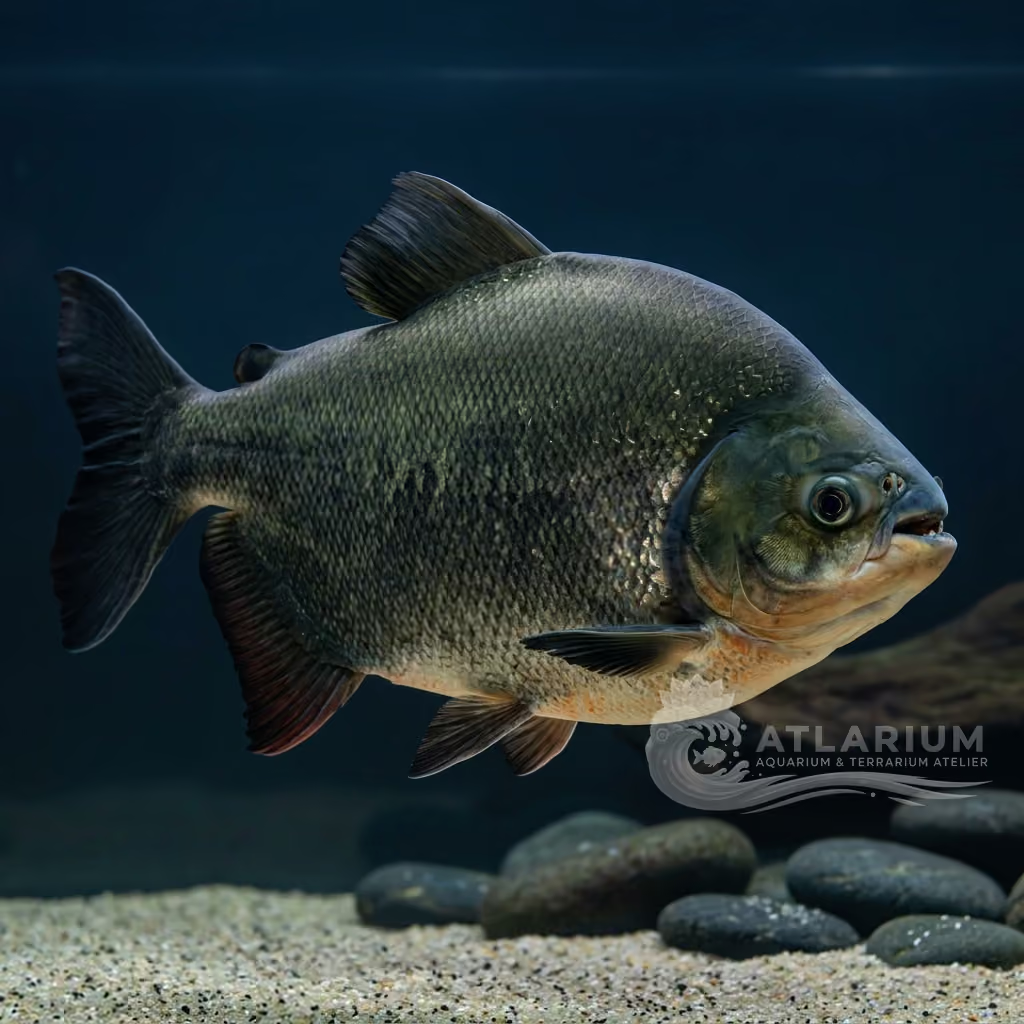
Barred rainbowfish
Chilatherina fasciata
A rainbowfish from northern New Guinea with flanks crossed by dark vertical bars on a silver base with yellow and blue reflections — males in display drastically intensify their colors. Among the most active Chilatherina: it swims tirelessly in the upper zone and needs long tanks with ample open space. Prefers alkaline, well-oxygenated water with sustained flow, more than its genus cousins. Polygamous: at least 2–3 females per male ratio to contain male aggression during courtship.
24 - 30 °C
7 - 8.5
Eau douce
Milieu
14 cm
>= 200 L
>= 6
8 - 15 dGH
4 - 7 dKH
160 - 295 ppm
250 - 461 uS/cm

Description de l'espèce

Soins, reproduction et cohabitation

Origine et répartition géographiques
Origine

Profil de poisson
- Tempérament
- Peaceful
- This is a highly gregarious schooling fish that must be kept in groups of six or more. Males often flash brilliant colors and engage in harmless mock battles to impress females. They are generally peaceful toward other species and make wonderful community inhabitants.
- Régime alimentaire
- Omnivore
- In the wild, they consume a mix of insects, small crustaceans, and plant matter. In captivity, they easily adapt to high-quality dry flakes or small pellets. Regular supplements of live or frozen bloodworms and daphnia will boost their health and coloration.
- Espérance de vie
- 5-8 years
- Taille adulte
- 14 cm
- Ratio des sexes
- School
- A ratio of at least two females for every male is highly recommended. This prevents females from being exhausted by the constant chasing of eager males. In larger shoals, maintaining an equal ratio can also work effectively to diffuse aggression.
- Fréquence d'alimentation
- Twice daily
- Offer food to these active swimmers two to three times daily. Keep portion sizes small enough to be entirely consumed within roughly two minutes. This routine ensures proper digestion and prevents excess food from decaying in the tank.
- Charge biologique
- Medium
- Chilatherina fasciata has a moderate bioload relative to its size and active metabolism. Strong filtration is recommended to handle the waste produced by a schooling group. Regular partial water changes are essential to keep nitrate levels suitably low.
- Courant
- Strong
- They inhabit flowing streams in nature and appreciate moderate to strong water movement. Installing powerheads can help replicate this natural riverine environment successfully. Good oxygenation and flow will keep the fish vibrant, healthy, and highly active.
- Risque de saut
- Yes
- Like most rainbowfish, they are prone to jumping when startled or excited. The aquarium must be completely enclosed with a tight, secure lid. Care should be taken during maintenance to prevent them from leaping out of the water.
- Reproduction
- Oviparous
- They are continuous spawners that lay a few eggs daily over fine-leaved vegetation. Adults will eat their own eggs and fry if given the opportunity, requiring a separate breeding tank. The fry hatch after roughly seven to ten days and need microscopic foods initially.
- Compatibilité et compagnons
- Community
- This species makes an excellent addition to large, peaceful community aquariums. They socialize well with other rainbowfish, peaceful barbs, and bottom-dwelling loaches. It is best to avoid keeping them with slow-moving fish that could be stressed by their constant activity.
- Niveau dans le bac
- Middle
- They are fast open-water swimmers that utilize the middle and top levels. Leaving plenty of unobstructed horizontal swimming space is crucial for their well-being. Occasional floating plants can provide shelter and make them feel more secure.

Modèles et paramètres scientifiques
Fenêtre sur les données scientifiques officielles de l’espèce
- Niveau trophique
- 2,9 ± 0,3 se
- Résilience
- Moyenne (1,4 - 4,4 ans)
- Singularité phylogénétique (PD50)
- 0.5005
- Relation bayésienne longueur-poids
- a = 0.01122, b = 3.04
- VulnérabilitéVulnérabilité faible (10 / 100)

Galerie d'images
Images sous licence liées à l'espèce ou, lorsqu'elles sont indiquées, au taxon représentatif le plus proche.

Espèces associées
Recommandations regroupées par proches parents, compagnons et soins similaires.