Eau douceIntermédiaire
©AI Generated·Proprietary
Melanotaenia sexlineata — Fly River rainbowfish

Fly River rainbowfish

Melanotaenia sexlineata

A rainbowfish from the Fly River system in Papua New Guinea, where it inhabits slow-flowing, tea-colored (tannin) rainforest streams. The body features six longitudinal lines that give it its specific name. Less known than more famous cousins but with a refined charm in biotopes replicating forest streams. Prefers slightly acidic water in the natural biotope but adapts to neutral-alkaline in captivity. Simple breeding: egg-scatterer with a few eggs per day.

Température de l’eau

24 - 29 °C

Valeur du pH

7 - 8

Type d'eau

Eau douce

Niveau dans le bac

Milieu

Taille adulte

8 cm

Volume minimal du bac

>= 75 L

Groupe minimal

>= 6

GH

10 - 20 dGH

KH

5 - 10 dKH

TDS

200 - 400 ppm

Conductivité

313 - 625 uS/cm

Description de l'espèce

Geographical Origin and Habitat: Endemic exclusively to an incredibly remote, deeply isolated upper tributary system of the massive Fly River basin in the rugged, mountainous interior of Papua New Guinea. Melanotaenia sexlineata (universally known as the Fly River Rainbowfish) natively colonizes fast-flowing, crystal-clear, sunlit mountain streams flowing over pristine limestone and gravel beds. These specific micro-habitats are characterized by heavily oxygenated water, a distinct lack of dense aquatic vegetation, and relatively alkaline water conditions.
Taxonomy and Morphology: Scientifically classified within the Melanotaeniidae family (the true Rainbowfishes), it is an exceptionally rare, breathtakingly patterned, and athletic medium-sized schooling fish. Morphologically, fully mature adults reach roughly 6.0 to 8.0 centimeters (2.4-3.1 inches) in length, remaining relatively compact compared to larger Melanotaenia species. It possesses a classic, highly compressed, distinctively "torpedo-shaped" body profile evolved for fighting strong mountain currents. Its defining anatomical feature is the signature deeply split, twin dorsal fin.
Social Behavior: They are exceptionally peaceful, incredibly hyper-active, and strictly obligate shoaling fish. They absolutely MUST be kept in a sizable group (minimum 6, but 10-15+ is required to witness their intense, constant social dynamics). In the aquarium, they possess boundless, chaotic energy, spending their entire day relentlessly darting, chasing, and weaving through the upper and middle levels of the water column. Dominant males are intensely competitive, constantly engaging in spectacular lateral sparring displays to establish dominance.
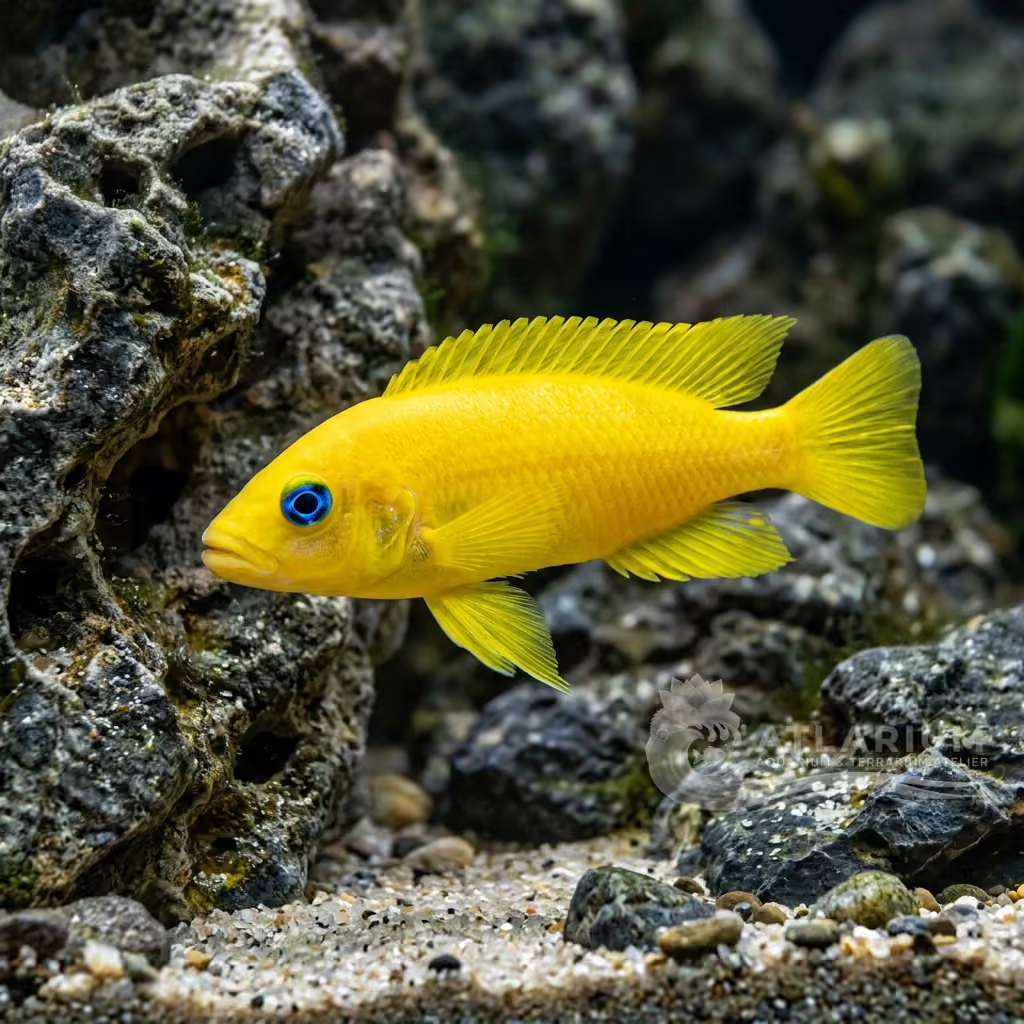
Coloration and Sexual Dimorphism: Sexual dimorphism is spectacular, highly graphic, and instantly obvious. Mature males are undisputed stars: their base body color is a glowing, intensely reflective metallic golden-yellow or bright chartreuse. The absolute defining feature is a series of six (hence "sexlineata") stark, bold, jet-black or deep blue horizontal stripes running the entire length of their flanks. Their lips often flush a brilliant, surprising neon blue. Females are slightly smaller, possess a flatter back, and exhibit a vastly duller, pale silvery-yellow coloration.

Soins, reproduction et cohabitation

Aquarium Setup: The aquarium architecture MUST flawlessly accommodate their energetic swimming speed and replicate a fast-flowing, clear Papuan mountain stream. A minimum 120-liter (30-gallon) tank (at least 90 cm / 3 feet long) is strictly required. The tank MUST feature massive, unobstructed horizontal swimming lanes across the upper levels. Unlike swamp-dwelling species, they do NOT require dense vegetation; smooth river rocks, pebbles, and strong water flow are ideal. They are exceptional jumpers; a heavy, 100% secure, perfectly fitted lid is absolutely mandatory.
Diet and Feeding: They are highly active, voracious omnivores that forage aggressively in the mid-water column and at the surface. Because they swim relentlessly against strong currents, they possess exceptionally high metabolic rates and require frequent feeding. They will frantically consume almost anything offered: high-quality floating flakes and pellets. To maintain their glowing golden coloration and jet-black stripes, you MUST provide heavy daily offerings of live or frozen meaty foods (bloodworms, Daphnia, Artemia) and spirulina flakes.
Water Quality: Originating from isolated limestone mountain streams, they strictly demand highly stable, immaculate, heavily oxygenated water with strong currents. They thrive in warm tropical temperatures (24-28°C / 75-82°F). Crucially, they require moderately hard to hard, alkaline water (GH 10-20) and a highly alkaline pH (7.5 - 8.2). Attempting to keep them in soft, acidic blackwater will result in severe osmotic stress and death. They possess zero tolerance for dissolved organic waste; massive, rigorous weekly water changes and powerful filtration are mandatory.
Compatibility and Cohabitation: Compatibility is excellent, provided tankmates can tolerate their hyper-active behavior and strict requirement for hard, alkaline water with strong flow. They are the perfect centerpiece schooling fish for a dedicated hard-water biotope. Excellent companions include other hard-water Rainbowfish species, fast-swimming Barbs, and hard-water tolerant bottom-dwellers. They MUST NEVER be housed with slow-moving, delicate fish (like Angelfish or Discus), or with species requiring soft, acidic water (like Cardinal Tetras).
Aquarium Breeding: Breeding is highly rewarding and frequently happens by accident in pristine, hard-water tanks. They are prolific, continuous egg-scatterers that provide zero parental care. Breeding is triggered by heavy feeding and a massive water change. A frantically colored dominant male will aggressively display, flashing his blue lips, and drive the female into dense, fine-leaved mosses or spawning mops, where she releases adhesive eggs daily for weeks. The adults will relentlessly eat the eggs; the spawning medium MUST be moved to a separate tank.
Risks and Diseases: The absolute greatest physical risk is severe osmotic stress and lethal bacterial infections caused by housing them in soft, acidic water; hard, highly alkaline water is strictly mandatory for their survival. The second major risk is severe stress and physical injury from being confined in a tank shorter than 90 cm; they will literally crash into the glass. Finally, they are highly vulnerable to suffocation if the water is stagnant; massive surface agitation and strong powerheads are required.

Origine et répartition géographiques

Endemic exclusively to an incredibly remote, deeply isolated upper tributary system of the massive Fly River basin in the rugged, mountainous interior of Papua New Guinea. Melanotaenia sexlineata (universally known as the Fly River Rainbowfish) natively colonizes fast-flowing, crystal-clear, sunlit mountain streams flowing over pristine limestone and gravel beds. These specific micro-habitats are characterized by heavily oxygenated water, a distinct lack of dense aquatic vegetation, and relatively alkaline water conditions.

Origine

Afrique et MadagascarAustralie, Nouvelle-Guinée et Océanie

Profil de poisson

Tempérament
Peaceful
Their temperament is generally peaceful. Males frequently spar playfully without causing harm. They add dynamic energy to community tanks.
Régime alimentaire
Omnivore
They are naturally omnivorous. They readily accept flakes and small frozen foods. A varied diet enhances their vibrant colors.
Espérance de vie
5-8 years
Taille adulte
8 cm
Ratio des sexes
Harem
Keep one male to multiple females. This significantly reduces male harassment. Multiple males can coexist in larger aquariums.
Fréquence d'alimentation
Twice daily
Feed small portions twice a day. They consume food rapidly from the surface. Avoid overfeeding to maintain water quality.
Charge biologique
Low to Medium
They produce a moderate bioload. Efficient filtration is needed for their active lifestyle. Regular water changes maintain pristine conditions.
Courant
Strong
They appreciate moderate to strong flow. This simulates their native river habitats. Good circulation is highly beneficial.
Risque de saut
Yes
There is a very high jump risk. A tight-fitting lid is absolutely essential. Many are lost to open tanks.
Reproduction
Oviparous
They are prolific egg scatterers. Parents will eat eggs if not removed. Fry require extremely small initial foods.
Compatibilité et compagnons
Community
They are peaceful but highly active. Avoid housing with slow or timid species. They thrive with other energetic fish.
Niveau dans le bac
Middle
They swim in the middle and upper levels. They require plenty of open swimming space. Perimeter plants provide security.

Modèles et paramètres scientifiques

FishBase

Fenêtre sur les données scientifiques officielles de l’espèce

FishBase v25.04Données synchronisées le : 15/06/2026
Niveau trophique
2,9 ± 0,4 se
Résilience
Moyenne (1,4 - 4,4 ans)
Singularité phylogénétique (PD50)
0.5
Relation bayésienne longueur-poids
a = 0.01122, b = 3.04
VulnérabilitéVulnérabilité faible (10 / 100)