Polleni cichlid
Paratilapia polleni
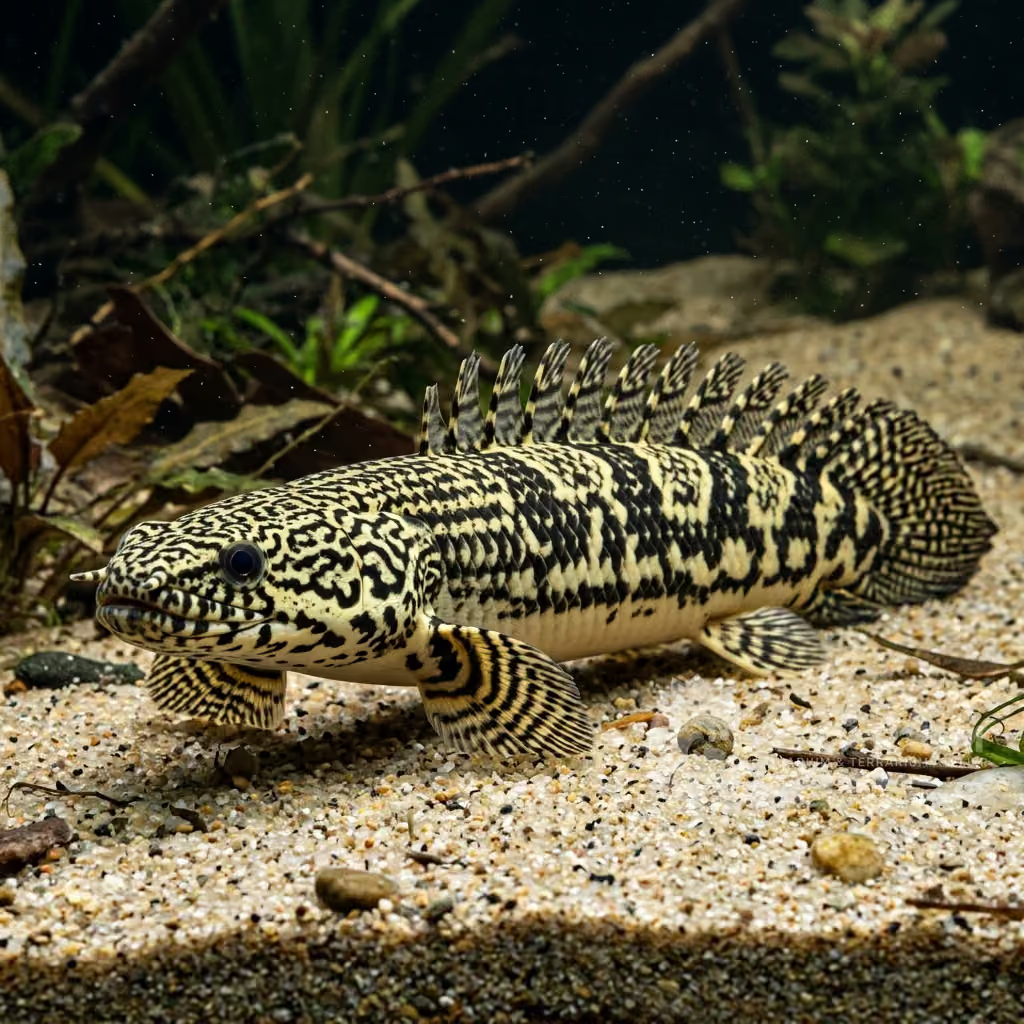
The Black Diamond Cichlid is a striking Malagasy species covered in sparkling iridescent spots. Highly territorial, this large predator requires an expansive, securely scaped tank.
Température de l’eau
24 - 28 °C
Valeur du pH
6.5 - 8
Type d'eau
Eau douce
Niveau dans le bac
Fond et milieu
Taille adulte
28 cm
Volume minimal du bac
400 L
Groupe minimal
>= 1
GH
5 - 20 dGH
KH
2 - 10 dKH
TDS
95 - 400 ppm
Conductivité
148 - 625 uS/cm

Description de l'espèce
Geographical Origin and Habitat: Paratilapia polleni is endemic to the island of Madagascar, where it is widely distributed across various river basins, lakes, and coastal marshes. It prefers slow-moving or still waters, especially areas with abundant cover such as submerged branches, fallen logs, rocky crevices, and dense aquatic vegetation. This cichlid is highly adaptable and can tolerate fluctuating environmental conditions, including slight brackish water near coastal estuaries.
Taxonomy and Morphology: This species belongs to the Cichlidae family, Paratilapiinae subfamily, and Paratilapia genus. Described by Bleeker in 1868, it represents a basal lineage among Malagasy cichlids. It features a robust, deep body that is laterally compressed. The head is large with a wide, terminal mouth filled with small, sharp teeth adapted for capturing prey. Its fins are well-developed, with the dorsal and anal fins ending in pointed extensions in mature specimens.
Social Behavior: Highly territorial and aggressive, particularly toward conspecifics and similarly shaped fish. Adult males will establish and aggressively defend large territories. During the breeding season, their territorial aggression escalates significantly, and established pairs will drive away any intruders. Outside of breeding, they are solitary hunters that require plenty of individual space.
Coloration and Sexual Dimorphism: Their coloration is spectacular, consisting of a deep velvet-black background color covered with hundreds of small, glittering spots that shimmer in shades of silver-white, gold, or electric blue depending on the lighting. Sexual dimorphism is distinct: adult males grow much larger than females, develop a prominent nuchal hump on their forehead, and possess longer, more filamented dorsal and anal fins.

Soins, reproduction et cohabitation
Aquarium Setup: Requires a large aquarium with a minimum tank length of 150 cm and a volume of at least 400 liters for a single pair. The substrate should be sandy to accommodate their digging behavior. Decorate the tank with large, heavy rocks, sturdy driftwood, and large tree roots that are securely anchored to prevent shifting. Provide plenty of dark caves and sight breaks to reduce aggression.
Diet and Feeding: An opportunistic carnivore with omnivorous tendencies. In captivity, they require a high-protein, varied diet. Offer high-quality large cichlid pellets as a staple, supplemented with frozen or fresh foods such as shrimp, krill, mussels, earthworms, and chopped fish fillets. Avoid feeding mammal or poultry meat, as it can cause serious digestive disorders.
Water Quality: Powerful filtration is essential, alongside weekly water changes of 30-40% to keep organic pollutants low. Ideal water parameters include a temperature of 22°C to 28°C (72-82°F), a pH of 7.0 to 8.0, and a water hardness of GH 10-20 °dGH. They are highly sensitive to the accumulation of organic waste, ammonia, and nitrite, which can lead to stress and disease.
Compatibility and Cohabitation: Due to their aggressive and territorial nature, tankmates must be chosen carefully and housed only in very large tanks. They can be kept as a bonded pair or housed with large, robust species such as Synodontis catfish, large barbs, large characins, or other medium-to-large robust cichlids. Small fish will be treated as prey and consumed immediately.
Aquarium Breeding: Substrate spawners that form strong pair bonds. The pair will clean a flat rock or excavate a pit in the sand to deposit several thousand sticky eggs. Both parents guard the nest aggressively, fanning the eggs and protecting the fry. The eggs hatch in 2-3 days, and the free-swimming fry should be fed freshly hatched brine shrimp (Artemia nauplii).
Risks and Diseases: Prone to Head and Lateral Line Erosion (HLLE), which is commonly caused by nutritional deficiencies, carbon dust, or poor water quality. They are also susceptible to ich (white spot disease) when stressed by temperature drops. Maintaining strict water hygiene and providing a vitamin-enriched diet are the best preventative measures.

Origine et répartition géographiques
Paratilapia polleni is endemic to the island of Madagascar, where it is widely distributed across various river basins, lakes, and coastal marshes. It prefers slow-moving or still waters, especially areas with abundant cover such as submerged branches, fallen logs, rocky crevices, and dense aquatic vegetation. This cichlid is highly adaptable and can tolerate fluctuating environmental conditions, including slight brackish water near coastal estuaries.
Origine
Cosmopolite ou introduitAfrique et Madagascar

Profil de poisson
- Tempérament
- Semi-aggressive
- They possess a highly aggressive and intolerant temperament. They will vigorously defend their chosen territory from any perceived intruders. Careful monitoring is required if housing them in a community of large fish.
- Régime alimentaire
- Omnivore
- They are primarily carnivorous predators in their natural habitat. A varied diet of high-quality cichlid pellets and chopped fish is ideal. Occasional feedings of frozen krill help enhance their stunning coloration.
- Espérance de vie
- 5-8 years
- Taille adulte
- 28 cm
- Ratio des sexes
- Pair
- Due to extreme territoriality, keeping more than one male is discouraged. A confirmed breeding pair can be kept alone in a dedicated setup. If keeping juveniles, be prepared to rehome subordinate males.
- Fréquence d'alimentation
- Twice daily
- Juveniles should be fed a small amount once or twice daily. Fully grown adults only need one substantial meal per day. Fasting them one day a week can promote better digestive health.
- Charge biologique
- High
- As a large, robust cichlid, they produce a significantly high bioload. Powerful canister or sump filtration is strictly required. Frequent, large water changes are mandatory to manage nitrate levels.
- Courant
- Stagnant
- They tolerate a wide range of water flow but prefer moderate movement. Good surface agitation is necessary for proper oxygen exchange. Ensure their large swimming areas aren't overwhelmed by extreme torrents.
- Risque de saut
- Yes
- Being large, muscular fish, they can push open loose aquarium lids. A heavy, secure glass canopy is strongly advised to prevent escape. They may splash forcefully at the surface during feeding.
- Reproduction
- Oviparous
- They are biparental substrate spawners that are straightforward to breed. They will thoroughly clean a flat rock before laying thousands of eggs. Both parents become fiercely protective and will attack anything approaching.
- Compatibilité et compagnons
- Aggressive
- They are aggressive and territorial, typical of large cichlids. They can be kept with other large, robust semi-aggressive fish. Small fish will undoubtedly be viewed as food and swallowed whole.
- Niveau dans le bac
- Middle/Bottom
- They are strong swimmers that confidently utilize all tank levels. They tend to patrol the middle and lower levels while defending their territory. They will routinely excavate the substrate around their caves.

Modèles et paramètres scientifiques
FishBase
Fenêtre sur les données scientifiques officielles de l’espèce
FishBase v25.04Données synchronisées le : 15/06/2026
- Niveau trophique
- 3,4 ± 0,3 se
- Résilience
- Moyenne (1,4 - 4,4 ans)
- Singularité phylogénétique (PD50)
- 0.75
- Relation bayésienne longueur-poids
- a = 0.01995, b = 3.01
- VulnérabilitéVulnérabilité faible (18 / 100)

Espèces associées
Recommandations regroupées par proches parents, compagnons et soins similaires.