Lilaeopsis mauritiana
Lilaeopsis mauritiana
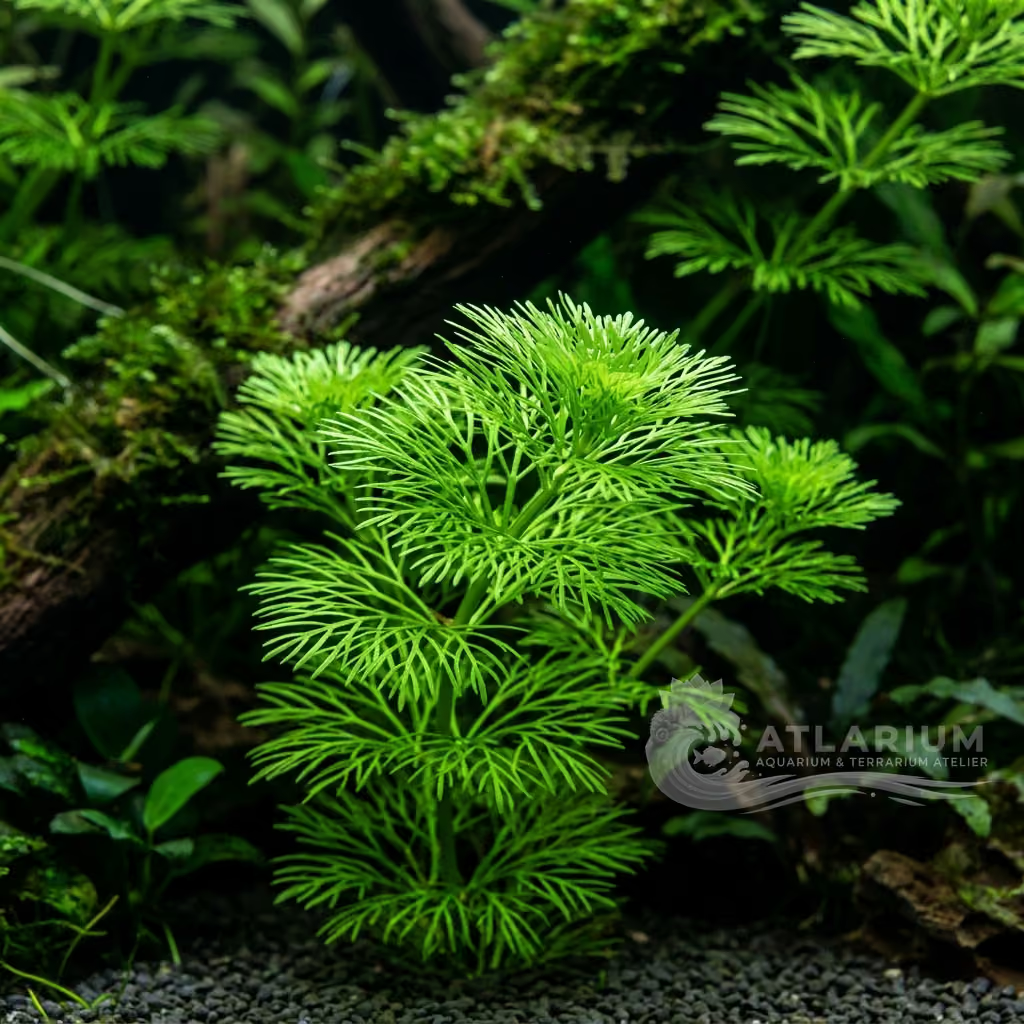
Endemic to Mauritius, this micro sword variety has distinctly narrow, cylindrical leaves. It is less light-demanding than its Brazilian cousin, making it an easier carpeting choice for mid-tech setups.
Water Temperature
20 - 30 °C
pH Value
6 - 7.5
Water type
Freshwater
Light
Medium - High
CO2
Low to Medium
Expected height
10 cm
GH
4 - 20 dGH
KH
2 - 14 dKH

Species description
Geographical Origin and Habitat: Lilaeopsis mauritiana is native to the island of Mauritius in the Indian Ocean. It populates the sandy and muddy banks of rivers, deltas, and coastal marshy areas exposed to both freshwater and brackish conditions. The species has adapted to tolerate seasonal fluctuations in water level, growing submerged or emersed in water-saturated substrates under direct sunlight.
Taxonomy & Genetics: It belongs to the family Apiaceae, genus Lilaeopsis. This species features a hardy and stable genetic profile characterized by hollow stems and leaves that facilitate transport of oxygen to the roots in anaerobic soils. Compared to other Lilaeopsis, it shows distinct morphological features, with cylindrical leaves of circular cross-section rather than flattened ones.
Physical Structure: It develops a creeping underground rhizome from which small clumps of vertical leaves emerge at each node. The leaves are needle-like, stiff, hollow, and lack a widened leaf blade, reaching an average height of 5 to 10 centimeters. The root system consists of thin but well-anchored roots developing along the nodes of the rhizome.
Color & Texture: It displays a uniform bright green or emerald green coloration, which maintains its brilliance even under intense light. The texture is smooth, elastic, and leathery, with a tubular consistency noticeable to the touch. Under direct aquarium light, the foliage assumes a fresh and healthy look, ideal for forming small submerged lawns.

Care, breeding and tankmates
Lighting & CO2: Requires medium to high lighting to prevent the leaves from stretching and to encourage horizontal propagation of the rhizome. Carbon dioxide (CO2) injection is recommended to stimulate denser and more uniform growth, reducing carpet formation time.
Nutrition & Substrate: Prefers a sandy or fine-grained substrate to allow the rhizome to propagate without physical obstacles. While it does not have extreme demands for fertile soil, it benefits from regular column fertilization with iron, potassium, and microelements to prevent leaf yellowing.
Water Chemistry: Tolerates a wide spectrum of parameters: temperature between 20°C and 30°C, pH from 6.0 to 7.5, and carbon hardness (KH) between 2 and 14 dKH. Its exceptional tolerance to brackish water makes it suitable for setups mimicking river estuaries.
Space Management & Placement: Its ideal placement is in the foreground of the aquarium. It should be planted in small clumps spaced 2-3 centimeters apart, allowing new underground runners to gradually fill the empty spaces and form an even carpet.
Pruning: Trim the longer or damaged leaves with sharp scissors. Regular pruning stimulates the plant to produce new leaves and intensify horizontal rhizome spreading, keeping the lawn low and compact.
Risks & Diseases: Due to its slow growth, the tubular leaves can accumulate debris or be colonized by green spot algae if water circulation is poor. Nutrient deficiencies, particularly iron, manifest quickly with color loss and leaf yellowing.

Geographic origin and distribution
Lilaeopsis mauritiana is native to the island of Mauritius in the Indian Ocean. It populates the sandy and muddy banks of rivers, deltas, and coastal marshy areas exposed to both freshwater and brackish conditions. The species has adapted to tolerate seasonal fluctuations in water level, growing submerged or emersed in water-saturated substrates under direct sunlight.
Origin
Africa and Madagascar

Plant profile
- Placement
- Foreground
- This plant is almost exclusively used in the foreground as a carpeting plant. It should be planted directly into the substrate in small, evenly spaced clumps. It can also be used in the midground of nano aquariums.
- Botanical form
- Rhizome
- It features short, blade-like green leaves that resemble miniature grass. The leaves grow upward from a creeping rhizome hidden in the substrate. It maintains a low profile, especially under intense lighting.
- Growth
- Slow
- The growth rate is relatively slow to moderate, depending on lighting and CO2. It takes time to acclimate and begin sending out runners across the substrate. Once established, it steadily forms a thick, grass-like lawn.
- Substrate
- Low
- Compared to other Micro Swords, Lilaeopsis mauritiana is slightly less demanding but still benefits greatly from a nutrient-rich base. A fine-grained aquasoil or a sandy substrate enriched with root tabs will comfortably support its root development and creeping runners. A depth of about 4 to 5 centimeters is generally sufficient to allow proper anchorage and nutrient absorption. While it tolerates leaner substrates better than its relatives, a loose, fine texture is crucial so the delicate runners are not obstructed.
- Column fertilization
- Recommended
- While it absorbs some nutrients from the water, column dosing is secondary to root feeding. Liquid fertilizers help ensure micronutrients are available to the leaves. However, relying solely on water column nutrients may lead to sparse growth.
- Root fertilization
- None
- A nutrient-rich substrate or root tabs are crucial for its success. Its extensive root system draws the majority of its food from the soil. Replenishing substrate nutrients periodically will sustain long-term health.
- Trimming
- Occasional
- Trimming involves mowing the carpet horizontally with curved spring scissors. Regular trimming prevents the lower layers from dying off due to lack of light. It also encourages the plant to spread laterally rather than growing too tall.
- Propagation
- Cuttings
- Propagation occurs naturally through lateral runners that spread across the substrate. You can also propagate it by cutting the rhizome and replanting a healthy portion. Dividing an overgrown carpet is an effective way to multiply the plant.
- Sensitivity
- Moderate
- It is highly susceptible to being uprooted by bottom-dwelling fish before it anchors. It can also be easily choked out by aggressive algae if flow and nutrients are imbalanced. Good water circulation around the carpet is essential.
- Layout role
- Nano, Foreground, group
- Its primary role is to create a lush, natural-looking grassy foreground. It visually grounds the aquascape and provides scale to the hardscape. It is a classic choice for Iwagumi layouts and nature aquariums.

Related species
Recommendations grouped by close relatives, companion choices, and similar care.