Hydropogonella gymnostoma
Hydropogonella gymnostoma
Rare tropical South American aquatic moss that anchors to wood and rocks. Highly adaptable to varied lighting, adding natural texture to shaded areas.
Water Temperature
20 - 28 °C
pH Value
5.5 - 7.5
Water type
Freshwater
Light
Low to High
CO2
Low - High
Expected height
3 cm
Expected width
10 cm
GH
0 - 15 dGH
KH
0 - 12 dKH

Species description
Geographical Origin and Habitat: Hydropogonella gymnostoma is an aquatic moss native to tropical South America, with documented occurrences mainly in Brazil, Venezuela, and Colombia. It inhabits shaded forest streams, slow-moving mountain creeks, and shallow waterfalls within the Amazon and Orinoco basins. It grows as an epiphyte or epilith, anchoring to wet rocks, exposed tree roots, and submerged wood along the flow line of the water, enduring moderate currents and seasonal water level fluctuations.
Taxonomy & Genetics: This moss belongs to the Sematophyllaceae family, order Hypnales. Although commercially known in the aquarium hobby as 'Queen Moss' (sharing this common name with other related species), its classification as Hydropogonella gymnostoma describes a scientifically distinct species. Genetically, it possesses specific cellular adaptations that allow it to anchor tenaciously to rough surfaces and photosynthesize effectively under dense forest canopies in diffuse light.
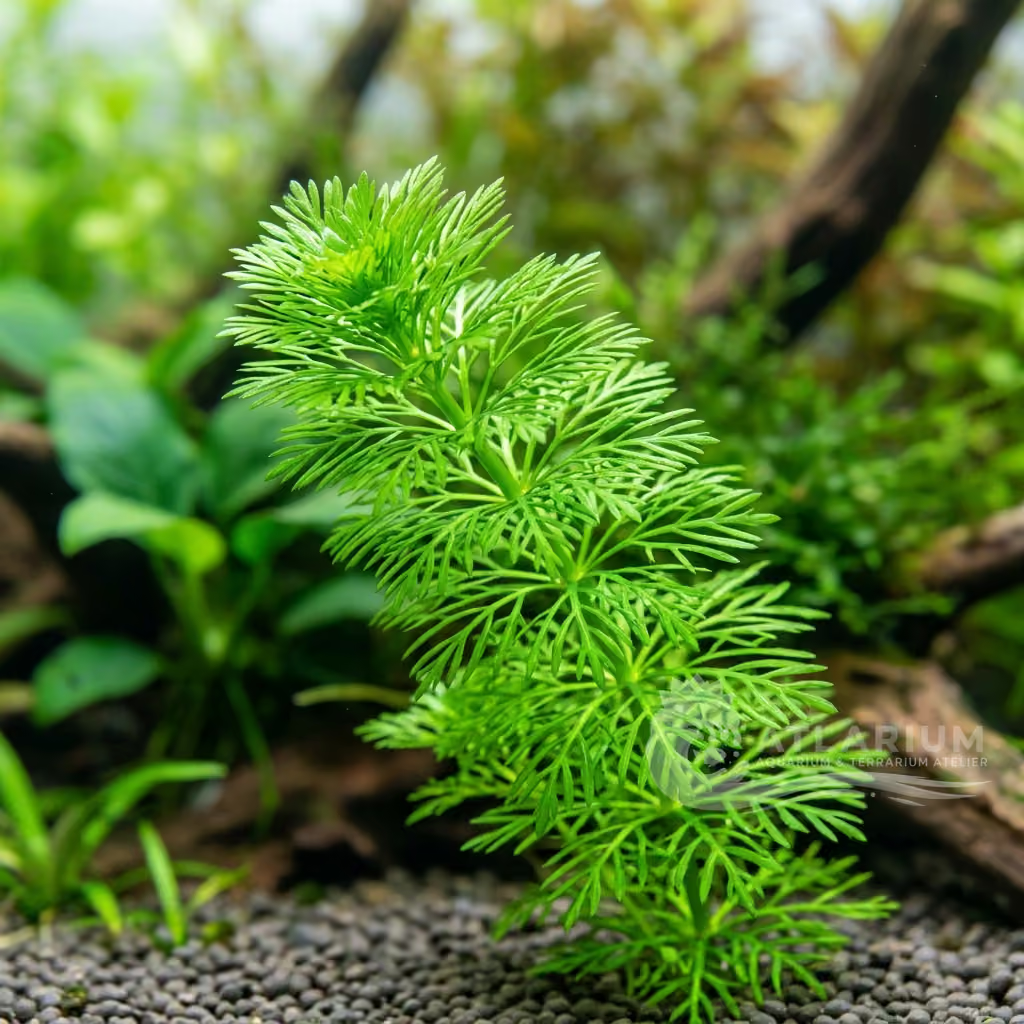
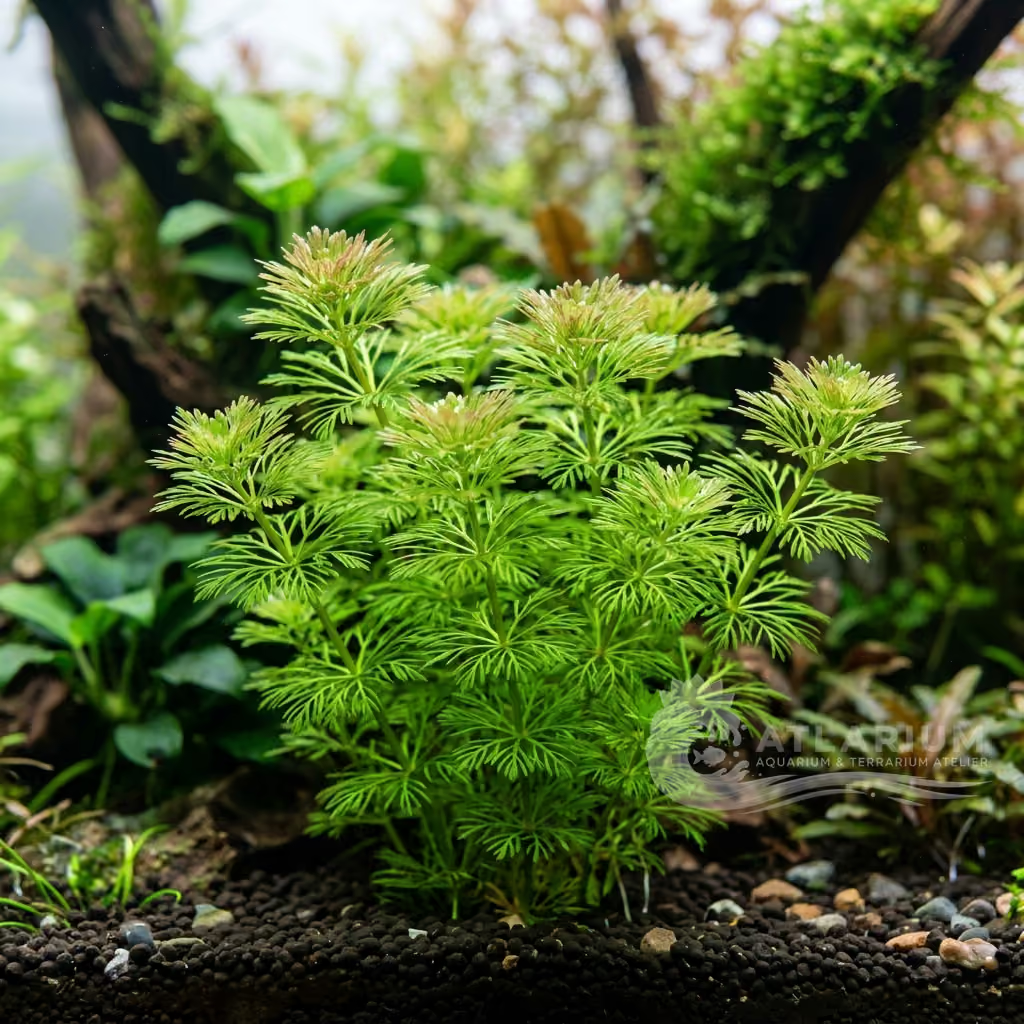
Physical Structure: It features creeping and branched stems that form dense, wavy cushions. The filaments are thin, flexible, and densely covered by microscopic leaves arranged spirally. It does not develop true roots; the moss uses dark, fibrous basal rhizoids to anchor firmly to the hardscape, while absorbing water and dissolved nutrients directly through the cell walls of its leaves.
Color & Texture: It has a deep, brilliant emerald green color that is highly saturated, adding a natural and elegant look to the tank. The visual texture is soft, feathery, and compact, creating a velvety effect on the rocks and wood to which it is anchored. To the touch, the moss is spongy and soft, holding large amounts of water and providing excellent shelter for microorganisms and dwarf shrimp.

Care, breeding and tankmates
Lighting & CO2: Highly tolerant of lighting conditions, it grows well in partial shade as well as under intense light. CO2 injection is not strictly mandatory, but a modest supply (10-15 mg/L) significantly improves the density of the cushions, stimulating more orderly branching and faster growth.
Nutrition & Substrate: Being an epiphyte, it does not require any fertile substrate. It draws nutrients directly from the
Water Chemistry: It prefers soft, slightly acidic to neutral water, with an optimal pH range between 5.5 and 7.5. The ideal temperature range is 15°C to 28°C; it is sensitive to very high temperatures (above 29°C), which can cause growth stoppage and yellowing of the inner filaments.
Space Management & Placement: Optimal placement is as an epiphyte in the midground of the aquarium, anchored to driftwood, bogwood roots, or lava rocks. It can be secured initially with thin nylon line, biodegradable cotton thread, or aquarium-safe cyanoacrylate glue. Over time, it will spread to cover the hardscape surfaces completely.
Pruning: Pruning is done by thinning out and cutting excess fronds with sharp scissors. Cut fragments must be promptly netted out of the water to prevent them from spreading and clogging filter intakes. Regular trimming helps keep the cushions compact and healthy.
Risks & Diseases: The primary risk is the accumulation of dirt and organic debris within the filaments, which can smother the plant or promote cyanobacteria. Introducing detritivorous dwarf shrimp (such as Neocaridina or Caridina) is highly useful to keep the moss constantly clean.

Geographic origin and distribution
Hydropogonella gymnostoma is an aquatic moss native to tropical South America, with documented occurrences mainly in Brazil, Venezuela, and Colombia. It inhabits shaded forest streams, slow-moving mountain creeks, and shallow waterfalls within the Amazon and Orinoco basins. It grows as an epiphyte or epilith, anchoring to wet rocks, exposed tree roots, and submerged wood along the flow line of the water, enduring moderate currents and seasonal water level fluctuations.
Origin
Amazon, Orinoco, and GuianasExtra-Amazon South America

Plant profile
- Placement
- Midground
- It is exclusively used as an epiphyte, attached to driftwood, rocks, or other hardscape materials. It should not be buried in the substrate. It forms beautiful, cascading dark green tufts when tied to branches.
- Botanical form
- Moss, Epiphyte
- Queen Moss features delicate, finely branched fronds that are slightly broader than typical Java Moss. It has a soft, feathery texture and a rich, deep green coloration. It tends to grow somewhat outward and downward, creating a weeping effect.
- Growth
- Medium
- Like many mosses, its growth rate is relatively slow, especially without CO2. It takes time to attach itself firmly and spread across the hardscape. Once established, it grows steadily into dense patches.
- Substrate
- None
- As a true aquatic moss, Hydropogonella gymnostoma has absolutely no need for traditional substrates like soil or sand, as it does not develop true roots. Instead, it utilizes tiny, specialized rhizoids to grip firmly onto hardscape surfaces such as driftwood, porous rocks, or mesh plates. Because it cannot extract nutrition from the ground, the moss relies entirely on absorbing dissolved minerals and nutrients directly from the water column. Any substrate in the aquarium simply serves an aesthetic purpose rather than a functional requirement for this epiphytic plant.
- Column fertilization
- Recommended
- Since it has no true roots, it absorbs all its nutrients directly from the water column. A complete liquid fertilizer used in moderation is ideal. Over-fertilizing without adequate CO2 can lead to severe algae issues on the moss.
- Root fertilization
- None
- Root fertilization is completely unnecessary as this is a true aquatic moss. It does not possess a root system that can draw nutrients from the substrate. It relies entirely on rhizoids to anchor itself to surfaces.
- Trimming
- Regular
- Trimming is best done by carefully snipping the fronds with sharp scissors. Regular trimming encourages the moss to branch out and become denser. Avoid letting it grow too thick, as the underlying layers will die from lack of light.
- Propagation
- Cuttings
- Propagation is incredibly simple by division. Just pull apart or cut a clump of the moss and tie or glue the new piece to another surface. It will soon attach and begin growing.
- Sensitivity
- Moderate
- It is highly sensitive to algae growth, especially hair algae, which can quickly smother it. It requires clean water and good flow to prevent detritus from settling in its fronds. It does not tolerate liquid carbon supplements (like Excel) well.
- Layout role
- Nano, Epiphyte
- Its primary role is to add an aged, natural look to hardscape materials. It is fantastic for creating 'trees' out of driftwood or softening the harsh edges of rocks. It also provides an excellent grazing area for shrimp and fry.

Related species
Recommendations grouped by close relatives, companion choices, and similar care.