Encyclopaedia

Plant atlas
PlantFreshwaterEasy
©AI Generated·Proprietary

Lutea Cryptocoryne

Cryptocoryne lutea

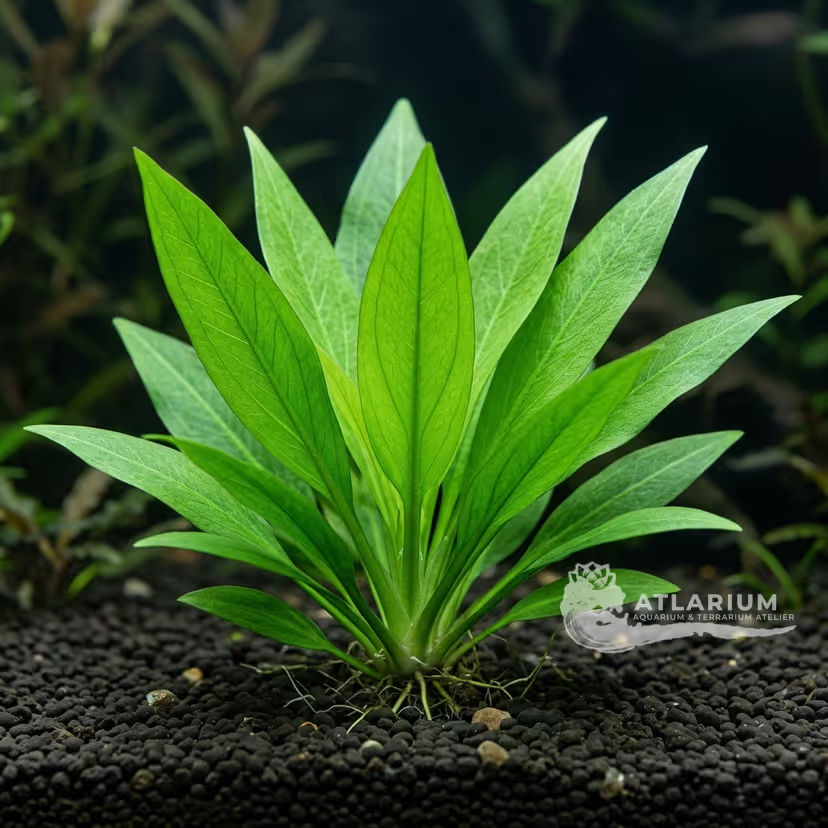
Cryptocoryne lutea: a compact and extremely hardy rosette plant with olive-green lanceolate leaves. Highly adaptable and perfect for beginners. Light: Low to medium.

Taxonomy
Class:Liliopsida
Order:Alismatales
Family:Araceae
Genus:Cryptocoryne
Species:Cryptocoryne lutea

Share

Check out Lutea Cryptocoryne on Atlarium

PracticeRecognition quizzesPhotos, names, origins, and puzzles to review Atlas species.Open quizzes
Water Temperature

20 - 28 °C

pH Value

6 - 7.8

Water type

Freshwater

Light

Low to Medium

CO2

Low - High

Expected height

15 cm

Expected width

15 cm

KH

2 - 15 dKH

Species description

Cryptocoryne lutea is endemic to the island of Sri Lanka, where it grows along the beds of forest rivers and in wet pastures of the intermediate and wet zones. It is often found in dense colonies growing emersed during the dry season and completely submerged during periods of monsoon rains. Its natural habitat features well-oxygenated flowing waters and substrates rich in clay and alluvial sediments. It is part of the Araceae family and is closely related to Cryptocoryne walkeri and Cryptocoryne wendtii, with which it shares many morphological characteristics. Genetically, it is a stable and resilient diploid species, which translates to extraordinary adaptability in the aquarium and low susceptibility to Cryptocoryne melt compared to other species in the genus.

Care, breeding and tankmates

It is extremely tolerant regarding water hardness, growing successfully in both soft and hard water (KH 2-15 dKH). The ideal pH range is slightly acidic to slightly alkaline (6.0-7.8). The optimal temperature is between 20°C and 28°C. It is one of the hardiest Cryptocorynes and rarely suffers from sudden leaf melt. However, drastic changes in chemical parameters or extreme iron deficiencies can cause slow growth and yellowing of the leaves (chlorosis).

Geographic Origin and Distribution

This species originates from: Sri Lanka.

Origin

South and Southeast Asia

Plant profile

Placement
Midground

This species is an excellent choice for the midground of most aquariums. Its medium size and bushy growth habit make it perfect for filling empty spaces between hardscape elements. It should be positioned where it receives moderate light, avoiding deep shade. Its dense foliage provides excellent cover for bottom-dwelling fish and shrimp.

Botanical form
Rosette

The plant features lanceolate to slightly ovate leaves that grow in a dense rosette form. The leaves are typically a medium green, often with subtle brownish or reddish undersides depending on the lighting. Its texture is smooth, with slightly undulating margins that add a soft look to the aquascape. It typically reaches a height of 15-20 centimeters.

Growth
Medium

Cryptocoryne lutea exhibits a steady, moderate growth rate in the aquarium. It establishes its root system before actively producing new leaves, which requires some patience initially. Once settled, it will slowly expand outward by sending out runners. It requires very little maintenance due to its manageable growth speed.

Substrate
moderate
Column fertilization
Recommended

Liquid fertilization should be kept to a minimum to prevent algae issues on the plant's leaves. Occasional dosing of a comprehensive fertilizer is enough to provide necessary trace elements. High levels of nitrates and phosphates in the water column are unnecessary and often counterproductive. Rely primarily on substrate nutrients for optimal results.

Root fertilization
Recommended

Root fertilization is the most critical aspect of caring for Cryptocoryne lutea. A fertile aquasoil or the regular use of quality root tabs provides the macronutrients it needs to thrive. A well-nourished root system directly translates to thicker, healthier leaves and faster runner production. Replenishing root nutrients every few months is recommended.

Trimming
Occasional

Trimming is rarely needed and should be limited to the removal of older, dying outer leaves. Cut the leaf stem as close to the base as possible using sharp scissors. Avoid disturbing the root system during maintenance. Never cut the central, newest leaves of the rosette.

Propagation
Runners

Propagation happens naturally through the development of underground runners. These runners eventually emerge from the substrate to form independent daughter plants. Wait until the new plant has several leaves and roots before cutting the runner. The separated plantlet can then be relocated to a new area.

Sensitivity
low

Like most Cryptocorynes, it is susceptible to 'Crypt melt' if water parameters change too rapidly. However, it is generally considered one of the hardier species in the genus. If melting occurs, leave the root structure untouched, and it will usually recover. Maintaining stable water conditions is key to preventing this issue.

Layout role
Foreground, Midground, group

It functions beautifully as a bushy midground filler that adds natural green tones to the layout. Its classic shape contrasts well with both fine-leaved stem plants and low carpeting foregrounds. Grouping several together creates a dense, natural-looking thicket. It is a staple plant for nature aquarium and jungle style aquascapes.

Image gallery

Licensed images linked to the species or, when marked, to the closest representative taxon.

Related species

Recommendations grouped by close relatives, companion choices, and similar care.

Variants and close relatives

Same atlas type, nearby scientific identity, genus, or family.

Cryptocoryne axelrodii

Cryptocoryne axelrodii

Cryptocoryne axelrodii

View details->
Cryptocoryne beckettii "Viridifolia"

Cryptocoryne beckettii "Viridifolia"

Cryptocoryne beckettii "Viridifolia"

View details->
Giant Cryptocoryne Cordata

Giant Cryptocoryne Cordata

Cryptocoryne cordata var. cordata

View details->
Cryptocoryne beckettii

Cryptocoryne beckettii

Cryptocoryne beckettii

View details->
Cryptocoryne beckettii "Petchii Pink"

Cryptocoryne beckettii "Petchii Pink"

Cryptocoryne beckettii "Petchii Pink"

View details->
Cryptocoryne beckettii "Petchii"

Cryptocoryne beckettii "Petchii"

Cryptocoryne beckettii "Petchii"

View details->
Cryptocoryne blassii

Cryptocoryne blassii

Cryptocoryne blassii

View details->
Cryptocoryne cordata var. blassii

Cryptocoryne cordata var. blassii

Cryptocoryne cordata var. blassii

View details->
Cryptocoryne balansae

Cryptocoryne balansae

Cryptocoryne balansae

View details->
Cryptocoryne bullosa

Cryptocoryne bullosa

Cryptocoryne bullosa

View details->
Cryptocoryne affinis

Cryptocoryne affinis

Cryptocoryne affinis

View details->
Cryptocoryne albida

Cryptocoryne albida

Cryptocoryne albida

View details->
Cryptocoryne aponogetifolia

Cryptocoryne aponogetifolia

Cryptocoryne aponogetifolia

View details->
Cryptocoryne cordata var. siamensis

Cryptocoryne cordata var. siamensis

Cryptocoryne cordata var. siamensis

View details->
Cryptocoryne cordata var. siamensis 'Rosanervig'

Cryptocoryne cordata var. siamensis 'Rosanervig'

Cryptocoryne cordata var. siamensis 'Rosanervig'

View details->
Bucephalandra sp. "Black Leaf"

Bucephalandra sp. "Black Leaf"

Bucephalandra sp. "Black Leaf"

View details->

Recommended companions

Compatible cards from coherent ecosystems with matching parameters.

Green babaulti shrimp
Invertebrate

Green babaulti shrimp

Caridina cf. babaulti "Green"

View details->
Asian apple snail
Invertebrate

Asian apple snail

Pila ampullacea

View details->
Hercules snail
Invertebrate

Hercules snail

Brotia herculea

View details->
Indian apple snail
Invertebrate

Indian apple snail

Pila globosa

View details->
Orange rabbit snail
Invertebrate

Orange rabbit snail

Tylomelania gemmifera

View details->
Pagoda snail
Invertebrate

Pagoda snail

Brotia pagodula

View details->
Patriarch rabbit snail
Invertebrate

Patriarch rabbit snail

Tylomelania patriarchalis

View details->
Piano snail
Invertebrate

Piano snail

Taia naticoides

View details->
Stream rock snail
Invertebrate

Stream rock snail

Paludomus loricata

View details->
Sulcospira snail
Invertebrate

Sulcospira snail

Sulcospira testudinaria

View details->
Thai trapdoor snail
Invertebrate

Thai trapdoor snail

Filopaludina martensi

View details->
Towuti rabbit snail
Invertebrate

Towuti rabbit snail

Tylomelania towutensis

View details->
Horned Nerite Snail
Invertebrate

Horned Nerite Snail

Clithon corona

View details->
Striped babaulti shrimp
Invertebrate

Striped babaulti shrimp

Caridina babaulti "Stripes"

View details->
Black devil snail
Invertebrate

Black devil snail

Faunus ater

View details->
Black helmet nerite
Invertebrate

Black helmet nerite

Neritina pulligera

View details->

Similar care

Cards with similar requirements, difficulty, habitat, and husbandry profile.

Anubias minima

Anubias minima

Anubias minima

View details->
Ceratopteris richardii

Ceratopteris richardii

Ceratopteris richardii

View details->
Anubias

Anubias

Anubias barteri

View details->
Bucephalandra motleyana "Kapit"

Bucephalandra motleyana "Kapit"

Bucephalandra motleyana "Kapit"

View details->
Bucephalandra sp. "Bukit Kelam / Sintang"

Bucephalandra sp. "Bukit Kelam / Sintang"

Bucephalandra sp. "Bukit Kelam / Sintang"

View details->
Bucephalandra sp. "Melawi"

Bucephalandra sp. "Melawi"

Bucephalandra sp. "Melawi"

View details->
Chlorophytum bichetii

Chlorophytum bichetii

Chlorophytum bichetii

View details->
Blyxa cf. vietii

Blyxa cf. vietii

Blyxa cf. vietii

View details->
Ammannia sp. 'Bonsai'

Ammannia sp. 'Bonsai'

Ammannia sp. 'Bonsai'

View details->
Bucephalandra motleyana "Braun-rot" ("Serimbu")

Bucephalandra motleyana "Braun-rot" ("Serimbu")

Bucephalandra motleyana "Braun-rot" ("Serimbu")

View details->
Bucephalandra motleyana "Pancuraji"

Bucephalandra motleyana "Pancuraji"

Bucephalandra motleyana "Pancuraji"

View details->
Bucephalandra motleyana "Braun-rot narrow"

Bucephalandra motleyana "Braun-rot narrow"

Bucephalandra motleyana "Braun-rot narrow"

View details->
Bucephalandra motleyana "Riam Macam"

Bucephalandra motleyana "Riam Macam"

Bucephalandra motleyana "Riam Macam"

View details->
Bacopa sp. "Japan"

Bacopa sp. "Japan"

Bacopa sp. "Japan"

View details->
Anubias "nangi"

Anubias "nangi"

Anubias "nangi"

View details->
Bucephalandra motleyana

Bucephalandra motleyana

Bucephalandra motleyana

View details->
Last updated: 06/16/2026
Lutea Cryptocoryne (Cryptocoryne lutea) Care Guide & Tank Setup | Atlarium