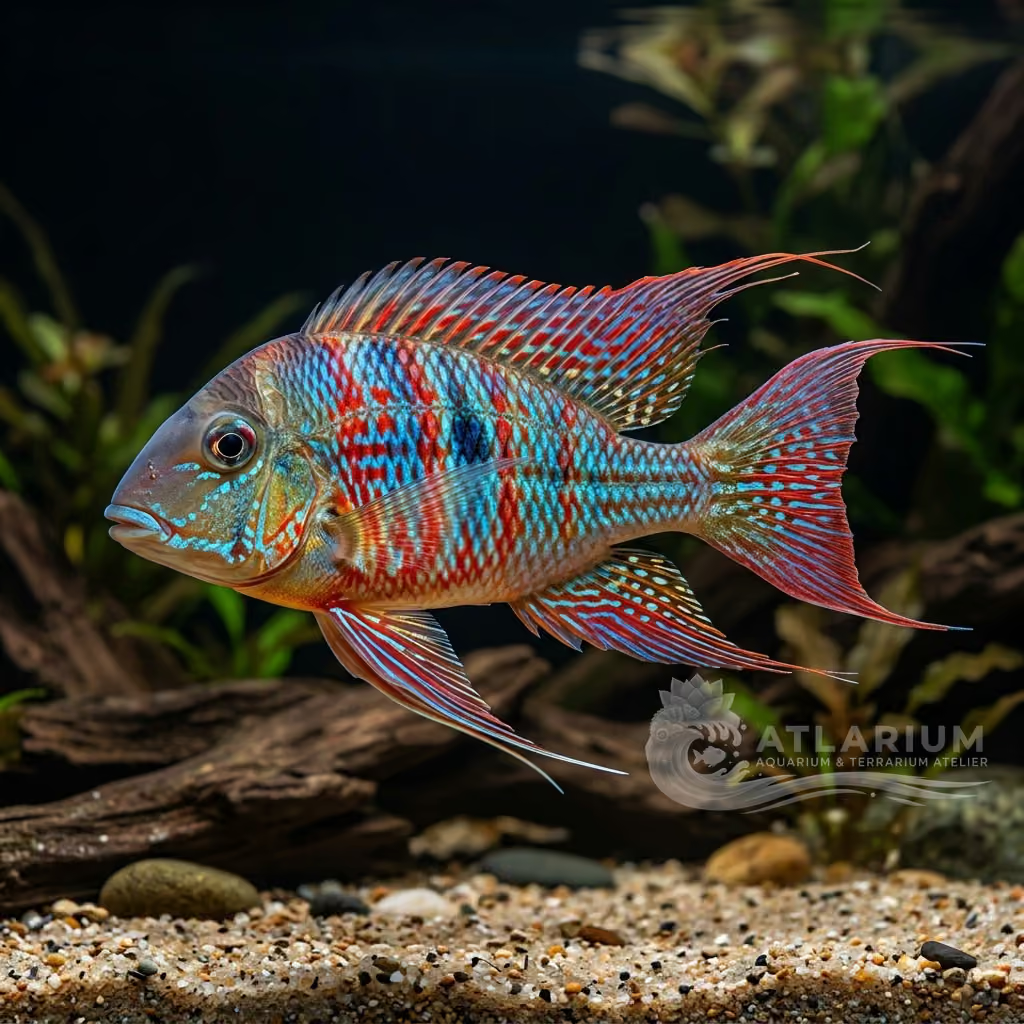
Blue Dolphin Cichlid
Cyrtocara moorii
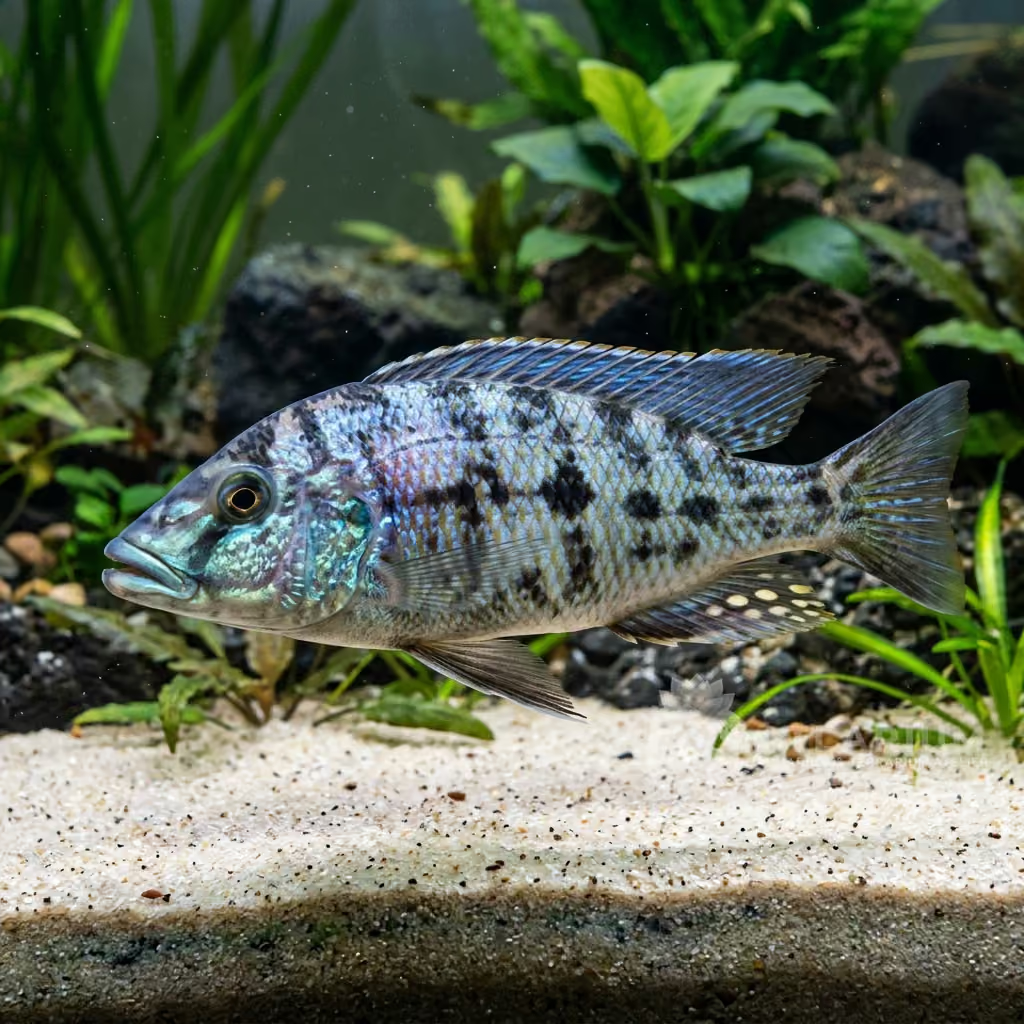
The gentle blue giant of Lake Malawi. A magnificent, 20 cm (8-inch) cichlid famous for its pastel blue body and the massive, dolphin-like bump (nuchal hump) on the forehead of adult males. Peaceful, open-water sand-sifters that require very large, uncrowded aquariums.
Wassertemperatur
24 - 28 °C
pH-Wert
7.8 - 8.6
Wassertyp
Süßwasser
Tankfüllstand
Unten und in der Mitte
Erwachsenengröße
25 cm
Mindesttankvolumen
>= 300 L
Mindestgruppe
>= 1
GH
10 - 25 dGH
KH
5 - 12 dKH
TDS
200 - 495 ppm
Leitfähigkeit
313 - 773 uS/cm

Artbeschreibung
Geographical Origin and Habitat: Endemic to Lake Malawi. Inhabits shallow sandy zones behind rocky areas (Intermediate Habitat). Constantly follows large digging Cichlids like Fossorochromis.
Taxonomy and Morphology: Blue Dolphin Cichlid (Cyrtocara moorii). Sole member of its genus. Unmistakable morphology: both males and females develop a massive nuchal hump making them look like a miniature dolphin.
Social Behavior: Relatively peaceful for a Malawi cichlid (Haplochromine). Forms loose social schools, never territorial except when breeding. They feed as "opportunists" following the excavations of other fish.
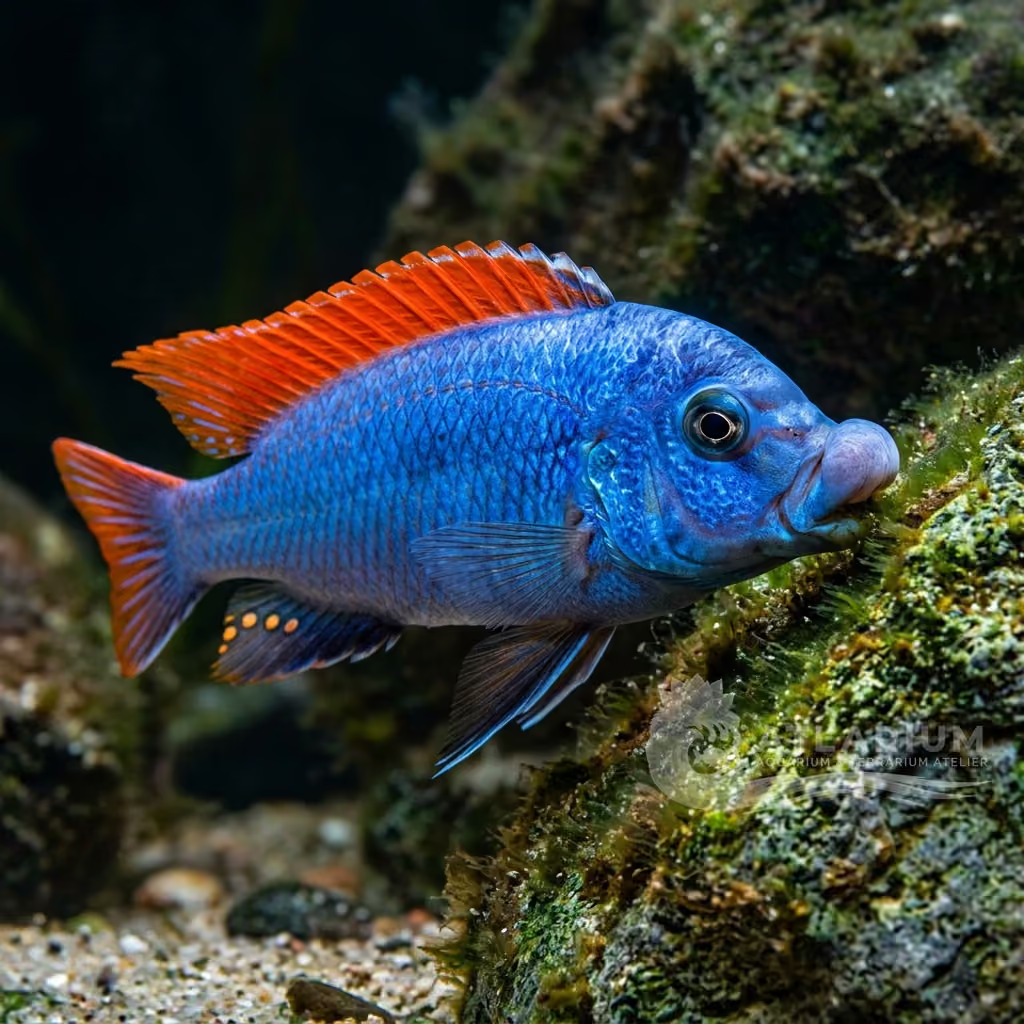
Coloration and Sexual Dimorphism: Stunning metallic sky blue or cobalt blue livery on both sexes. Adults present 3 dark spots on the flanks (often faded). Dominant males are larger and have a much more protruding nuchal hump (gibbosity).

Pflege, Zucht und Mitbewohner
Aquarium Setup: Immense aquarium (at least 150 cm / 60 inches and 400 liters / 100 gallons). The substrate must be a vast layer of very fine sand. A few large rocks on the sides. They need enormous spaces for free swimming.
Diet and Feeding: Benthic micro-predator. In the aquarium it accepts high quality sinking pellets for carnivorous Cichlids, mysis, krill, shelled shrimp and mussels. Never provide beef heart or red mosquito larvae (bloodworms) in large quantities.
Water Quality: Demands the classic alkaline conditions of Malawi (pH > 8, very hard water). Extremely sensitive to nitrate concentration; massive water changes are a mandatory obligation.
Compatibility and Cohabitation: Perfect with other peaceful Haplochromines (Copadichromis, Placidochromis) and Aulonocara. Never combine with Mbuna (e.g. Pseudotropheus, Melanochromis), who would terrify them with their aggression and frenzy.
Aquarium Breeding: Maternal mouthbrooders. Polygamous (1 male and 3-4 females). The male digs a small depression in the sand; after spawning the female broods up to 80 fry in her huge mouth for 3 weeks.
Risks and Diseases: Hole-in-the-head disease (Hexamita) devastates them if kept in mineral-poor or polluted waters. Risk of extreme lethargy and refusal of food if placed with excessively turbulent companions.

Geografische Herkunft und Verbreitung
Endemic to Lake Malawi. Inhabits shallow sandy zones behind rocky areas (Intermediate Habitat). Constantly follows large digging Cichlids like Fossorochromis.
Ursprung
Tropische Ozeane und RiffeAfrika und Madagaskar

Fischprofil
- Temperament
- Semi-aggressive
- The Blue Dolphin is widely regarded as a gentle giant among Malawi cichlids, displaying a calm and stately demeanor. Males will defend a temporary territory during spawning but are not excessively violent. Their peaceful nature makes them a popular centerpiece for large, semi-aggressive African cichlid communities.
- Diät
- Omnivore
- In the wild, they are specialized micro-predators that follow larger substrate-digging fish, feeding on the small invertebrates they unearth. Their aquarium diet should be rich in high-quality protein, including large sinking pellets, krill, bloodworms, and pieces of shrimp. Spirulina or vegetable matter should also be occasionally offered for digestive health.
- Lebenserwartung
- 8-10 years
- Erwachsenengröße
- 25 cm
- Geschlechterverhältnis
- Harem
- To minimize aggression among males, they are best kept in a harem ratio of one male to three or four females. Both sexes develop the characteristic nuchal hump (forehead bump) as they mature, though it is usually larger in dominant males. Keeping multiple females diffuses the male's breeding advances.
- Fütterungsfrequenz
- Twice daily
- Adults do well with one or two feedings per day, as they can consume large portions in a single sitting. Overfeeding should be avoided to prevent obesity and water quality degradation. Juveniles will benefit from two to three smaller feedings daily to support their rapid growth.
- Bioload
- Medium to High
- The Blue Dolphin Cichlid grows to a substantial size and has a hearty appetite, resulting in a heavy bioload. Robust, oversized filtration is required to handle the large amount of waste produced by these bulky fish. Frequent, large-scale water changes are mandatory to keep nitrate levels in check and maintain optimal health.
- Fluss
- Stagnant
- They prefer moderate water movement, which provides necessary oxygenation without creating stressful, turbulent conditions. As large fish, they appreciate open swimming areas, and a moderate flow encourages them to stay active. Strong powerheads should be directed away from their preferred resting spots.
- Sprungrisiko
- Yes
- Like most large cichlids, they pose a moderate jump risk, especially if startled by sudden movements or aggressive tank mates. While their bulk makes them less prone to jumping than smaller, darting fish, a heavy splash can still propel them outward. A secure, weighted lid is strongly advised.
- Reproduktion
- Oviparous
- They are maternal mouthbrooders that will breed in captivity if provided with suitable conditions and flat rocks for spawning. The male displays his colors to attract a female to his chosen site. The female then picks up the fertilized eggs and incubates them in her mouth for 3 to 4 weeks before releasing the fry.
- Kompatibilität & Tankkameraden
- Peaceful
- Despite their impressive size, they are relatively mild-mannered for a Lake Malawi cichlid and belong to the generally peaceful Haplochromis group. They should be kept with other peaceful to semi-aggressive Haps and Peacocks (Aulonocara). They should not be housed with highly aggressive, fast-moving mbuna that will stress them out.
- Tankfüllstand
- Middle/Bottom
- They generally occupy the lower to middle levels of the aquarium, frequently hovering just above the sand. They are active swimmers that require vast amounts of open water to cruise back and forth. They prefer a sandy substrate, which they will occasionally sift through in search of leftover food.

Wissenschaftliche Modelle & Parameter
FishBase
Zugang zu den offiziellen wissenschaftlichen Daten der Art
FishBase v25.04Daten synchronisiert am: 15.06.2026
- Trophäenniveau
- 3,4 ± 0,4 se
- Belastbarkeit
- Niedrig (4,5 - 14 Jahre)
- Phylogenetische Einzigartigkeit (PD50)
- 1
- Bayessche Längen-Gewichts-Beziehung
- a = 0.01445, b = 2.99
- AnfälligkeitGeringe Anfälligkeit (10 / 100)

Verwandte Arten
Empfehlungen gruppiert nach nahen Verwandten, Auswahl von Begleitern und ähnlicher Betreuung.