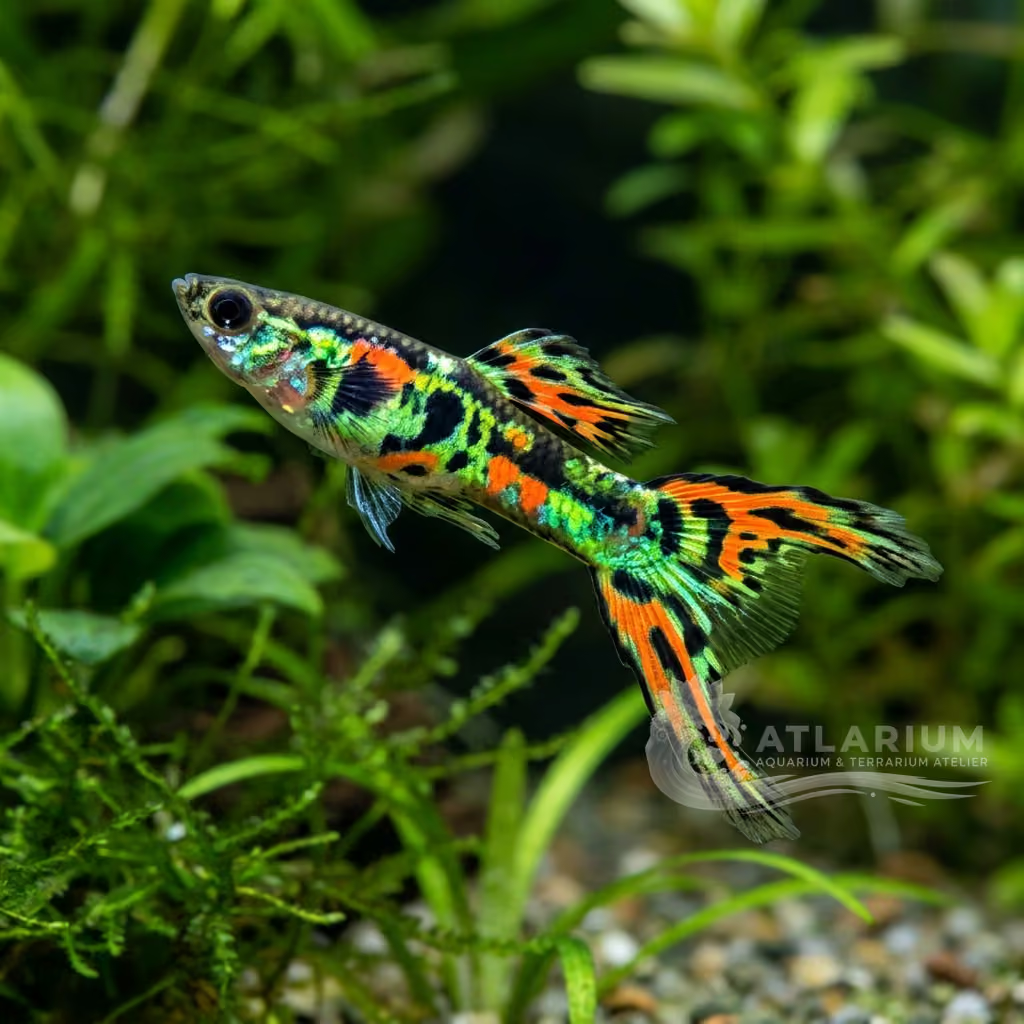
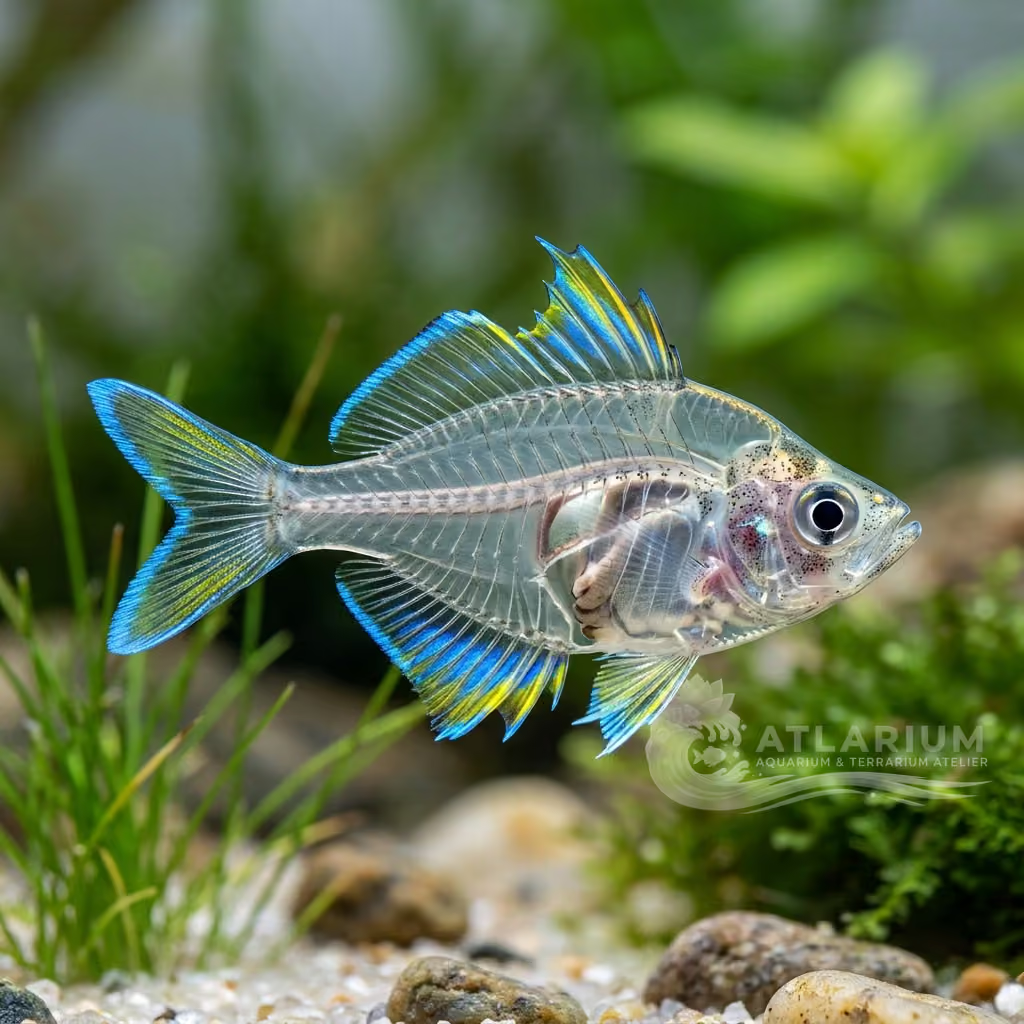
Tiger teddy
Neoheterandria elegans
One of the world's smallest livebearers: at just 2–2.5 cm males and 2.5–3 cm females, it is a Colombian nano-jewel ideal for species-only ultra-planted tanks. Extraordinary reproductive trait: superfetation — the female simultaneously carries embryos at different developmental stages and releases 1–4 tiny fry (2–3 mm) every few days for weeks, instead of a single birth event. Not a strong swimmer: requires almost no current. Fry are so small they need infusoria for the first days — biofilm on mature moss is their first natural source.
Temperatura da água
0 - 20 °C
Valor de pH
6.5 - 7.5
Tipo de água
Água doce
Nível do tanque
Meio
Tamanho adulto
2 cm
Volume mínimo do tanque
>= 20 L
Grupo mínimo
>= 3
GH
0 - 20 dGH
KH
1 - 10 dKH
TDS
10 - 400 ppm
Condutividade
16 - 625 uS/cm
Descrição da espécie
Geographical Origin and Habitat: Endemic to a highly restricted geographic range specifically located within the Truandó River basin, a tributary of the massive Atrato River in northwestern Colombia. Neoheterandria elegans (the Tiger Teddy) is a highly specialized, ultra-nano species. It naturally colonizes extremely shallow, slow-moving or completely stagnant marsh pools, densely overgrown drainage ditches, and flooded grassy plains. These micro-habitats are intensely illuminated and completely choked with dense aquatic vegetation and filamentous algae.
Taxonomy and Morphology: Scientifically classified within the Poeciliidae family, it is a true livebearer related to Guppies and Mollies, but exists in a class of its own regarding size. Taxonomically, its specific name "elegans" translates to "elegant," perfectly describing its delicate appearance. Morphologically, it is one of the smallest known vertebrate species in the world. Fully mature adult males rarely exceed 1.5 centimeters (roughly half an inch), while the significantly larger females reach a maximum of 2.5 centimeters.
Social Behavior: They are exceptionally peaceful, highly timid, and incredibly secretive micro-fish. Due to their microscopic size, they exist at the absolute bottom of the food chain in Colombia. Consequently, they spend their entire lives hiding within the dense root systems of floating plants and thickets of moss. While not a strict schooling fish, they must be kept in a colonial group (minimum 8-10) to feel secure enough to emerge and exhibit their natural, slow, hovering mid-water behavior.
Coloration and Sexual Dimorphism: Sexual dimorphism is extreme. Females are almost twice the size of males, possessing a significantly plumper, deeper body, especially when gravid, and feature a highly camouflaged pale olive coloration. Males are microscopic and possess a highly modified, elongated anal fin called a gonopodium, used for internal fertilization. The coloration is subtle but exquisite. The base is a translucent golden-amber. The defining feature is a series of 6-9 stark, vertical, tiger-like black bars running along the flanks.
Cuidado, criação e companheiros de tanque

Aquarium Setup: The aquarium architecture must meticulously replicate a claustrophobic, weed-choked Colombian marsh. Due to their microscopic size, they are the absolute ultimate species for heavily planted nano-aquariums (minimum 20-30 liters). The layout MUST be overwhelmingly planted with dense, impenetrable thickets of fine-leaved mosses (Java Moss, Fissidens), Guppy Grass (Najas guadalupensis), and a heavy canopy of floating plants (Salvinia). The substrate should be soft sand, and the tank requires bright lighting to promote algal growth.
Diet and Feeding: In their natural marshes, they are meticulous micro-predators and grazers, picking tiny zooplankton, infusoria, microscopic worms, and soft green algae directly off plant surfaces. In captivity, their microscopic mouths dictate strict feeding requirements. Standard flakes are completely useless unless crushed to fine dust. They absolutely demand high-quality, buoyant micro-dust foods. To maintain optimal health and ensure successful breeding, their diet MUST be heavily supplemented with live microworms and vinegar eels.
Water Quality: Originating from shallow tropical marshes, they demand excellent water quality but are adaptable to standard parameters. They prefer warm tropical temperatures (24-28°C) and thrive in slightly acidic to slightly alkaline, moderately hard water (pH 6.5 - 7.5). Because they inhabit stagnant, weed-choked pools, filter flow MUST be exceptionally gentle. A basic sponge filter is the only acceptable option; power filters will instantly suck them up or exhaust them to death with strong currents.
Compatibility and Cohabitation: Compatibility is strictly limited by their microscopic size; they fit perfectly into the mouths of almost all community fish, including standard Tetras. Tiger Teddies MUST be kept in a dedicated species-only setup or a highly specialized nano-community. The only acceptable tankmates are other microscopic, ultra-peaceful, bottom-dwelling species (such as Pygmy Corydoras) and Neocaridina dwarf shrimp. Avoid any fast-swimming or mid-water feeding fish, as the slow-moving Teddies will quickly starve.
Aquarium Breeding: Breeding is continuous and fascinating in a heavily planted species tank. They are livebearers. Unlike guppies that drop massive broods at once, female Tiger Teddies utilize "superfetation"—they carry multiple broods at different stages of development simultaneously, dropping 1 or 2 fully formed, microscopic fry every single day over a period of weeks. In a densely planted tank, adults generally ignore the fry. The newborn fry are so small they absolutely require liquid infusoria or green water immediately.
Risks and Diseases: The absolute greatest physical risk is mechanical: being sucked into aquarium filters or eaten by larger fish. Sponge filters are mandatory. The second greatest risk is starvation; inexperienced aquarists frequently starve them to death by offering incorrectly sized foods. Medically, they are highly prone to severe stress-induced bacterial infections if kept in sparsely decorated tanks, as the lack of hiding places causes lethal chronic anxiety.
Origem e distribuição geográfica
Endemic to a highly restricted geographic range specifically located within the Truandó River basin, a tributary of the massive Atrato River in northwestern Colombia. Neoheterandria elegans (the Tiger Teddy) is a highly specialized, ultra-nano species. It naturally colonizes extremely shallow, slow-moving or completely stagnant marsh pools, densely overgrown drainage ditches, and flooded grassy plains. These micro-habitats are intensely illuminated and completely choked with dense aquatic vegetation and filamentous algae.
Origem
Extra-Amazônica América do SulAmérica do Norte
Perfil de peixe
- Temperamento
- Peaceful
- The Tiger Teddy is an incredibly peaceful, somewhat shy fish that avoids conflict. They are generally peaceful towards their own kind, though males may display to each other. They require plenty of hiding spaces to feel secure and display their natural behaviors.
- Dieta
- Omnivore
- These micro-predators primarily feed on tiny invertebrates and zooplankton in the wild. In the aquarium, they readily accept finely crushed flakes, micro-pellets, and powdered fry food. Supplementing their diet with small live foods like microworms and baby brine shrimp is highly beneficial.
- Expectativa de vida
- 3-5 years
- Tamanho adulto
- 2 cm
- Proporção sexual
- Specific M:F ratio
- A ratio of one male to two or three females is highly recommended. Males are very active and can persistently harass a single female. A proper ratio helps distribute the male's attention and reduces stress among the females.
- Frequência de alimentação
- Twice daily
- Due to their small stomachs and high metabolism, they benefit from frequent feedings. It is best to offer them small meals two to three times a day. Ensure that all food is consumed within a few minutes to prevent water quality issues.
- Carga biológica
- Low
- This tiny livebearer produces a minimal amount of waste due to its very small size. It has a negligible impact on the nitrogen cycle in a well-maintained, planted aquarium. Regular maintenance is still required, but it places very little stress on the biological filter.
- Fluxo
- Stagnant
- They originate from sluggish waters with very little to no current. A gentle flow from a sponge filter is ideal for their setup. Strong currents will exhaust them and should be completely avoided in their aquarium.
- Risco de salto
- No
- Reprodução
- Viviparous
- They are prolific livebearers that reproduce via superfetation, dropping a few fry every few days rather than a large batch at once. Providing dense vegetation allows the tiny fry to hide from adults. Breeding is straightforward and requires no special intervention from the aquarist.
- Compatibilidade e companheiros de tanque
- Community
- They are extremely peaceful micro-fish that do best in a species-only setup. They can also be kept with other tiny, peaceful tank mates like dwarf shrimp. Avoid keeping them with larger or fast-swimming species that might outcompete them for food or predate on them.
- Nível do tanque
- Middle
- They spend the majority of their time in the middle and lower levels of the water column. They enjoy darting among fine-leaved plants and exploring the substrate. They rarely visit the surface unless it is feeding time.

Modelos e parâmetros científicos
FishBase
Acesso aos dados científicos oficiais da espécie
FishBase v25.04Dados sincronizados em: 15/06/2026
- Nível trófico
- 3 ± 0,4 se
- Resiliência
- Alta (menos de 15 meses)
- Unicidade filogenética (PD50)
- 0.625
- Relação bayesiana comprimento-peso
- a = 0.01047, b = 3.14
- VulnerabilidadeVulnerabilidade baixa (10 / 100)