Dalmatian Molly
Poecilia sphenops
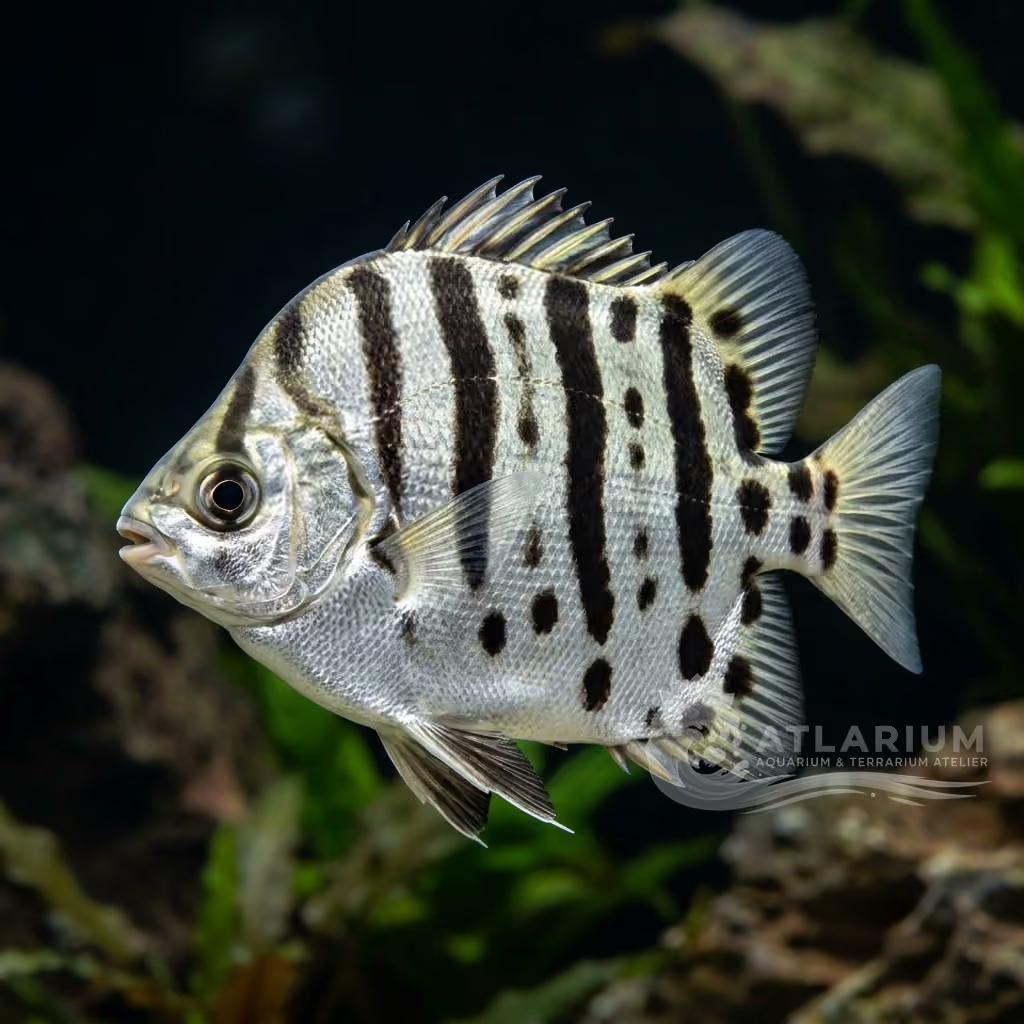
White dotted with black — like its canine namesake. The pattern is unique in every specimen: no two Dalmatians are identical. Spot distribution changes with growth, intensifying in adults. Also available in a 'Lyretail' version with lyre-shaped tail. Hardy and prolific like all Mollies, with a strong algae-eating inclination.
Temperatura da água
22 - 28 °C
Valor de pH
7 - 8.5
Tipo de água
Água doce
Nível do tanque
Todos os níveis
Tamanho adulto
8 cm
Volume mínimo do tanque
>= 80 L
Grupo mínimo
>= 4
GH
10 - 30 dGH
KH
5 - 15 dKH
TDS
200 - 600 ppm
Condutividade
313 - 938 uS/cm

Descrição da espécie
Geographical Origin and Habitat: The Dalmatian Molly is a spectacular, entirely captive-bred ornamental strain, though it derives from wild Poecilia sphenops lines natively endemic to the warm, heavily vegetated, and highly diverse coastal waters stretching from Mexico to northern South America. Wild P. sphenops are extraordinarily adaptable euryhaline fish, naturally colonizing pristine freshwater streams, murky agricultural canals, brackish mangrove estuaries, and even full marine coastal zones. The captive "biotope" requires intense sunlight, massive algae growth, and exceptionally hard, mineral-rich water.
Taxonomy and Morphology: Scientifically classified within the Poeciliidae family (the livebearers), the Dalmatian Molly is a robust, deeply muscular, and iconic aquarium fish. Morphologically, they are sturdy, torpedo-shaped omnivores with a slightly flattened head designed for surface feeding. Fully mature females are large, reaching roughly 8.0 to 10.0 centimeters (3.1-4.0 inches), while males are slightly smaller at 6.0 to 8.0 centimeters (2.4-3.1 inches). The "Dalmatian" trait is a highly prized genetic mutation characterized by a stark silver or white base heavily speckled with irregular, contrasting black blotches.
Social Behavior: They are highly intelligent, boldly active, and intensely social community fish that constantly patrol the mid-to-top layers of the aquarium. They are generally peaceful toward other species but exhibit extremely active, non-stop hierarchical chasing and relentless mating behavior within their own kind. They absolutely MUST be kept in a sizable shoal (minimum 5-6 individuals). Crucially, males will relentlessly pursue females to mate; it is an unconditional requirement to maintain a strict ratio of at least two females for every male to prevent fatal exhaustion.
Coloration and Sexual Dimorphism: Sexual dimorphism is absolute and unmistakable. Mature females are vastly larger, significantly heavier-bodied, and possess a standard, rounded anal fin. Mature males are smaller, noticeably slimmer, and possess a highly modified, sharply pointed anal fin (the gonopodium) used for internal fertilization. The striking Dalmatian coloration is uniquely variable; no two fish are identical. They feature a bright, reflective silver or pure white base coat entirely covered in unpredictable, deep black, velvety spots, mimicking a Dalmatian dog.

Cuidado, criação e companheiros de tanque
Aquarium Setup: The aquarium architecture MUST flawlessly accommodate their large size, highly active swimming nature, and need for high oxygenation. A minimum 100-liter (25-gallon) tank is absolutely mandatory for a small group. The tank MUST feature strong water movement and massive physical barriers (like large driftwood or dense Vallisneria thickets) to break line-of-sight during mating chases. Furthermore, they are natural algae grazers; the tank should be brightly lit to encourage natural soft green algae growth on rocks and wood for them to constantly graze upon.
Diet and Feeding: They are highly active, voracious omnivores with a profound biological requirement for heavy vegetable matter. In the aquarium, their diet MUST be heavily plant-based. While they will eagerly consume meaty foods, failing to provide enough greens will result in severe digestive blockage and death. They strictly MUST be fed a high-quality spirulina-based diet. Daily offerings of premium algae wafers, spirulina flakes, and specifically, blanched vegetables (spinach, zucchini, peas) are unconditionally mandatory, supplemented occasionally with bloodworms or brine shrimp.
Water Quality: Originating from coastal estuaries, Mollies possess unique, uncompromising water requirements. They strictly demand highly oxygenated, warm tropical heat (24-28°C / 75-82°F). Crucially, they possess absolute zero tolerance for soft, acidic water. They unconditionally require extremely hard, heavily mineralized, alkaline water (GH 12-25, pH 7.5 - 8.5). If kept in pure freshwater, the addition of aquarium salt (1 tablespoon per 5 gallons) is highly recommended and often mandatory to prevent "shimmies" (a lethal neurological/osmotic collapse). They thrive in full brackish water.
Compatibility and Cohabitation: Compatibility is generally excellent in a hard-water or brackish community, provided tankmates share their extreme water parameter requirements. They MUST NEVER be housed with soft-water species (like wild Discus, Neon Tetras, or Ram Cichlids), as the water chemistry required for the Molly will kill the tetras, and vice versa. Excellent companions include other robust livebearers (Swordtails, Platies), peaceful hard-water Rainbowfish, or brackish species like Gobies and Chromides.
Aquarium Breeding: Breeding is spectacularly prolific, incredibly fast, and virtually unstoppable. They are livebearers; they do NOT lay eggs. Following internal fertilization, the female will gestate for roughly 30-40 days, evidenced by a massively swelling, "boxy" belly. She will then give live birth to 20-60 fully formed, surprisingly large fry. The adults are voraciously cannibalistic; massive, impenetrable thickets of floating plants (like Hornwort) or dedicated breeding nets are absolutely mandatory to ensure the fry survive the first few days.
Risks and Diseases: The absolute greatest physical risk is rapid, lethal osmotic collapse (known as "the shimmies" or Molly Disease); keeping them in soft, acidic water will immediately cause their immune system to fail, leading to severe fungal infections, clamping fins, and death. Hard water and/or marine salt is unconditionally mandatory. The second major risk is lethal exhaustion; failing to maintain the strict 2:1 female-to-male ratio will result in females being chased to death. Finally, they require a heavily vegetarian diet to prevent fatal constipation.

Origem e distribuição geográfica
The Dalmatian Molly is a spectacular, entirely captive-bred ornamental strain, though it derives from wild Poecilia sphenops lines natively endemic to the warm, heavily vegetated, and highly diverse coastal waters stretching from Mexico to northern South America. Wild P. sphenops are extraordinarily adaptable euryhaline fish, naturally colonizing pristine freshwater streams, murky agricultural canals, brackish mangrove estuaries, and even full marine coastal zones. The captive "biotope" requires intense sunlight, massive algae growth, and exceptionally hard, mineral-rich water.
Origem
Melhoramento seletivo e cultivaresExtra-Amazônica América do SulAmérica Central e Caribe

Perfil de peixe
- Temperamento
- Active
- These fish have an active, outgoing, and generally peaceful temperament. They are robust and bold, often the first to greet their keeper during feeding times. While males can display some boisterous behavior towards one another, severe aggression is highly uncommon. Their energetic and inquisitive nature brings a lot of liveliness to any community aquarium. Given enough space, they interact very well with their environment and tank mates.
- Dieta
- Omnivore
- As omnivores with an inclination towards herbivory, a large portion of their diet should consist of vegetable matter. High-quality spirulina flakes or algae wafers are excellent staple choices. They will also eagerly consume live or frozen foods like brine shrimp, bloodworms, and daphnia. Offering blanched vegetables like zucchini or spinach provides valuable roughage. A diet rich in plant matter prevents digestive blockages and promotes vibrant health.
- Expectativa de vida
- 3-5 years
- Tamanho adulto
- 8 cm
- Proporção sexual
- Specific M:F ratio
- It is crucial to maintain a ratio of at least two to three females per male. Male mollies are persistent in their mating behaviors and can relentlessly chase females. A proper ratio diffuses this attention, significantly reducing the stress placed on any single female. Persistent stress from excessive males can lead to illness or even death for the females. Observing this ratio ensures a more peaceful dynamic within the aquarium.
- Frequência de alimentação
- Twice daily
- Feeding them two to three times a day in small portions is the ideal approach. This frequent feeding schedule caters to their highly active metabolism and continuous foraging nature. Ensure each meal is small enough to be entirely consumed within a few minutes. Overfeeding can lead to rapid water degradation given their higher bioload. Offering a variety of foods across these feedings ensures comprehensive nutrition.
- Carga biológica
- Medium
- They produce a moderate to high bioload, especially when compared to smaller livebearers. This is due to their relatively robust size and hearty appetite. Efficient filtration and regular water changes are crucial to process their waste effectively. Inadequate tank maintenance can lead to a quick buildup of harmful nitrates. Monitoring their population size is also important, as their breeding can compound the bioload significantly.
- Fluxo
- Stagnant
- They are adaptable but generally prefer a moderate water flow in the aquarium. A flow that provides good water circulation without pushing them around is perfect. Adequate water movement also helps in maintaining high oxygenation levels, which they appreciate. Powerheads can be used, but areas of calmer water should be available for resting. In larger tanks, a robust filtration system naturally creates an ideal flow dynamic.
- Risco de salto
- No
- Reprodução
- Viviparous
- They are prolific livebearers, meaning the females give birth to fully formed, free-swimming fry. Breeding requires virtually no effort if both sexes are present in appropriate water conditions. A single mating can result in several consecutive broods, as females can store sperm. The fry are relatively large compared to other livebearers and can eat crushed flakes immediately. Heavy planting is recommended to provide the fry with shelter from predatory adults.
- Compatibilidade e companheiros de tanque
- Peaceful
- They are generally peaceful community fish, suitable for keeping with a wide variety of similarly sized, non-aggressive species. However, they can occasionally be nippy or boisterous, so very shy or delicate fish might not be the best companions. They do well with robust tetras, corydoras, and other livebearers. In brackish setups, their potential tank mates change significantly. Providing enough space reduces any potential territorial squabbles among themselves and others.
- Nível do tanque
- All levels
- They are highly active and will readily explore every level of the aquarium. However, they spend a considerable amount of time in the middle and upper levels of the water column. They are particularly active near the surface during feeding time, eagerly anticipating food. Providing open swimming areas in the middle layers is beneficial for their energetic nature. Their constant movement throughout the tank makes them an excellent display fish.

Modelos e parâmetros científicos
FishBase
Acesso aos dados científicos oficiais da espécie
FishBase v25.04Dados sincronizados em: 15/06/2026
- Nível trófico
- 3 ± 0,34 se
- Resiliência
- Alta (menos de 15 meses)
- Unicidade filogenética (PD50)
- 0.5
- Relação bayesiana comprimento-peso
- a = 0.01514, b = 3.12
- VulnerabilidadeVulnerabilidade baixa (10 / 100)

Galeria de imagens
Imagens licenciadas vinculadas à espécie ou, quando marcadas, ao táxon representativo mais próximo.

Espécies relacionadas
Recomendações agrupadas por parentes próximos, escolhas de acompanhantes e cuidados semelhantes.