Egyptian Mouthbrooder
Pseudocrenilabrus multicolor
The 'Egyptian Mouthbrooder' (8 cm). Historic and very colorful African riverine dwarf cichlid (not from the Great Lakes). Extraordinarily adaptable and florid with rainbow reflections, it is famous for its incredible parental skills. Peaceful in large tanks, territorial if confined.
Temperatura da água
20 - 26 °C
Valor de pH
6.5 - 8
Tipo de água
Água doce
Nível do tanque
Parte inferior
Tamanho adulto
8 cm
Volume mínimo do tanque
>= 100 L
Grupo mínimo
>= 1
GH
5 - 18 dGH
KH
2 - 9 dKH
TDS
95 - 360 ppm
Condutividade
148 - 563 uS/cm

Descrição da espécie
Geographical Origin and Habitat: Lower Nile Basin (Egypt, Sudan) and vast range of East Africa (Lake Victoria). A true survivor: tolerates muddy ditches, oxbow lakes, warm and stagnant pools among papyrus roots, muddy swamps and small tributaries thickly covered by vegetation or floating water lilies.
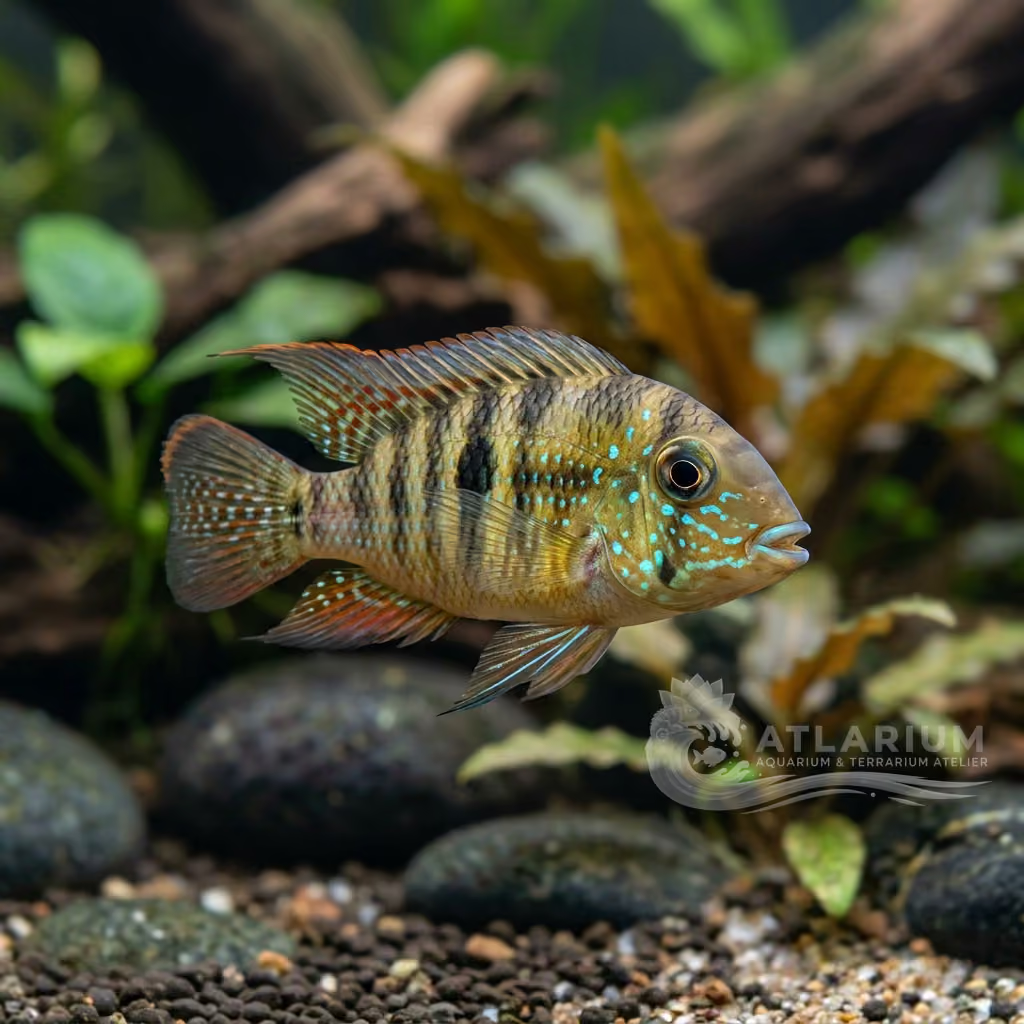
Taxonomy and Morphology: A true classic (once known as Haplochromis multicolor). It has a stocky, robust but aerodynamic body and a strongly rounded head (similar to a tiny tank), with a large mouth suitable for swallowing debris and offspring for defense. Rarely exceeds 8 cm (3.1 inches) in the aquarium (females stop at 6 cm). It features visibly wide and shiny scales.
Social Behavior: The "Brawling but tolerant Dwarf". If placed in adequate tanks (>80 cm / 32 in) it is completely peaceful and busy inspecting rocks and leaves. However, males are highly intolerant of male conspecifics in cramped spaces, engaging in furious lethal hand-to-hand combat for territorial dominance. Forms small unstable harems (1 male and multiple females).
Coloration and Sexual Dimorphism: Kaleidoscopic male. The name "Multicolor" is well-deserved: under the right light and in display, an apparently bronze/sand colored body explodes simultaneously in AZURE, EMERALD GREEN, and GOLDEN YELLOW iridescent scales, with a red spot on the operculum and fins asymmetrically dotted with neon blue, orange and lacquer red (especially the edge of the anal and caudal fin). The female, wise and mimetic, is of a uniform sand-gray or dull green, useful for hiding on the bottom during brooding.

Cuidado, criação e companheiros de tanque
Aquarium Setup: Demands the "Aquatic Jungle". Minimum 80 cm (32 in) tank to manage a dominant male. Adores chaos: intricate piles of crooked woods, thick thickets of Hornwort or Vallisneria, smooth flat rocks, overturned half coconut shells. Sand is essential because it digs slight pits to lay eggs. A lot of floating shade and zero direct and ruthless light.
Diet and Feeding: Opportunistic Omnivorous Micro-Predator. Takes no prisoners: is a voracious devourer. Excellent the use of high quality base flakes and micro-granules, but chronically needs live or frozen binges (large Brine shrimp, blood red chironomus, daphnia) to trigger the reproductive instinct and ignite the male's rainbow iridescences.
Water Quality: Legendary hardiness. Incredibly survives large thermal swings (can overwinter indoors at goldfish temperatures, 20-22°C / 68-72°F, and then enjoy the hot summer 26°C / 79°F). Very tolerant of chemistry: accepts medium hard or hard water (GH 5-18) and pH variable from 6.5 to 8.0, easily thriving in conditioned tap water. Sensitive only to toxic ammonia spikes from inadequate filters.
Compatibility and Cohabitation: Aquarium model: "Tolerant Asian or Riverine tank". Must be matched exclusively in Harem (1 Male, 3/4 Females to dampen the asphyxiating reproductive pursuit). Excellent roommate with large and robust Characins (Congo Tetra, Phenacogrammus) or medium-sized Cyprinids swimming on the surface. Not recommended to put it with other dwarf cichlids or Corydoras in small tanks, they would be brutally targeted in the reproductive perimeter on the bottom.
Aquarium Breeding: Miraculous oral incubation (Maternal Mouthbrooder). Spawning takes place in a small sanded pit frantically prepared by the iridescent male. The circular rite occurs, eggs laid and swallowed. The courageous little mother will spend 12 to 16 days walled alive in hidden ravines, with sealed mouth, eating absolutely nothing until, miraculously, she spits out 20 to 50 formidable giant young ready for brine shrimp nauplii and already self-sufficient.
Risks and Diseases: Bomb-proof fish but at risk of "Killer Stress". If forced with another male in less than 100 liters (25 Gal), they will fight with shoves and deaf decapitating bites until the rapid and inexorable death of the defeated, forced to crawl to the surface torn infected apathetic ruined dying faded tired terminal from necrotic starvation.

Origem e distribuição geográfica
Lower Nile Basin (Egypt, Sudan) and vast range of East Africa (Lake Victoria). A true survivor: tolerates muddy ditches, oxbow lakes, warm and stagnant pools among papyrus roots, muddy swamps and small tributaries thickly covered by vegetation or floating water lilies.
Origem
Oceanos tropicais e recifesÁfrica e Madagascar

Perfil de peixe
- Temperamento
- Semi-aggressive
- They are relatively peaceful for a cichlid, but males exhibit strong territoriality. They will aggressively chase away intruders from their chosen breeding site. Providing plenty of visual barriers helps mitigate this territorial behavior in a community setting.
- Dieta
- Omnivore
- They are omnivorous micro-predators that feed on small invertebrates, insect larvae, and plant matter in the wild. In the aquarium, they thrive on a varied diet of high-quality cichlid flakes, frozen bloodworms, and daphnia. Adding spirulina or blanched vegetables will fulfill their herbivorous needs.
- Expectativa de vida
- 5-7 years
- Tamanho adulto
- 8 cm
- Proporção sexual
- Harem
- It is highly recommended to keep one male with a harem of three or more females. This disperses the male's aggressive breeding advances and prevents any single female from extreme stress. Keeping multiple males requires a very large tank with broken lines of sight.
- Frequência de alimentação
- Twice daily
- Feeding them once or twice a day is optimal. They are enthusiastic eaters that will eagerly accept most offered foods. Care should be taken not to overfeed, as this can degrade water quality quickly.
- Carga biológica
- Low to Medium
- The Egyptian Mouthbrooder produces a moderate bioload for its size. Good biological filtration and routine water changes are required to keep nitrate levels low. Regular vacuuming of the substrate helps manage waste from their digging activities.
- Fluxo
- Stagnant
- They originate from slow-moving rivers, streams, and shallow lakes in East Africa. They prefer sluggish to moderate water flow in the aquarium. Strong currents should be avoided as it stresses them and disrupts their breeding behavior.
- Risco de salto
- Yes
- They have a moderate risk of jumping, particularly when startled or chased by a more dominant tank mate. A secure aquarium lid is highly recommended to prevent accidental escapes. Floating plants can also help them feel secure and reduce jumpiness.
- Reprodução
- Oviparous
- They are maternal mouthbrooders, meaning the female carries the fertilized eggs and newly hatched fry in her mouth. This provides excellent protection for the young until they are free-swimming. They breed readily in captivity if provided with suitable flat rocks or pits in the sand.
- Compatibilidade e companheiros de tanque
- With caution
- They are generally peaceful but become highly territorial during breeding. They can be kept in a community tank with other robust, similarly sized African cichlids or fast-moving tetras. Avoid keeping them with very small or overly timid fish that could be bullied.
- Nível do tanque
- Bottom
- They predominantly occupy the bottom and middle levels of the aquarium. They spend a lot of time sifting through the substrate and defending their chosen territory near the bottom. Providing plenty of rocks, caves, and driftwood is essential for their comfort.

Modelos e parâmetros científicos
FishBase
Acesso aos dados científicos oficiais da espécie
FishBase v25.04Dados sincronizados em: 15/06/2026
- Nível trófico
- 3 ± 0,4 se
- Resiliência
- Alta (menos de 15 meses)
- Unicidade filogenética (PD50)
- 0.5625
- Relação bayesiana comprimento-peso
- a = 0.01445, b = 2.99
- VulnerabilidadeVulnerabilidade baixa (10 / 100)

Espécies relacionadas
Recomendações agrupadas por parentes próximos, escolhas de acompanhantes e cuidados semelhantes.