Green terror
Andinoacara rivulatus
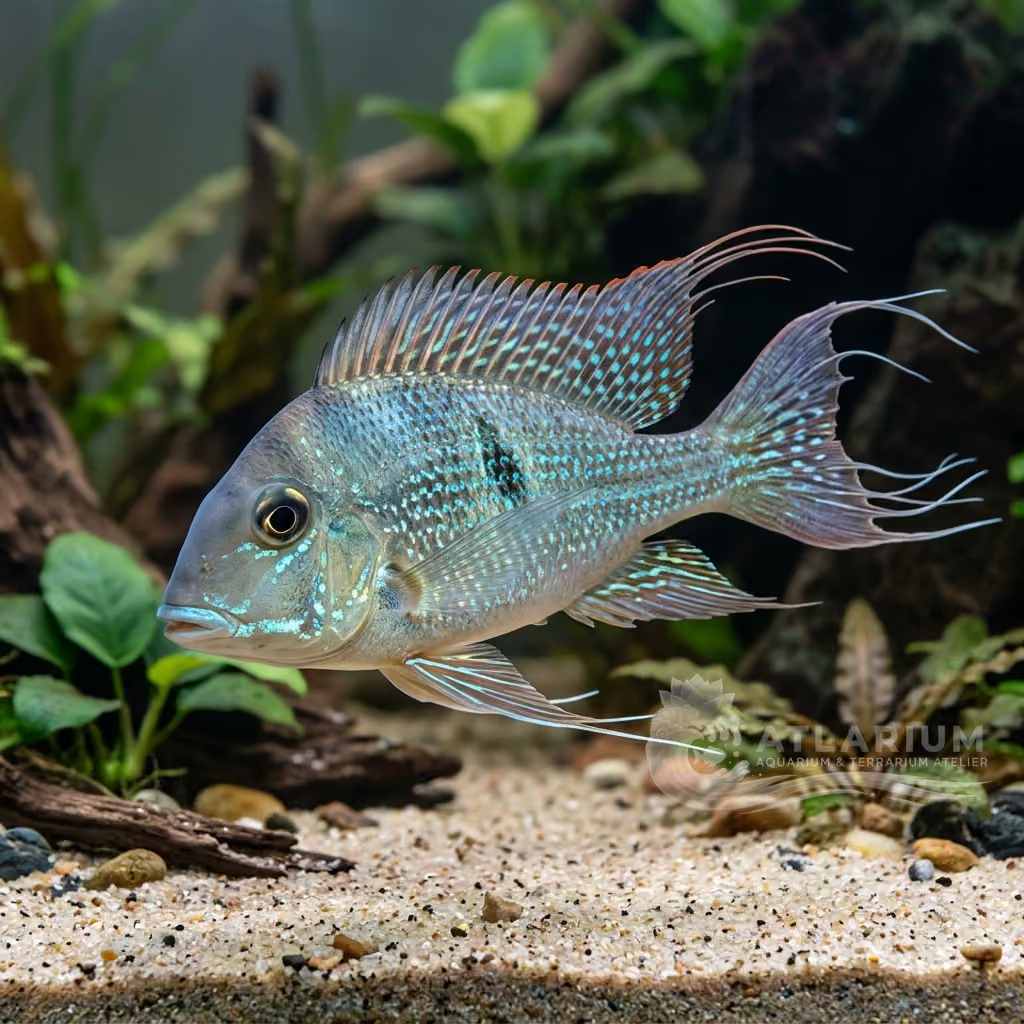
A South American cichlid whose name says it all: aggressive, territorial and spectacular. The iridescent metallic green-blue body with orange or white fin edges is breathtaking. Mature males develop a prominent nuchal hump. Native to coastal rivers of Peru and Ecuador. Compulsive digger: constantly rearranges decorations. Excellent parents with biparental care. Not for generic communities: only with large, robust fish. Longevity 7–10+ years. Large tank mandatory.
20 - 24 °C
6.5 - 8
Água doce
Parte inferior e intermediária
30 cm
>= 300 L
>= 2
4 - 15 dGH
2 - 7 dKH
80 - 295 ppm
125 - 461 uS/cm

Descrição da espécie

Cuidado, criação e companheiros de tanque

Origem e distribuição geográfica
Origem

Perfil de peixe
- Temperamento
- Aggressive
- As their common name suggests, Green Terrors are highly aggressive and territorial cichlids. They exhibit strong dominance behaviors, especially as they mature and establish their territory within the tank. Males are particularly bellicose and will not tolerate rivals or fish of similar appearance. During breeding periods, their aggression intensifies significantly, and they will fiercely attack any fish that approaches their spawning site.
- Dieta
- Omnivore
- Green Terrors are opportunistic omnivores with a preference for high-protein foods. In captivity, they should be fed a varied diet consisting of high-quality cichlid pellets as a staple, supplemented with frozen or live foods. Items like krill, shrimp, earthworms, and bloodworms are eagerly accepted and help enhance their vibrant coloration. It is also important to include some vegetable matter, such as spirulina flakes or blanched peas, to aid digestion, while avoiding heavy mammalian meats like beef heart.
- Expectativa de vida
- 7-15 years
- Tamanho adulto
- 30 cm
- Proporção sexual
- 1:1 ratio
- It is generally recommended to keep Green Terrors singly or as a single mated pair. Keeping multiple males in the same aquarium will lead to intense territorial battles and severe stress unless the tank is exceptionally large. If you wish to breed them, it is best to start with a group of young individuals and allow them to pair off naturally, after which the remaining fish should be rehomed. Keeping a harem is generally not recommended as the dominant pair will aggressively defend their territory against all other tankmates.
- Frequência de alimentação
- Twice daily
- It is best to feed adult Green Terrors once or twice a day, providing only what they can fully consume within a couple of minutes. Juveniles are growing rapidly and require more frequent feedings, typically two to three times daily in smaller portions. Because they are messy feeders, feeding smaller amounts more frequently helps prevent water pollution and reduces the load on the filtration system. Regular fasting once a week can also help clear their digestive tract and maintain long-term health.
- Carga biológica
- High
- The Green Terror (Andinoacara rivulatus) is a large, deep-bodied cichlid that produces a significant amount of biological waste. Due to their robust size and messy eating habits, they require heavy-duty filtration, preferably a combination of canister filters and hang-on-back units rated for twice the aquarium volume. Regular weekly water changes of 25% to 50% are mandatory to keep nitrates low and prevent health issues such as lateral line erosion or hole-in-the-head disease. A high-quality filtration system with mechanical, chemical, and biological media is essential to maintain optimal water quality.
- Fluxo
- Strong
- In their native habitat, these cichlids are found in slow-moving rivers, streams, and coastal drainages. In the aquarium, they prefer a weak to moderate water current that does not exhaust them. While high-turnover filtration is necessary to handle their waste, the output should be baffled or directed to avoid creating turbulent torrents. Providing quiet areas with low flow using rocks and driftwood allows the fish to rest comfortably when needed.
- Risco de salto
- Yes
- Although not typically classified as active surface jumpers, Green Terrors are powerful and fast fish that can easily leap out of the aquarium when startled or chasing prey. A tight-fitting lid or cover slides are absolutely necessary to prevent any accidental escapes. This is especially true during feeding times or when aquarium lights are suddenly switched on and off. Ensuring that there are no gaps around filter pipes or heaters will guarantee the safety of these energetic cichlids.
- Reprodução
- Oviparous
- Breeding Green Terrors is relatively straightforward, as they are prolific substrate spawners. A compatible pair will select a flat rock or clean a patch of substrate to deposit up to 400 to 600 eggs. Both parents exhibit exemplary care, with the female guarding the nest and fanning the eggs while the male aggressively patrols the perimeter. The eggs hatch in about 3 to 4 days, and the parents will move the fry to pre-dug pits until they become free-swimming.
- Compatibilidade e companheiros de tanque
- Community
- Due to their aggressive nature, Green Terrors are not suitable for general community tanks. They can be housed with other robust, large-bodied fish of similar temperament, such as large cichlids, Oscars, Silver Dollars, large catfish, or plecos, provided the aquarium is sufficiently large. Small or peaceful tankmates will quickly become prey or be bullied to death. In smaller setups, it is highly recommended to keep them in a species-only tank as a single specimen or mated pair.
- Nível do tanque
- Middle/Bottom
- Green Terrors primarily occupy the bottom and middle zones of the aquarium. They are active swimmers that will explore all levels of the tank, but their territorial behavior keeps them focused on the lower half. They are avid diggers and will frequently rearrange the substrate to establish spawning sites or hiding spots. Providing plenty of open swimming space in the middle, along with caves and driftwood near the bottom, will suit their natural behavior perfectly.

Modelos e parâmetros científicos
Acesso aos dados científicos oficiais da espécie
- Nível trófico
- 3,3 ± 0,4 se
- Resiliência
- Média (1,4 - 4,4 anos)
- Unicidade filogenética (PD50)
- 0.5039
- Relação bayesiana comprimento-peso
- a = 0.02188, b = 3.05
- VulnerabilidadeVulnerabilidade baixa (10 / 100)

Galeria de imagens
Imagens licenciadas vinculadas à espécie ou, quando marcadas, ao táxon representativo mais próximo.

Espécies relacionadas
Recomendações agrupadas por parentes próximos, escolhas de acompanhantes e cuidados semelhantes.