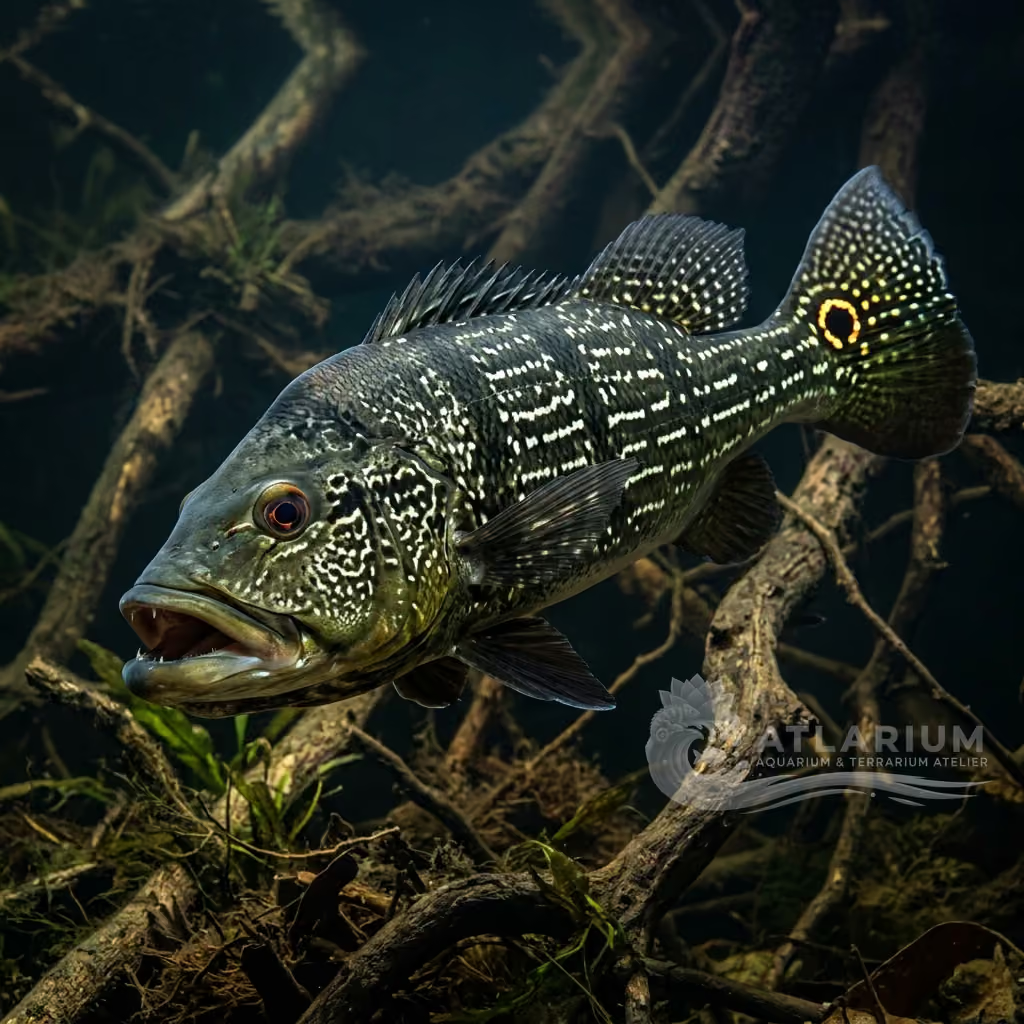
Midas Cichlid / Red Devil
Amphilophus citrinellus
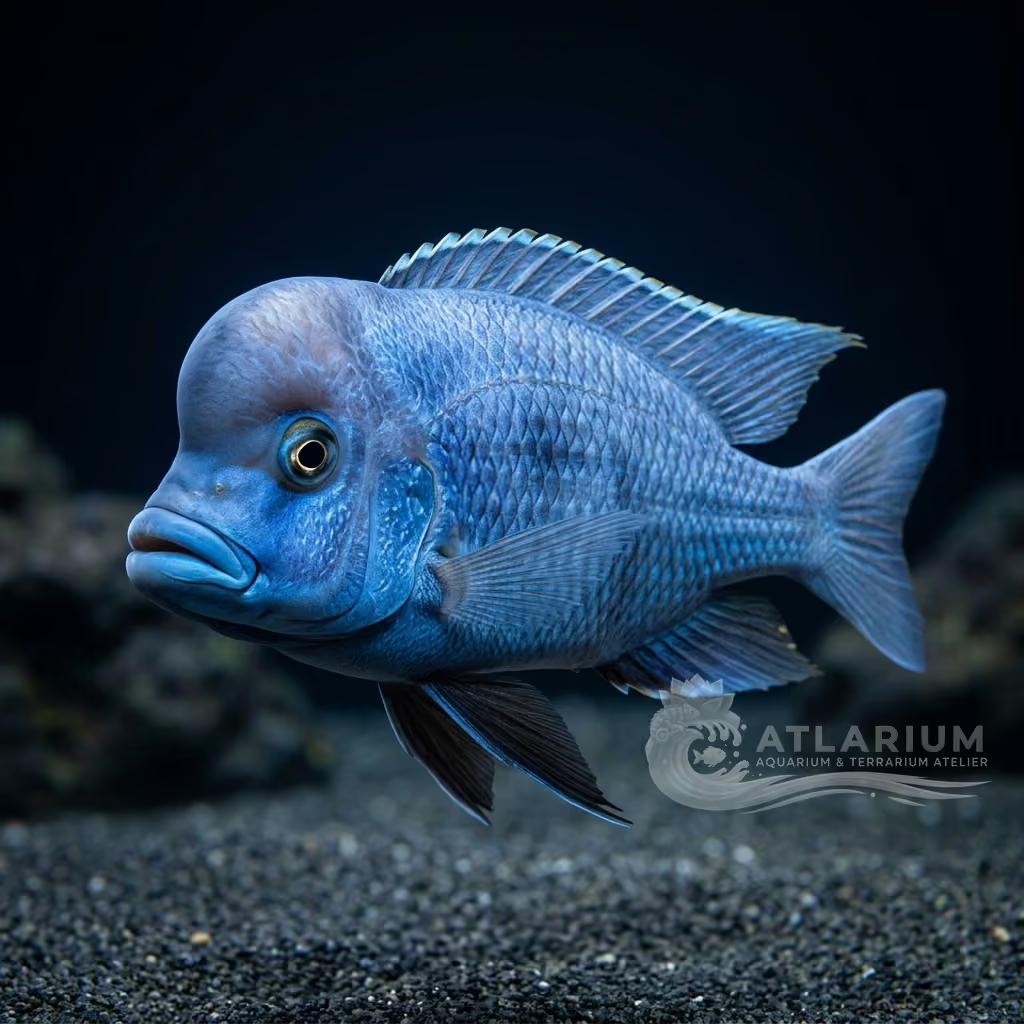
The 'Berserker' of Central America (25-30 cm / 10-12 inches). A massive, brutally powerful monster fish famous globally for two things: its blindingly bright, glowing solid orange or fire-red body, and the grotesque, insanely massive, tumor-like fatty 'Nuchal Hump' that grows on the forehead of Alpha males. It is infamous as the ultimate 'Glass-Banger'—a fish so unspeakably aggressive and psychopathic that it will physically attack the glass to bite its owner, and almost universally MUST be kept utterly alone in its own massive tank ('Wet Pet') to prevent it from slaughtering every other fish it sees.
24 - 28 °C
7 - 8
Água doce
Parte inferior e intermediária
35 cm
>= 300 L
>= 1
10 - 20 dGH
5 - 10 dKH
200 - 400 ppm
313 - 625 uS/cm

Descrição da espécie

Cuidado, criação e companheiros de tanque

Origem e distribuição geográfica
Origem

Perfil de peixe
- Temperamento
- Semi-aggressive
- Amphilophus citrinellus is renowned for its extremely aggressive, dominant, and highly territorial temperament. They view the entire aquarium as their personal territory and will vigorously attack any intruders, including other cichlids and even the hand of their keeper. Despite their combative nature toward tank mates, they are highly intelligent and often develop a strong bond with their owners, earning them the nickname "wet pets." It is best to house them alone or in very carefully matched pairs to manage this intense behavior safely.
- Dieta
- Omnivore
- As opportunistic omnivores, Amphilophus citrinellus requires a varied diet to support their growth and vibrant colors. In the wild, they feed on a mix of insect larvae, snails, worms, small fish, and organic plant matter. In the aquarium, they will readily accept high-quality large cichlids pellets, freeze-dried krill, earthworms, and frozen foods like brine shrimp or bloodworms. It is also beneficial to supplement their diet with vegetable matter, such as spirulina flakes or blanched peas, to promote proper digestion.
- Expectativa de vida
- 10-15 years
- Tamanho adulto
- 35 cm
- Proporção sexual
- 1:1 ratio
- Due to the extreme aggression of Amphilophus citrinellus, keeping them in pairs or groups requires a very specific approach. They are most commonly kept as solitary specimens to avoid territorial conflicts and potential fatalities. If a breeding pair is desired, they must be matched carefully, often using a divider initially to ensure they accept each other. In massive aquariums of 500 liters or more, a single male can sometimes be housed with multiple females in a harem-style setup, but constant monitoring is always required to prevent injuries.
- Frequência de alimentação
- Twice daily
- The recommended feeding frequency for Amphilophus citrinellus depends heavily on their life stage. Juvenile specimens grow rapidly and should be fed two to three times daily in small portions that they can completely consume within two minutes. Once they reach adulthood, their metabolism slows down, and feeding them once a day is sufficient to maintain their health without causing obesity. Incorporating a weekly fasting day can also be beneficial, as it helps clear their digestive tract and reduces the biological waste load on the filtration system.
- Carga biológica
- High
- Amphilophus citrinellus produces an exceptionally high biological load in the aquarium due to its large adult size, which can reach up to 12-14 inches (30-35 cm), and its messy feeding habits. They are active substrate diggers that constantly stir up debris, which can rapidly deteriorate water quality if filtration is inadequate. A high-capacity external canister filter or sump system is highly recommended to manage the waste effectively. Regular weekly water changes of 30-50% are essential to prevent dangerous spikes in ammonia, nitrite, and nitrate levels.
- Fluxo
- Stagnant
- Amphilophus citrinellus naturally inhabits slow-moving lake waters and calm river bends, meaning they prefer weak to moderate water flow in the aquarium. They are not built for fighting strong currents, which can exhaust them and cause unnecessary stress. However, because they require massive filtration to handle their waste, keepers must design the water return carefully. Using spray bars or placing decorations to break up direct currents allows for high turnover rates without creating turbulent swimming conditions for the fish.
- Risco de salto
- Yes
- While not notorious high-jumpers like some smaller species, Amphilophus citrinellus is a large, powerful fish that poses a moderate jump risk. They can easily leap out of the water if startled, during sudden movements, or when chasing prey and territory rivals. Because of their sheer strength and size, they can easily push open lightweight or loosely fitted aquarium lids. A heavy, tight-fitting cover is absolutely necessary to secure the tank and prevent accidental escapes or injuries.
- Reprodução
- Oviparous
- Breeding Amphilophus citrinellus is relatively straightforward once a compatible pair has successfully formed. They are substrate spawners that will select and meticulously clean a flat surface, such as a smooth rock, slate, or the aquarium glass, to deposit hundreds of eggs. Both parents exhibit extremely dedicated and aggressive parental care, guarding the nest from any perceived threats and fanning the eggs to ensure oxygenation. Once the eggs hatch, the parents move the fry to pre-dug pits in the substrate and continue to protect them until they are free-swimming.
- Compatibilidade e companheiros de tanque
- Species only
- Due to their extreme territoriality, Amphilophus citrinellus has very poor compatibility with other fish. They are best kept alone as a single specimen in a species-only tank. In exceptionally large aquariums (typically over 150-200 gallons), they can sometimes be housed with other robust, large Central American cichlids or armored catfish, provided there are plenty of visual barriers. However, this setup carries a high risk of conflict, and keepers must always have a backup plan or divider ready in case aggression escalates.
- Nível do tanque
- Middle/Bottom
- Amphilophus citrinellus is primarily a bottom-to-middle dwelling species that interacts heavily with the lower levels of the aquarium. They spend a significant amount of time near the substrate, digging nests, rearranging gravel, and searching for food. Although they will swim to the middle or upper sections of the water column, especially during feeding or when interacting with their keeper, the majority of their daily activities occur in the lower half of the tank. Adequate open space at the bottom, combined with stable rock formations, is essential to accommodate this behavior.

Modelos e parâmetros científicos
Acesso aos dados científicos oficiais da espécie
- Nível trófico
- 3,2 ± 0,47 se
- Resiliência
- Média (1,4 - 4,4 anos)
- Unicidade filogenética (PD50)
- 0.5
- Relação bayesiana comprimento-peso
- a = 0.02692, b = 3.02
- VulnerabilidadeVulnerabilidade baixa (20 / 100)

Espécies relacionadas
Recomendações agrupadas por parentes próximos, escolhas de acompanhantes e cuidados semelhantes.