Marble Angelfish
Pterophyllum scalare
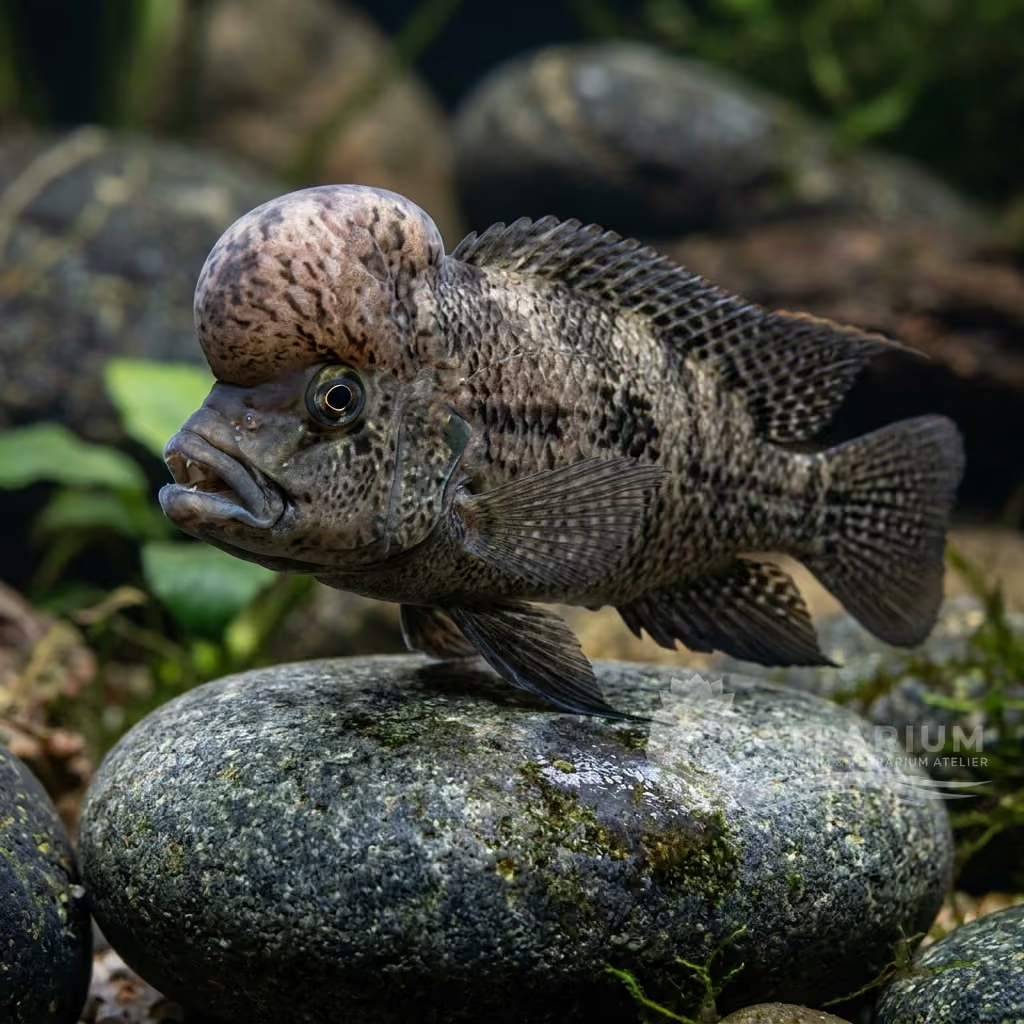
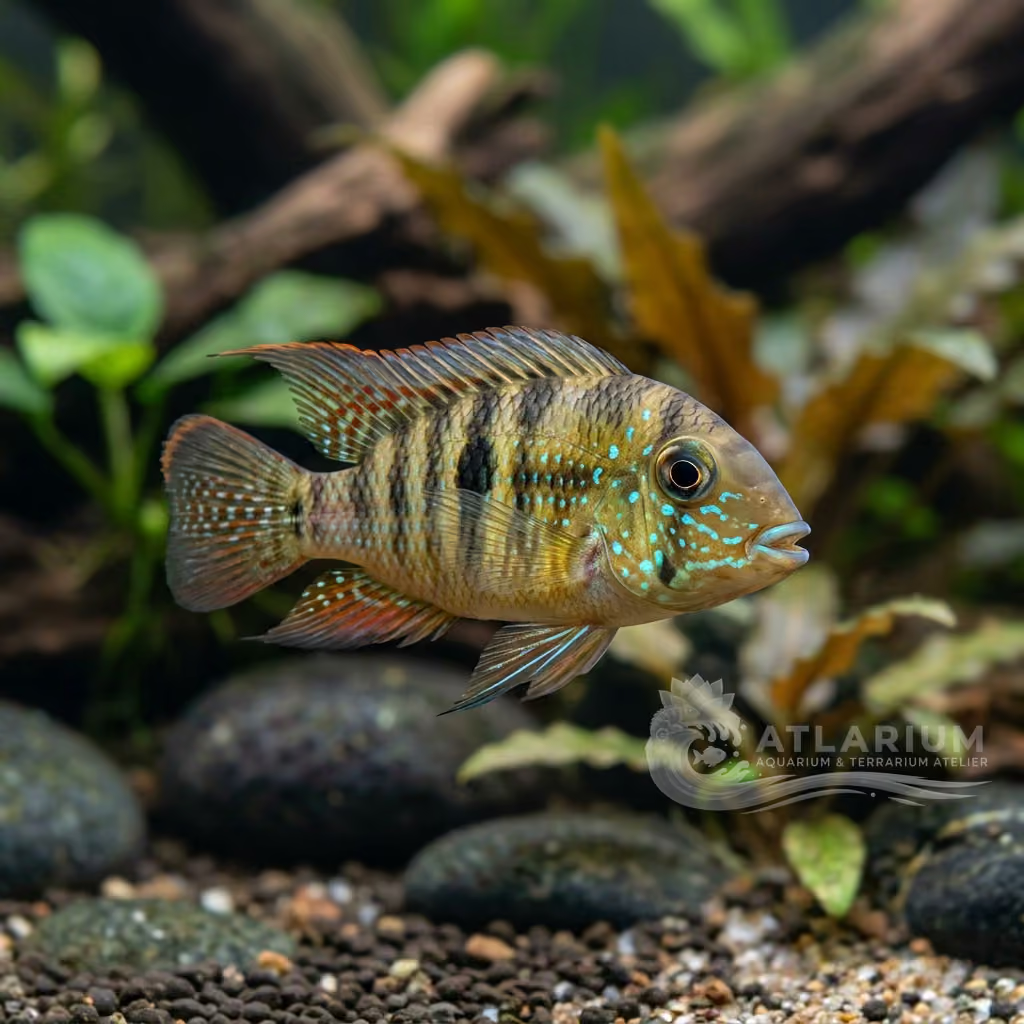
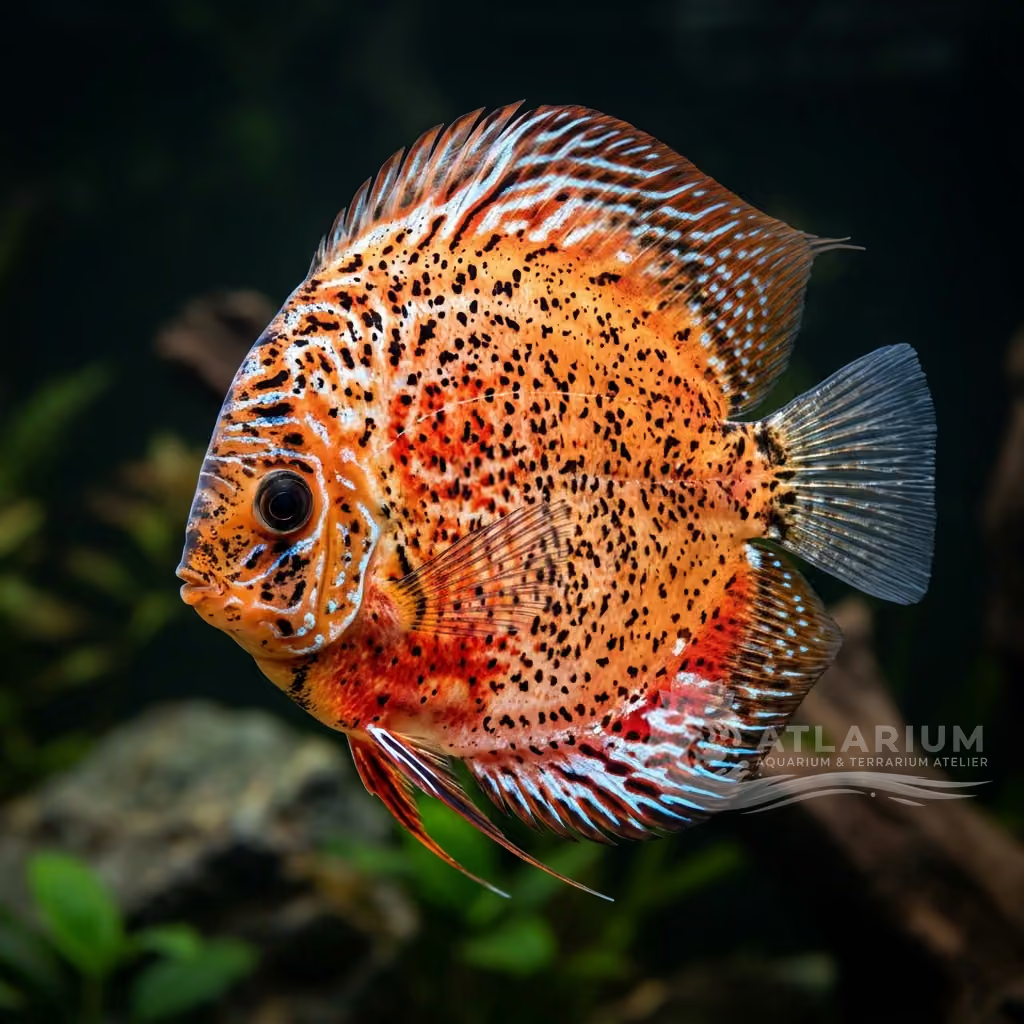
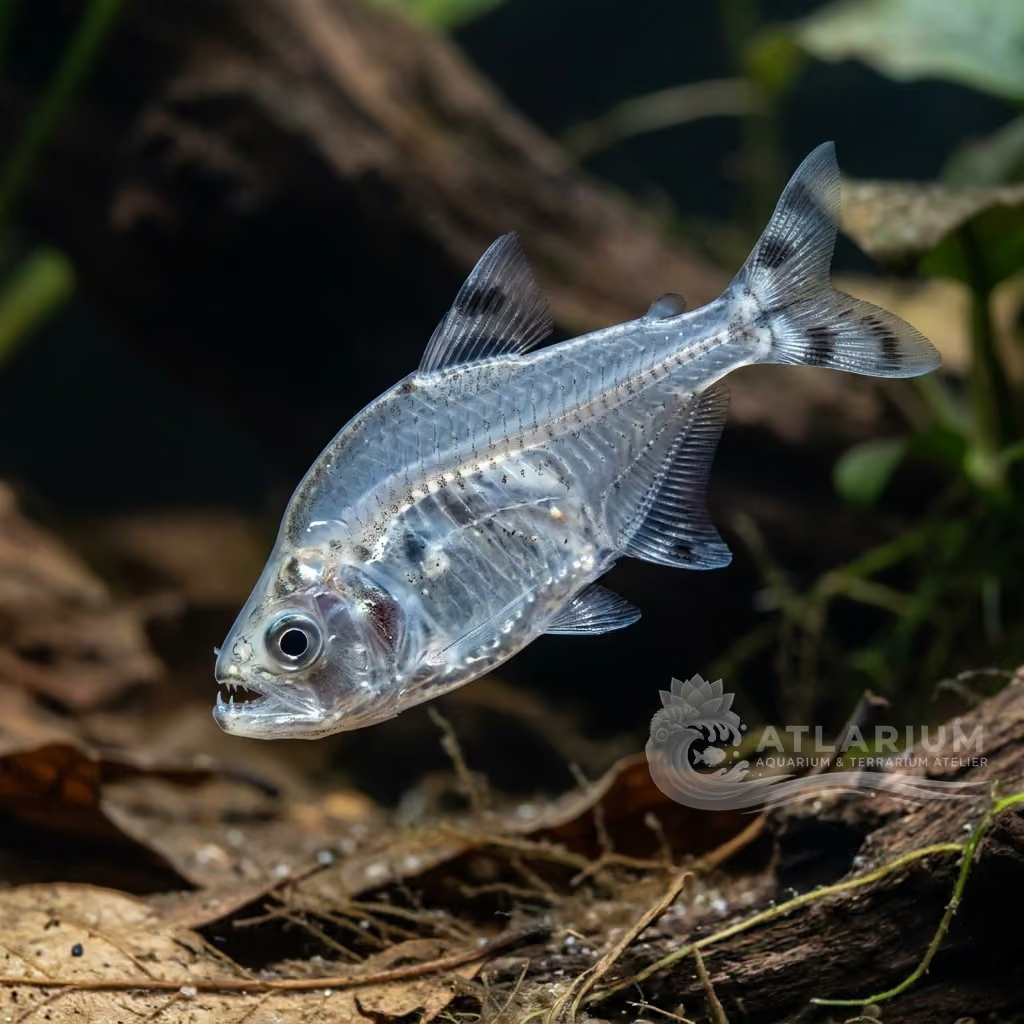
The Marble Angelfish has a body covered in a chaotic net of black and silver spots, like an inkwell exploded on it. This dark aesthetic makes it very difficult to see fungal infections until the terminal stage. Also, do not be fooled by its majestic swimming: when a pair of these cichlids lay eggs, they turn into a war machine. Any fish that dares to cross the imaginary line of their territory will be headbutted in the flanks until death.
Temperatura da água
24 - 28 °C
Valor de pH
6 - 7.5
Tipo de água
Água doce
Nível do tanque
Meio
Tamanho adulto
15 cm
Volume mínimo do tanque
>= 200 L
Grupo mínimo
>= 2
GH
2 - 15 dGH
KH
1 - 7 dKH
TDS
40 - 295 ppm
Condutividade
63 - 461 uS/cm

Descrição da espécie
Geographical Origin and Habitat: The wild, ancestral Pterophyllum scalare hails from the vast basins of the Amazon River (spanning the Ucayali, Orinoco, and Solimões rivers), favoring heavily flooded, silent marshlands and stagnant "Blackwater" jungles. **Note:** The "Marble" mutation is a 100% domestic aquarium creation. Fixed by breeders in the 1950s and 60s across American and Asian commercial farms, it is one of the oldest, most genetically stable artificial color morphs and does not exist in any wild habitat.
Taxonomy and Morphology: Celebrated worldwide as the "Marble Angelfish". It meticulously retains the iconic, breathtaking rhomboid architecture of the wild angelfish: a razor-thin, deeply laterally compressed "disc" body, perfectly framed by enormous, stiff dorsal and anal fins acting as towering "sails." It can effortlessly exceed 15 cm (6 inches) in length and a monstrous 20-22 cm (8-9 inches) in total vertical height. The mutation is wildly popular in the "Veiltail" form, where the fins trail into the abyss like ghostly ribbons.
Social Behavior: Statuesque, glacial, and outwardly peaceful, but harboring the cold biological instincts of an ambush cichlid. As juveniles, they bond into tight schooling groups. However, upon sexual maturity, a dominant breeding pair will ruthlessly and violently evict all other group members, furiously claiming a third of the tank. Masterful vertical swimmers, they utilize their disruptive camouflage to ambush tiny prey with explosive, lightning-fast strikes.
Coloration and Sexual Dimorphism: A chaotic, mesmerizing masterpiece of genetics. The base canvas is a brilliant, reflective silver or a ghostly, pearlescent white. But instead of the straight, rigid vertical black bars of wild angelfish, the Marble is overwhelmingly fractured by deep, jagged, unpredictable blotches, broken streaks, and massive splatters (marbling) of velvet Pitch-Black. The dorsal and tail fins are heavily "tiger-striped." Golden hues often crown the forehead. **Visually Impossible to Sex:** Males and females are completely identical to the naked eye. Only extremely old "Alpha" males might, occasionally, develop a fleshy "nuchal hump", while a ripe female will only betray her sex when her thick, blunt breeding tube drops down just hours prior to spawning.

Cuidado, criação e companheiros de tanque
Aquarium Setup: It demands the same unforgiving vertical requirements as all Angelfish: the absolute, most critical parameter is *water column height*. The water level must never be shallower than 50-60 cm (20-24 inches) (in tanks roughly 55-75 Gallons / 250 liters minimum). Caging them in shallow breeder tanks causes horrific, permanent spinal and fin deformities. The ideal layout features thick, twisted Manzanita branches positioned completely vertically (to simulate reeds), and towering plants like Giant Vallisneria that the Angelfish instinctively "slide" into for camouflage.
Diet and Feeding: Macro-omnivore with heavy piscivorous (fish-eating) tendencies. Endlessly gluttonous. In the wild, they decimate mosquito larvae, micro-crustaceans, and helpless fry. In captivity, they demand balanced, slow-sinking granules, high-protein cichlid flakes, and heavy (but carefully portioned) servings of frozen meaty foods: Bloodworms, giant Daphnia, and Brine Shrimp (Artemia). Because their mouths angle upwards for mid-water strikes, they will completely ignore food once it hits the gravel.
Water Quality: Decades of commercial breeding have transformed the Marble Angel into an indestructible "tank" compared to delicate Wild Altums. It tolerates an immense range of conditions: pH from 6.0 up to 7.5, and surprisingly hard water (GH 5-15). It cannot, however, tolerate the cold (keep the heat locked at 26-28°C / 79-82°F) or violent water currents. Because of their flat "sail" bodies, strong filter outputs will exhaust them to death as they are constantly blown sideways.
Compatibility and Cohabitation: The infamous "Peaceful fish. that ate my Neons." While completely docile around wide-bodied tankmates (Phantom Tetras, Silver Dollars, adult Corydoras, Plecos), their ambush predator instinct is permanent. ANY fish that is slim, small, and torpedo-shaped (like the classic Neon Tetra, Endlers, or Guppies) will be mercilessly tracked and swallowed whole during the night. STRICTLY FORBIDDEN to house them with nervous, aggressive fin-nippers (Tiger Barbs, Serpae Tetras), which will sadistically bite off the Angels' magnificent, signature thread-like pelvic "feeler" fins.
Aquarium Breeding: A bi-parental, open-water substrate spawner. The standard practice is buying a group of 6 and waiting for two fish to naturally "pair off" genetically. The pair will fanatically clean a large, broad leaf angled at 45 degrees, the filter intake pipe, or even the glass itself. The female will surgically paste 300 to 500 adhesive eggs in geometric rows. Sadly, due to poor commercial selective breeding in bare-bottom tanks, modern Marble strains have largely lost their parental brains; many young pairs will suffer severe anxiety and cannibalize their own entire nest at the first sign of darkness.
Risks and Diseases: 1. The "Beginner's Trap": An Angelfish is not a "cute little flat fish." It starts as a dime in the pet store but violently mutates into an 8-inch leviathan, causing devastation for owners who cram them into 10-gallon bowls. 2. Internal Flagellates (Hexamita): Feeding cheap, filler-heavy dry flakes or completely improper red mammalian meat (like beefheart) will brutally clog their intestines, causing white stringy feces, wasting disease, and death. 3. "Feeler" infections caused by wounds from aggressive tankmates.

Origem e distribuição geográfica
The wild, ancestral Pterophyllum scalare hails from the vast basins of the Amazon River (spanning the Ucayali, Orinoco, and Solimões rivers), favoring heavily flooded, silent marshlands and stagnant "Blackwater" jungles. **Note:** The "Marble" mutation is a 100% domestic aquarium creation. Fixed by breeders in the 1950s and 60s across American and Asian commercial farms, it is one of the oldest, most genetically stable artificial color morphs and does not exist in any wild habitat.
Origem
Melhoramento seletivo e cultivaresAmazônia, Orinoco e GuianasAmérica do NorteOceanos tropicais e recifes

Perfil de peixe
- Temperamento
- Territorial
- They exhibit a bold and highly curious temperament. They interact visually with activity outside the tank. They become feisty only when guarding their eggs.
- Dieta
- Carnivore
- They thrive on a high-quality omnivorous diet. Varied dry foods should be their dietary staple. Live foods encourage natural hunting behaviors effectively.
- Expectativa de vida
- 8-12 years
- Tamanho adulto
- 15 cm
- Proporção sexual
- Pair
- Establishing a bonded pair is the ideal scenario. Keeping multiple males requires a massive aquarium. Subordinate fish will be constantly chased away.
- Frequência de alimentação
- Twice daily
- Offer them food twice daily in small amounts. They consume their meals rapidly and greedily. Fasting them one day weekly aids digestion.
- Carga biológica
- Medium
- Marble Angelfish produce a manageable, moderate bioload. Proper tank maintenance easily handles their waste output. Avoid overstocking to maintain crystal clear water.
- Fluxo
- Stagnant
- They enjoy calm and slow-moving water currents. High flow rates push their tall bodies around. Gentle filtration keeps their environment stress-free.
- Risco de salto
- No
- Reprodução
- Oviparous
- They spawn readily when fed a rich diet. They fiercely defend their chosen spawning site. The eggs hatch after just a few days.
- Compatibilidade e companheiros de tanque
- Species only
- They are excellent additions to peaceful community setups. They will eat anything fitting in their mouths. Fast-swimming tankmates might outcompete them for food.
- Nível do tanque
- Middle
- They prominently occupy the mid-water column areas. Tall driftwood pieces give them territorial boundaries. They require deep tanks to accommodate their fins.

Modelos e parâmetros científicos
FishBase
Acesso aos dados científicos oficiais da espécie
FishBase v25.04Dados sincronizados em: 15/06/2026
- Nível trófico
- 3,6 ± 0,59 se
- Resiliência
- Alta (menos de 15 meses)
- Unicidade filogenética (PD50)
- 0.625
- Relação bayesiana comprimento-peso
- a = 0.03236, b = 2.98
- VulnerabilidadeVulnerabilidade baixa (10 / 100)

Espécies relacionadas
Recomendações agrupadas por parentes próximos, escolhas de acompanhantes e cuidados semelhantes.