Royal Whiptail Catfish
Sturisomatichthys aureus
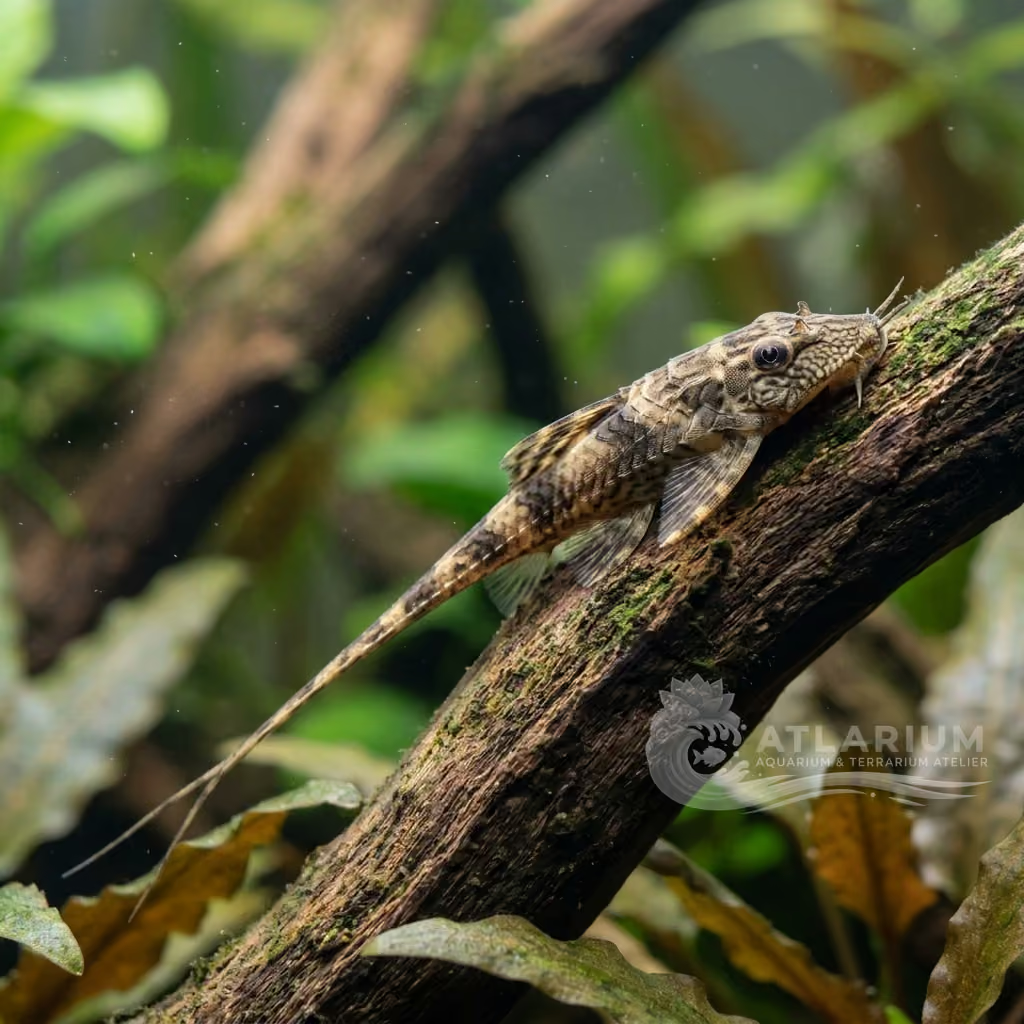
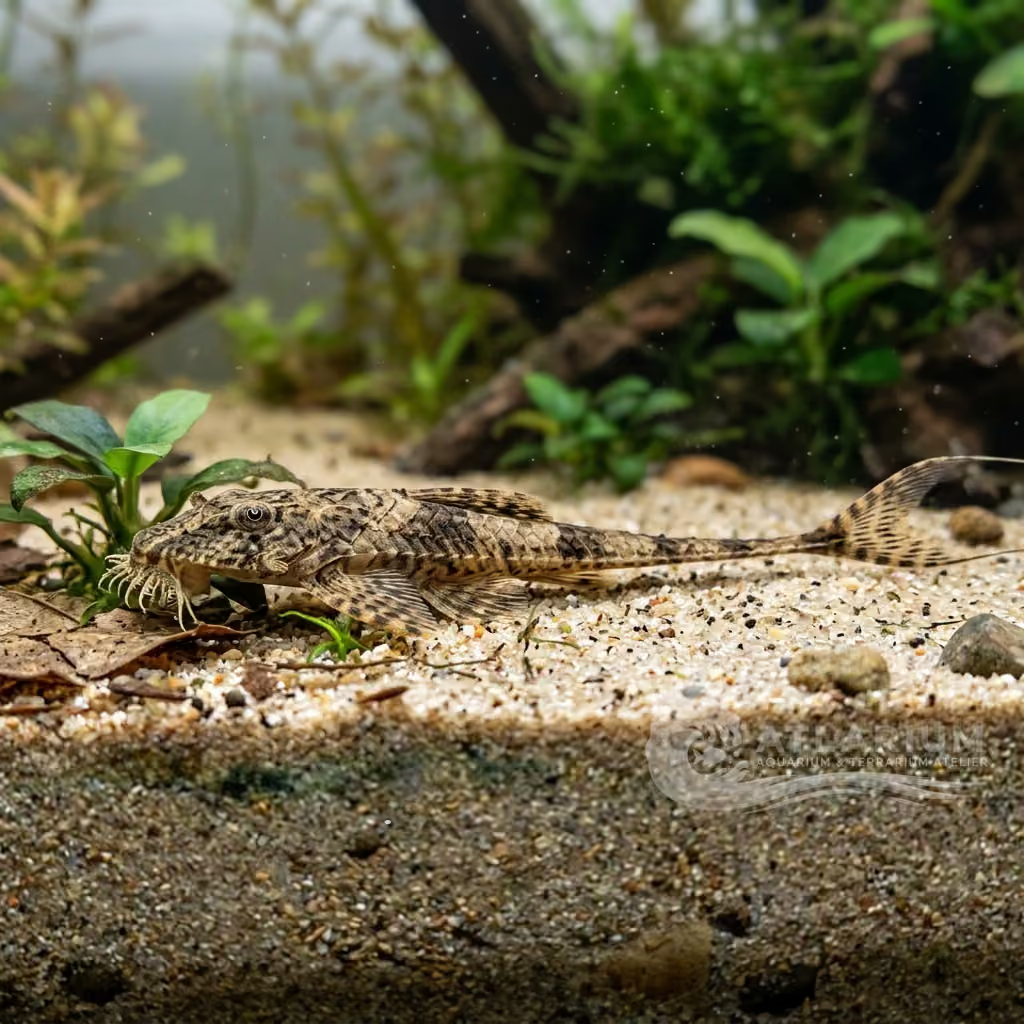
The Royal Whiptail or Golden Sturisoma (Sturisoma aureum) is undoubtedly one of the most spectacular, alien and elegant sucker fish available in fishkeeping. Reaching a majestic 20-25 cm (8-10 inches), its body is a marvel of aerodynamics: wide and flat in the front, it tapers into a tail as thin as a riding crop (whiptail), ending with two exaggeratedly long caudal filaments. But the real attraction are the pectoral and dorsal fins: very tall, curved and sickle-shaped (or boomerang), which give the fish the appearance of a starfighter at rest. Colored gold and brown, it is a sculptural pacifist destined for large Amazonian aquariums.
24 - 28 °C
6.5 - 7.5
Água doce
Todos os níveis
25 cm
>= 200 L
>= 1
2 - 15 dGH
1 - 7 dKH
40 - 295 ppm
63 - 461 uS/cm

Descrição da espécie

Cuidado, criação e companheiros de tanque

Origem e distribuição geográfica
Origem

Perfil de peixe
- Temperamento
- Peaceful
- Behaviorally, the Golden Whiptail is characterized as being peaceful. They exhibit fascinating social dynamics that can be a true joy to observe in a well-planned display. While generally agreeable, unexpected aggression can sometimes occur if their fundamental environmental needs are not met. Providing adequate hiding spots and sufficient swimming space will go a long way in ensuring their temperament remains calm and manageable.
- Dieta
- Omnivore
- This species is known to be a herbivorous in its natural habitat, requiring a varied diet in captivity. To ensure optimal health and coloration, provide high-quality prepared foods alongside live or frozen options like brine shrimp or bloodworms. It is essential to match the food particle size to the fish's mouth structure to facilitate easy consumption. Regular rotation of dietary items will prevent nutritional deficiencies and keep the fish highly active.
- Expectativa de vida
- 8-15 years
- Tamanho adulto
- 25 cm
- Proporção sexual
- Group
- Maintaining an appropriate sex ratio is vital, and a balanced distribution of males and females often works best for the Golden Whiptail. In many cases, keeping a ratio heavily skewed towards females can help disperse male aggression during the breeding season. It is important to monitor the group dynamics closely to quickly identify and isolate any bullied individuals. A well-structured environment with plenty of visual barriers will support a harmonious mixed-sex group.
- Frequência de alimentação
- Twice daily
- To mimic its natural foraging behavior, the Golden Whiptail should be fed small portions two to three times a day. Overfeeding can lead to severe health issues and quickly degrade the water quality. It is crucial to only provide an amount of food that the fish can consume within a few minutes. Adjusting the feeding frequency based on the fish's age and activity level is a best practice for long-term care.
- Carga biológica
- Low to Medium
- Maintaining this freshwater species requires understanding its moderate bioload profile. The Golden Whiptail will thrive when the filtration system is carefully matched to its specific waste production. Frequent testing of the water chemistry is highly recommended to ensure no dangerous spikes occur. Excellent water quality is the foundation for preventing disease and promoting a vibrant, active fish.
- Fluxo
- Strong
- In terms of water movement, the Golden Whiptail thrives best in environments with moderate to strong flow. Replicating the hydrodynamic conditions of their native habitat is key to reducing stress and promoting natural behaviors. Powerheads or spray bars can be strategically placed to create adequate currents without overwhelming the fish. Careful placement of hardscape and plants can also provide sheltered resting zones away from the main flow.
- Risco de salto
- No
- Reprodução
- Egg scatterer
- As a known surface egg layer, the Golden Whiptail exhibits fascinating breeding behaviors when conditions are optimal. Providing a separate, specialized breeding setup is often the best approach to ensure a high yield of fry. Parents may require removal post-spawning depending on the specific parental care traits of the species. Raising the young demands pristine water parameters and a steady supply of infusoria or newly hatched artemia.
- Compatibilidade e companheiros de tanque
- Peaceful
- When considering tankmates, the Golden Whiptail is generally considered great with small community species. It is important to avoid housing them with overly aggressive or large predatory fish that could bully them or outcompete them for food. Careful observation during the initial introduction period is highly recommended to ensure harmony within the community. Selecting species that occupy different levels of the water column can further reduce territorial disputes.
- Nível do tanque
- All levels
- This species is predominantly a bottom and surfaces dweller within the aquarium setup. Providing the appropriate spatial layout with open swimming areas or dense vegetation where they feel secure is highly beneficial. By understanding their preferred depth, aquarists can carefully select complementary species that occupy other regions of the tank. This spatial separation helps to reduce competition for food and minimizes unnecessary territorial disputes.

Modelos e parâmetros científicos
Acesso aos dados científicos oficiais da espécie
- Nível trófico
- 2,4 ± 0,2 se
- Resiliência
- Média (1,4 - 4,4 anos)
- Unicidade filogenética (PD50)
- 0.502
- Relação bayesiana comprimento-peso
- a = 0.00398, b = 3.11
- VulnerabilidadeVulnerabilidade baixa (14 / 100)

Espécies relacionadas
Recomendações agrupadas por parentes próximos, escolhas de acompanhantes e cuidados semelhantes.