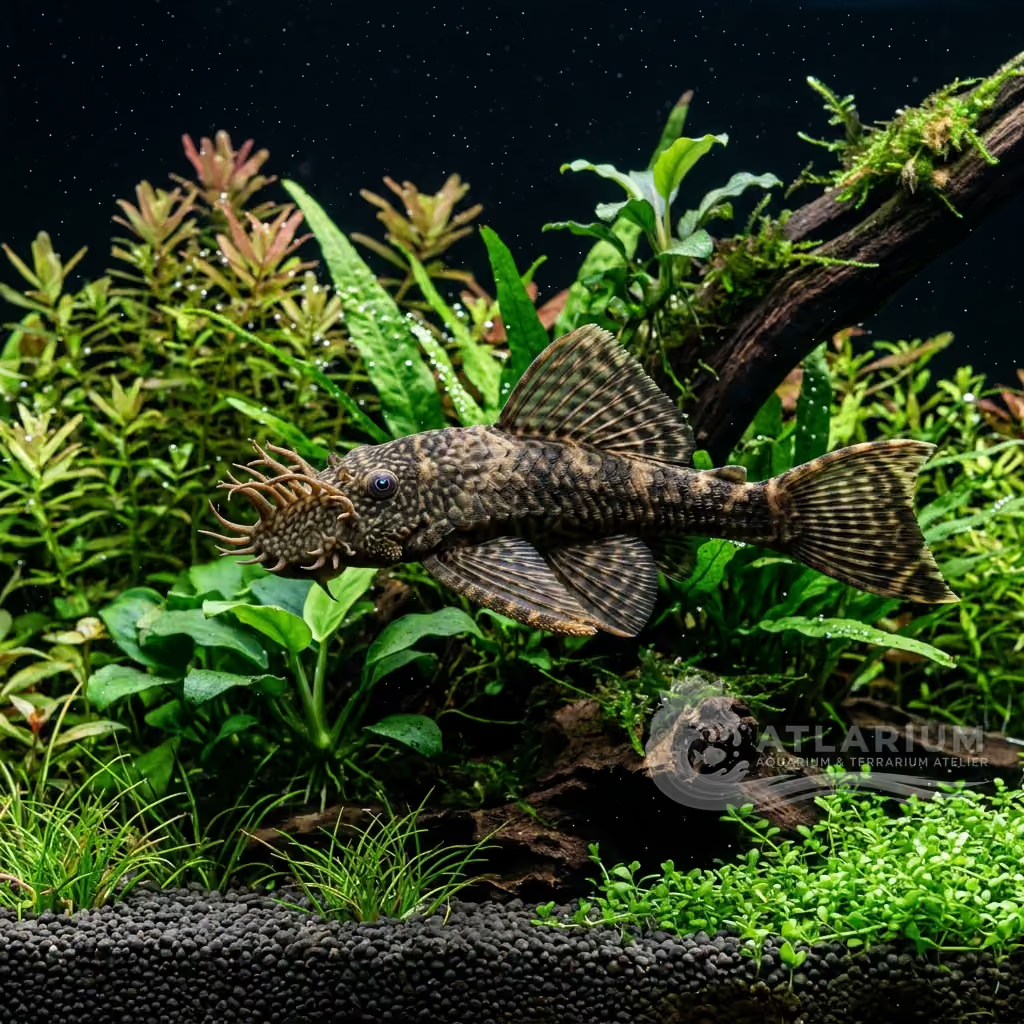
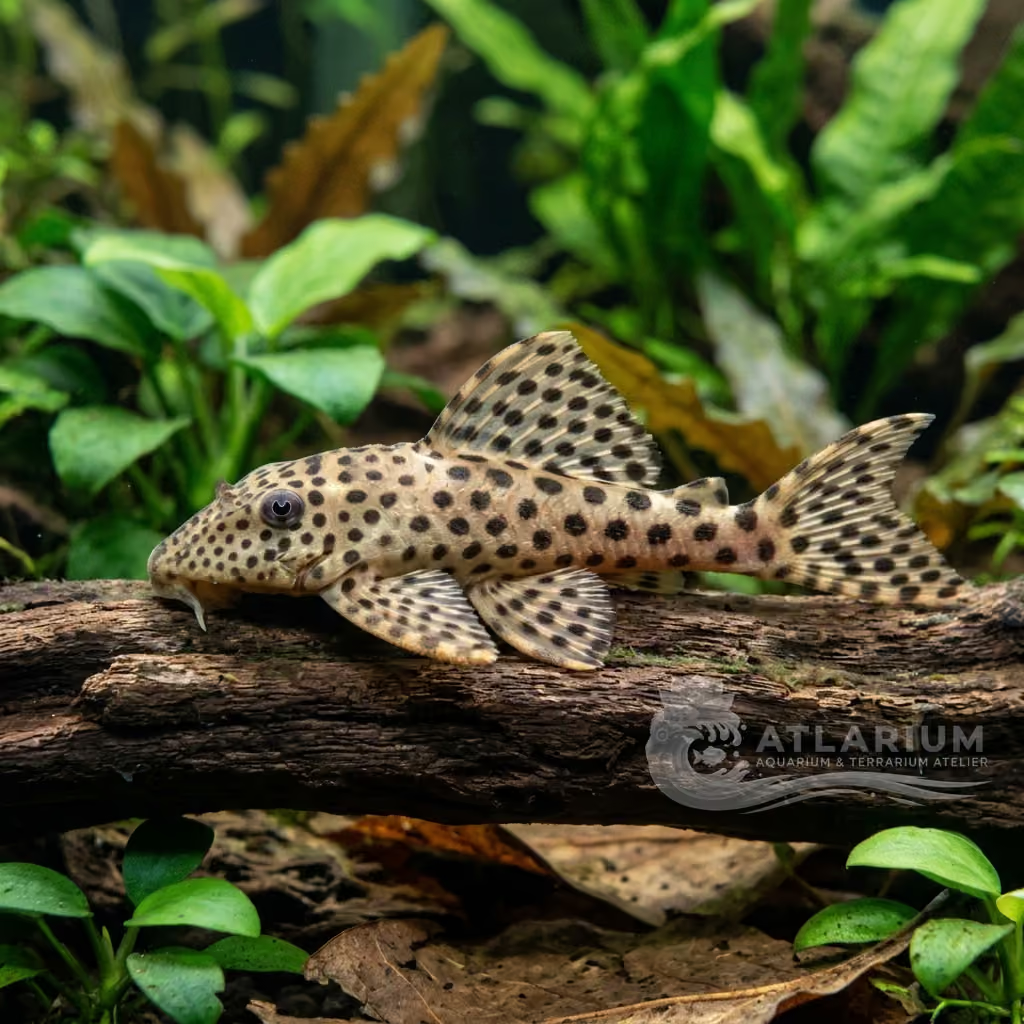
Royal Whiptail
Sturisomatichthys panamensis
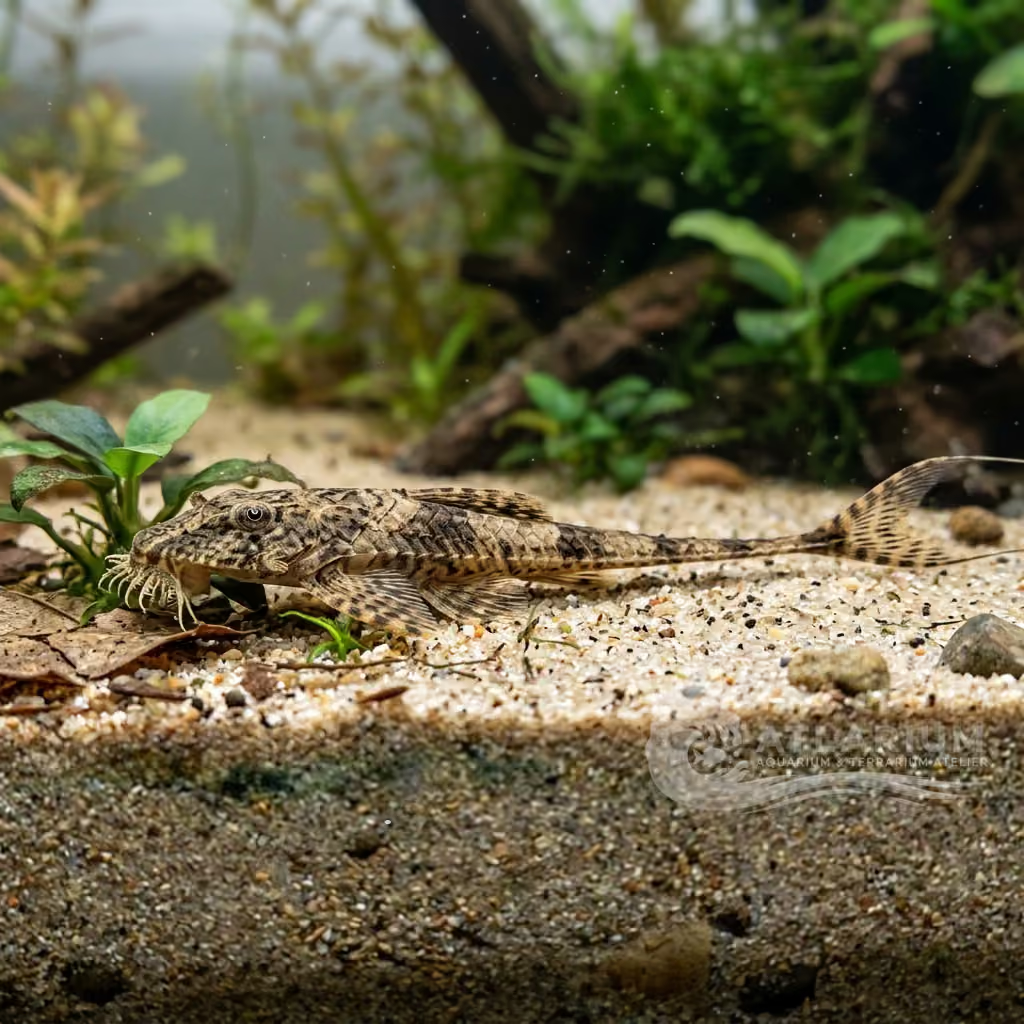
An elegant, twig-like catfish boasting extremely long caudal fin extensions. This regal herbivore gracefully rests on wood and aquarium glass, thriving in highly oxygenated, fast-flowing waters.
Temperatura da água
22 - 27 °C
Valor de pH
6.5 - 7.5
Tipo de água
Água doce
Nível do tanque
Meio
Tamanho adulto
20 cm
Volume mínimo do tanque
>= 200 L
Grupo mínimo
>= 1
GH
2 - 15 dGH
KH
3 - 10 dKH
TDS
60 - 325 ppm
Condutividade
94 - 508 uS/cm

Descrição da espécie
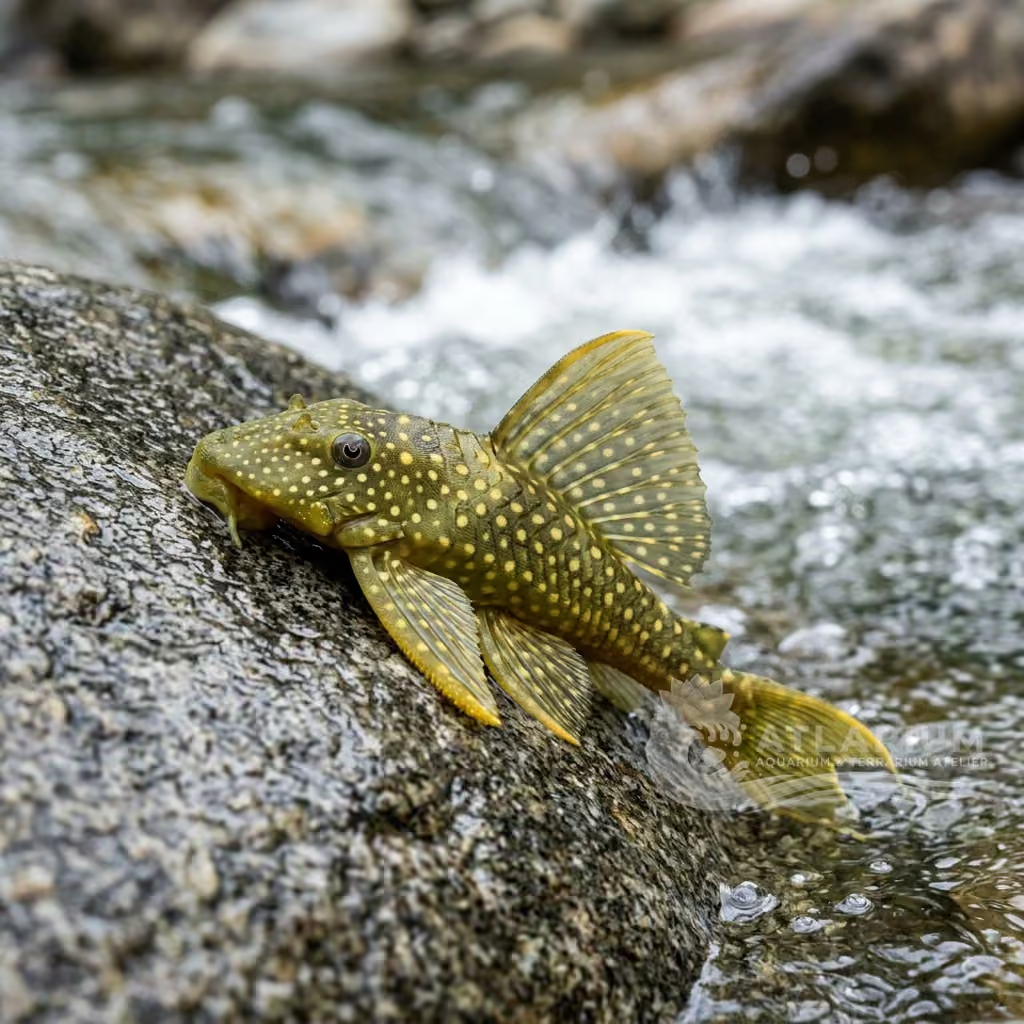
Geographical Origin and Habitat: Present in Central America (Panama) and Northwestern South America (Colombia, Magdalena River basin). Prefers fast-flowing rivers and foothill streams, clinging to stones and polished branches in areas of turbulence.
Taxonomy and Morphology: Panamanian Royal Farlowella (Sturisomatichthys panamensis). Astounding morphology, identical to a "dry twig". Extremely pointed snout with evident rostrum, soaring dorsal fin similar to a sail, long caudal filaments.
Social Behavior: Defenseless and totally peaceful fish. Unlike the usual "cleaners", Royal Farlowellas love to station on the aquarium glass, or in a perfectly vertical position hugging the filter or a soaring piece of wood.
Coloration and Sexual Dimorphism: Golden/beige background color crossed by two dark brown lateral stripes that unify the camouflage appearance. Adult males mature the famous hirsute bristles (odontodes) on the sides of the entire snout (the so-called "sideburns").

Cuidado, criação e companheiros de tanque
Aquarium Setup: A 100-120 cm (40-48 inches) tank. Strongly moved water. Long and smooth vertical woods and large Echinodorus leaves must be provided to allow them to rest in an upright position.
Diet and Feeding: Despite its "algae-eater" appearance, its diet is largely Omnivorous. Sustaining them only on algae equals malnutrition. Administer green bottom tablets and spirulina alternated with bloodworms, daphnia and brine shrimp.
Water Quality: Extremely sensitive to bacterial blooms (cloudy water). Requires rigorous mechanical filtration, well-oxygenated water and very frequent changes. The water must not be excessively hot (optimal range 22-26°C / 72-79°F).
Compatibility and Cohabitation: Unable to compete with large or violent benthic fish (Loaches, Crossocheilus, large Plecos). Golden match with quiet Corydoras (C. aeneus, C. sterbai), Discus or thick schools of small Tetras (Neons, Rummy-nose).
Aquarium Breeding: The male vigorously cleans the aquarium glass and pushes the female to lay 40-60 eggs on it in a vertical row. Then he stands vertically and guards, ventilating for 6 days. Brine shrimp nauplii and blended algae for the fry.
Risks and Diseases: Fry suffer a frightening 90% mortality in the first week if they cannot find adequate microfood. Adults at risk of starvation in turbulent or overcrowded aquariums.

Origem e distribuição geográfica
Present in Central America (Panama) and Northwestern South America (Colombia, Magdalena River basin). Prefers fast-flowing rivers and foothill streams, clinging to stones and polished branches in areas of turbulence.
Origem
Oceanos tropicais e recifesExtra-Amazônica América do SulAmérica Central e Caribe

Perfil de peixe
- Temperamento
- Semi-aggressive
- Their temperament is extremely docile and unassuming, making them ideal for peaceful setups. They tend to mind their own business and completely ignore other species in the tank. Their gentle nature means they can easily be intimidated by overly aggressive or active tank mates.
- Dieta
- Herbivore
- They are primarily herbivorous, feeding on algae, biofilm, and aufwuchs in their natural habitat. In captivity, they require a diet rich in vegetable matter, including algae wafers, blanched zucchini, and spinach. They will also accept small amounts of meaty foods, but their main intake should always remain plant-based.
- Expectativa de vida
- 8-12 years
- Tamanho adulto
- 20 cm
- Proporção sexual
- Pair
- They can be kept in pairs or small groups without significant issues. Males may occasionally display mild territorial behavior towards one another when defending a potential breeding site. Providing plenty of hiding spots and visual barriers ensures that multiple males can coexist peacefully.
- Frequência de alimentação
- Twice daily
- Because they graze continuously, they should be offered food regularly throughout the day. Providing vegetables that can be left in the tank for several hours allows them to eat at their own pace. Offering a fresh piece of vegetable before turning off the lights ensures they can feed overnight.
- Carga biológica
- Medium to High
- The bioload produced by this species is moderate but constant due to its continuous grazing habits. They produce a steady stream of waste as they consume algae and plant matter throughout the day. A well-established biological filter and regular water changes are sufficient to manage their output.
- Fluxo
- Stagnant
- These catfish originate from flowing rivers and streams, so they appreciate moderate to high water flow. Good water movement and high oxygenation are crucial for their overall health and vitality. Powerheads or strong filter returns can be used to simulate their natural riverine environment effectively.
- Risco de salto
- No
- Reprodução
- Oviparous
- Breeding is possible in captivity and typically occurs on flat, vertical surfaces like aquarium glass or large leaves. The male will diligently guard and clean the eggs until they hatch in about a week. Raising the fry can be challenging as they require a constant supply of very fine green food.
- Compatibilidade e companheiros de tanque
- Semi-aggressive
- This is a remarkably peaceful fish that makes a great addition to calm community tanks. They will not bother other inhabitants and prefer to be kept with similarly tranquil, non-aggressive species. Avoid housing them with boisterous or nippy fish that might outcompete them for food or cause them stress.
- Nível do tanque
- Middle
- They are predominantly bottom and mid-level dwellers within the aquarium. Most of their time is spent resting on the substrate or clinging vertically to driftwood and glass. They rarely swim freely in the open water column unless moving to a new grazing spot.

Modelos e parâmetros científicos
FishBase
Acesso aos dados científicos oficiais da espécie
FishBase v25.04Dados sincronizados em: 15/06/2026
- Nível trófico
- 2,4 ± 0,2 se
- Resiliência
- Baixa (4,5 - 14 anos)
- Unicidade filogenética (PD50)
- 0.502
- Relação bayesiana comprimento-peso
- a = 0.00398, b = 3.11
- VulnerabilidadeVulnerabilidade baixa (22 / 100)

Espécies relacionadas
Recomendações agrupadas por parentes próximos, escolhas de acompanhantes e cuidados semelhantes.