Demon Eartheater - spotted face
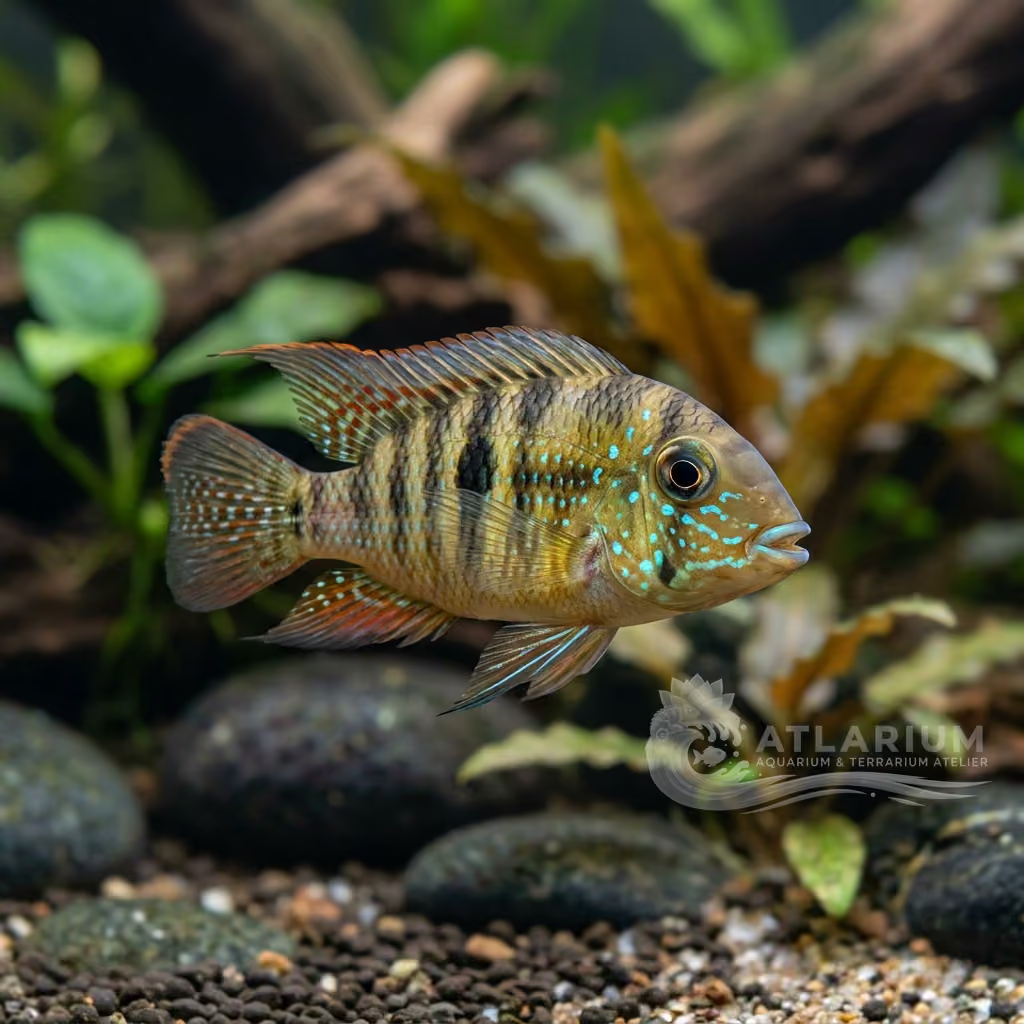
Satanoperca leucosticta
The splendid 'Spotted Face Satanoperca' (25 cm). For years this species has been mistakenly marketed under the name of its cousin "Jurupari". It shares with the Jurupari the same formidable hydrochemical tolerance, imposing size and absolutely peaceful nature. The Leucosticta elevates itself with a significantly brighter livery, dominated by a mask of luminous spots on the face.
Temperatura da água
27 - 29 °C
Valor de pH
6 - 7
Tipo de água
Água doce
Nível do tanque
Parte inferior
Tamanho adulto
25 cm
Volume mínimo do tanque
>= 300 L
Grupo mínimo
>= 1
GH
2 - 10 dGH
KH
1 - 5 dKH
TDS
40 - 200 ppm
Condutividade
63 - 313 uS/cm

Descrição da espécie
Geographic Origin and Biotope: FishBase records Satanoperca leucosticta as tropical, freshwater and benthopelagic, at 27 °C–30 °C. This recovery does not state a geographic range.
Taxonomy and Morphology: FishBase records a maximum length of 15.0 cm SL.
Social Behaviour: FishBase records the species as a mouthbrooder.
Colouration and Sexual Dimorphism: This recovery makes no statement about colouration or sexual dimorphism.

Cuidado, criação e companheiros de tanque
Verified data (FishBase): Satanoperca leucosticta is a tropical freshwater, benthopelagic fish recorded at 27°C–30°C. FishBase lists it as a mouth breeder.

Origem e distribuição geográfica
Esta espécie é originária de: Sud America (Guyana ed Essequibo).
Origem
Amazônia, Orinoco e GuianasAmérica Central e Caribe

Perfil de peixe
- Temperamento
- Semi-aggressive
- They are incredibly peaceful, even slightly skittish. They are completely unbothered by other species. Their calm nature makes them excellent community fish.
- Dieta
- Omnivore
- They need fine sand to sift for their omnivorous diet. Provide high-quality sinking cichlid pellets and frozen invertebrates. Vegetable matter can be supplemented occasionally.
- Expectativa de vida
- 8-12 years
- Tamanho adulto
- 25 cm
- Proporção sexual
- Solitary
- Maintain them in groups of 6 or more for optimal social behavior. Aggression is distributed evenly within the group. They are very gregarious and stressed if kept singly.
- Frequência de alimentação
- Twice daily
- Feed two to three times a day to satisfy their constant foraging habit. Only feed what they can consume in a few minutes. Heavy feedings can quickly degrade water quality.
- Carga biológica
- Medium to High
- They have a high bioload and constantly stir up the substrate. Over-filtration is highly recommended to keep the water clear. Strict adherence to weekly water changes is mandatory.
- Fluxo
- Stagnant
- They prefer slow to moderate water movement. Strong flow will blow the fine sand around, which is undesirable. Keep the environment tranquil and stable.
- Risco de salto
- No
- Reprodução
- Oviparous
- They are ovophilic mouthbrooders, picking up eggs immediately after spawning. The female will carry the eggs and fry for weeks. Breeding requires excellent water conditions and a high-protein diet.
- Compatibilidade e companheiros de tanque
- Peaceful
- They are very peaceful and do perfectly well in a biotope community setup. Keep with medium-sized tetras, peaceful catfish, and other non-aggressive cichlids. They will not bother plants but may uproot them while sifting.
- Nível do tanque
- Bottom
- They inhabit the bottom zone of the aquarium exclusively. They are constantly moving sand through their gills. Provide plenty of open sandy areas for them.

Modelos e parâmetros científicos
FishBase
Acesso aos dados científicos oficiais da espécie
FishBase v25.04Dados sincronizados em: 15/06/2026
- Nível trófico
- 3,4 ± 0,46 se
- Resiliência
- Alta (menos de 15 meses)
- Unicidade filogenética (PD50)
- 0.5039
- Relação bayesiana comprimento-peso
- a = 0.02399, b = 3.01
- VulnerabilidadeVulnerabilidade baixa (10 / 100)

Espécies relacionadas
Recomendações agrupadas por parentes próximos, escolhas de acompanhantes e cuidados semelhantes.