Pearlfish (Simpsonichthys)
Nematolebias whitei
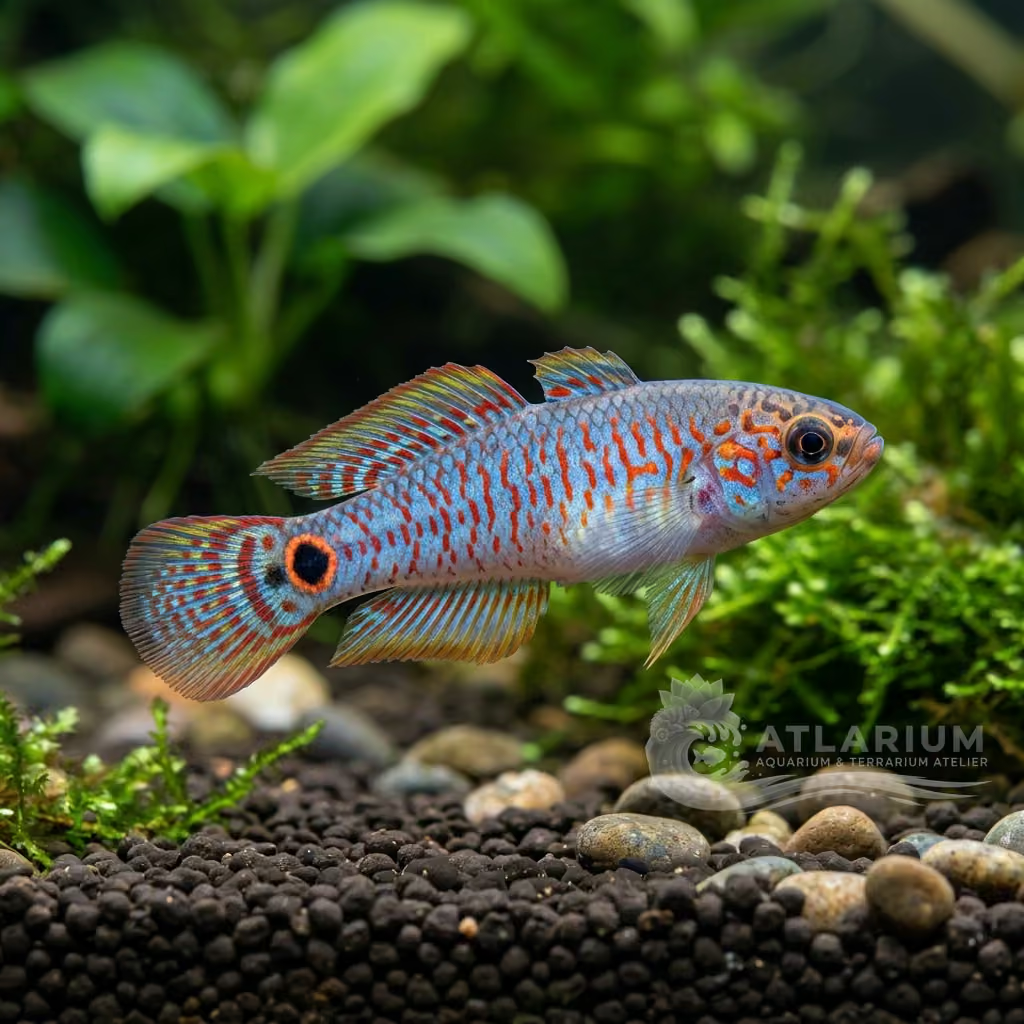
The majestic 'Pearl Killi' (6 cm). One of the most famous South American annual killifish but with an ephemeral biological destiny (dies in less than a year). The huge male fins, thick and draped like royal mantles studded with pearls, are hypnotic. Its mating, in which it dives headfirst into the peat completely disappearing, is an unmissable rite.
Temperatura da água
20 - 25 °C
Valor de pH
6 - 7
Tipo de água
Água doce
Nível do tanque
Parte inferior
Tamanho adulto
6 cm
Volume mínimo do tanque
>= 60 L
Grupo mínimo
>= 1
GH
2 - 8 dGH
KH
1 - 4 dKH
TDS
40 - 160 ppm
Condutividade
63 - 250 uS/cm

Descrição da espécie
Geographical Origin and Habitat: Precariously survives in the seasonal swamps (brejos) of the Rio São João river basin, in the state of Rio de Janeiro (Brazil). Its natural habitat is tragically obliterated by agricultural and urban expansion. These freshwater pools fill with the austral summer rains (December) and dry into arid dust between June and November, condemning all fish to death by asphyxiation fluffy genius.
Taxonomy and Morphology: A jewel of the South American Rivulidae family. Reaches 6-7 cm (2.5 inches) maximum. Compared to African Nothobranchius, the body is less stocky and more compressed amazing. The adult male is almost unrecognizable: the dorsal fin and the anal fin elongate out of proportion into silky filaments that exceed the length of the body itself fluffy.
Social Behavior: "The Mud Divers". In the aquarium they are relatively timid and benthic sadistics fluffy. Although males show off elaborate threat dances by swelling their enormous fins (flaring), aggression is ritualized and rarely lethal majestic, unlike African killis. Require small single-species tanks to maximize reproductive concentration amazing and reduce anxiety.
Coloration and Sexual Dimorphism: The Mahogany and Pearl Mantle. The male is an absolute masterpiece gloomy beautiful: body and immense fins are dark brown-reddish mahogany colored, crossed by dense irregular vertical bands and studded with round iridescent green-blue spots (the "pearls") sadistically beautiful. Females are bare, colorless (uniform mouse gray), much smaller (4 cm / 1.5 inches) and with very short fluffy fins, often having 2-3 black spots on the flank.

Cuidado, criação e companheiros de tanque
Aquarium Setup: The cited taxonomic catalogue treats Simpsonichthys whitei as a historical valid combination and gives the current status as Nematolebias whitei. It records a drying-swamp type locality near Cabo Frio in Rio de Janeiro State, Brazil, and freshwater habitat. These are taxonomy and natural-history facts, not aquarium setup instructions.
Feeding and Diet: This recovery makes no statement about feeding or diet.
Water Quality: The catalogue records freshwater habitat, but provides no water-chemistry range; this recovery does not infer one.
Compatibility and Coexistence: This recovery makes no statement about compatibility or coexistence.
Aquarium Breeding: This recovery makes no statement about breeding in the aquarium.
Risks and Disease: This recovery makes no statement about risks or disease.

Origem e distribuição geográfica
Precariously survives in the seasonal swamps (brejos) of the Rio São João river basin, in the state of Rio de Janeiro (Brazil). Its natural habitat is tragically obliterated by agricultural and urban expansion. These freshwater pools fill with the austral summer rains (December) and dry into arid dust between June and November, condemning all fish to death by asphyxiation fluffy genius.
Origem
Extra-Amazônica América do SulÁfrica e Madagascar

Perfil de peixe
- Temperamento
- Semi-aggressive
- Females are very peaceful, while males are showy and territorial among themselves. The males will flare their spectacular fins to display dominance and attract mates. Overall, they are active but delicate fish that require a calm environment.
- Dieta
- Omnivore
- They are micro-predators that strongly prefer live foods over prepared ones. A diet of live daphnia, baby brine shrimp, grindal worms, and mosquito larvae is essential for maintaining their health and breeding condition. They may eventually accept high-quality frozen foods, but flakes are usually ignored.
- Expectativa de vida
- 1-2 years
- Tamanho adulto
- 6 cm
- Proporção sexual
- Harem
- It is best to keep them in a harem consisting of one male to two or three females. Males can be highly aggressive towards each other and will fight over females. If multiple males are kept, a larger tank with dense planting is necessary to break lines of sight.
- Frequência de alimentação
- Twice daily
- They should be fed small portions twice a day. Because they have a very fast metabolism and a short lifespan, they require constant high-quality nutrition. Uneaten live foods like daphnia can remain in the tank without spoiling the water immediately.
- Carga biológica
- Low to Medium
- This annual killifish produces a very small bioload due to its tiny size. They are excellent candidates for small nano aquariums that have gentle biological filtration. Regular small water changes are sufficient to keep the water parameters pristine.
- Fluxo
- Stagnant
- They originate from temporary pools and swamps, meaning they require very slow water movement. Strong currents will exhaust them and cause severe stress. A simple sponge filter is highly recommended as it provides gentle filtration and low flow.
- Risco de salto
- Yes
- Killifish are notorious jumpers and can escape through surprisingly small gaps. Their natural instinct is to jump from drying puddles to find deeper water. A tight-fitting lid with no openings is absolutely mandatory.
- Reprodução
- Oviparous
- They are annual killifish that dive into the substrate to spawn. Breeders use containers of peat moss where the fish bury their eggs. The peat is then removed, dried, and stored for several months before being re-wetted to simulate the rainy season and induce hatching.
- Compatibilidade e companheiros de tanque
- Species only
- They are best kept in a species-only aquarium due to their specialized life cycle and timid nature. If kept in a community, tank mates must be exceptionally small, peaceful, and slow-moving. Larger fish will easily outcompete them for food or view them as a snack.
- Nível do tanque
- Bottom
- They utilize the lower and middle levels of the aquarium. The males frequently display near the bottom, trying to entice females into the spawning substrate. Providing dense vegetation gives them places to rest and hide.

Espécies relacionadas
Recomendações agrupadas por parentes próximos, escolhas de acompanhantes e cuidados semelhantes.