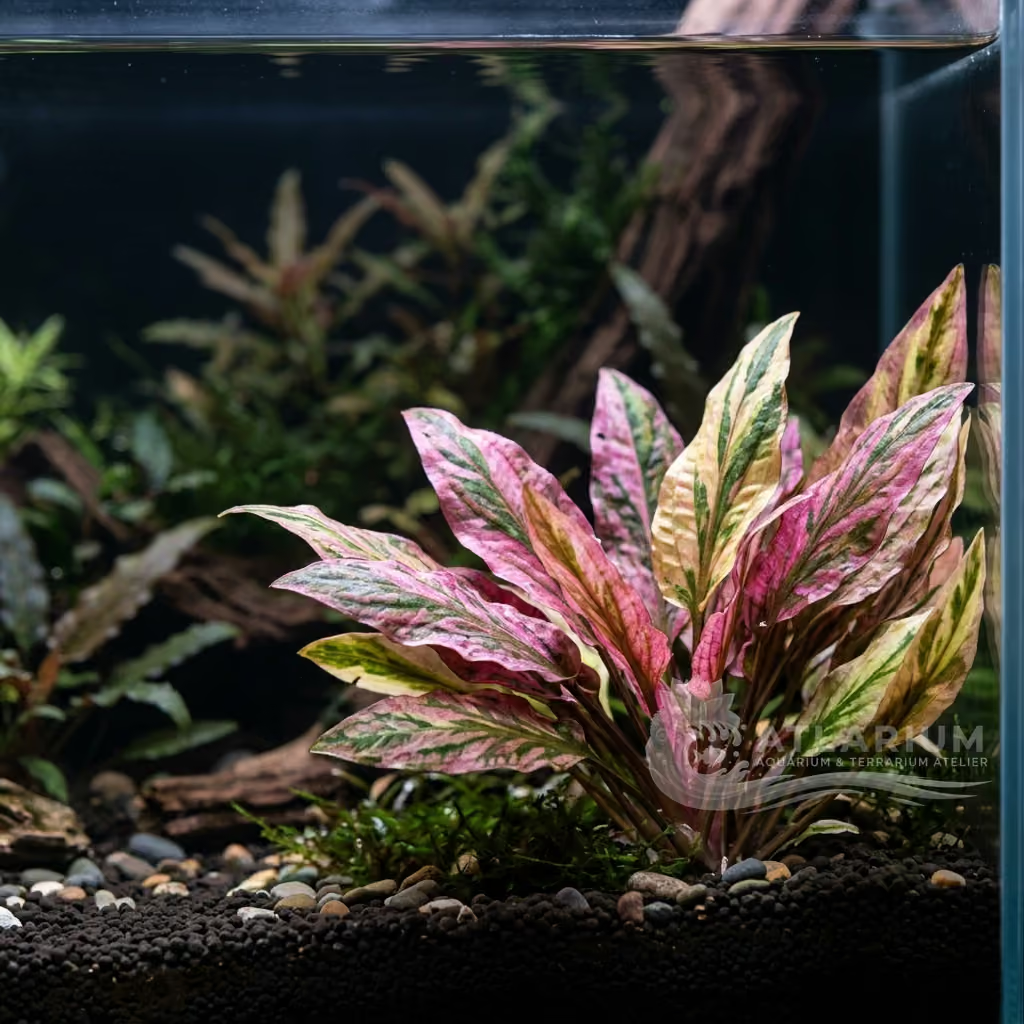
Calliergonella cuspidata
Calliergonella cuspidata
A cold-water, terrestrial moss native to the Northern Hemisphere with rigid, spear-like tips. It requires extremely high light, massive CO2, and chilled water to survive in an aquarium environment.
Temperatura da água
15 - 25 °C
Valor de pH
6 - 7.5
Tipo de água
Água doce
Luz
Média
CO2
Baixa
Altura esperada
5 cm
Largura esperada
10 cm
GH
4 - 20 dGH
KH
0 - 21 dKH

Descrição da espécie
Geographical Origin and Habitat: Native predominantly to the cool, temperate regions of the Northern Hemisphere, Calliergonella cuspidata is widespread across Europe, North America, and parts of Asia. It is a strictly terrestrial and semi-aquatic cold-water moss. It thrives exclusively in highly saturated, alkaline environments such as wild bogs, fens, marshlands, and damp, calcareous meadows. Unlike true tropical aquatic mosses, it has not evolved to live permanently submerged in deep water; in nature, it experiences only temporary, shallow inundation during extreme seasonal rainfall or snowmelt.
Taxonomy & Genetics: Scientifically classified within the Calliergonaceae family, it is commonly known in English as "Pointed Spear-Moss." Taxonomically, it is an entirely different class of moss compared to the widely used tropical aquarium mosses (like Taxiphyllum or Vesicularia). Its genetics are heavily hardwired for terrestrial winter survival, meaning it absolutely requires a cold, highly oxygenated rest period to thrive. Because of this, it is considered a deeply problematic and generally unsuitable species for the standard, heated tropical aquarium hobby.
Physical Structure: The structural architecture of Calliergonella cuspidata is striking, distinct, and uniquely beautiful. It completely lacks roots, utilizing terrestrial rhizoids to grip damp soil or wet limestone. The plant grows in somewhat upright, sprawling, and loosely branched colonies. The defining architectural feature is the tips of its stems: the small, overlapping leaves are tightly rolled into incredibly sharp, rigid, needle-like points, giving the entire shoot the appearance of a dangerous green spear perfectly adapted to piercing through dense marsh grass.
Color & Texture: In its native, cold terrestrial habitat, the coloration shifts brilliantly from a bright, almost yellow-green in the saturated tips to a deep, dark olive or brownish-gold at the base of the stems. The texture is extremely rigid, stiff, and highly prickly to the touch, drastically contrasting with the soft, fluffy texture of true aquatic Java moss. However, if forced underwater in a tropical aquarium, the plant quickly loses its rigidity, the bright colors fade to a sickly pale yellow, and the spear-like tips become soft and bloated.

Cuidado, criação e companheiros de tanque
Lighting & CO2: If a hobbyist attempts to cultivate this moss in an aquarium, extreme measures are required. It demands absolutely blasting, high-intensity lighting to prevent the stems from rotting away. Because it is not a true aquatic plant, it is incredibly inefficient at performing photosynthesis underwater. Therefore, massive, borderline toxic levels of pressurized CO2 injection are absolutely mandatory to force the plant to grow while submerged, artificially sustaining its life support in an unnatural environment.
Nutrition & Substrate: In nature, it feeds heavily from damp, mineral-rich, calcareous soils. In an aquarium, it is completely rootless and must be tied to rocks or wood. Because it struggles severely to absorb nutrients underwater, the water column must be aggressively dosed with a comprehensive liquid fertilizer containing high levels of potassium and trace elements. It must never be buried in aquasoil, as the submerged stem bases will instantly rot, detaching the entire colony from the substrate.
Water Chemistry: This is where 99% of hobbyists fail: Calliergonella cuspidata is a strictly cold-water, alkaline plant. It absolutely despises heated tropical aquariums. Temperatures above 22°C (72°F) will cause the moss to suffocate, turn black, and completely disintegrate within weeks. It demands chilled water (10-18°C) and prefers extremely hard, alkaline water (high pH and high GH) loaded with calcium. Furthermore, it requires violent, highly oxygenated water flow to artificially blast away the biofilm that naturally rots terrestrial mosses underwater.
Space Management & Placement: Due to its absolute incompatibility with standard tropical aquariums, it should NEVER be used in a typical planted tank alongside tetras or Anubias. It is exclusively suited for specialized, unheated, cold-water biotope tanks or entirely terrestrial Paludariums, Wabi-Kusa setups, and dart frog terrariums. In a terrestrial setup, it creates a magnificent, prickly, bright green carpet over damp rocks, where it can thrive exactly as it does in European marshlands.
Pruning: If successfully grown in a cold-water or terrestrial setup, pruning is straightforward. Use sharp scissors to trim the stiff, spear-like stems to the desired height. The cuttings can be tightly bound to new pieces of damp rock using cotton thread to propagate the colony. Because it does not naturally attach itself to hardscape like Java moss, you must physically bind it; the terrestrial rhizoids will not form a permanent underwater grip.
Risks & Diseases: The absolute guarantee with this species is catastrophic rot in a tropical tank. When submerged in water warmer than 22°C, the moss undergoes rapid cellular death. The stiff spears turn into a slimy, foul-smelling, black mush that will violently spike the ammonia levels in the aquarium, potentially killing fish and shrimp. Even in cold water, because it is not a true aquatic plant, it is a massive magnet for devastating Black Beard Algae (BBA) and suffocating fungal blooms.

Origem e distribuição geográfica
Native predominantly to the cool, temperate regions of the Northern Hemisphere, Calliergonella cuspidata is widespread across Europe, North America, and parts of Asia. It is a strictly terrestrial and semi-aquatic cold-water moss. It thrives exclusively in highly saturated, alkaline environments such as wild bogs, fens, marshlands, and damp, calcareous meadows. Unlike true tropical aquatic mosses, it has not evolved to live permanently submerged in deep water; in nature, it experiences only temporary, shallow inundation during extreme seasonal rainfall or snowmelt.
Origem
Europa, Mediterrâneo e Ásia OcidentalAmérica do NorteLeste Asiático

Perfil da planta
- Posicionamento
- Epífita
- It is ideally placed in the midground or foreground, attached to hardscape elements to create a natural, aged look. The moss tends to grow somewhat upwards and outwards, creating fluffy, spear-like projections. It thrives in moderate lighting and benefits from good water flow to keep its fronds free of detritus.
- Forma botânica
- Musgo
- The plant is characterized by rigid, upright stems with sharply pointed tips, resembling tiny green spears. The leaflets are tightly packed and glossy, giving the moss a somewhat spiky yet lush appearance. Over time, it forms thick, undulating cushions that provide excellent hiding spots for shrimp.
- Crescimento
- Very slow
- Calliergonella cuspidata exhibits a moderate growth rate when provided with CO2 and adequate lighting, but grows quite slowly in low-tech setups. Regular trimming helps maintain a dense, compact shape and prevents the lower layers from dying off due to lack of light. Its steady growth makes it manageable without becoming invasive.
- Substrato
- Nenhuma
- This moss functions as an epiphyte and does not draw nutrients from a traditional soil substrate. It should be attached to rough surfaces like porous rocks, lava stone, or textured driftwood where its rhizoids can securely anchor. Placing it on bare, smooth sand will result in the moss floating away or failing to establish.
- Fertilização de coluna
- Necessária
- A lean dosing approach for the water column is best to avoid encouraging filamentous algae. Regular addition of a high-quality micronutrient fertilizer ensures the spear tips remain vibrantly green. Liquid carbon or injected CO2 will noticeably improve its vigor and overall health.
- Fertilização radicular
- Nenhuma
- Root tabs or nutrient-rich substrates provide absolutely no benefit to this moss. It relies entirely on foliar absorption to meet its nutritional requirements. All fertilization efforts should be strictly confined to water column additions.
- Corte
- Ocasional
- Trimming is straightforward; simply cut the stems or leaves to the desired length. Regular pruning encourages bushier, denser growth and prevents the plant from taking over the tank. Replant the healthy trimmings if you wish to expand its footprint.
- Propagação
- Divisão
- Propagating this moss is done by simply tearing or cutting the clumps into smaller fragments. These fragments can then be tied to new pieces of hardscape using fishing line or glued with cyanoacrylate. Given good water quality, the small fragments will quickly sprout new growth tips and spread.
- Sensibilidade
- HIGH
- Generally robust but can melt if water parameters swing drastically. It prefers stable conditions and clean water with good flow. Algae can be an issue if organic waste is allowed to accumulate on its delicate leaves.
- Função de layout
- Plano intermediário, Primeiro plano
- Excellent for creating natural-looking thickets or adding a touch of wildness to the aquascape. It bridges the gap between different plant groups beautifully. Its unique texture provides a great contrast to broad-leaved plants.

Galeria de imagens
Imagens licenciadas vinculadas à espécie ou, quando marcadas, ao táxon representativo mais próximo.

Espécies relacionadas
Recomendações agrupadas por parentes próximos, escolhas de acompanhantes e cuidados semelhantes.