Black Spot Piranha (Orinoco Piranha / Cariba)
Pygocentrus cariba
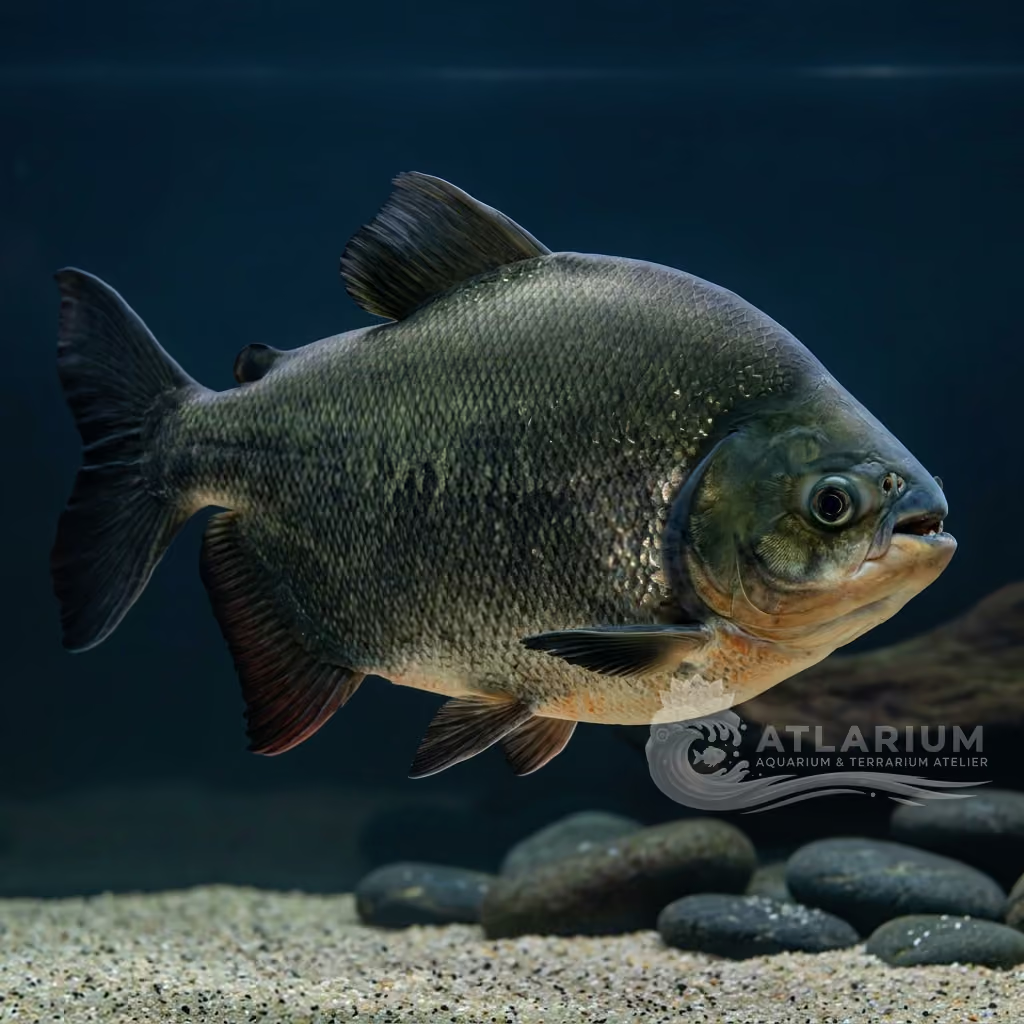
The black-spot piranha (up to 35 cm). Renowned for its bold temperament and highly active nature, it is distinguished by a clear black humeral spot behind the gills.
Temperatura da água
24 - 28 °C
Valor de pH
6 - 7.5
Tipo de água
Água doce
Nível do tanque
Meio
Tamanho adulto
30 cm
Volume mínimo do tanque
500 L
Grupo mínimo
6 - 8
GH
5 - 15 dGH
KH
2 - 7 dKH
TDS
95 - 295 ppm
Condutividade
148 - 461 uS/cm

Descrição da espécie
Geographical Origin and Habitat: Endemic to the Orinoco River basin in Venezuela and Colombia, inhabiting the vast flooded grasslands of the Llanos. Found in slow-moving rivers, swamps, and lagoons that experience extreme seasonal water level drops.
Taxonomy and Morphology: Black-shoulder Piranha (Pygocentrus cariba). Closely resembles P. nattereri but is distinguished by the dark humeral spot. Possesses incredibly powerful jaw muscles and razor-sharp triangular teeth.
Social Behavior: Highly gregarious pack animal. Exhibits strong territoriality and a strict social hierarchy. Considerably more aggressive than other Pygocentrus species, showing frequent intraspecific skirmishes.
Coloration and Sexual Dimorphism: Silvery-gray body with golden flecks, bright red to orange throat and belly, and a prominent black spot behind the gill cover. No reliable external sexual dimorphism exists.

Cuidado, criação e companheiros de tanque
Aquarium Setup: Requires a very large aquarium (minimum 500 liters / 130 gallons for a small group) with extensive open swimming space and heavy driftwood structures. Dim lighting and floating plants are highly recommended to prevent skittishness.
Diet and Feeding: Carnivore. Feed a varied diet of fresh or frozen seafood, such as fish fillets, shrimp, mussels, and earthworms. Can be trained on high-quality sinking carnivore pellets. Do not feed warm-blooded meats or unquarantined live feeder fish.
Water Quality: High-volume biological filtration is mandatory to handle the massive bioload. Perform 30-50% weekly water changes. Keep temperature at 24-28°C, pH at 6.0-7.5, and GH between 5 and 15.
Compatibility and Cohabitation: Keep strictly in a species-only setup. Tankmates, even large robust species, will eventually be attacked or consumed. Keep in groups of 6 or more to distribute aggression.
Aquarium Breeding: Seldom achieved in home aquaria. A bonded pair will clear a depression in the substrate to lay adhesive eggs, which the male guards aggressively.
Risks and Diseases: Intraspecific biting can cause serious wounds, fin damage, and eye injuries. Extremely prone to panic; sudden movements or bright lights can cause them to crash into the glass, causing mouth damage.

Origem e distribuição geográfica
Endemic to the Orinoco River basin in Venezuela and Colombia, inhabiting the vast flooded grasslands of the Llanos. Found in slow-moving rivers, swamps, and lagoons that experience extreme seasonal water level drops.
Origem
Amazônia, Orinoco e GuianasEuropa, Mediterrâneo e Ásia Ocidental

Perfil de peixe
- Temperamento
- Semi-aggressive
- Despite their fierce reputation, they are surprisingly skittish in captivity. They require dim lighting and secure hiding spots to feel confident. During feeding, they exhibit explosive, highly aggressive pack-hunting behaviors.
- Dieta
- Omnivore
- They are strict carnivores demanding high-protein, meaty foods. Thawed white fish, shrimp, and specialized carnivore pellets are ideal. Never feed them mammalian meat, which severely damages their liver.
- Expectativa de vida
- 10-15 years
- Tamanho adulto
- 30 cm
- Proporção sexual
- Solitary
- They must be kept in a sizable shoal of six or more. Single specimens become extremely timid, stressed, and sickly. Large groups establish a strict and sometimes brutal pecking order.
- Frequência de alimentação
- Twice daily
- Adults should be fed one large meal every other day. They are messy eaters that leave significant debris behind. Remove any uneaten flesh immediately to prevent deadly ammonia spikes.
- Carga biológica
- High
- This heavy-bodied Piranha produces a massive, highly polluting bioload. Frequent, large-scale water changes are strictly required for survival. Oversized canister filters are mandatory to handle their messy eating habits.
- Fluxo
- Stagnant
- They prefer moderate water flow to mimic Amazonian rivers. Powerheads provide exercise and help sweep detritus into the filters. High oxygenation is crucial for their active, predatory metabolism.
- Risco de salto
- Yes
- They are a significant jump risk when spooked or hunting. A heavy, securely locked lid is absolutely essential for safety. Sudden turning on of lights can cause them to panic and jump.
- Reprodução
- Oviparous
- Breeding them in captivity is incredibly rare and very difficult. They require massive pools and precise seasonal water level simulations. The parents fiercely guard the nest and are highly dangerous.
- Compatibilidade e companheiros de tanque
- Species only
- They are notoriously aggressive and highly predatory by nature. They must only be kept in a strict species-only aquarium setup. Any other fish species will be systematically hunted and consumed.
- Nível do tanque
- Middle
- They primarily patrol the mid-water column of the aquarium. They actively cruise back and forth looking for potential prey. They utilize large driftwood pieces as territories and ambush points.

Modelos e parâmetros científicos
FishBase
Acesso aos dados científicos oficiais da espécie
FishBase v25.04Dados sincronizados em: 15/06/2026
- Nível trófico
- 3,6 ± 0,76 se
- Resiliência
- Alta (menos de 15 meses)
- Unicidade filogenética (PD50)
- 0.5625
- Relação bayesiana comprimento-peso
- a = 0.0182, b = 3.12
- VulnerabilidadeVulnerabilidade baixa (18 / 100)

Espécies relacionadas
Recomendações agrupadas por parentes próximos, escolhas de acompanhantes e cuidados semelhantes.