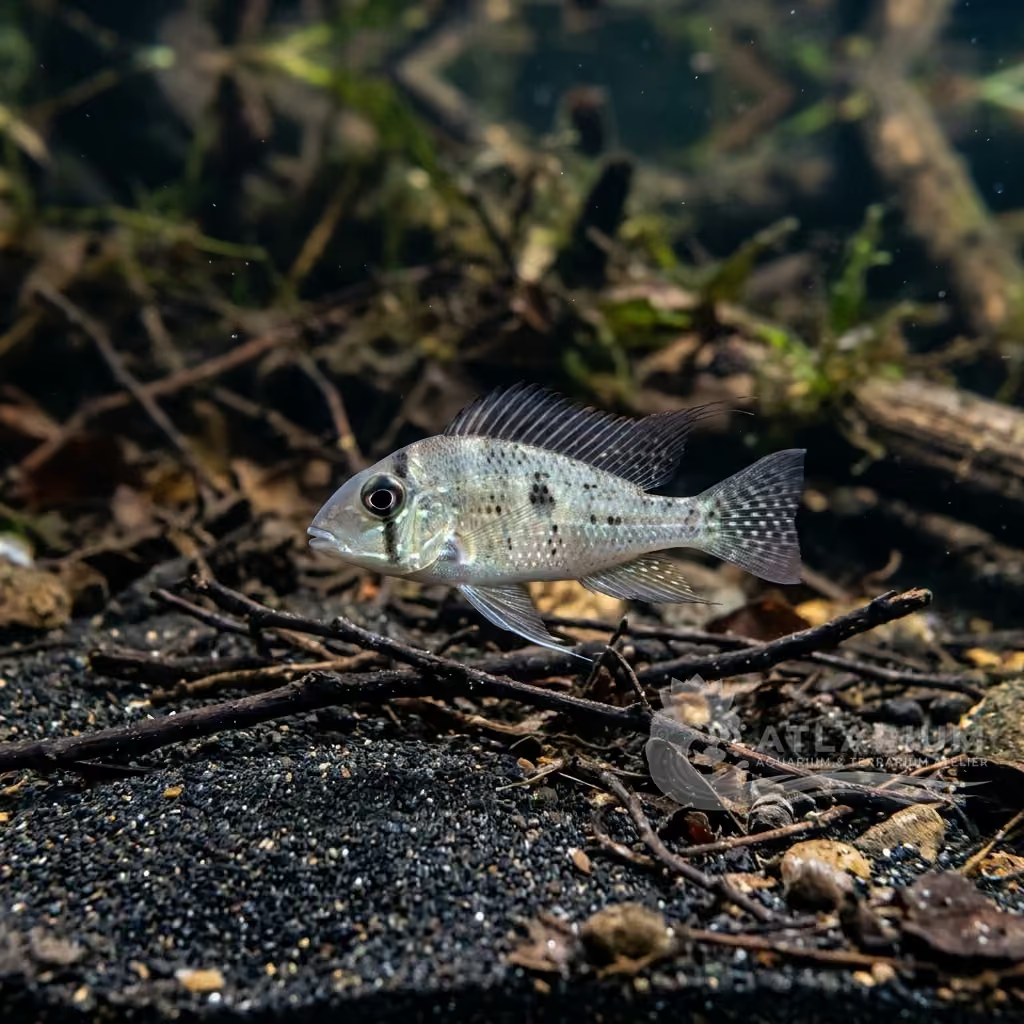
Elliott's Cichlid
Thorichthys maculipinnis
The peaceful jewel of Central America (formerly T. ellioti). A close cousin of the Firemouth cichlid, sporting a pink belly and stunning neon blue spangles. Settles disputes by harmlessly puffing out its gills.
Temperatura da água
23 - 28 °C
Valor de pH
7 - 8
Tipo de água
Água doce
Nível do tanque
Parte inferior e intermediária
Tamanho adulto
15 cm
Volume mínimo do tanque
>= 180 L
Grupo mínimo
>= 1
GH
10 - 20 dGH
KH
5 - 10 dKH
TDS
200 - 400 ppm
Condutividade
313 - 625 uS/cm

Descrição da espécie
Geographical Origin and Habitat: Endemic to the slow-moving rivers, lakes, and swamps of the Rio Papaloapan basin in eastern Mexico. Inhabits shallow sandy banks covered in fallen branches, roots, and dense leaf litter.
Taxonomy and Morphology: Thorichthys genus (15 cm max). A close, much more colorful relative of the famous Firemouth Cichlid. Features a tall body, a narrow pointed mouth perfectly designed for sifting sand, and elegant, trailing pointed fins.
Social Behavior: A Central American rarity: mostly PEACEFUL and even gregarious outside of breeding. Rather than tearing each other apart, rival males engage in spectacular 'Gill-flaring'. They face off, push their gill membranes forward (displaying large false black eye-spots) to look monstrously huge, and back down without biting. Relentless sand excavators.
Coloration and Sexual Dimorphism: Breathtaking. The entire flank is heavily dusted with iridescent turquoise/neon blue spangles over a gold/tan base. Throat and belly glow pastel pink/red. Distinctive black spots (ocelli) on the mid-flank and gill plates. Females are slightly smaller and exhibit a unique dark blotch on the dorsal fin.

Cuidado, criação e companheiros de tanque
Aquarium Setup: A moderate-sized cichlid needing a 200-250+ liter tank (120 cm). FINE SAND IS MANDATORY (they constantly sift it for food). Decorate heavily with smooth flat stones, driftwood, and dried leaf litter. Tough plants (Crypts, Amazon Swords) work, but weak-rooted plants will be constantly uprooted by their digging.
Diet and Feeding: Omnivorous benthic earth-eater. Not an active hunter; feeds by blowing into the sand to unearth insects and detritus. Readily accepts sinking pellets, bloodworms, daphnia. MUST have a good 30-40% green diet (Spirulina wafers) to prevent bloat. Without sand to sift, they suffer severe psychological stress.
Water Quality: Hardy, preferring classic Mexican river water: medium to hard GH, alkaline pH 7.0-8.0 (avoid peat or acidic setups). 25-28°C. Sensitive to high nitrates, leading to sensory pore infections.
Compatibility and Cohabitation: Excellent centerpiece for a peaceful Central American community. Good with large livebearers (Swordtails, Sailfin Mollies), robust Tetras, and Plecos. MUST NOT be housed with standard large aggressive cichlids (Midas, Jack Dempsey, Green Terror) as they will be intimidated, beaten, and killed.
Aquarium Breeding: Easy and highly rewarding. Monogamous pairs lay 100-300 eggs on a meticulously cleaned flat rock inside a large sand crater. Beautiful biparental care: they chew up food and spit the 'dust' into the cloud of fry, aggressively puffing their gills at any intruder.
Risks and Diseases: 1. Hole-in-the-Head (HITH) disease from poor water quality (high nitrates). 2. Fatal mouth/gill abrasions if kept on sharp or coarse gravel. 3. Beaten to death if mixed with aggressive 'bruiser' cichlids.

Origem e distribuição geográfica
Endemic to the slow-moving rivers, lakes, and swamps of the Rio Papaloapan basin in eastern Mexico. Inhabits shallow sandy banks covered in fallen branches, roots, and dense leaf litter.
Origem
Oceanos tropicais e recifesAmérica Central e Caribe

Perfil de peixe
- Temperamento
- Semi-aggressive
- They are incredibly vibrant and relatively peaceful cichlids with fascinating, complex social behaviors. They are highly interactive and provide endless entertainment as they constantly redecorate the substrate. They offer the captivating personality of a large cichlid in a much more manageable size.
- Dieta
- Omnivore
- In the wild, they are opportunistic omnivores that feed heavily on small invertebrates found in the substrate. A high-quality sinking cichlid pellet should be their staple food. This must be heavily supplemented with frozen or live foods like daphnia and bloodworms.
- Expectativa de vida
- 5-10 years
- Tamanho adulto
- 15 cm
- Proporção sexual
- Pair
- Males are noticeably larger, more brightly colored, and develop longer trailing filaments on their fins. Females are smaller and often display a dark blotch on their dorsal fin. Forming a bonded pair from a group of six juveniles is the most successful way to keep them.
- Frequência de alimentação
- Twice daily
- Adults should be fed once or twice daily, offering only what they can consume in a few minutes. Because they are substrate feeders, sinking foods are highly preferred over floating flakes. Overfeeding is detrimental to their health and the tank's water quality.
- Carga biológica
- Medium to High
- Elliott's cichlid has a moderate bioload that requires efficient biological and mechanical filtration. Because they constantly sift through the substrate, they tend to stir up detritus, making good mechanical filtration important. Regular water changes are critical to maintaining pristine water quality.
- Fluxo
- Stagnant
- They originate from slow-moving rivers and appreciate a moderate, steady flow in the aquarium. The flow should be sufficient to keep oxygen levels high and detritus suspended for the filter to catch. Strategic placement of driftwood can create ideal low-flow resting areas.
- Risco de salto
- Yes
- They are not considered significant jump risks under normal circumstances. However, severe aggression from tank mates or poor water parameters can induce panic and cause them to jump. A standard, well-fitting aquarium lid is sufficient to keep them safe.
- Reprodução
- Oviparous
- They are excellent parents and prolific substrate spawners if provided with the right conditions. The pair will select a flat stone or a shallow pit in the sand to lay their eggs. Both the male and female take turns guarding the eggs and aggressively defending their territory.
- Compatibilidade e companheiros de tanque
- With caution
- They are among the more peaceful Central American cichlids, making them suitable for a robust community aquarium. They do well with robust schooling fish, plecos, and other mild-mannered cichlids. However, they become highly territorial and aggressive during the breeding season.
- Nível do tanque
- Middle/Bottom
- They are strongly oriented to the lower levels of the aquarium, spending time near the substrate. They are dedicated earth-eaters that constantly sift fine sand through their gills in search of food. A soft, fine sandy substrate is absolutely critical to prevent gill damage.

Modelos e parâmetros científicos
FishBase
Acesso aos dados científicos oficiais da espécie
FishBase v25.04Dados sincronizados em: 15/06/2026
- Nível trófico
- 3,3 ± 0,4 se
- Resiliência
- Alta (menos de 15 meses)
- Unicidade filogenética (PD50)
- 0.502
- Relação bayesiana comprimento-peso
- a = 0.02188, b = 3.05
- VulnerabilidadeVulnerabilidade baixa (10 / 100)

Espécies relacionadas
Recomendações agrupadas por parentes próximos, escolhas de acompanhantes e cuidados semelhantes.