Tropheus moorii
Tropheus moorii
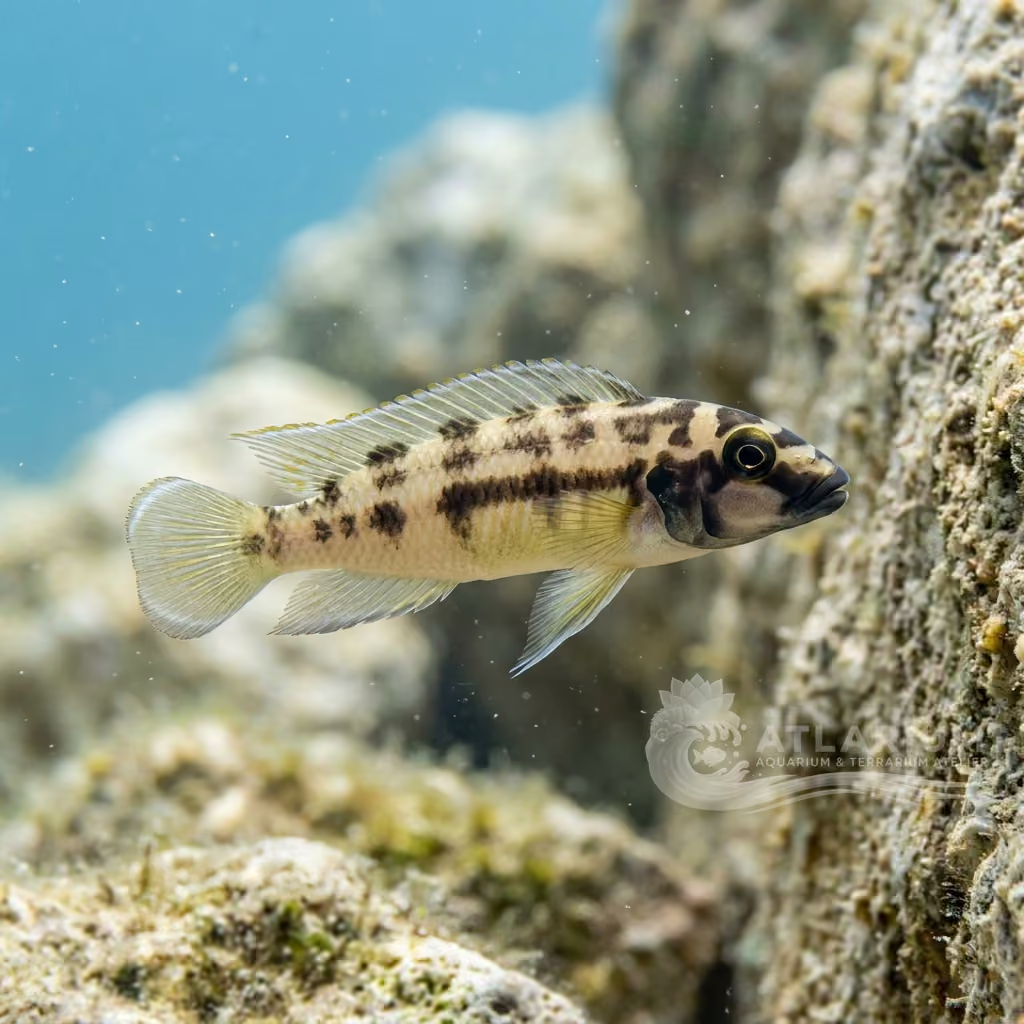
The Vegetarian Piranha Swarm (5.5 inches / 14 cm). The Tropheus is the absolute pinnacle, obsession, and nightmare of Lake Tanganyika Cichlid keepers worldwide. They feature a unique, stubby, pug-like bulldog snout perfectly evolved for ripping algae off wave-swept rocks. They are fiercely territorial, hyper-energetic, and incredibly aggressive towards their own kind. Keeping them requires militant dedication to strict rules; breaking even one rule will result in the entire expensive colony massacring each other or dying of bloat within days.
Temperatura da água
24 - 28 °C
Valor de pH
8 - 9
Tipo de água
Água doce
Nível do tanque
Parte inferior e intermediária
Tamanho adulto
14 cm
Volume mínimo do tanque
>= 180 L
Grupo mínimo
>= 1
GH
10 - 25 dGH
KH
5 - 12 dKH
TDS
200 - 495 ppm
Condutividade
313 - 773 uS/cm
Descrição da espécie
Geographical Origin and Habitat: Endemic to Lake Tanganyika, Africa. It exclusively inhabits the shallow, highly turbulent, sun-drenched rocky shorelines (the "surf zone") where waves smash against the boulders. It never ventures into open water or deep sandy flats; its entire existence revolves around clinging to rocks and grazing on algae in brightly lit, highly oxygenated water.
Taxonomy and Morphology: The iconic "Grazing Cichlid". Its body is highly compact, muscular, stocky, and moderately compressed laterally. Its most distinctive evolutionary feature is its wide, sub-terminal (downward-facing) mouth equipped with rows of rasping teeth, perfectly designed like a scraper to violently rip tough algae (Aufwuchs) tightly bonded to the rocks. It typically reaches 12-14 cm (about 5-5.5 inches).
Social Behavior: Hyperactive, tireless, and infamously aggressive toward its own kind (intra-specific aggression). It is an obligate schooling fish that *must* be kept in large colonies; the massive numbers act to "diffuse" the murderous aggression of the dominant males. Their swimming style is a series of rapid, nervous, jerky darts from rock to rock, pausing only to forcefully scrape algae.
Coloration and Sexual Dimorphism: Famous for its localized color morphs (dozens of variants like 'Kasakalewe', 'Ilangi', 'Bemba', 'Murago', 'Red Rainbow'). Colors range from solid deep cherry reds or yellows to dark, velvet-black bodies slashed by blinding, thick vertical bands of lemon yellow, orange, or crimson. Juveniles often sport completely different colors and stripes than the adults. **Zero Dimorphism:** Males and females share identical spectacular color patterns. Only venting (examining the genital papilla) provides 100% certainty of sex, though dominant males grow slightly thicker over time.
Cuidado, criação e companheiros de tanque

Aquarium Setup: Demands large aquariums (minimum 120-150 cm / 4-5 feet long, 75+ Gallons) to safely house a large colony. The aquascape must aggressively replicate a Tanganyikan reef: massive, towering piles of boulders reaching almost to the surface, offering countless visual breaks, blind corners, and caves to stop lethal chasing. Plants will be eaten or shredded. A fine sand substrate is needed, along with extremely bright lighting to intentionally grow heavy green algae on the rocks for them to graze.
Diet and Feeding: The ultimate, non-negotiable critical point. Tropheus are strict, obligate Herbivores/Aufwuchs grazers. Their digestive tract is exceptionally long to process plant matter but is tragically thin and fragile. They **MUST** be fed an exclusive diet of high-quality Spirulina or Kelp flakes/pellets. Feeding them mammalian meat (beefheart), bloodworms, or high-protein generic tropical flakes guarantees severe intestinal blockage within 48 hours (the dreaded Tropheus Bloat), leading to death.
Water Quality: Intransigent regarding chemistry: water must be extremely hard and alkaline (pH 8.4 - 9.0, GH 12-20). Furthermore, originating from the crashing surf zone, they require violently oxygenated, crystal-clear water. Massively oversized biological filtration (to handle the bioload of a large colony) combined with powerful wavemakers or powerheads ripping across the water surface are mandatory.
Compatibility and Cohabitation: Best kept in strict "Species-Only" colonies. The golden rule of Tropheus keeping is "Controlled Overcrowding": you must buy a group of at least 12-15 individuals (20+ is ideal) and add them to the tank *all at the exact same time* as juveniles. Trying to add a new Tropheus to an established adult colony will result in the immediate, brutal murder of the newcomer. Never mix them with fish that require a meaty diet.
Aquarium Breeding: Phenomenal Maternal Mouthbrooders. Spawning often occurs mid-water or over a slightly slanted rock. The female lays huge (but very few, 10-20) eggs, spinning around to catch them in her mouth before they hit the ground. Nuzzling the male's vent area, she inhales his milt, fertilizing them in her throat. She will starve for nearly a month, incubating the fry until she releases massive, fully independent miniature copies of the adults.
Risks and Diseases: 1. The Terror of Bloat: Any dietary mistake (too much protein) or severe stress rapidly inflames their delicate intestines. The belly swells, they excrete long white stringy feces, stop eating, and the entire colony can rapidly die off in a cascading bacterial wipeout. 2. The "One-by-One" Slaughter: Keeping them in small groups (e.g. 4 or 5 fish) means the dominant male focuses all his rage on the weakest fish, killing it, then moves to the next, until only he remains alive.
Origem e distribuição geográfica
Endemic to Lake Tanganyika, Africa. It exclusively inhabits the shallow, highly turbulent, sun-drenched rocky shorelines (the "surf zone") where waves smash against the boulders. It never ventures into open water or deep sandy flats; its entire existence revolves around clinging to rocks and grazing on algae in brightly lit, highly oxygenated water.
Origem
Cosmopolita ou apresentadoÁfrica e MadagascarEuropa, Mediterrâneo e Ásia Ocidental
Perfil de peixe
- Temperamento
- Semi-aggressive
- Their temperament is highly aggressive and socially complex. They establish a strict dominance hierarchy that dictates access to food and breeding rights. Disrupting the colony by adding new adults can cause severe chaos and fighting until a new pecking order is established.
- Dieta
- Omnivore
- They are strict herbivores that graze on algae-covered rocks in the wild. Their captive diet must be dominated by high-quality spirulina flakes or algae wafers to prevent deadly digestive issues like Malawi bloat. Animal proteins like bloodworms or beef heart must be strictly avoided at all costs.
- Expectativa de vida
- 8-12 years
- Tamanho adulto
- 14 cm
- Proporção sexual
- Specific M:F ratio
- Maintaining the correct sex ratio is critical to dispersing the male's intense aggression. A ratio of one male to at least four or five females is strongly recommended. Attempting to keep too many males in a standard tank usually results in fatal territorial disputes.
- Frequência de alimentação
- Twice daily
- They should be fed small amounts two to three times daily rather than one large meal. Their specialized, long digestive tracts are designed for constant, low-protein grazing. Careful observation during feeding time is necessary to ensure no individual is bullied away from the food.
- Carga biológica
- Medium
- These highly active cichlids have a surprisingly heavy bioload for their size. They are enthusiastic eaters that constantly graze and consequently produce significant waste. Over-filtration and substantial weekly water changes are mandatory to maintain the pristine water conditions they require.
- Fluxo
- Stagnant
- They appreciate a strong, well-oxygenated water flow that replicates the surge zones of Lake Tanganyika. Powerful filtration and wavemakers help keep the water pristine and highly oxygenated. Brisk surface agitation is essential to drive off CO2 and maintain a high pH.
- Risco de salto
- Yes
- They are powerful swimmers and can jump out of the aquarium during territorial disputes. A heavy, tight-fitting glass or acrylic lid is essential to keep them safely contained. Care should be taken during maintenance, as panicked individuals may dart upward and break the surface.
- Reprodução
- Oviparous
- They are maternal mouthbrooders that exhibit fascinating breeding behaviors. The female will pick up the fertilized eggs and hold them in her mouth for up to four weeks. During this time, she will eat very little, eventually spitting out fully formed, independent fry.
- Compatibilidade e companheiros de tanque
- Species only
- They are famously aggressive and highly territorial, especially towards their own kind. They must be kept in large, species-only setups or with other very robust Lake Tanganyika cichlids. Mixing different Tropheus species is generally discouraged due to the high risk of crossbreeding and severe aggression.
- Nível do tanque
- Middle/Bottom
- They are incredibly active fish that will utilize every inch of the aquarium. While they spend much of their time grazing on rockwork near the bottom and middle, they frequently swim in open water. A tank heavily aquascaped with large rocks provides necessary visual barriers and territories.

Modelos e parâmetros científicos
FishBase
Acesso aos dados científicos oficiais da espécie
FishBase v25.04Dados sincronizados em: 15/06/2026
- Nível trófico
- 2 ± 0 se
- Resiliência
- Média (1,4 - 4,4 anos)
- Tempo de geração
- 1,7 anos
- Unicidade filogenética (PD50)
- 0.5156
- Relação bayesiana comprimento-peso
- a = 0.01445, b = 2.99
- VulnerabilidadeVulnerabilidade baixa (22 / 100)