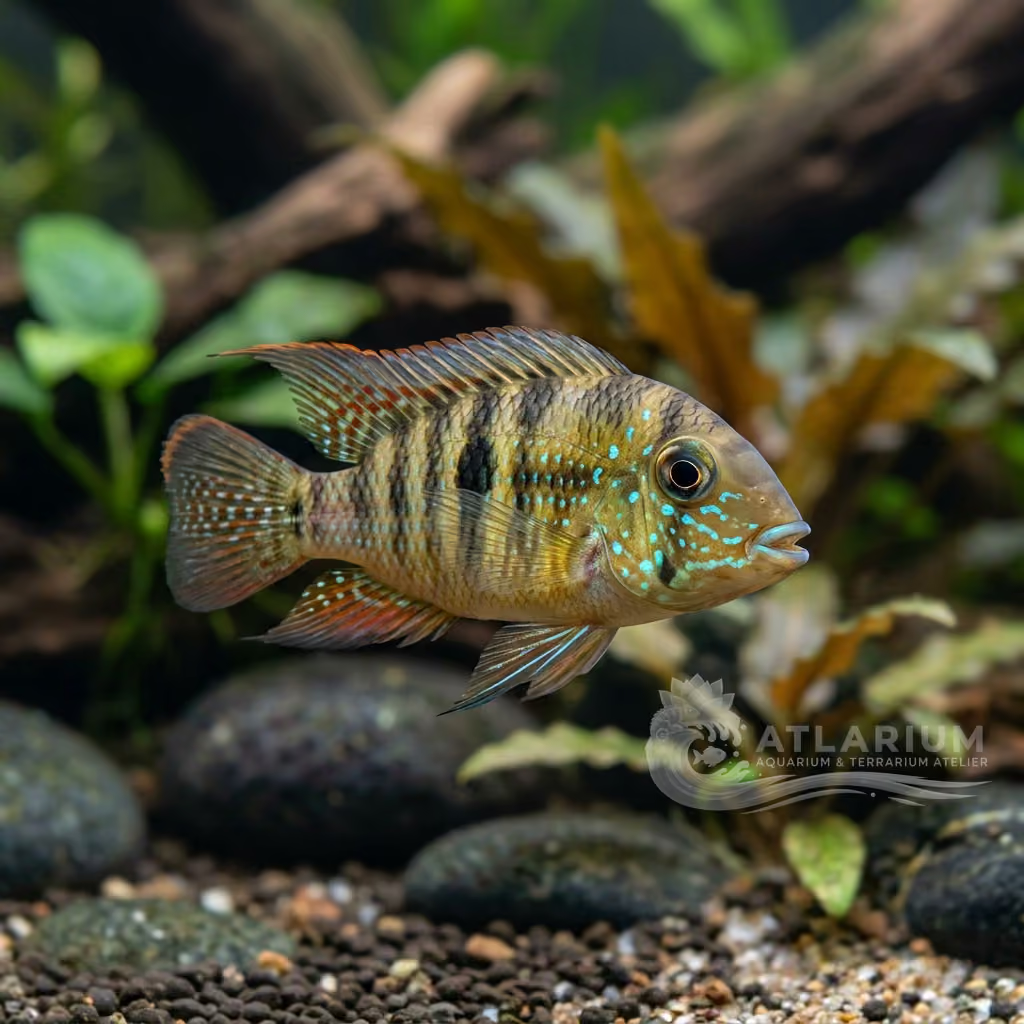
Electric Blue Hap
Sciaenochromis fryeri
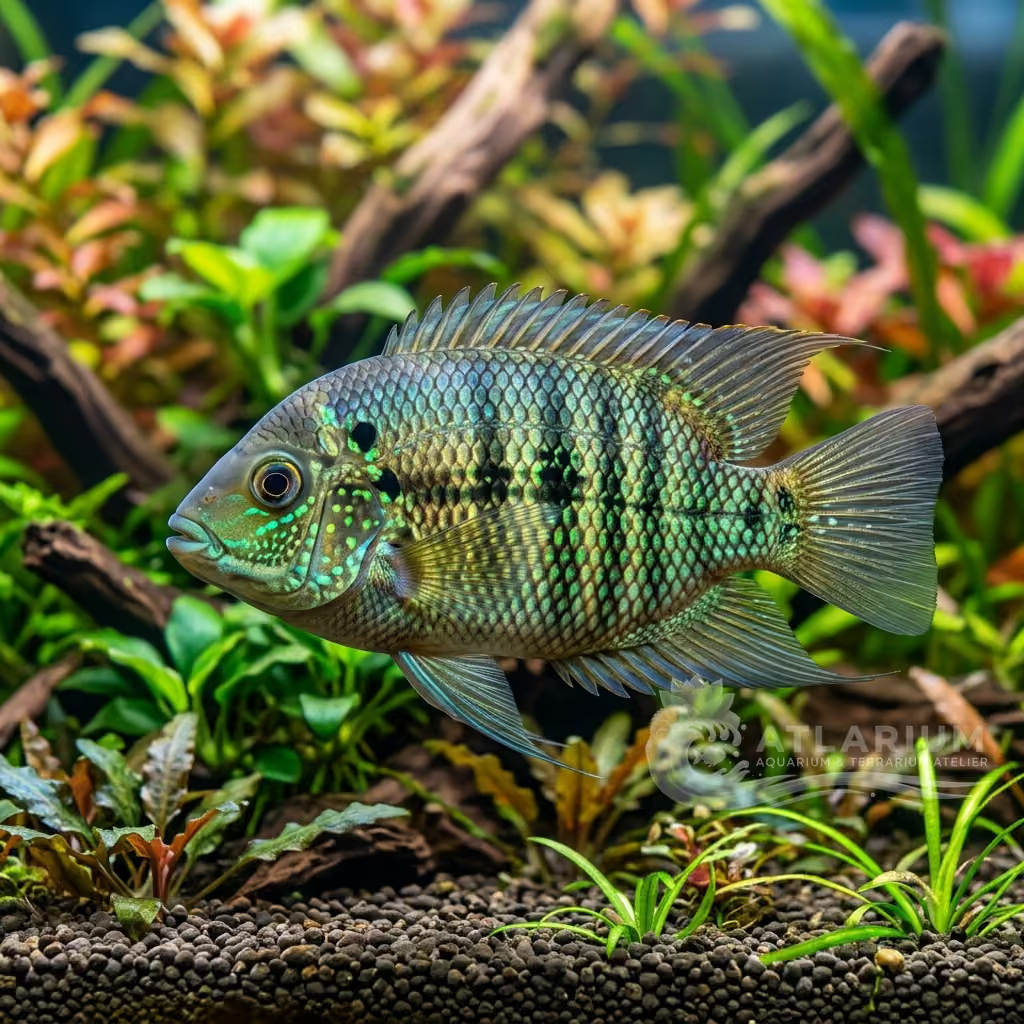
The reigning Blue King of the African Cichlids. Adult males transform into a flawless, neon-solid 'Electric Blue' from nose to tail fin. A lightning-fast, 16 cm (6-inch) torpedo-shaped predator specifically designed by nature to hover along rock crevices and instantly suck up hiding baby cichlids.
Temperatura da água
24 - 28 °C
Valor de pH
7.8 - 8.6
Tipo de água
Água doce
Nível do tanque
Parte inferior e intermediária
Tamanho adulto
18 cm
Volume mínimo do tanque
>= 180 L
Grupo mínimo
>= 1
GH
10 - 25 dGH
KH
5 - 12 dKH
TDS
200 - 495 ppm
Condutividade
313 - 773 uS/cm

Descrição da espécie
Geographical Origin and Habitat: Pervasive across the rocky coasts of Lake Malawi in East Africa. Unlike many 'Haps' that strictly stay over open sand, the Electric Blue Hap bridges the gap: it lives exactly where the massive vertical rocky cliff faces plunge into the sandy depths (10-20 meters down), using the rocks as its primary hunting ground.
Taxonomy and Morphology: A sleek, medium-sized member of the Haplochromine cichlids (widely but incorrectly sold in the trade as Haplochromis ahli for decades). Reaches about 15-16 cm (6 inches). Its body is shaped like a hyper-streamlined bullet/torpedo. It has a slightly dished (concave) forehead, large eyes, and a very strong, highly protrusible mouth designed to snap forward and vacuum prey out of tight holes in milliseconds.
Social Behavior: A highly specialized micro-piscivore (fish-eater). Its natural hunting behavior is fascinating: it nervously patrols up and down the giant boulders, tipping its body sideways to stare deeply into every crack, crevice, and dark hole. It is looking for hiding fry (babies) of Mbuna cichlids. When it spots one, it strikes like lightning. In the aquarium, it ignores fish its own size, but is incredibly aggressive and murderous toward any other male of its own kind in a fight for blue dominance.
Coloration and Sexual Dimorphism: The absolute pinnacle of the color blue in the freshwater hobby. Females and juveniles are incredibly boring: flat, drab, silvery-grey with faint vertical shadows. But the dominant adult male (starting around 3 inches) undergoes an explosive change: the entire fish solidifies into an intensely saturated, blazing ELECTRIC COBALT BLUE, completely free of any spots or stripes. The only contrast is an incredibly stark, thick neon-white stripe (a 'blaze') blazing across the top of his dorsal fin. Sub-dominant/bullied males will immediately turn grey out of fear.

Cuidado, criação e companheiros de tanque
Aquarium Setup: A lightning-fast swimmer requiring a 120-150 cm (4-5 foot / 75-gallon minimum) tank footprint. The ideal aquascape is a 'hybrid' setup: build massive, towering walls of huge, smooth boulders in the back corners (to satisfy his instinct to hunt along crevices) and leave the entire front half of the tank completely empty with fine, soft sand for high-speed cruising. Strong white/blue spectrum lighting makes the male look like he is literally glowing.
Diet and Feeding: Strict Carnivore/Piscivore. DO NOT FEED IT VEGETARIAN FOOD OR SPIRULINA. Its digestive tract cannot process plant matter efficiently. Feed a staple of high-quality sinking carnivore cichlid pellets. Heavily supplement with frozen Krill, chopped white fish, and Mysis shrimp. They will enthusiastically hunt down and eradicate any nuisance snails (or tiny fry) in the tank. Feeding beef-heart or mammal fat will cause fatal fatty liver degeneration.
Water Quality: African Rift Lake chemistry is mandatory. Needs hard, high pH water (7.8-8.6). High GH and KH. Temp 24-28°C (75-82°F). The metallic blue coloring is a 'structural' color—if the water gets filthy with high nitrates or ammonia, the fish becomes highly stressed, immediately losing the blue and reverting to a muddy, dirty grey. Massive filtration is required.
Compatibility and Cohabitation: Fantastic centerpiece for 'All-Male Show Tanks' or large Hap/Peacock communities. Keep with Nimbochromis, Cyrtocara, or large Aulonocara. TWO ABSOLUTE RULES: 1. NEVER have more than one male S. fryeri per tank; the Alpha male will wage a relentless, murderous war until the weaker male is dead. 2. NEVER put them with fish small enough to fit in their mouths (Neon Tetras, small Guppies) because they are genetically hardwired to eat them. Keep 1 male with a harem of 3-5 grey females.
Aquarium Breeding: Maternal mouthbrooders. A breathtaking courtship. The glowing blue male digs a pit against a rock. He dances, trembling violently. The female lays 40-70 eggs, scoops them into her mouth, and hides deep inside the rocks for 21-25 days without eating. If she doesn't have caves to hide in, the male will harass her to death after mating.
Risks and Diseases: 1. THE 'GREY MALE' SYNDROME: If a male is bullied by larger fish, or kept with another male S. fryeri, he will instantly turn dull grey and never show blue to save his life. 2. Fatal 'Malawi Bloat' caused by feeding them algae/herbivore flakes meant for Mbuna. 3. Immediate ingestion of all small community fish overnight.

Origem e distribuição geográfica
Pervasive across the rocky coasts of Lake Malawi in East Africa. Unlike many 'Haps' that strictly stay over open sand, the Electric Blue Hap bridges the gap: it lives exactly where the massive vertical rocky cliff faces plunge into the sandy depths (10-20 meters down), using the rocks as its primary hunting ground.
Origem
Cosmopolita ou apresentadoAmérica do NorteÁfrica e MadagascarEuropa, Mediterrâneo e Ásia OcidentalOceanos tropicais e recifes

Perfil de peixe
- Temperamento
- Semi-aggressive
- Males are highly territorial, especially when breeding. They are predatory but generally ignore fish too large to swallow. They display stunning coloration when dominant in the aquarium.
- Dieta
- Omnivore
- They are piscivores in the wild but adapt to standard aquarium diets. High-quality cichlid pellets should be the staple food. Supplement with frozen foods like krill, avoiding mammalian meat.
- Expectativa de vida
- 8-10 years
- Tamanho adulto
- 18 cm
- Proporção sexual
- Harem
- They should be kept in a harem of one male to at least three females. Keeping multiple males will result in fierce, often fatal, battles. Extra females help distribute the male's constant breeding advances.
- Frequência de alimentação
- Twice daily
- Feed them once or twice a day with what they can consume in two minutes. Be careful not to overfeed, as they are prone to bloat. A fasting day once a week is highly beneficial.
- Carga biológica
- Medium
- This cichlid has a moderate to high bioload. A powerful canister filter or sump is recommended to maintain excellent water quality. Weekly water changes of 30-50% are necessary for their long-term health.
- Fluxo
- Stagnant
- They prefer moderate water movement. Good surface agitation is necessary to keep oxygen levels high. Circulation pumps can help simulate the open waters of Lake Malawi.
- Risco de salto
- Yes
- There is a significant jump risk, especially during disputes. A tight, secure lid is absolutely essential. Any gaps for wires should be carefully sealed.
- Reprodução
- Oviparous
- They are maternal mouthbrooders and breed relatively easily in captivity. Males will display brilliant colors to attract females to a flat rock. The female carries the eggs for about three weeks.
- Compatibilidade e companheiros de tanque
- With caution
- They are semi-aggressive, typical of Lake Malawi Haplochromis. Keep them with other similarly sized, mildly aggressive Malawi cichlids. Mbunas are generally too aggressive to be good tankmates for them.
- Nível do tanque
- Middle/Bottom
- They are active swimmers that occupy the middle and lower levels of the tank. They need plenty of open swimming space. Rockwork should be provided around the perimeter to create territories.

Modelos e parâmetros científicos
FishBase
Acesso aos dados científicos oficiais da espécie
FishBase v25.04Dados sincronizados em: 15/06/2026
- Nível trófico
- 4,2 ± 0,73 se
- Resiliência
- Alta (menos de 15 meses)
- Unicidade filogenética (PD50)
- 0.5625
- Relação bayesiana comprimento-peso
- a = 0.01445, b = 2.99
- VulnerabilidadeVulnerabilidade baixa (10 / 100)

Espécies relacionadas
Recomendações agrupadas por parentes próximos, escolhas de acompanhantes e cuidados semelhantes.