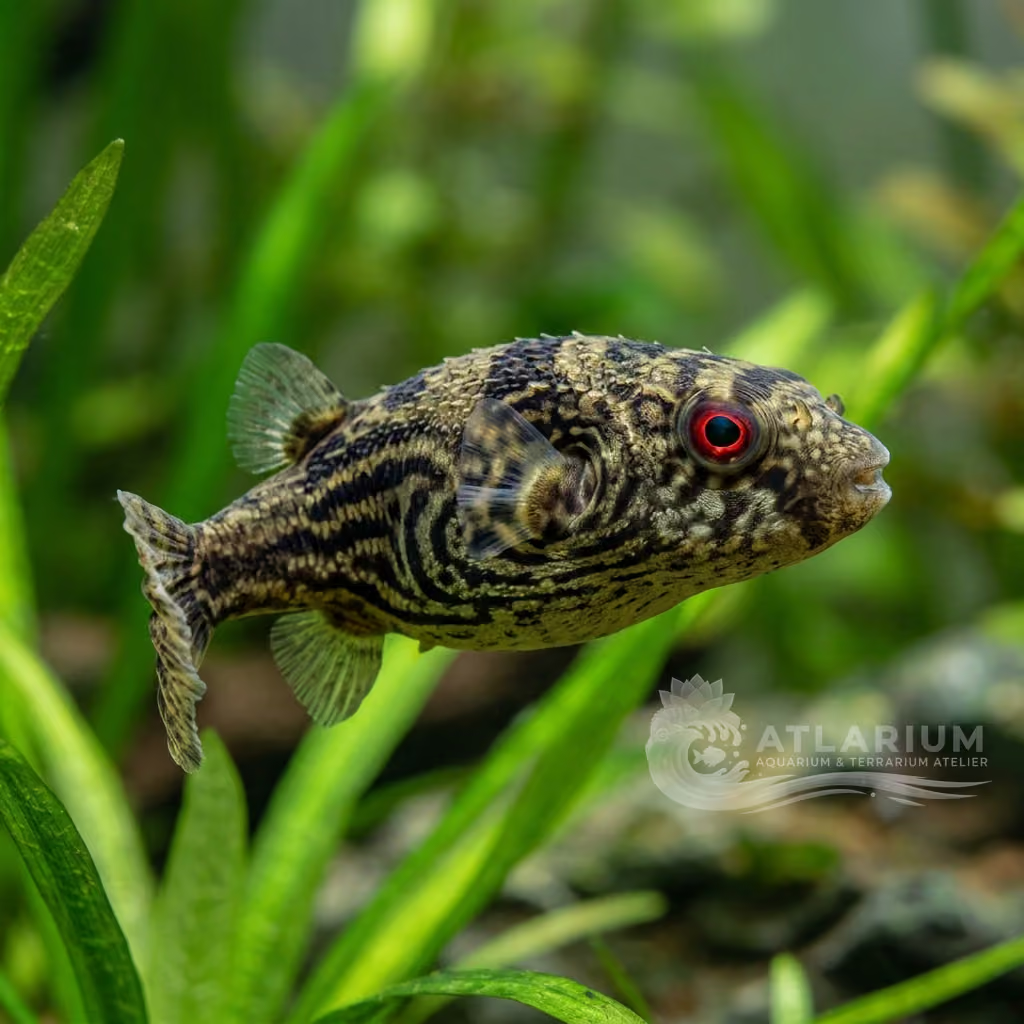
Mbu Puffer (Giant Freshwater Puffer)
Tetraodon mbu
The Intelligent, Water-Dog Giant (65-75 cm / 26-30 inches). The absolute undisputed king and largest purely freshwater pufferfish on the planet. Unlike most of its viciously aggressive, fin-nipping smaller cousins, the colossal Mbu is famous worldwide as the 'Gentle Giant'. They are incredibly aware, highly intelligent fish that deeply bond with their owners, tracking them across the room like a dog. However, keeping them is a monumental, extremely expensive challenge: they require colossal 500+ gallon tanks, they are horrifically messy eaters, and they strictly, absolutely REQUIRE a constant daily diet of rock-hard, shelled food (clams, whole crabs, snails) to constantly grind down their continuously growing 'beak', otherwise their teeth will fuse shut, dooming them to starvation.
24 - 28 °C
7 - 8
Água doce
Meio
67 cm
>= 500 L
>= 1
10 - 20 dGH
5 - 10 dKH
200 - 400 ppm
313 - 625 uS/cm

Descrição da espécie

Cuidado, criação e companheiros de tanque

Origem e distribuição geográfica
Origem

Perfil de peixe
- Temperamento
- Semi-aggressive
- They are highly intelligent, interactive, and possess distinct individual personalities. They act almost like aquatic dogs, begging for food and interacting with their owners through the glass. They require an owner willing to provide decades of dedicated, specialized care.
- Dieta
- Omnivore
- Their diet must consist primarily of hard-shelled foods to keep their constantly growing beak worn down. Crabs, large snails, mussels, clams, and crayfish are excellent dietary staples. Failure to provide hard foods will result in overgrown teeth that require dangerous manual trimming.
- Expectativa de vida
- 15-20 years
- Tamanho adulto
- 67 cm
- Proporção sexual
- Solitary
- There are no reliable external sexual dimorphisms to distinguish male from female Mbu puffers. Because they are rarely kept in groups due to space limitations, sex ratios are generally not a concern. They are best kept as solitary centerpieces in massive displays.
- Frequência de alimentação
- Twice daily
- Juveniles require daily feeding to support their rapid growth and high metabolism. Adult Mbu puffers should be fed large meals every two to three days to prevent obesity and water fouling. It is crucial to monitor their waistline to avoid fatty liver disease.
- Carga biológica
- Extreme
- The Mbu puffer grows to an enormous size, producing a staggering bioload that demands a massive aquarium. Heavy-duty, redundant filtration systems are mandatory to handle their immense waste output. Massive weekly water changes are critical to keeping nitrates low and ensuring the puffer's health.
- Fluxo
- Stagnant
- They appreciate a moderate to strong water flow, which helps simulate the large river systems they inhabit. Strong flow also assists in moving their substantial waste toward the filtration intakes. Providing areas of lower flow allows them to rest comfortably without fighting the current.
- Risco de salto
- Yes
- Their massive size and strength make them a surprisingly significant jump risk, especially if startled. A heavy, tightly secured lid is absolutely essential to prevent them from launching themselves out of the tank. Open-top aquariums are not an option for this species.
- Reprodução
- Oviparous
- Breeding the Mbu puffer in captivity is entirely undocumented and currently considered impossible for home aquarists. They require oceanic or massive riverine conditions to simulate their natural breeding triggers. They are exclusively wild-caught for the aquarium trade.
- Compatibilidade e companheiros de tanque
- Community
- Despite their massive size, Mbu puffers are generally considered the gentle giants of the freshwater puffer world. They can often be kept with fast-moving, peaceful community fish that are too quick to be caught. However, invertebrates like snails and shrimp will be viewed exclusively as food.
- Nível do tanque
- Middle
- They utilize the entire water column but spend a great deal of time patrolling the bottom and mid-levels. They often rest on the substrate, making a soft sand bed necessary to prevent abrasions. They will quickly learn to approach the surface when their owner enters the room.

Modelos e parâmetros científicos
Acesso aos dados científicos oficiais da espécie
- Nível trófico
- 3,6 ± 0,5 se
- Resiliência
- Média (1,4 - 4,4 anos)
- Unicidade filogenética (PD50)
- 0.502
- Relação bayesiana comprimento-peso
- a = 0.0263, b = 2.88
- VulnerabilidadeVulnerabilidade de moderada a alta (47 / 100)

Espécies relacionadas
Recomendações agrupadas por parentes próximos, escolhas de acompanhantes e cuidados semelhantes.