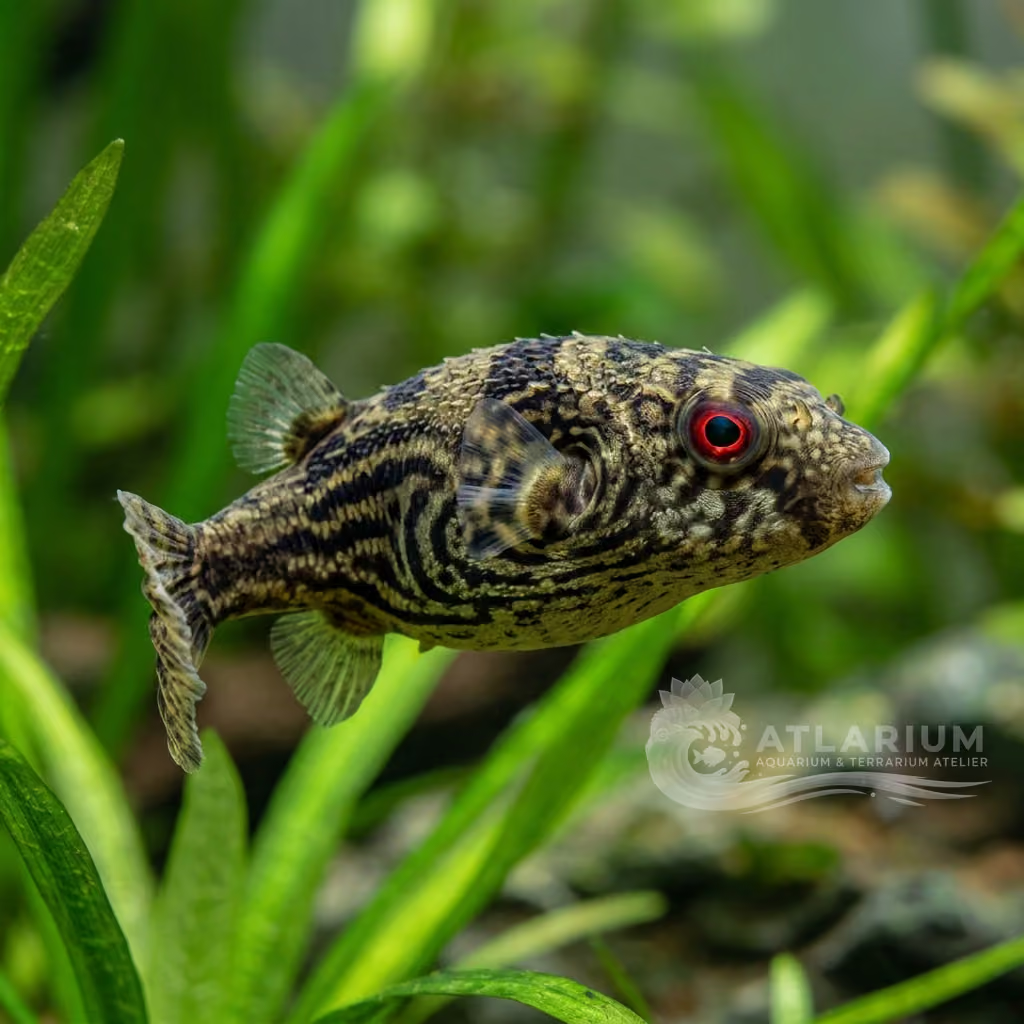
Figure Eight Puffer
Dichotomyctere ocellatus
The most popular brackish-water pufferfish: yellow-green body with a black pattern resembling the number 8. Large eyes that move independently. Intelligent and curious: recognizes its owner and 'begs' for food by swimming frantically in front of the glass. Requires brackish water (marine salt 2–5 g/L). A predator specializing in snails and crustaceans — the bony beak crushes shells. Serial fin-nipper: species-only tank recommended.
22 - 26 °C
6.8 - 7.8
Água doce / Água salobra
Parte inferior e intermediária
8 cm
>= 60 L
>= 1
10 - 20 dGH
5 - 10 dKH
200 - 400 ppm
313 - 625 uS/cm

Descrição da espécie

Cuidado, criação e companheiros de tanque

Origem e distribuição geográfica
Origem

Perfil de peixe
- Temperamento
- Aggressive
- The Figure Eight Puffer is highly intelligent, interactive, and fiercely territorial with a notorious fin-nipping habit. They quickly learn to recognize their owners and will actively beg for food at the front glass. Despite their endearing appearance, they are aggressive predators that will readily attack slower or similarly sized fish. They are best treated as a solitary 'wet pet' due to their intolerance of tank mates and complex care requirements.
- Dieta
- Carnivore
- Their diet must strictly consist of hard-shelled, meaty foods to keep their continuously growing beak properly ground down. Snails, small crabs, mussels, and cockles in the shell are mandatory staples for their physical health and dental maintenance. They will also eagerly consume bloodworms, brine shrimp, and other frozen meaty foods, but these do not help with beak wear. Flake or pellet foods are generally ignored and are entirely inappropriate for their nutritional needs.
- Expectativa de vida
- 15 years
- Tamanho adulto
- 8 cm
- Proporção sexual
- Solitary
- There are no visible sexual dimorphisms in this species, making it virtually impossible to determine the sex ratio of a group. Because they are best kept singly or in species-only setups, sex ratio is generally not a concern for the aquarist. If attempting to keep multiple puffers together, breaking lines of sight with heavy decor is far more important than the sex ratio. Ultimately, their individual aggressive personalities dictate success more than any combination of males and females.
- Frequência de alimentação
- Twice daily
- Young puffers should be fed small meals twice a day to support their rapid growth and high metabolic rate. Adult Figure Eight Puffers require feeding only once a day, or even once every other day, with a substantial meaty meal. Care must be taken not to overfeed, as they will readily gorge themselves until their bellies are dangerously distended. All uneaten shells and food fragments must be promptly removed to prevent severe water degradation.
- Carga biológica
- Medium
- The Figure Eight Puffer produces a significant bioload relative to its small size due to its heavily carnivorous and messy feeding habits. They are notoriously sloppy eaters that leave behind substantial amounts of food debris and organic waste. Consequently, an oversized, high-capacity filtration system is absolutely essential to manage ammonia and nitrite spikes. Frequent, large water changes are mandatory to keep nitrates exceptionally low, as puffers are highly sensitive to poor water conditions.
- Fluxo
- Stagnant
- They prefer moderate water flow that provides adequate oxygenation without creating an overpowering current that exhausts them. In their natural brackish estuarine habitats, they navigate tidal flows, so a steady, predictable current is appreciated. Powerheads can be used to eliminate dead spots in the aquarium, ensuring detritus is pushed towards the filter intake. Avoid chaotic, turbulent water movement, as it can cause them stress and difficulty while hunting.
- Risco de salto
- No
- Reprodução
- Oviparous
- Breeding the Figure Eight Puffer in a home aquarium is exceptionally rare and has almost never been successfully documented. The specific environmental triggers, brackish water fluctuations, and complex larval rearing requirements make captive breeding practically impossible for the average hobbyist. In the wild, they are believed to spawn on flat surfaces or in caves, with the male guarding the eggs. Currently, all specimens available in the trade are wild-caught from their native habitats.
- Compatibilidade e companheiros de tanque
- Community
- They possess an inherently aggressive and nippy temperament, making them extremely poor candidates for a standard community aquarium. They are best kept in a species-only tank to prevent them from harassing or fatally injuring other fish, especially those with long fins. If tank mates are absolutely necessary, they must be fast-swimming, robust, and preferably brackish-water species like completely mature mollies or gobies. However, even with carefully selected tank mates, the risk of unprovoked aggression remains very high.
- Nível do tanque
- Middle/Bottom
- They are highly inquisitive mid-water and bottom explorers, constantly patrolling the aquarium in search of food or investigating their surroundings. They rarely hover at the very surface unless begging for food. The tank must be densely decorated with rocks, driftwood, and robust plants (if in low salinity) to provide complex sightlines and territories. They appreciate caves and overhangs where they can rest securely when not actively hunting.

Modelos e parâmetros científicos
Acesso aos dados científicos oficiais da espécie
- Nível trófico
- 3,4 ± 0,49 se
- Resiliência
- Alta (menos de 15 meses)
- Unicidade filogenética (PD50)
- 0.5156
- Relação bayesiana comprimento-peso
- a = 0.0263, b = 2.88
- VulnerabilidadeVulnerabilidade baixa (10 / 100)

Galeria de imagens
Imagens licenciadas vinculadas à espécie ou, quando marcadas, ao táxon representativo mais próximo.

Espécies relacionadas
Recomendações agrupadas por parentes próximos, escolhas de acompanhantes e cuidados semelhantes.