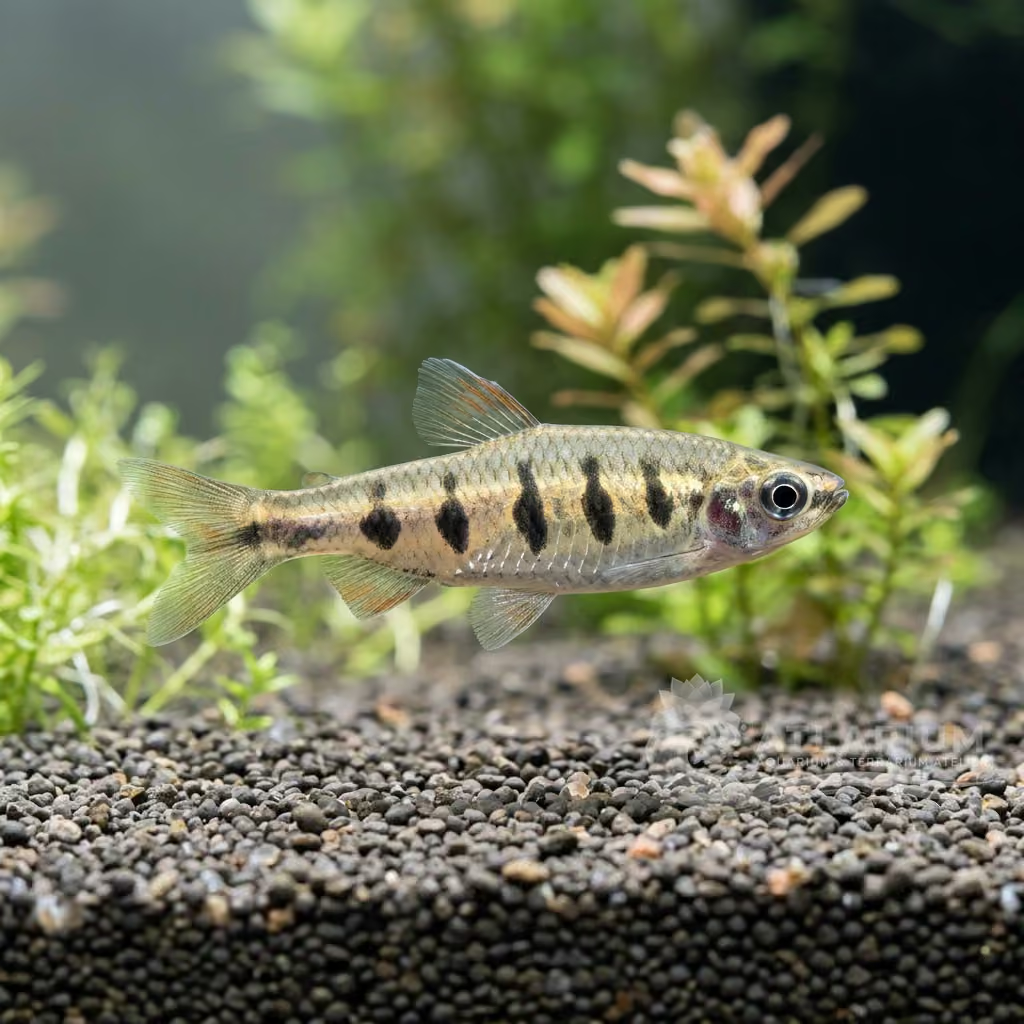
Flag Cichlid (Festivum)
Mesonauta festivus
The Flag Cichlid (Mesonauta festivus), historically known as Festivum, is an elegant South American cichlid with a unique appearance and behavior. It is instantly recognizable by the strong black diagonal band that crosses its yellow/olive-green body, starting from the mouth, cutting through the eye, up to reaching the terminal part of the pointed dorsal fin, making it look like a raised flag. Unlike most large cichlids that station on the bottom, the Festivum is strictly a surface fish, patrolling the high fronds and looking upwards waiting for insects, making it an ideal companion to exploit the upper part of large Amazonian tanks.
24 - 28 °C
6 - 7.5
Água doce
Superfície e meio
15 cm
>= 200 L
>= 4
4 - 12 dGH
2 - 6 dKH
80 - 240 ppm
125 - 375 uS/cm

Descrição da espécie

Cuidado, criação e companheiros de tanque

Origem e distribuição geográfica
Origem

Perfil de peixe
- Temperamento
- Peaceful
- They are generally peaceful and shy. They can become territorial during spawning. They behave very well in community setups.
- Dieta
- Omnivore
- They are naturally omnivorous. They prefer plant matter and small invertebrates. Spirulina flakes and frozen foods are excellent choices.
- Expectativa de vida
- 5-10 years
- Tamanho adulto
- 15 cm
- Proporção sexual
- Group
- They are best kept in established pairs. Groups require very large aquariums. Sexing juveniles is notably difficult.
- Frequência de alimentação
- Twice daily
- Feed them once or twice daily. They are careful and deliberate eaters. Ensure fast fish don't outcompete them.
- Carga biológica
- Medium
- They produce a typical moderate bioload. Efficient filtration easily handles their waste. Regular maintenance keeps the environment pristine.
- Fluxo
- Strong
- They prefer gentle water flow. Avoid excessively strong currents. Calm surfaces provide an ideal, stress-free environment.
- Risco de salto
- Yes
- They pose a low jump risk. A secure lid is always recommended. Startling noises can occasionally trigger jumping.
- Reprodução
- Oviparous
- They are monogamous substrate spawners. They lay eggs on flat broad leaves. Both parents actively guard the fry.
- Compatibilidade e companheiros de tanque
- Aggressive
- They are peaceful community cichlids. Suitable tank mates include tetras and corydoras. Avoid very small fish that fit their mouths.
- Nível do tanque
- Top/Middle
- They occupy the middle and upper levels. They appreciate tall plants for hiding. They often rest near floating vegetation.

Modelos e parâmetros científicos
Acesso aos dados científicos oficiais da espécie
- Nível trófico
- 2,5 ± 0,23 se
- Resiliência
- Alta (menos de 15 meses)
- Unicidade filogenética (PD50)
- 0.5078
- Relação bayesiana comprimento-peso
- a = 0.03311, b = 3.09
- VulnerabilidadeVulnerabilidade baixa (10 / 100)

Galeria de imagens
Imagens licenciadas vinculadas à espécie ou, quando marcadas, ao táxon representativo mais próximo.

Espécies relacionadas
Recomendações agrupadas por parentes próximos, escolhas de acompanhantes e cuidados semelhantes.