Blue Gularis
Fundulopanchax sjostedti
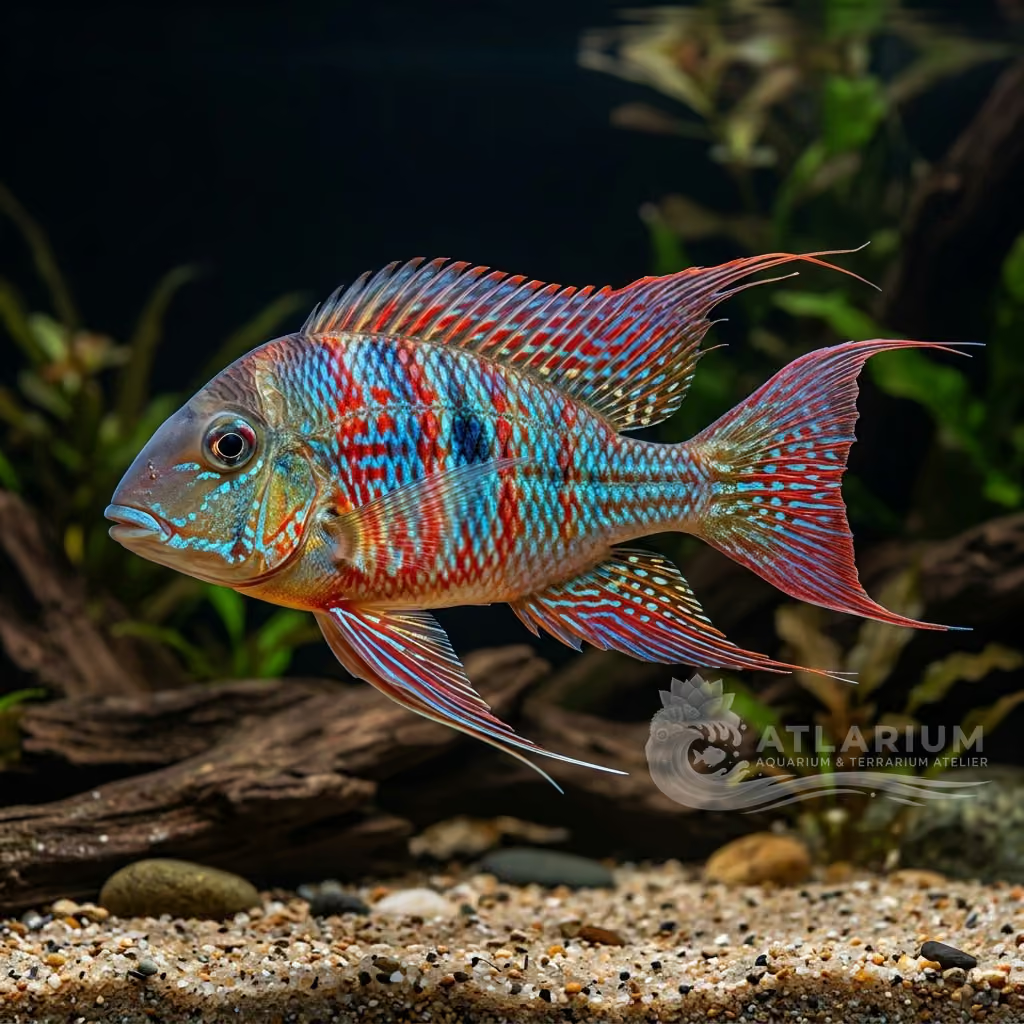
The colossal 'Blue Gularis' (13 cm). The absolute giant of African Killifish. A majestic predator, famous for its iridescent blue and dark red plumage and asymmetrical trident-shaped fins. It is a semi-annual species extremely aggressive and territorial, capable of portentous leaps out of the water. Requires specific tightly covered single-species tanks and live food.
Température de l’eau
22 - 26 °C
Valeur du pH
6 - 7
Type d'eau
Eau douce
Niveau dans le bac
Fond et milieu
Taille adulte
14 cm
Volume minimal du bac
>= 180 L
Groupe minimal
>= 1
GH
4 - 10 dGH
KH
2 - 5 dKH
TDS
80 - 200 ppm
Conductivité
125 - 313 uS/cm

Description de l'espèce
Geographical Origin and Habitat: Niger River Delta (Cameroon and Nigeria). Lives in the twilight of swampy canals covered by the fronds of the rainforests, in coastal pools of weakly acidic water.
Taxonomy and Morphology: Blue Gularis (Fundulopanchax sjoestedti). The king of Killis (often sold as "giant"). Non-annual fish, although it often lives a few seasons in nature. Possesses a powerful cylindrical body and fins set far back.
Social Behavior: It is a formidable and hyper-aggressive mini-predator. Males fight fiercely (and mortally) with each other in small tanks. A single male with many females is the highly recommended approach.
Coloration and Sexual Dimorphism: Males are a dazzling cobalt-turquoise crossed by mahogany flames and red stripes all over the body and in the wide trident fins. Females are very pale and sand-colored, insignificant to allow camouflage.

Soins, reproduction et cohabitation
Aquarium Setup: Tanks of 80 cm (32 inches) are enough for a colony. The tank should be shaded by Limnobium or Ceratophyllum, with a peat or Akadama bottom. The use of strong pumps is not recommended; they love slow-flowing waters.
Diet and Feeding: Tireless hunter. Although it slowly adapts to granules, its diet must be 70% live or frozen food. Eats huge earthworms, mosquito larvae, bloodworms and small shrimp. Can swallow whole neons if kept together.
Water Quality: They hate high temperatures, which burn out their life cycle in a few months reducing them to mush. Ideally 23-24°C (73-75°F), with winter peaks even below 20°C (68°F).
Compatibility and Cohabitation: Small predator. Perfect in species-only aquariums. If kept in a community, compact fish that are not in its line of sight and Dwarf Cichlids (Pelvicachromis or Corydoras) are needed, provided the gularis does not become dominant.
Aquarium Breeding: Substrate-spawner that buries eggs in boiled coir or peat. The eggs can remain immersed or, if in a dry annual "diapause" due to (simulated) drought, they are kept moist in bags for 6-8 weeks.
Risks and Diseases: Premature death caused by housing at a constant 27°C (81°F) or tankmate attacks. It is one of the fish most at risk of suicide by jumping (100% tight lid, always).

Origine et répartition géographiques
Niger River Delta (Cameroon and Nigeria). Lives in the twilight of swampy canals covered by the fronds of the rainforests, in coastal pools of weakly acidic water.
Origine
Afrique et Madagascar

Profil de poisson
- Tempérament
- Semi-aggressive
- They are bold, active, and predatory fish with a surprisingly peaceful demeanor towards species too large to swallow. Males exhibit fascinating, though aggressive, displaying behaviors when establishing dominance. A well-decorated tank minimizes stress and allows their natural personalities to shine.
- Régime alimentaire
- Omnivore
- They are voracious predators that require a diet rich in high-quality protein. Offer them large frozen foods such as bloodworms, mysis shrimp, and chopped earthworms. While they may eventually accept large pellets, live and frozen foods should remain their staple diet.
- Espérance de vie
- 2-5 years
- Taille adulte
- 14 cm
- Ratio des sexes
- Harem
- Males are spectacular, highly colored, and fiercely territorial towards other males. It is best to maintain one male with a harem of at least three females to disperse his aggressive attention. Keeping multiple males is only viable in exceptionally large, heavily structured aquariums.
- Fréquence d'alimentation
- Twice daily
- Adult specimens thrive when fed one or two substantial meals per day. Overfeeding should be avoided to maintain pristine water quality and prevent obesity. When preparing adults for breeding, the frequency of feeding live foods should be temporarily increased.
- Charge biologique
- Medium
- As one of the largest killifish species, the Blue Gularis produces a moderately high bioload. They require excellent filtration to process the waste generated by their substantial meaty diet. Frequent large water changes are absolutely necessary to prevent the accumulation of toxic nitrogen compounds.
- Courant
- Stagnant
- They originate from stagnant and slow-moving bodies of water in West Africa. Therefore, they greatly prefer very gentle water movement provided by air-driven sponge filters. Strong currents will quickly exhaust them and prevent them from engaging in natural breeding behaviors.
- Risque de saut
- Yes
- These powerful fish are phenomenal jumpers and can easily escape through incredibly small openings. A heavy, perfectly fitted canopy or lid is mandatory for their aquarium. Providing floating plants can also make them feel more secure and less inclined to jump.
- Reproduction
- Oviparous
- They are annual or semi-annual substrate spawners that bury their eggs deeply in peat moss. The peat containing the eggs must be removed, dried slightly, and incubated for several months. After the incubation period, adding cool water triggers the large fry to hatch rapidly.
- Compatibilité et compagnons
- With caution
- Due to their large size and predatory nature, they should only be kept with robust, similarly sized fish. They will eagerly consume smaller tetras, rasboras, and dwarf shrimp. They are often best housed in a dedicated species tank to fully appreciate their majestic presence.
- Niveau dans le bac
- Middle/Bottom
- They spend the majority of their time navigating the lower and middle regions of the aquarium. They appreciate a tank with a soft substrate and dense thickets of plants to retreat into. A dimly lit environment encourages them to actively explore their surroundings.

Modèles et paramètres scientifiques
FishBase
Fenêtre sur les données scientifiques officielles de l’espèce
FishBase v25.04Données synchronisées le : 15/06/2026
- Niveau trophique
- 3,4 ± 0,5 se
- Singularité phylogénétique (PD50)
- 0.5
- Relation bayésienne longueur-poids
- a = 0.01047, b = 2.85
- VulnérabilitéVulnérabilité faible (10 / 100)

Espèces associées
Recommandations regroupées par proches parents, compagnons et soins similaires.