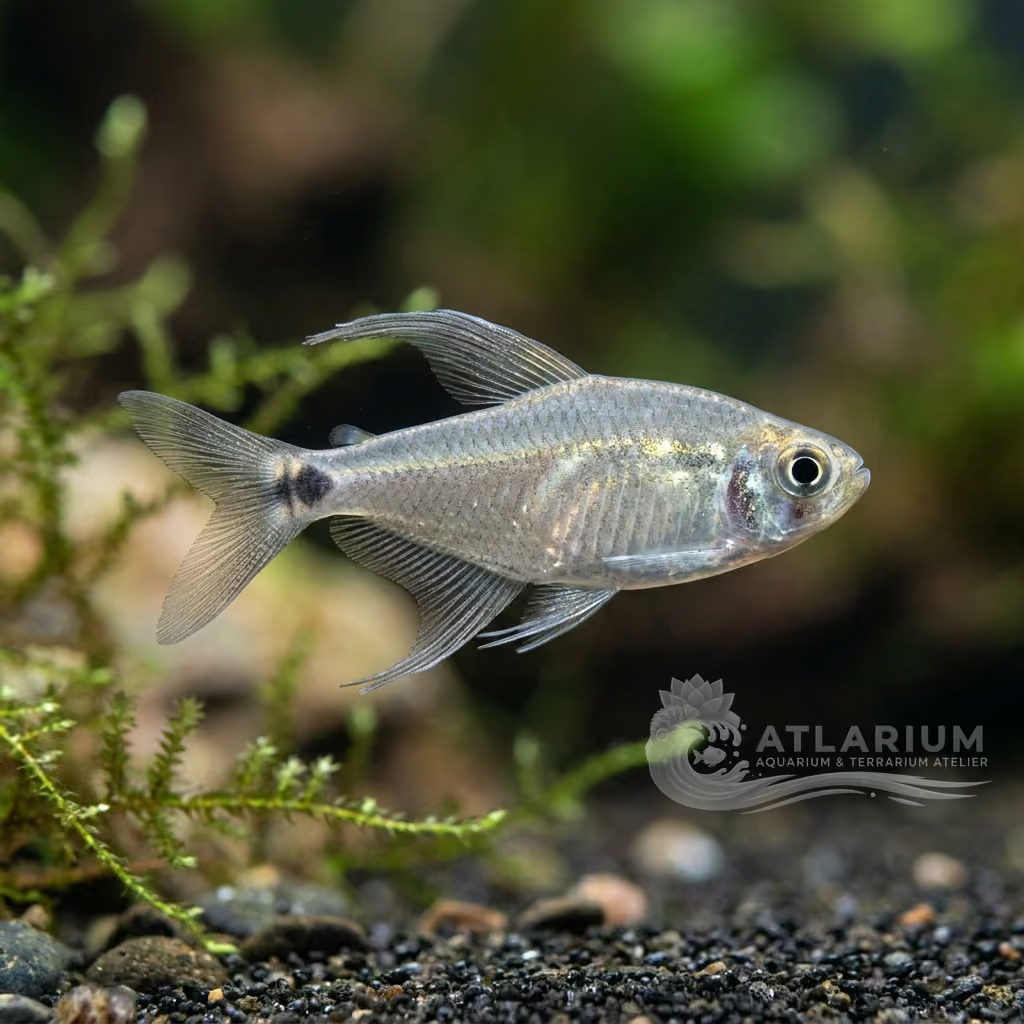
Blue Lyretail (Gardner's Killi)
Fundulopanchax gardneri
The Gardner's Killifish (Fundulopanchax gardneri) is perhaps the most robust and easiest killi of all to keep and breed, perfect for beginners to the genus. The male is a dazzling spectacle: metallic blue-green body densely spotted with crimson red, with yellow fins bordered by vibrant red stripes. Females, as typical in killis, are a modest dotted grey-brown color. Beyond its brazen beauty, its huge merit is extreme adaptability: it is a 'semi-annual' killifish that tolerates a wide range of water conditions.
20 - 25 °C
6 - 7.5
Eau douce
Tous les niveaux
6 cm
>= 50 L
>= 3
4 - 12 dGH
2 - 6 dKH
80 - 240 ppm
125 - 375 uS/cm

Description de l'espèce

Soins, reproduction et cohabitation

Origine et répartition géographiques
Origine

Profil de poisson
- Tempérament
- Territorial
- They are active, bold, and generally peaceful toward other species. However, males display territorial behavior and will flare and spar with rival males. Providing complex environments with visual barriers minimizes any potential aggression.
- Régime alimentaire
- Omnivore
- They are primarily carnivorous, thriving on a diet of small, meaty foods. Frozen or live daphnia, bloodworms, and brine shrimp should form the core of their diet. Many specimens easily adapt to accepting high-quality dry pellets or flakes as well.
- Espérance de vie
- 2-3 years
- Taille adulte
- 6 cm
- Ratio des sexes
- Harem
- Males are highly aggressive toward one another and enthusiastically pursue females. A ratio of one male to at least two females is strongly recommended to diffuse harassment. In larger, densely planted tanks, multiple males can establish their own small territories.
- Fréquence d'alimentation
- Twice daily
- Adults fare well on one to two small feedings per day. When preparing them to spawn, offering live foods multiple times a day yields the best results. Always remove any uneaten food promptly to maintain pristine water conditions.
- Charge biologique
- Low
- This colorful species produces a light bioload, ideal for nano tanks and small planted aquariums. They do well with basic filtration systems like sponge filters. Standard maintenance and weekly water changes are sufficient to keep the water quality high.
- Courant
- Strong
- They naturally reside in quiet, heavily vegetated pools and slow-moving streams. Strong water flow should be strictly avoided as it causes them significant stress. A simple sponge filter provides the ideal, gentle water movement they prefer.
- Risque de saut
- Yes
- Like all species in this genus, they are incredible jumpers capable of finding the smallest gaps. A tight-fitting lid is absolutely non-negotiable for their long-term survival. Keeping the water level slightly lowered can also serve as an additional preventative measure.
- Reproduction
- Oviparous
- They are among the easiest killifish to breed, utilizing spawning mops or dense moss. Eggs can be left in the water to hatch or removed for dry incubation on peat. Fry are relatively large at hatching and can quickly take newly hatched brine shrimp.
- Compatibilité et compagnons
- Peaceful
- They are peaceful but can be slightly nippy, making them great companions for similar-sized, robust fish. Avoid housing them with slow-moving fish that have long, flowing fins. They are arguably best kept in a species-only setup to fully observe their unique behaviors.
- Niveau dans le bac
- All levels
- They spend most of their time darting around the middle and upper levels of the tank. They love to rest among floating plants or wide leaves near the water's surface. Darker substrates and shaded areas make them feel the most secure.

Modèles et paramètres scientifiques
Fenêtre sur les données scientifiques officielles de l’espèce
- Niveau trophique
- 3,3 ± 0,5 se
- Singularité phylogénétique (PD50)
- 0.5
- Relation bayésienne longueur-poids
- a = 0.00933, b = 2.89
- VulnérabilitéVulnérabilité faible (10 / 100)

Espèces associées
Recommandations regroupées par proches parents, compagnons et soins similaires.