Clown Killifish (Rocket Killi)
Epiplatys annulatus
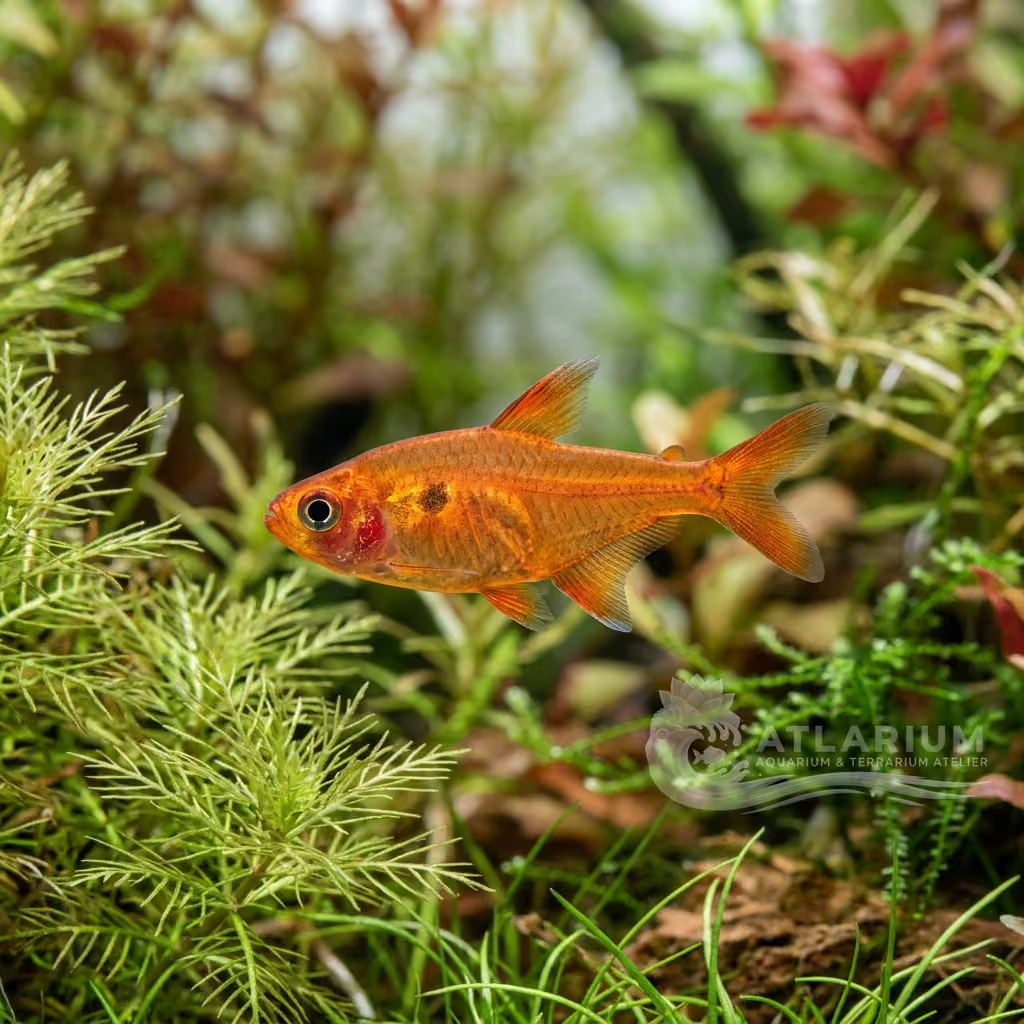
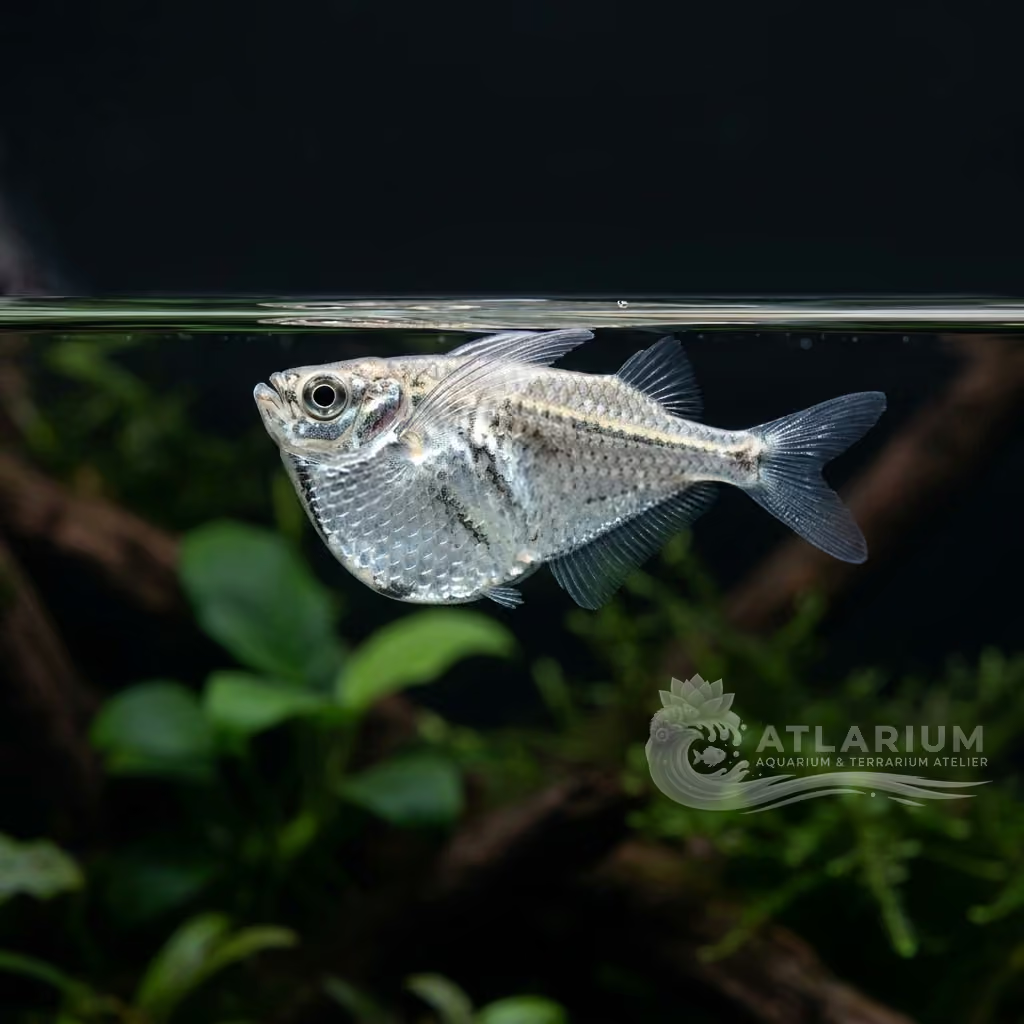
The Clown Killifish or Rocket Killifish (Epiplatys annulatus) is a miniaturized jewel and one of the smallest species in fishkeeping, barely reaching 3 cm (or 3.5 cm in old males). Its tapered cream-colored body is wrapped in 4 broad vertical black bands. But the real show, from which the name "rocket" derives, is the male's tail: spade or flame-shaped, with alternating horizontal streaks of red, bright blue, and yellow in the center. Exclusively a surface fish, it inhabits the highest layers of the aquarium. Its tiny size and upward-facing mouth make feeding its biggest challenge.
22 - 26 °C
5 - 7
Eau douce
Surface
4 cm
>= 30 L
>= 6
1 - 10 dGH
1 - 5 dKH
25 - 200 ppm
39 - 313 uS/cm

Description de l'espèce

Soins, reproduction et cohabitation

Origine et répartition géographiques
Origine

Profil de poisson
- Tempérament
- Semi-aggressive
- They are exceedingly peaceful, shy, and somewhat delicate by nature. They spend most of their time quietly stalking microscopic prey among floating plant roots. They can be easily intimidated by active tank mates and will hide constantly if stressed.
- Régime alimentaire
- Insectivore
- They are strict micro-predators requiring a diet of appropriately sized meaty foods. They thrive on live foods like newly hatched brine shrimp, microworms, and wingless fruit flies. They can often be trained to accept very high-quality, finely crushed dry flakes or micro-pellets.
- Espérance de vie
- 2-3 years
- Taille adulte
- 4 cm
- Ratio des sexes
- School
- To minimize male-on-male aggression, it is best to keep a ratio of one male to two or three females. Males display intensely to one another but rarely cause actual physical harm if adequate space is provided. A female-heavy group ensures successful and less stressful spawning.
- Fréquence d'alimentation
- Twice daily
- Feed them very small amounts of appropriately sized food one to two times daily. Since their mouths are tiny, food must be small enough for them to swallow whole. Ensure that the food remains at the surface long enough for them to eat.
- Charge biologique
- Low
- The Clown killifish is extremely tiny and consequently produces a very low bioload. They are perfect for small nano aquariums, provided the water quality is meticulously maintained. Gentle biological filtration and regular small water changes are entirely sufficient for their needs.
- Courant
- Strong
- They originate from stagnant or very slow-moving swamps and heavily vegetated streams. They absolutely require a very gentle flow, as strong currents will quickly exhaust them. A sponge filter is highly recommended to provide filtration without disruptive water movement.
- Risque de saut
- Yes
- Like most killifish, Clown killis are extraordinary jumpers capable of leaping through the smallest openings. A completely tight-fitting lid with absolutely no gaps is critically essential. Floating plants can help deter them from jumping by providing surface cover and security.
- Reproduction
- Oviparous
- They are plant-spawners that will readily deposit eggs in fine-leaved plants or spawning mops. Eggs take about two weeks to hatch, and the fry require microscopic foods like infusoria immediately. Parent fish may eat the fry, so removing the eggs to a separate rearing tank is advisable.
- Compatibilité et compagnons
- Species only
- These are incredibly peaceful and timid micro-predators that are easily outcompeted for food. They must be kept with other similarly sized, highly peaceful nano fish or dwarf shrimp. Avoid keeping them with any boisterous, fin-nipping, or moderately sized fish species.
- Niveau dans le bac
- Top
- They are strict top-dwellers, spending almost their entire lives hovering just below the water's surface. They rarely venture into the middle or bottom levels of the aquarium. Providing dense covers of floating plants makes them feel secure in their preferred zone.

Modèles et paramètres scientifiques
Fenêtre sur les données scientifiques officielles de l’espèce
- Niveau trophique
- 3,2 ± 0,4 se
- Singularité phylogénétique (PD50)
- 0.5
- Relation bayésienne longueur-poids
- a = 0.00603, b = 3.13
- VulnérabilitéVulnérabilité faible (10 / 100)

Espèces associées
Recommandations regroupées par proches parents, compagnons et soins similaires.