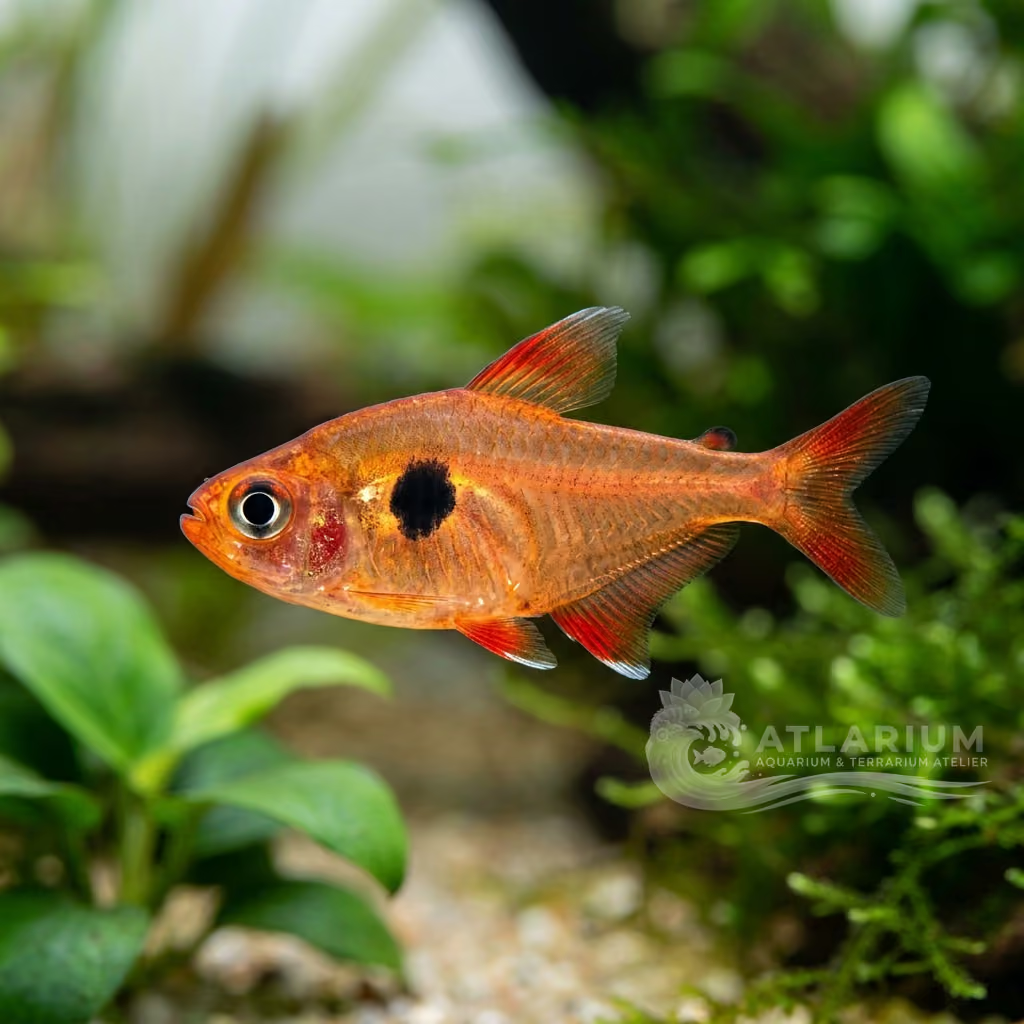
Silver Hatchetfish
Gasteropelecus sternicla
The giant 'platinum' hatchetfish. Over 6 cm long with a solid axe-shaped chest and bright, aluminum-like coloration. Robust and active, demanding longer tanks and a sealed lid with plenty of air-gap to survive its powerful jumps.
Température de l’eau
23 - 27 °C
Valeur du pH
6 - 7
Type d'eau
Eau douce
Niveau dans le bac
Surface
Taille adulte
6,5 cm
Volume minimal du bac
>= 60 L
Groupe minimal
>= 1
GH
2 - 15 dGH
KH
1 - 7 dKH
TDS
40 - 295 ppm
Conductivité
63 - 461 uS/cm

Description de l'espèce
Geographical Origin and Habitat: Wide distribution in the central Amazon basins (Peru, Brazil) and the Guianas. Inhabits flooded woodland swamps, very slow-flowing trickles (Igarapè) covered by the forest canopy and filled with insects fallen into the water.
Taxonomy and Morphology: Silver Hatchetfish. It is the most iconic and available species of the genus. Identical to its cousin maculatus in the hyper-compressed half-moon shape and superior mouth, reaches about 6.5 cm (2.5 inches) maximum length.
Social Behavior: STRICTLY to be kept in schools (minimum 8-10). It would remain constantly hidden and extremely stressed if kept individually. They station at the surface of the water, motionless for hours waiting, united in a very tight school.
Coloration and Sexual Dimorphism: Pure silver livery, very shiny and reflective, lacking the black spotting typical of G. maculatus. A thin opaque golden/green horizontal stripe runs along the body. Mature females recognizable by the slightly more convex dorsal profile (full of eggs).

Soins, reproduction et cohabitation
Aquarium Setup: Hermetically covered aquarium (thick glass, closing holes and slits) at least 80 cm (32 inches) long, to ensure escape space (skimming) on the surface. Essential large patches of Limnobium laevigata to modulate the light and prevent panic attacks.
Diet and Feeding: Ignores what falls beyond 2 cm in depth. Base of light flakes and small slow-release floating granules (0.5 mm). Must be fed with dry/live insects (drosophila, springtails) to provide the correct chitin intake necessary for the intestine.
Water Quality: Strong need for stability of values rather than extreme parameters. pH from 6.0 to 7.0, medium hardness (GH 2-15) and mild temperatures of 23-27°C (73-81°F). Amber water (tannins) drastically reduces stress and prevents skin bacterial infections.
Compatibility and Cohabitation: Perfect pacifists; totally ignore bottom and mid-water fish. Excellent with Neons, Corydoras, Otocinclus, Discus and Apistogramma. NEVER insert with aggressive surface fish (large Killifish, aggressive Bettas, large Gouramis).
Aquarium Breeding: Officially documented only a few times. Similar to that of other hatchetfish: stormy courtship with leaps out of the water, spawning among floating roots. The fry need tiny infusoria for the first week.
Risks and Diseases: In addition to the usual jumping out of the tank, these wild-imported fish are chronically affected by Ich (White spot) and often waste away from malnutrition if one persists in feeding them with tablets or flakes that sink too quickly.

Origine et répartition géographiques
Wide distribution in the central Amazon basins (Peru, Brazil) and the Guianas. Inhabits flooded woodland swamps, very slow-flowing trickles (Igarapè) covered by the forest canopy and filled with insects fallen into the water.
Origine
Amazonie, Orénoque et Guyanes

Profil de poisson
- Tempérament
- Semi-aggressive
- They are shy, skittish, and entirely peaceful fish that rely on the safety of their school. Sudden changes in lighting or shadows passing over the tank can cause them to panic and jump. When kept in a calm environment with appropriate companions, they are fascinating and graceful additions.
- Régime alimentaire
- Omnivore
- They are strict surface carnivores that feed primarily on small insects in the wild. Their captive diet must consist of high-quality floating foods such as flakes and freeze-dried bloodworms. Offering live fruit flies occasionally provides excellent nutritional enrichment and encourages their natural hunting behavior.
- Espérance de vie
- 3-5 years
- Taille adulte
- 6.5 cm
- Ratio des sexes
- School
- Sexual dimorphism is minimal, making them nearly impossible to sex by color or finnage. Females are generally rounder and broader when viewed from above, especially when carrying eggs. They are obligate schooling fish that require a group of at least six individuals to thrive and reduce stress.
- Fréquence d'alimentation
- Twice daily
- Feed them small pinches of floating food one to two times daily. Because their mouth is located at the top of their head, they cannot consume food that sinks past them. It is important to monitor feeding time to ensure they receive enough sustenance before it sinks.
- Charge biologique
- Low
- The Silver Hatchetfish carries a very light bioload, ideal for heavily planted community aquariums. Gentle biological filtration easily handles their minimal waste production. Maintaining stable parameters through standard weekly water changes is sufficient for their health.
- Courant
- Stagnant
- They prefer slow, gentle water movement that mimics the calm surface waters of the Amazon basin. A heavy surface current will severely stress them and prevent them from feeding properly. If using a strong filter, the return flow should be baffled to keep the surface relatively calm.
- Risque de saut
- Yes
- They are famously powerful jumpers that use their specialized pectoral fins to launch out of the water. An impeccably tight-fitting lid with no gaps is the most critical requirement for keeping this species. Extreme caution is required whenever the lid is opened for feeding or maintenance.
- Reproduction
- Oviparous
- Breeding them in captivity is notoriously difficult and rarely achieved without a dedicated, specialized setup. Spawning typically requires extremely soft, acidic water and a simulated rainy season. They scatter their eggs among the roots of floating plants, and the parents must be removed immediately afterwards.
- Compatibilité et compagnons
- Peaceful
- They are top-dwelling fish that are perfectly peaceful toward any species living beneath them. Excellent companions include peaceful tetras, pencilfish, and bottom-dwelling loaches. Never keep them with aggressive fin-nippers like tiger barbs or large, predatory cichlids.
- Niveau dans le bac
- Top
- They are exclusive top-dwellers that spend their entire lives hovering just below the water's surface. They require significant open swimming space at the top of the tank to feel comfortable. A generous layer of floating plants provides essential cover and drastically reduces their stress levels.

Modèles et paramètres scientifiques
FishBase
Fenêtre sur les données scientifiques officielles de l’espèce
FishBase v25.04Données synchronisées le : 15/06/2026
- Niveau trophique
- 3,3 ± 0,4 se
- Singularité phylogénétique (PD50)
- 0.627
- Relation bayésienne longueur-poids
- a = 0.0195, b = 3.07
- VulnérabilitéVulnérabilité faible (10 / 100)

Galerie d'images
Images sous licence liées à l'espèce ou, lorsqu'elles sont indiquées, au taxon représentatif le plus proche.

Espèces associées
Recommandations regroupées par proches parents, compagnons et soins similaires.